




Overview
- US earnings continue to grow, but smaller earnings surprises leave shares exposed when results fall short of market expectations.
- AI investment supports demand for cloud services and equipment, while heavy capital spending puts pressure on free cash flow.
- RBA and Bank of England decisions could drive AUDUSD and GBPUSD. Guidance on further tightening will shape the response.
- US midterm elections and Friday’s employment report could shift the dollar, gold and Bitcoin.
US Earnings Season So Far: Strong Profits, but Beats are Getting Smaller
Corporate profits continue to expand, but the cost of funding future growth puts pressure on cash flow. FactSet’s 30 October update put blended third-quarter S&P 500 earnings growth at 30.2%, up from 29.5% a week earlier. Blended growth combines reported results with estimates for companies yet to report.
Approximately 300 S&P 500 companies had released results, with 82%, or roughly 246 companies, beating earnings estimates. All 11 sectors reported year-on-year earnings growth, including seven with double-digit increases.
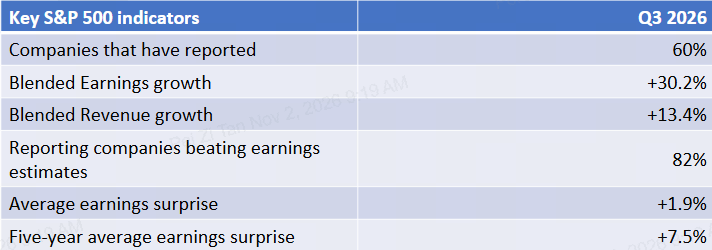
However, the size of those earnings beats paints a more cautious picture. Aggregate earnings exceeded estimates by just 1.9%, below the five-year average of 7.5%. Companies continue to grow profits, but they are clearing market expectations by smaller margins.
That leaves less room for disappointment. Even a profitable company can see its shares fall if earnings or guidance fail to meet investor expectations. Traders should watch whether future profit forecasts hold up as investment costs rise, particularly among companies expanding their AI infrastructure.
Earnings leadership spreads beyond the largest technology companies
The Magnificent Seven’s earnings advantage has narrowed. FactSet figures reported on 30 October put their blended third-quarter earnings growth at 22.6%, down from 33.6% a month earlier.
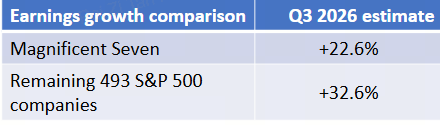
If these estimates hold, it would mark the first time since Q4 2022 that the Magnificent Seven’s earnings growth trails the rest of the index. This shift suggests that earnings support extends beyond the largest technology names. It could reduce the broader market’s dependence on a small group of companies, provided other sectors maintain their forecasts. Industrial results offer evidence of that wider demand. GE Aerospace reported third-quarter orders of $19.0 billion, up 49% year on year. Caterpillar increased sales and revenues by 17% to $20.7 billion and reported a record backlog.
These results point to continued spending on equipment and services. They do not establish that every part of the economy is accelerating, but they give traders a reason to monitor market breadth alongside technology performance. If industrial and other non-technology shares hold firm during weakness in the largest AI stocks, the broader equity outlook would look more resilient.
AI demand grows while investment consumes cash
Amazon’s results show why traders need to separate business demand from investment costs. For the 12 months ending 30 September 2026, operating cash flow rose 29% to $168.3 billion. Yet free cash flow fell to an outflow of $42.4 billion, mainly because of higher investment in property and equipment linked to AI. AWS third-quarter sales increased 39% to $46.0 billion.
The figures show that rising cash generation can coexist with negative free cash flow when capital spending grows faster. Investment can expand capacity and support future sales. However, new data centres and chips must generate enough revenue to cover their cost, maintenance and eventual replacement.
The next test is whether cloud growth and operating profits keep pace with spending. Further investment increases without stronger revenue guidance could weigh on technology shares. Better cash conversion would give investors firmer evidence that expansion can support future returns.
Valuations depend on companies delivering forecast profits
FactSet forecasts S&P 500 earnings growth of 28.4% for the fourth quarter and 32.9% for full-year 2026. The index’s forward price-to-earnings ratio stands at 18.7, below its five-year average of 19.8 and ten-year average of 19.1.
Those comparisons offer some valuation support. However, the ratio uses expected earnings. If analysts cut those estimates, shares can become more expensive relative to profits even without a price rise.
The equity outlook remains conditional. Stable forecasts and wider earnings growth could support buying during pullbacks. Weaker guidance, rising costs or a longer wait for AI cash returns could prolong selling pressure.
Rate decisions and US jobs bring the focus back to currencies
The RBA announces its decision on 3 November, followed by the Bank of England on 5 November. Calendar forecasts point to increases of 25 basis points, taking Australia’s cash rate to 4.85% and UK Bank Rate to 4.00%.
An expected increase may produce only a brief currency response. Guidance on subsequent meetings could have a larger effect. Signals of further tightening could support the Australian dollar or sterling, while a cautious outlook could limit gains.
US midterm elections also take place on 3 November. Changes in congressional control could alter expectations for fiscal policy and regulation. The market response will depend on the results and their policy implications, so a fixed directional forecast would be premature.
Friday’s US employment report provides the next economic test. Payrolls are forecast to rise by 63,000, following 29,000, with unemployment expected to remain at 4.2%.
Stronger hiring could support Treasury yields and the dollar if traders reduce expectations for policy easing. Weaker data could help gold through lower yields, although a sharp rise in growth concerns could also weigh on equities and Bitcoin.
Key Symbols to Watch
USDX | AUDUSD | GBPUSD | XAUUSD | BTCUSD
Upcoming Events
| Date | Currency | Event | Forecast | Previous | Analyst Remarks |
| 3 November 2026 | AUD | RBA Cash Rate | 4.85% | 4.60% | A 25-basis-point increase is forecast. Guidance on further tightening could determine whether AUD gains extend. |
| 5 November 2026 | GBP | Bank of England Bank Rate | 4.00% | 3.75% | A 25-basis-point increase is forecast. The vote split and inflation projections could drive sterling. |
| 6 November 2026 | USD | US Non-Farm Employment Change | 63,000 | 29,000 | Stronger hiring could support the dollar. A weaker result could lower yields and increase concern about growth. |
| USD | US Unemployment Rate | 4.20% | 4.20% | An unexpected rise could strengthen expectations for easier policy and weigh on risk appetite. |
For a full view of upcoming economic events, check out VT Markets’ Economic Calendar.
Key Movements of the Week
USDX
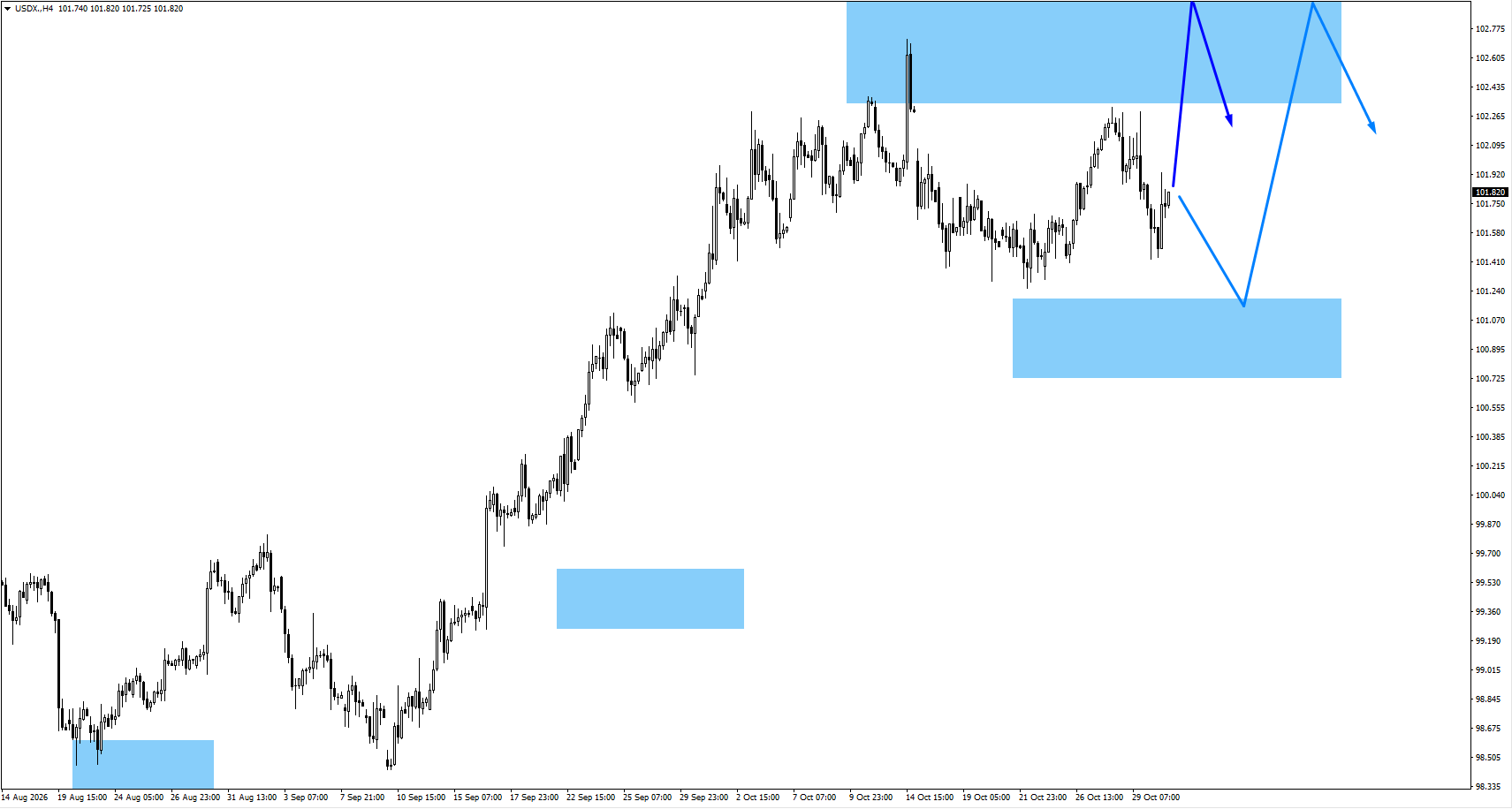
- USDX could rise from the current area and break above 102.715.
- Following a break, monitor price action for signs of rejection that could signal a reversal lower.
- If prices retreat first, watch for bullish price action around 101.00. A rebound could carry USDX above 102.715 before a potential decline.
AUDUSD
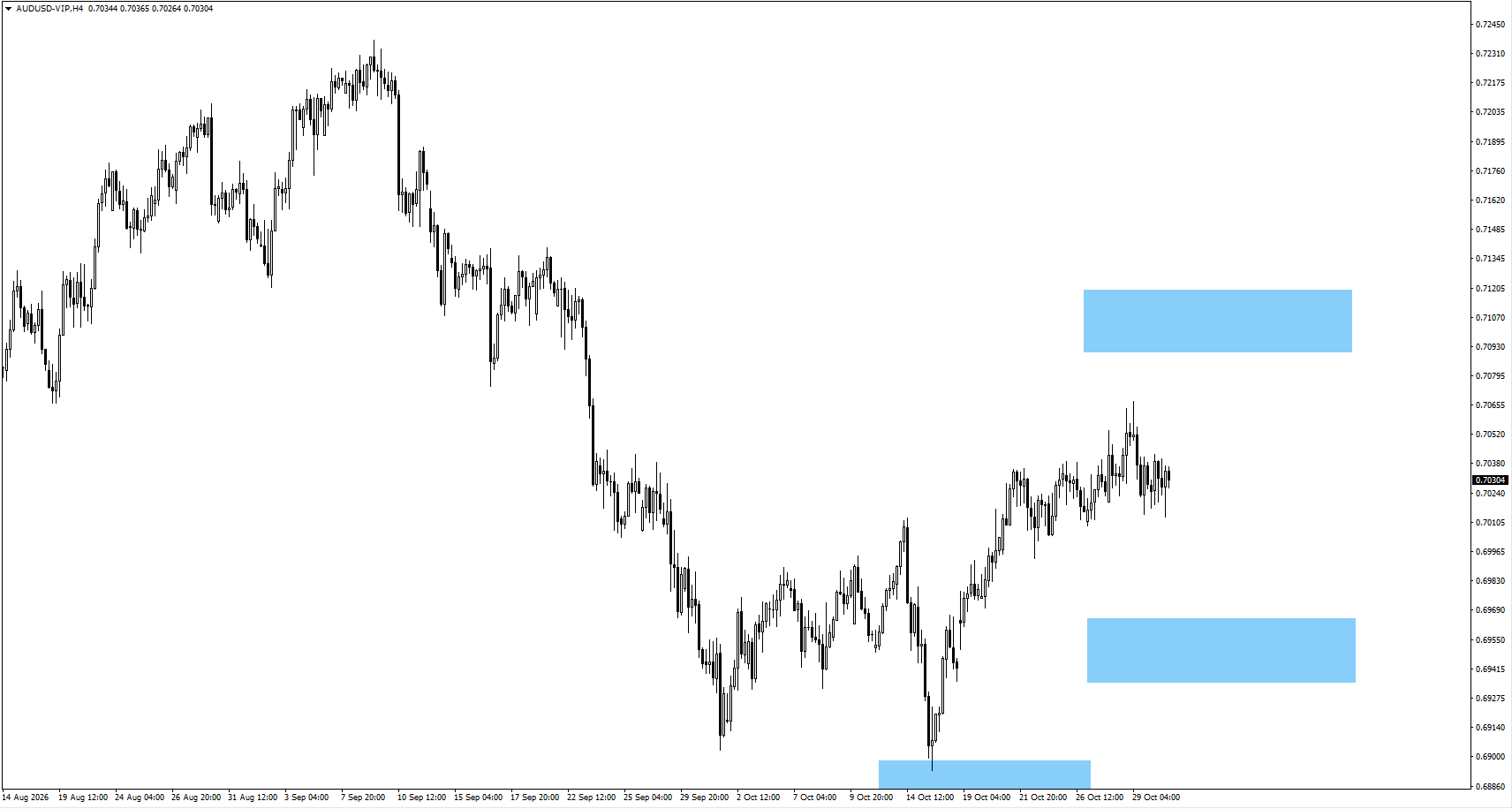
- AUDUSD could consolidate further before attempting another move higher.
- If prices retreat, watch for bullish price action around 0.6945 that could support a recovery.
GBPUSD
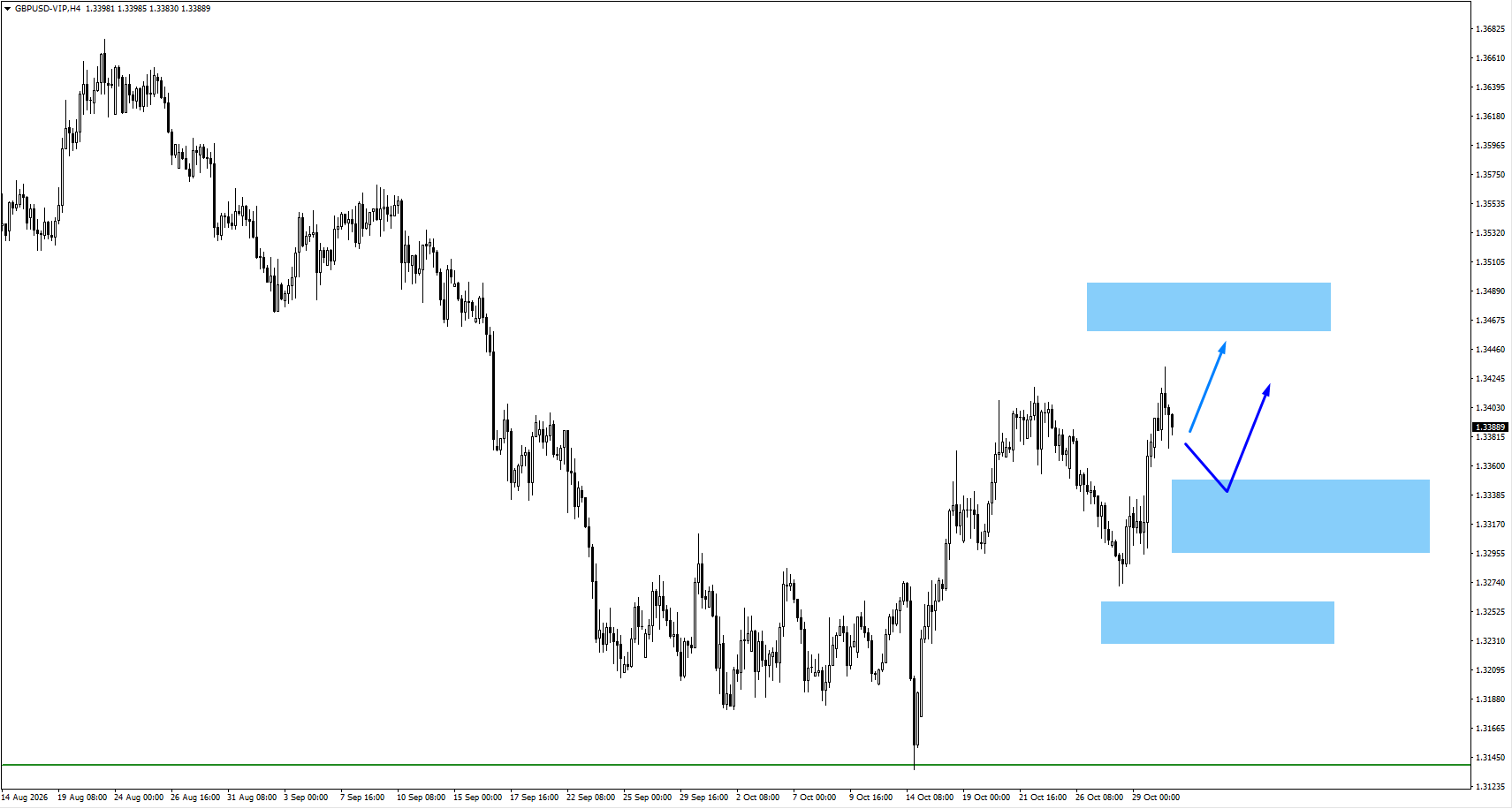
- GBPUSD could extend its recovery from the current area.
- If prices rise, monitor the response at 1.3485 for signs of further upside or rejection.
- If prices consolidate lower, watch for bullish price action around 1.3330 or 1.3260 that could support another move higher.
XAUUSD
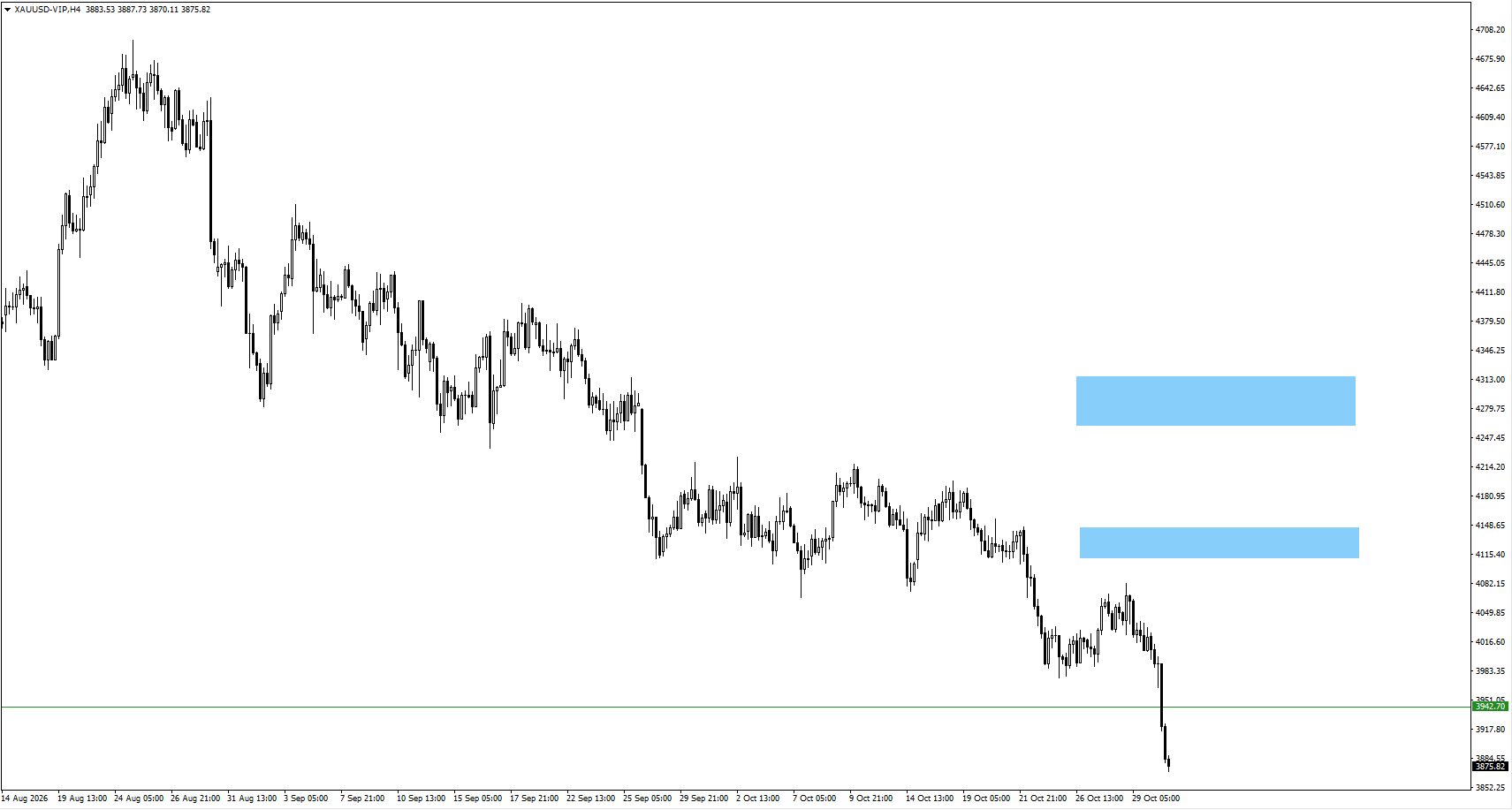
- Gold extended its decline on Friday and broke below $3,942.70, in line with the bearish outlook.
- A strong bullish move above a recent swing high would help confirm a potential recovery.
- A slow, overlapping rebound would suggest weak buying momentum and leave gold vulnerable to further declines.
BTCUSD
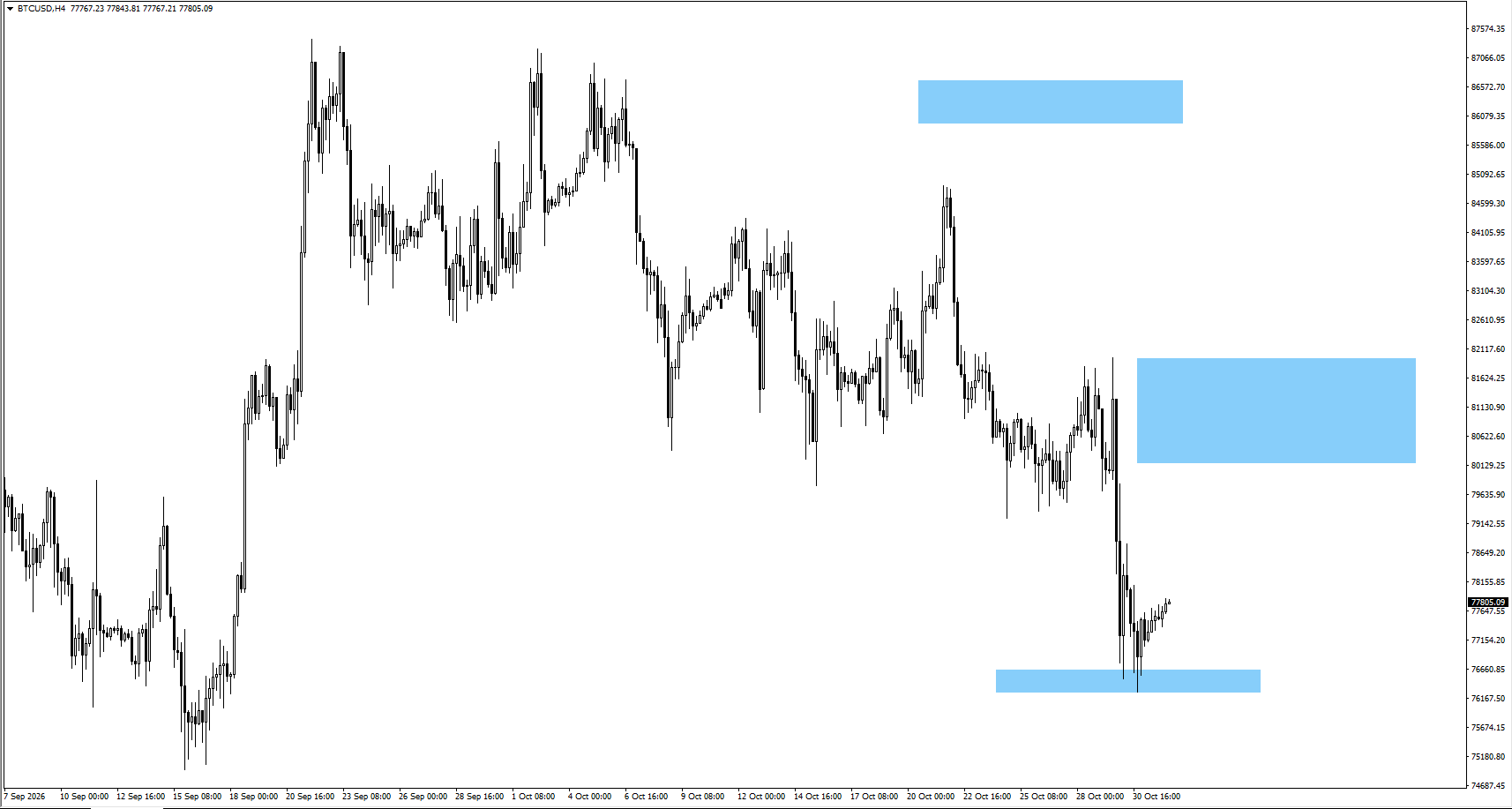
- Bitcoin is trading around the monitored $76,450 area.
- If prices consolidate and recover towards $81,160, watch for bearish price action that could signal renewed selling.
- Monitor the response to a break below the $74,953 low. Sustained trading below it could favour further declines, while a quick recovery above it could signal a failed breakdown.
Bottom Line
Earnings growth continues to support the equity outlook, but smaller surprises and heavy AI spending leave less room for weak guidance. RBA and Bank of England decisions could drive currency moves early in the week, while US election results and Friday’s jobs report could reshape dollar and yield expectations. Gold needs stronger evidence of a recovery after losing support, and Bitcoin remains exposed to selling on rebounds.
Traders should assess those technical signals alongside the incoming policy and employment data.
Create a live VT Markets account today to access our platform features, including market insights and educational content.

Frequently Asked Questions
What are the main market events this week?
The main events for 2–6 November 2026 are the RBA decision and US midterm elections on 3 November, the Bank of England decision on 5 November, and the US employment report on 6 November.
Are strong earnings enough to support US stocks?
Strong earnings can support stocks, but prices also depend on expectations and guidance. S&P 500 third-quarter earnings growth stands at 30.2%, yet aggregate earnings have exceeded estimates by just 1.9%, below the five-year average of 7.5%. Smaller beats leave shares more exposed to disappointment.
Why does AI spending concern investors?
Heavy spending on data centres and chips reduces the cash companies retain after investment. Investors want evidence that this spending will generate enough additional revenue and profit to support future cash flow.
Does negative free cash flow mean a company is struggling?
No. A company can generate more cash from its operations while spending even more on expansion. However, prolonged negative free cash flow can increase funding needs if those investments take longer than expected to produce returns.
How could US jobs data affect gold and the dollar?
Stronger hiring could lift Treasury yields and support the dollar, putting pressure on gold. Weaker hiring could lower yields and help gold, although the response will also depend on wages, unemployment and revisions to earlier payroll figures.
What could move AUDUSD and GBPUSD this week?
The RBA and Bank of England decisions could shift interest-rate expectations. Guidance suggesting further tightening could support the Australian dollar and sterling. Cautious guidance or an unexpected hold could weigh on either currency.
How could the US midterm elections affect markets?
The results could change expectations for government spending, taxation and regulation. Traders should assess the implications of congressional control alongside movements in Treasury yields and the dollar, rather than assume a fixed market response.



