





The Shocking Truth About Global Gold Supply in 2026: Which Countries Control the World’s Most Precious Metal?
Key Takeaways
- Global gold supply reached a record 5,002 tonnes in 2025, with mine production hitting an all-time high of 3,672 tonnes
- China remains the world’s largest producer at 380 tonnes annually, followed by Russia (330t) and Australia (284 t).
- Central banks purchased 863 tonnes of gold in 2025, maintaining historically elevated buying patterns for the fourth consecutive year
- Gold prices surged to record levels above $5,000 per ounce in early 2026, representing a 72% increase from the previous year
- Recycled gold supply reached 1,404 tonnes in 2025, showing a surprisingly muted response despite record-breaking gold prices
- Africa leads global production by region with 1,010 tonnes, driven by Ghana, Mali, and South Africa
- Investment demand drove unprecedented growth, with gold ETFs recording their second-strongest year ever at 801 tonnes
Understanding the Global Gold Supply Landscape in 2026
The global gold supply represents one of the most fascinating aspects of commodity markets, where geological limitations intersect with human enterprise. In 2026, understanding gold supply by country has become increasingly critical for investors, policymakers, and anyone interested in economic stability. According to the World Gold Council, total gold supply reached a record 5,002 tonnes in 2025, marking the highest level in the organisation’s annual data series dating back to 1970.
The composition of global supply tells a compelling story. Mine production accounted for approximately 3,672 tonnes (73% of total supply), whilst recycled gold contributed 1,404 tonnes (27%). This balance between primary and secondary sources reflects both the constrained nature of gold mining and the growing importance of recycled gold as prices reach unprecedented levels.
For traders and investors working with platforms like VT Markets, these supply dynamics create both opportunities and challenges. The limited growth in mine production—just 1% year-over-year—combined with surging demand has propelled gold prices to extraordinary heights, with spot prices exceeding $5,000 per troy ounce in February 2026.
Gold-Producing Countries: The Global Power Players of 2024-2025
China: The World’s Largest Producer
China has maintained its position as the world’s largest producer of gold, with mines yielding approximately 380 tonnes in 2024. This production level represents roughly 10% of global mine production, cementing China’s status as the dominant force in gold supply. However, the country faces significant challenges, including tighter environmental regulations and mine depletion, which have contributed to production plateauing recently.
The Chinese government’s focus on environmental sustainability has led to stricter controls on mining operations, particularly in provinces like Shandong and Henan. Despite being the largest producer, China is also one of the world’s biggest gold consumers, meaning domestic production rarely enters international markets in significant quantities.
Russia: Strategic Gold Accumulation
Russia secured its position as the second-largest gold producer globally, with mines yielding approximately 330 tonnes in 2024. The country has strategically increased production over the past decade, with central banks purchasing substantial domestic output to build reserves as a hedge against economic sanctions and currency fluctuations.
Russian gold mining is concentrated in Siberia and the Far East, where significant deposits continue to be developed. The country’s approach to gold has become increasingly strategic; it uses the metal as a tool for economic sovereignty and dedollarization efforts.
Australia: The Leading Western Producer
Australia ranks third globally with 284 tonnes of production in 2024, making it the leading Western gold producer. Western Australia heavily concentrates the country’s production, while operations across the continent significantly contribute to the global supply. Australian producers benefit from stable political environments, advanced mining technology, and robust geological surveys that continue to identify new reserves.
The sector faces challenges due to rising labour costs and environmental scrutiny, but technological innovation and strong governance make Australia an attractive destination for mining investments.
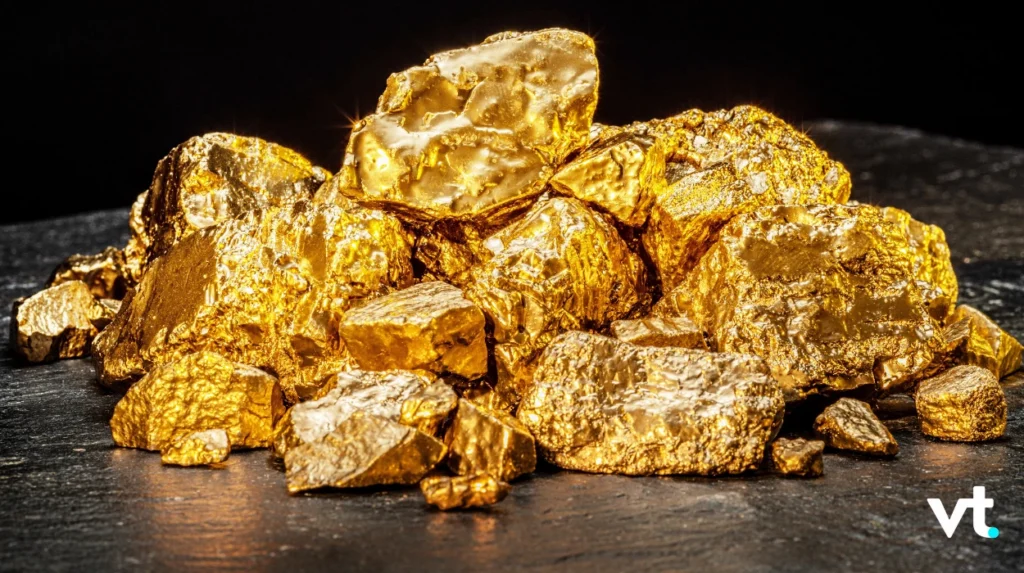
Regional Gold Production Breakdown: Africa’s Dominance
A remarkable shift in global gold production has seen Africa emerge as the world’s leading gold-producing region, surpassing Asia in total output.
| Region | 2024 Production (Tonnes) | % of Global Supply | Leading Countries |
|---|---|---|---|
| Africa | 1,010 | 27.5% | Ghana (141t), Mali (100t), South Africa (99t) |
| Asia | 665 | 18.1% | China (380t), Indonesia (140t) |
| CIS Region | 584 | 15.9% | Russia (330t), Uzbekistan (129t) |
| Oceania | 346 | 9.4% | Australia (284t) |
| North America | ~360 | ~9.8% | United States, Canada, Mexico |
| South America | ~450 | ~12.2% | Peru, Brazil, Chile |
Africa’s dominance represents a significant shift in mining dynamics, with Ghana now outpacing traditional heavyweight South Africa, which once dominated the industry. Ghana’s 141 tonnes of production in 2024 demonstrates the continent’s growing importance in global gold supply.
The Critical Role of Recycled Gold in Global Supply
Recycled gold has become an increasingly vital component of total gold supply, reaching 1,404 tonnes in 2025. However, this figure represents only a 3% increase from the previous year—a surprisingly muted response considering gold prices surged 67% in US dollar terms during the same period.
This restrained recycling activity stems from several factors. Developed market economies such as the United States, Europe, and Japan saw healthy year-over-year increases in scrap supply, whereas emerging markets, including India, the Middle East, and Southeast Asia, saw declines. Among major emerging markets, only China reported a year-over-year increase in recycling volumes.
The relatively modest growth in recycled gold supply despite record prices reflects several dynamics:
- Expectations of further price gains: Many holders are reluctant to sell, anticipating gold will appreciate further
- Economic stability: The absence of widespread economic distress means fewer people need cash urgently
- Cultural factors: In markets like India, gold jewellery serves purposes beyond investment, reducing willingness to sell
- Use as collateral: Gold is increasingly pledged for loans rather than sold outright
How Recycled Gold Enters the Market
Recycled gold comes primarily from jewellery, with consumers choosing to sell pieces when gold prices rise or they need cash. The technology sector also contributes through electronic waste processing to recover precious metals from circuit boards, connectors, and other components.
The recycling sector provides a natural market stabiliser—when gold prices surge dramatically, recycling volumes typically increase as the financial incentive to sell becomes stronger. This creates a self-balancing mechanism that can moderate price increases during periods of high demand.
Mine Production Dynamics: What Determines Output in 2026?
Geological Constraints and Limited Supply Growth
The fundamental constraint on gold supply remains geological. According to the United States Geological Survey, identified gold reserves enable continued production, but the challenge lies in the fact that easily accessible, high-grade deposits have largely been exhausted. Producers must now pursue deeper, lower-grade ore bodies that require more capital and advanced technology to mine economically.
Despite gold prices reaching unprecedented levels above $5,000 per ounce in early 2026, mine production grew just 1% in 2025. This modest growth underscores the limited ability of mining to quickly respond to price signals. The mining cycle is lengthy—typically spanning 10-15 years from discovery to actual production—so gold production does not react quickly to price changes.
Technology’s Impact on Production Capacity
Modern mining technology has revolutionised gold production capabilities. Advanced exploration techniques using satellite imagery, geophysical surveys, artificial intelligence, and machine learning algorithms help companies identify promising sites more efficiently. Extraction technology, including heap leaching and carbon-in-pulp processing, enables economic recovery from lower-grade ores that would have been unprofitable in previous decades.
Automation, satellite intelligence platforms, and innovative processing techniques are boosting efficiency, safety, and sustainability across operations worldwide. These technological advances help offset declining ore grades and enable producers to maintain output despite geological challenges.
Central Banks and Gold Supply Management: Record Buying Continues
Central banks play a unique and powerful role in gold markets, acting as both holders and occasional sellers of reserves. In 2025, global central banks purchased 863 tonnes of gold, marking the fourth consecutive year of purchases exceeding 800 tonnes. This sustained buying represents a dramatic shift from historical patterns and reflects fundamental changes in how nations view reserve management.
Why Central Banks Are Buying Gold
The unprecedented surge in central bank gold buying since 2022 reflects several strategic considerations:
Dedollarization efforts: the US dollar’s share of global reserves declined from over 70% in 2000 to approximately 58% in 2025, according to IMF data. Gold’s share has increased from around 8% to nearly 15% during the same period.
Geopolitical insurance: The freezing of Russia’s foreign currency reserves in 2022 demonstrated that dollars could be weaponised, prompting central banks worldwide—particularly in emerging markets—to accelerate diversification efforts.
Inflation hedge: with persistent inflation concerns and fiscal uncertainties across major economies, gold provides insurance against currency debasement.
No counterparty risk: unlike bonds or currency reserves, gold cannot be printed, devalued through policy decisions, or subjected to sanctions.
Leading Central Bank Buyers in 2025
Poland led official sector purchases in 2025 with 102 tonnes added to reserves, bringing total holdings to 550 tonnes. The National Bank of Poland has announced plans to purchase up to 150 additional tonnes, aiming to reach 700 tonnes and achieve what Governor Adam Glapiński calls “elite” status among central bank gold holders.
China continued steady accumulation, officially reporting 27 tonnes added in 2025, with reserves now standing at 2,306 tonnes. However, research suggests the People’s Bank of China may hold significantly more gold than publicly disclosed—potentially exceeding 5,000 tonnes based on unreported purchases.
Other active buyers included:
- Turkey: 27 tonnes added in 2025
- Czech Republic: 20 tonnes added (34 consecutive months of purchases)
- India: Continued strategic additions
- Kazakhstan: 8 tonnes added in August 2025 alone
For traders using VT Markets to navigate gold markets, central bank behaviour offers critical perspectives on long-term price trends and supply-demand dynamics.
Gold Demand: The Other Side of the Supply Equation
Total gold demand exceeded 5,000 tonnes for the first time in 2025, driven by unprecedented investment activity and sustained central bank buying. Combined with record-breaking gold prices—which set 53 new all-time highs during the year—total demand value reached an unprecedented US$555 billion, up 45% year-over-year.
Investment Demand: The Dominant Force
Investment demand drove overall growth in 2025. Global gold ETFs recorded their second-strongest year on record with 801 tonnes of inflows, whilst bar and coin buying accelerated to reach a 12-year high. Safe-haven and diversification motives were consistent themes driving investment interest throughout the year.
North American gold ETFs experienced particularly strong demand, with US-listed funds attracting US$50 billion of inflows and 437 tonnes of demand—representing more than half of global ETF totals. This pushed US holdings to a record 2,019 tonnes (US$280 billion in assets under management).
Jewellery Demand: Price Sensitivity
The jewellery sector, traditionally the largest source of gold demand, declined in volume terms during 2025—an entirely expected development given the series of record-high gold prices. For the first time, retail investment demand exceeded jewellery demand in key markets.
However, value-based purchasing remained relatively firm, particularly for jewellery, suggesting that, while consumers bought less gold by weight, total spending held steady. This demonstrates gold’s enduring cultural and aesthetic appeal even at elevated price levels.
Technology Sector Demand
Technology sector demand remained broadly stable at 323 tonnes for 2025, supported by continued growth in artificial intelligence-related applications. Gold’s excellent conductivity and corrosion resistance make it indispensable in electronics, semiconductors, and specialised equipment, providing a steady baseline demand regardless of price fluctuations.
Gold Prices in 2026: Record Levels and Market Dynamics
Gold prices have reached extraordinary levels in early 2026, trading above $5,000 per troy ounce as of February 9, 2026. This represents approximately $5,015-$5,037 per ounce depending on the specific trading session—a staggering 72% increase from year-ago levels around $2,900 per ounce.
The price surge reflects multiple converging factors:
Limited supply growth: Mine production grew only 1% despite record prices, demonstrating supply constraints Sustained central bank buying: Official sector purchases continue absorbing available supply Investment surge: Economic uncertainty drives investors toward gold as a hedge Currency factors: US dollar weakness and falling real interest rates support higher gold prices Geopolitical tensions: Ongoing conflicts and trade disputes reinforce gold’s safe-haven appeal
Price Volatility and Trading Opportunities
While gold’s long-term trend has been decisively upward, the market experiences significant volatility. Gold prices can move hundreds of dollars within days based on central bank announcements, geopolitical developments, or changes in monetary policy expectations.
Please take note that whilst gold’s upward trajectory creates opportunities for traders, price volatility requires careful analysis and appropriate risk management strategies. Those trading gold through VT Markets should employ stop-loss orders, position sizing rules, and other risk controls to protect capital during volatile periods.
The Economics of Gold Mining: Why Supply Remains Limited
High Capital Requirements
Developing a gold mine typically requires hundreds of millions or even billions of dollars in capital expenditure. From initial exploration through construction and commissioning, the timeline often spans 10-15 years before the first ounce is produced. This long development cycle and high capital intensity create natural constraints on how quickly supply can respond to higher prices.
Even with gold trading above $5,000 per ounce—levels that make previously marginal projects economically attractive—new supplies cannot materialise quickly. Projects initiated in response to current prices won’t reach production until the 2030s at the earliest.
Declining Ore Grades
A critical challenge facing the gold mining sector is declining ore grades. The average grade of gold ore processed globally has fallen dramatically over recent decades. This means mines must process vastly more rock to produce the same amount of gold, increasing costs, energy consumption, and environmental impact.
Advanced technology helps offset declining grades but cannot eliminate the fundamental challenge that the best deposits have already been discovered and mined.
Environmental and Regulatory Constraints
Modern gold mining faces stringent environmental regulations, particularly in developed markets. Permitting processes can take years, and operations must meet strict standards for water quality, tailings management, and land rehabilitation. Jurisdictions such as British Columbia require extensive consultation with Indigenous communities and environmental assessments before projects can proceed.
While these regulations are essential for environmental protection and community well-being, they add time and cost to gold production, further limiting supply responsiveness.
Regional Spotlight: Canadian Gold Production and British Columbia
Canada ranks among the world’s top gold producers, with significant operations in Ontario, Quebec, and British Columbia contributing to global supply. Canadian production benefits from political stability, clear regulatory frameworks, advanced mining technology, and a skilled workforce—factors that make the country an attractive destination for mining investment.
British Columbia has emerged as a particularly important region, with geological diversity hosting varied gold deposit types. The province’s mines contribute meaningfully to both Canadian and global gold supply, with operations ranging from large-scale open-pit mines to underground operations.
Canadian producers face challenges, including higher labour costs compared to developing countries and harsh climate conditions that affect seasonal operations. However, the country’s strong governance, property rights, and mining expertise help offset these disadvantages.
How Economic Shocks Affect Gold Supply and Demand
Economic shocks create complex ripple effects throughout gold markets. When financial crises, geopolitical tensions, or unexpected policy changes occur, several supply and demand responses typically follow:
Short-term effects:
- Increased recycled gold is due to consumers selling jewellery to raise cash.
- Mine production continues relatively unchanged (cannot quickly adjust)
- Investment demand typically surges, absorbing available supply and driving prices higher
Medium-term effects:
- Higher prices stimulate exploration and development activity
- Marginal mines become economically viable, expanding production capacity
- Central banks may accelerate or decelerate purchases based on macroeconomic conditions
Long-term effects:
- New mines reach production, expanding supply over multi-year horizons
- Technology advances enable lower-grade ore processing
- The market rebalances at new equilibrium, reflecting changed fundamentals
The 2025 experience demonstrates these dynamics vividly. Despite gold prices surging 44% during the year, supply increased just 1%, while demand exceeded 5,000 tonnes for the first time, creating persistent price pressure.
Investment Implications of Gold Supply Dynamics
Understanding gold supply by country and the factors constraining production helps investors make informed decisions through platforms like VT Markets. Several key investment considerations emerge from the supply analysis:
Supply limitations support long-term prices: with mine production growing slowly—just 1% in 2025 despite record prices—and reserves becoming harder to access, supply constraints provide fundamental support for gold prices, particularly when demand remains strong.
Country-specific risks matter: Production concentrated in specific countries creates supply risks. Political instability, nationalisation, or regulatory changes in major producing countries can impact global supplies and prices. Diversified geographical production reduces but does not eliminate this risk.
Recycling responds to price: the elastic nature of recycled gold supply means that sharp price increases stimulate additional supply, potentially moderating price rallies. However, the surprisingly muted recycling response in 2025 suggests structural changes may be limiting this traditional dampening effect.
Central bank behaviour is crucial: official sector buying or selling significantly impacts markets, given the large quantities involved. The sustained 863-tonne purchases in 2025 provided powerful price support.
Gold Supply and Portfolio Diversification
Many investors hold gold as a hedge against various risks, including inflation, currency debasement, and economic shocks. The supply characteristics of gold enhance its hedging properties:
- Limited supply: Unlike fiat currencies that can be created without constraint, gold supply is limited by geology and economics
- Distributed production: No single country dominates production completely, reducing geopolitical concentration risk
- Physical scarcity: Gold exists as a tangible asset independent of any government or institution
- Historical stability: Across civilisations, gold has been a reliable store of value for thousands of years.
These supply-side features help explain why gold maintains its appeal for portfolio diversification and wealth preservation, particularly during periods of economic uncertainty.
Please take note that, while gold serves as an effective hedge in many scenarios, its price can be volatile over shorter timeframes, and unlike stocks or bonds, it generates no income through dividends or interest payments. Investors should carefully consider their risk tolerance and investment horizon when allocating to gold.
The Future of Gold Supply: Trends Shaping 2026 and Beyond
Peak Gold Theory and Production Constraints
Some analysts argue global gold production may have peaked or will peak soon, based on the depletion of major deposits and declining discovery rates. Despite increased exploration spending, industry data indicates the identification of fewer world-class deposits. The marginal 1% growth in 2025 mine production, despite record prices above $3,400 per ounce on average, lends credence to this view.
If peak gold theory proves accurate, limited or declining supply growth combined with sustained demand—particularly from central banks and investors—could support structurally higher gold prices in coming years.
Technological Innovation Potential
Conversely, technological advances could unlock previously uneconomic resources. Innovations in extraction, processing, and exploration technology may enable production from deeper deposits, lower-grade ores, or previously inaccessible locations. Artificial intelligence and machine learning are being deployed to optimise mining operations and identify new targets with greater precision.
Satellite-based mineral detection platforms and 3D mineral prospectivity mapping are cutting exploration costs, reducing timeframes, and minimising environmental impact—potentially expanding the economically viable resource base.
Recycling Growth and Circular Economy
As the stock of above-ground gold grows—currently estimated at over 210,000 tonnes—recycled gold becomes an increasingly important supply source. Improved collection and processing systems, combined with elevated gold prices, could make recycling a larger proportion of total supply.
The development of more efficient recycling technologies for electronic waste, in particular, may unlock significant additional supply from discarded smartphones, computers, and other devices containing small but collectively significant quantities of gold.
Frequently Asked Questions
Which country produces the most gold in 2024-2025?
China holds the position as the world’s largest producer of gold, with mines yielding approximately 380 tonnes in 2024, representing about 10% of global mine production. Russia follows as the second-largest producer at 330 tonnes, with Australia ranking third at 284 tonnes. Together, these three countries account for roughly 27% of global gold production. However, it’s important to note that whilst China leads in production, its output has plateaued in recent years due to environmental regulations and mine depletion. The country also consumes most of its domestic production, meaning relatively little enters international markets.
How much gold is recycled each year globally?
Recycled gold supply totalled 1,404 tonnes in 2025, representing approximately 27% of total global gold supply. Interestingly, this figure represented only a 3% increase from the previous year—a surprisingly modest response considering gold prices surged 67% in US dollar terms during 2025. This recycled gold comes primarily from jewellery, with consumers selling pieces when they need cash or wish to capitalise on high prices. The technology sector also contributes through the processing of electronic waste to recover precious metals. Recycling volumes tend to be responsive to price changes, though 2025 demonstrated that expectations of further price gains and generally supportive economic conditions can restrain recycling activity even when prices reach record levels.
Why is gold supply limited compared to other commodities?
Gold supply faces several fundamental constraints that differentiate it from many other commodities. Geologically, gold is rare in the Earth’s crust, occurring at average concentrations of just 0.004 parts per million. Economic deposits are even scarcer and typically require unique geological conditions formed over millions of years. The best and most accessible deposits have largely been discovered and mined over thousands of years of human activity, forcing producers to target deeper, lower-grade, or more remote resources. Mining costs and technological requirements have increased as easily accessible gold has been exhausted. Additionally, the long development timeline for new mines—often 10-15 years from discovery to production—means supply cannot quickly respond to price increases. Even with gold prices exceeding $5,000 per ounce in early 2026, mine production grew just 1% in 2025, demonstrating these structural supply constraints.
How do central banks affect gold supply and prices in 2025-2026?
Central banks exert significant influence on gold markets through their reserve management activities. Collectively, central banks hold approximately 36,000 tonnes of gold in reserves, representing over 17% of all gold ever mined. When central banks buy gold, they remove supply from the market, supporting prices and potentially creating physical market tightness. In 2025, central banks purchased 863 tonnes of gold, marking the fourth consecutive year of elevated buying above 800 tonnes annually. This sustained demand has provided powerful support for gold prices, which surged to record levels above $5,000 per ounce in early 2026. Leading buyers include Poland (102 tonnes in 2025), China (27 tonnes officially reported), Turkey (27 tonnes), and numerous other countries. Central bank buying signals broader economic concerns—accelerated gold purchases often indicate worries about currency stability, inflation, or geopolitical risks. For investors using platforms like VT Markets, monitoring central bank behaviour provides valuable insights into long-term gold market trends and potential price movements.








