





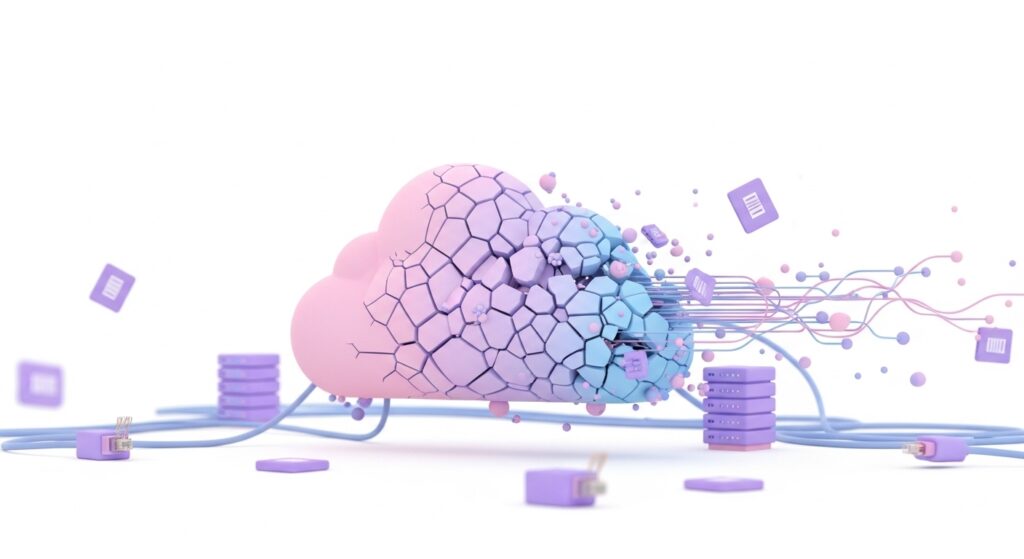
When Cloudflare suddenly went offline, the ripple effect was immediate and overwhelming. Websites refused to load, charts froze mid-movement, and platforms that millions rely on simply stopped functioning without warning.
For traders, that moment was more than a technical disruption. According to a report by Finance Magnates, the three-hour downtime may have wiped out over $1.58 billion in trading volume, equal to almost 1% of an average broker’s monthly revenue. For an industry built on speed, execution, and continuous uptime, this level of disruption is beyond significant. It was a reminder of how fragile our digital environment truly is, and how quickly a technical failure can influence global trading activity, execution speed, and trader psychology.
Just a short while ago, YouTube experienced its own massive outage that interrupted live content for millions across the world. At first glance, these two incidents seem unrelated, but together they paint a clear picture. Even the largest and most trusted platforms can go silent in an instant, and when they do, the people who depend on them are forced to confront how little control they actually have.
When the Internet Stops Moving, It Forces Traders to See What They Normally Ignore
The Cloudflare outage arrived without warning. One moment, the internet was moving at its usual pace, and the next, everything felt frozen in time. Traders managing open positions, preparing for news releases, or reviewing charts were suddenly cut off from the information they depended on.
Moments like this trigger a unique emotional response. Traders know they should stay rational, yet helplessness becomes difficult to ignore. Watching a chart freeze or a platform fail activates fear, frustration, and uncertainty — a reminder that even the best analysis is powerless when the tools behind it stop working.
Moreover, outages rarely occur when markets are quiet. They often strike during volatile sessions, liquidity shifts, or critical news cycles — the exact moments when traders are most exposed.
The Emotional Impact Is Bigger Than the Technical One
Most traders prepare for market risk, price risk, and volatility risk. Very few prepare for the emotional shock that hits when they lose access to the tools they rely on. The Cloudflare outage proved that technology can fail at the exact moment traders need it most, and that is the kind of pressure that reveals who is disciplined and who is not.
- A platform outage does not just freeze charts. It freezes your thoughts.
- You wonder if your trade is losing or winning.
- You wonder if your stop is safe.
- You wonder if the market is moving aggressively in the background.
The absence of information is more stressful than bad information because it leaves the mind to imagine the worst. And when the mind starts filling the gaps, fear has room to grow.
This is exactly why outages can be more emotionally damaging than a losing trade. A loss is clear. A frozen screen is unknown. Traders are far more afraid of what they cannot see.
These Moments Reveal a Hard Truth About Modern Trading
The Cloudflare disruption highlighted several issues that many traders prefer not to think about, but should.
1. Traders rely on tools that can fail at any time
Every component of the modern trading stack — charting, login systems, mobile apps, data feeds — depends on infrastructure layers traders rarely think about until they break. This is especially true for fast-moving products like gold, indices, and forex. Even a short freeze can affect stops, entries, or exits. The Cloudflare outage highlighted how fragile execution can be when real-time price data disappears.
2. Overconfidence in technology creates hidden vulnerability
Many believe their favourite platforms are too big to fail or too advanced to experience outages. The events involving Cloudflare and YouTube prove the opposite. If platforms with global infrastructure can collapse without warning, then traders need backup systems rather than blind trust.
3. Emotional discipline is tested more by silence than volatility
Volatile markets trigger instinctive reactions, but platform outages trigger something deeper. When everything freezes, silence creates uncertainty that forces traders to confront how they handle pressure. Some stay calm because they trust their risk rules, while others feel panic rising the moment the system reconnects. That emotional rush is what leads to reckless, impulsive decisions right after an outage.
What Traders Should Do During an Outage
When systems freeze, the instinct is to act quickly, but the safest response is usually the opposite. Traders should pause instead of trying to force a solution, because repeatedly reconnecting or switching platforms too fast can lead to confusion and mistakes. The next step is to rely on your plan rather than your emotions. If your risk is already defined, trust your stop level and avoid making new decisions while visibility is low. Once the platform recovers, give the market a few moments to stabilise before taking any action. Volatility, spreads, and liquidity can behave unpredictably right after an outage, so patience becomes more important than speed.
It is also important to understand that not every platform reacts to outages in the same way. Web-based tools such as client portals, trading dashboards, or analytics sites rely heavily on content delivery networks like Cloudflare.
On the other hand, platforms like MT4 or MT5 may continue functioning through mobile or desktop terminals, but account functions (logins, deposits, withdrawals, password resets, and authentication) may still be affected. Traders who understand this distinction can plan better: always keep multiple logins ready, maintain your mobile terminal, and have at least one alternate network connection available when your primary access point becomes unreliable.
A Frozen Chart Is Still a Message
When the data stops moving, it is easy to feel powerless. But the stillness tells you something important. It signals that the environment is unstable and that execution might be risky until systems fully recover. It warns that liquidity could shift once platforms reconnect and that volatility may spike as the market adjusts. Many traders rush back into action the moment the screen comes alive, but the responsible ones wait, observe, and act only when conditions stabilise.
In the world of trading, restraint is often the difference between survival and unnecessary damage.
The Lesson Traders Should Carry Forward
Cloudflare’s outage was not just a technical event. It was a reminder that trading relies on a digital foundation that is far more fragile than most people realise. A similar truth was revealed during the YouTube outage. Platforms that seem unshakeable can break, and when they do, traders must be prepared.
- Preparation should matter more than prediction.
- Redundancy should matter more than convenience.
- Emotional stability should matter more than speed.
The market will always move. Platforms will sometimes fail. What a trader chooses to do in those uncomfortable moments determines whether their long-term journey is defined by discipline or by panic.
The next big outage will not ask for permission. It will not wait for traders to be ready. It will simply happen. And the ones who have planned for fragility, rather than assumed reliability, will always be better positioned to protect their capital.
This Wasn’t the First Outage, and It Won’t Be the Last
The Cloudflare disruption is not an isolated case. YouTube’s recent global outage proved the same point, and other major platforms like Meta, Binance, and AWS have all experienced unexpected downtime in the past. These incidents remind us that digital infrastructure, no matter how advanced, is not invincible. Outages will continue to happen because the internet is a complex system with many moving parts. Traders who recognise this pattern are better prepared because they stop assuming stability and start planning for disruption. That shift in mindset is what protects them when the next major outage arrives.
Key Takeaways for Traders
The Cloudflare outage showed that even the strongest platforms can fail without warning, and traders need to be ready for moments when information suddenly disappears. Preparation matters more than prediction, and having backup tools, stable risk management, and a calm mindset can prevent unnecessary losses. Understanding how different platforms behave during downtime reduces panic and prevents impulsive decisions. Most importantly, outages reveal how traders behave under real stress, and that emotional awareness is just as important as technical analysis.
Build Trading Confidence That Survives Any Disruption
Outages and system disruptions can happen at any time, which is why traders need platforms and tools they can rely on. VT Markets gives you the stability, speed, and flexibility to stay connected through fast-changing market conditions. Trade seamlessly on the VT Markets App, MetaTrader 4 (MT4), and MetaTrader 5 (MT5), supported by secure infrastructure and real-time execution designed to keep you in control.
Strengthen your skills through our free demo account and use the Help Centre to deepen your understanding of market behaviour, risk management, and trading setups. When you build confidence through preparation, unexpected moments become easier to navigate.
Create an account with VT Markets today and experience a secure, transparent, and reliable environment built for traders who want to stay ready for anything the market or the internet might throw their way.








