





Key Takeaways
- A trading cent account allows beginners to trade gold with as little as $50 while managing risk effectively
- Cent accounts display balances in cents (USC) rather than dollars, making psychological barriers lower for new traders
- Gold trading on a cent account requires just 0.01 of a standard lot, significantly reducing margin requirements
- VT Markets offers cent accounts with leverage up to 500:1 (2000:1 in certain countries*), identical execution speeds, and MetaTrader 5 access
- The minimum deposit for all account types is $50
- Cent accounts serve as the ideal bridge between demo trading and live standard accounts
What Is a Trading Cent Account for Gold Traders?
In 2026, the gold market continues to attract thousands of new traders monthly, drawn by the precious metal’s reputation as a safe-haven asset. However, many beginners face a critical challenge: how to gain real trading experience without risking substantial capital while learning to navigate gold’s price movements.
A cent account is a specialised live trading account where your balance and positions are denominated in cents (USCs) rather than standard currency units. Rather than seeing your $50 deposit displayed as $50 USD, it appears as 5,000 USC. This seemingly simple change has profound implications for how you learn to trade gold and manage risk.
For gold traders specifically, cent accounts offer unique advantages. Gold trading typically requires larger margins than forex pairs, and price movements can be volatile. A cent account allows you to experience these real market conditions with proportionally reduced risk, making it an ideal environment for mastering gold trading strategies before committing larger capital.

How Cent Accounts Work for Gold Trading
Understanding the mechanics of a cent account is essential before opening one. Here’s what differentiates a cent account from standard trading accounts:
| Feature | Cent Account | Standard Account |
| Account Currency | USC (US Cents) | USD, EUR, GBP, JPY, AUD, CAD |
| Minimum Deposit | $50 | $50 |
| Gold Lot (XAUUSD) | 0.01 standard lot (1 ounce) | 1 standard lot (100 ounces) |
| Leverage | Up to 500:1 (2000:1 in certain countries)* | Up to 500:1 (2000:1 in certain countries)* |
| Execution | Real market execution | Real market execution |
*Terms and conditions apply. Leverage availability depends on regulatory requirements in your jurisdiction.
Practical Gold Trading on a Cent Account
Understanding What Moves Gold Prices
Before placing your first trade, understanding the fundamental drivers of gold prices is essential. Gold responds to specific macroeconomic forces:
- Inflation and Economic Uncertainty: Gold serves as a hedge against inflation. When purchasing power declines, demand for gold increases as investors preserve value.
- Interest Rates: Gold has an inverse relationship with interest rates. Lower real yields make non-yielding gold more attractive.
- US Dollar Strength: As gold is priced in USD, a weaker dollar typically supports higher gold prices.
- Geopolitical Risks: Wars, political instability, and financial system stress drive safe-haven demand for gold.
Example: Trading Gold with $50 on a Cent Account
Consider this scenario using VT Markets’ cent account specifications with current 2026 gold prices:
- Account Balance: $50 (displayed as 5,000 USC)
- Gold Price: $5,000 per ounce
- Position Size: 0.001 lot (0.1 ounce)
- Leverage: 500:1
- Margin Required: Approximately $1.00
This means you only need about $1 of margin to open the position, while still participating in real gold price movements.
If gold moves to $10 in your favour, your profit is approximately $1—a 2% return to your account. More importantly, if the trade moves against you with a $20 stop-loss, your maximum loss is $2—manageable and educational rather than devastating.
This demonstrates the power of cent accounts: you’re trading real gold price movements, experiencing genuine market conditions, but with position sizes that make learning affordable.
Optimal Trading Times for Gold
Gold volatility concentrates during the London–New York session overlap, typically between 12:00 PM and 4:00 PM GMT. During this window, institutional participation increases, spreads tighten, and breakout moves are more common.
Gold is also highly reactive to major economic releases such as US CPI data, non-farm payrolls, and Federal Reserve interest rate decisions.
Choosing the Right Cent Account Type at VT Markets
| Account Type | Best For | Commission | Spread | Swap Fees |
| Cent STP | Beginners, long-term holders | No | Low | Yes |
| Cent STP Swap-Free | Traders who hold positions overnight, or those practising Islamic principles | No | Low | No |
| Cent ECN | Active traders, scalpers | Yes | 0.0 pips | Yes |
| Cent ECN Swap-Free | Traders who hold positions overnight, or those practising Islamic principles | Yes | 0.0 pips | No |
*The information above is for reference only. For the latest specifications, please refer to the latest details on your account.
For gold traders specifically:
- Swing Traders: Cent STP Swap-Free accounts offer simplicity without commission charges, ideal for positions held over days or weeks.
- Day Traders and Scalpers: Cent ECN accounts provide tighter spreads and faster execution for intraday gold movements.
Mastering Technical Analysis and Trading Strategies
A Step-by-Step Technical Approach for Beginners
Rather than relying on multiple indicators, beginners benefit from a clear and repeatable process.
Step 1: Define Market Bias (H4 Timeframe)
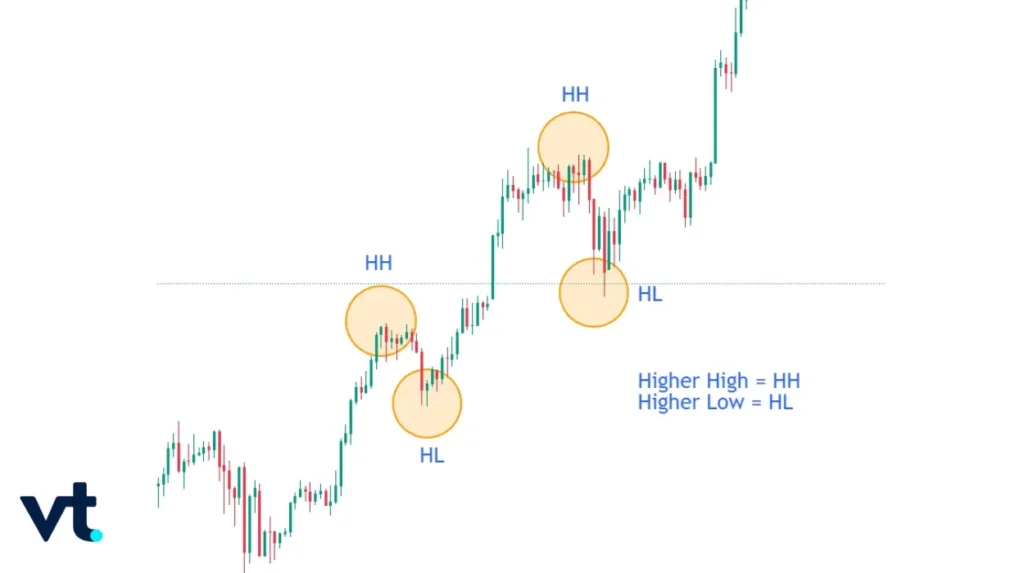
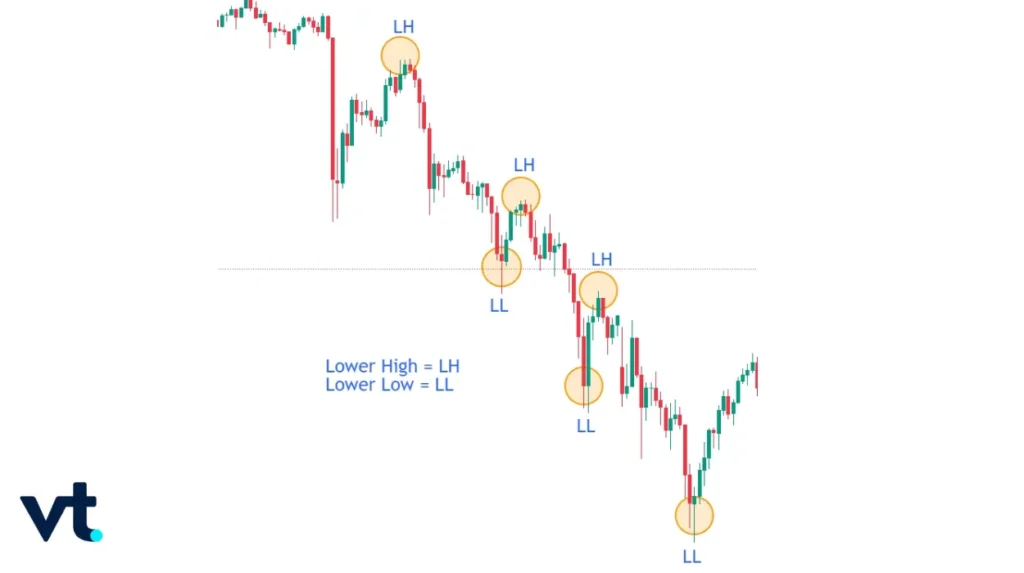
Use the H4 (4-hour) timeframe to identify the dominant trend. Higher highs (HH) and higher lows (HL) suggest bullish conditions, while lower highs and lower lows indicate bearish pressure. This gives you the overall direction for your trades.
Step 2: Refine Entries (M15 Timeframe)
Move to the M15 (15-minute) timeframe to refine your entries. Look for pullbacks, consolidation patterns, or breakouts that align with your higher-timeframe bias. This multi-timeframe approach significantly improves your entry timing and risk-reward ratios.
Step 3: Trade the Right Session
Focus on the London-New York overlap when institutional participation is highest and spreads are tightest. Your cent account allows you to experiment with different sessions risk-free, documenting which timeframes align best with your schedule.
Step 4: Manage Risk Appropriately
Set stop-losses between 150-300 points depending on market conditions, and never risk more than 5-10% of your total capital per trade. On a 5,000 USC cent account, risking 10% means your maximum loss per trade should be 500 USC ($50).
Essential Chart Patterns for Gold Trading
Chart patterns provide invaluable insights. Master these key patterns on your cent account:
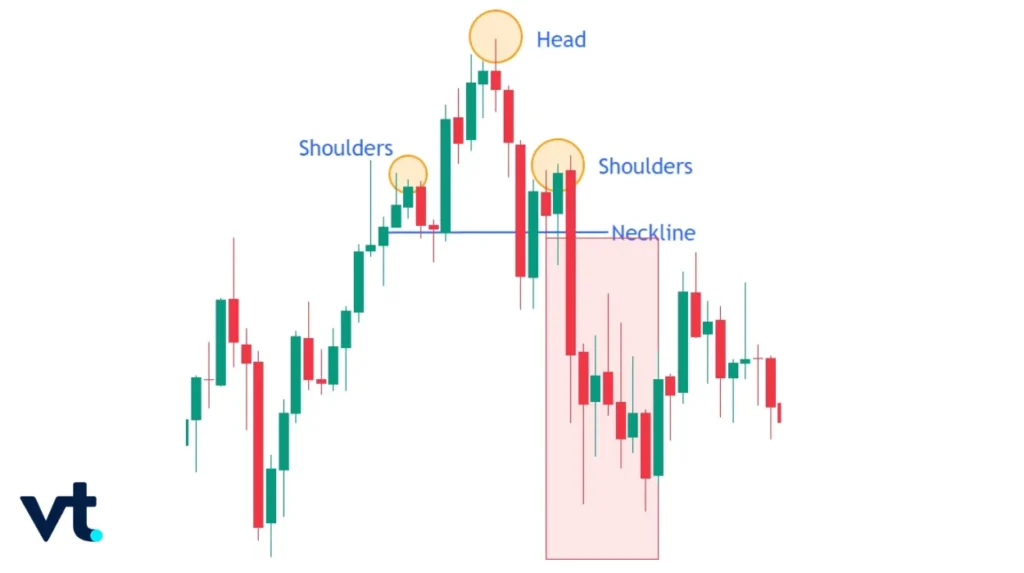
This reversal pattern consists of three peaks: a higher middle peak (head) and two lower peaks (shoulders). When price breaks below the neckline, it signals a bearish move.
Double Top and Double Bottom
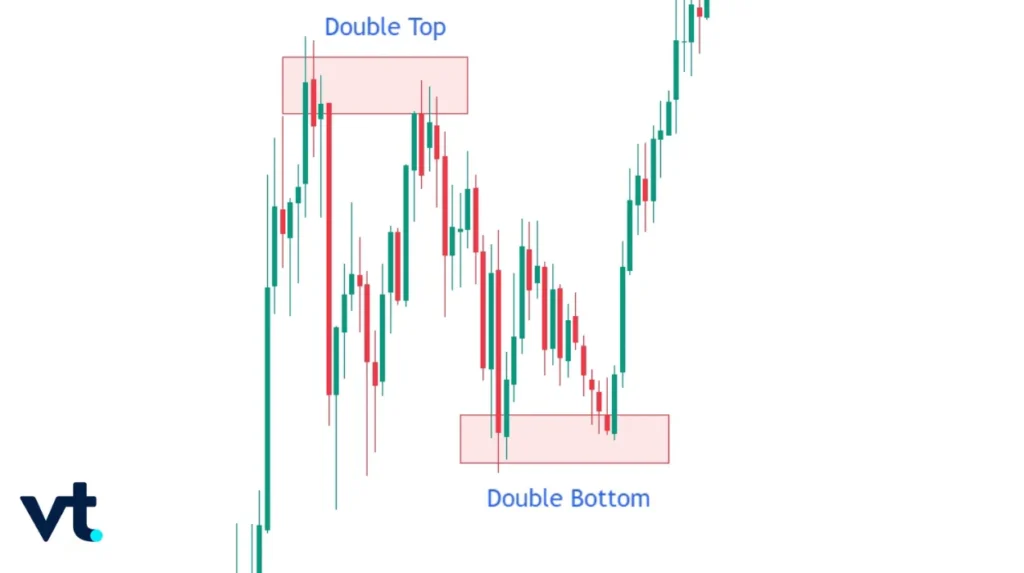
A double top occurs when price reaches a high twice, failing to break resistance—indicating bearish reversal. A double bottom forms when price hits a low twice, suggesting bullish reversal. Gold frequently forms these at psychologically significant price levels.
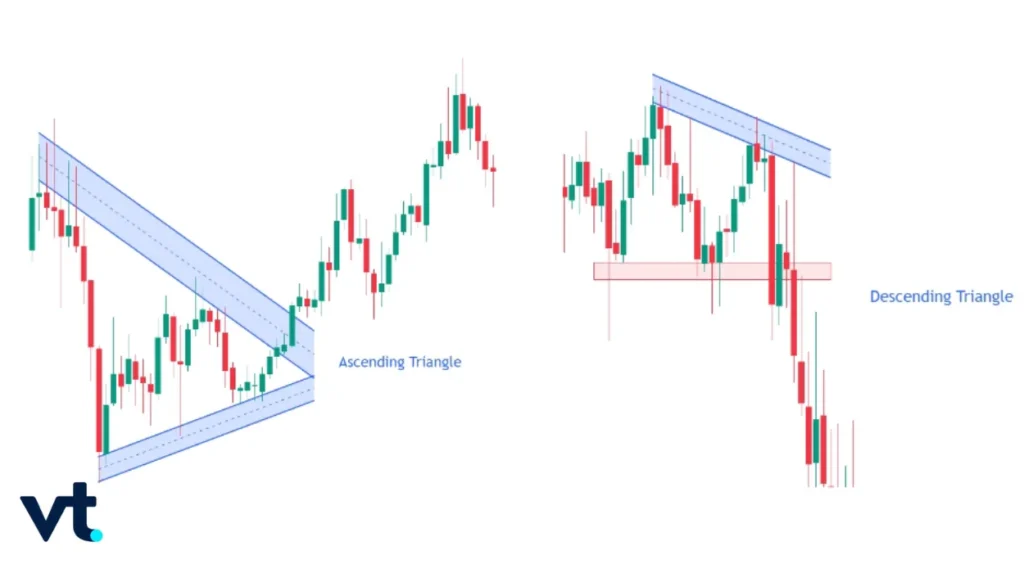
Ascending and Descending Triangles
Ascending triangles show higher lows converging with horizontal resistance, signalling potential bullish breakout. Descending triangles indicate lower highs meeting horizontal support, hinting at bearish breakout.
Popular Gold Trading Strategies for Cent Accounts
Trend Trading with Moving Averages
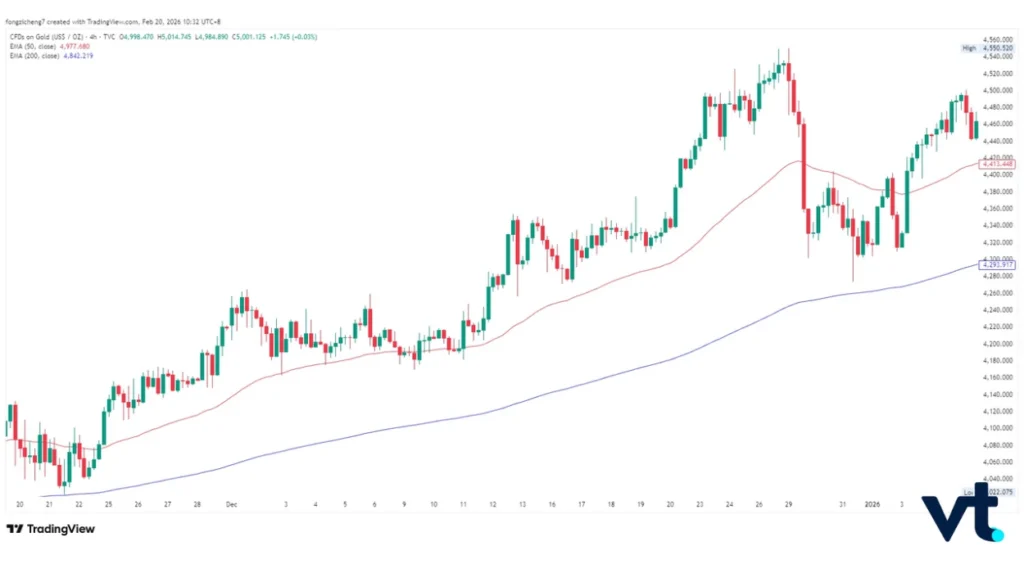
If gold consistently trades above its 50-period and 200-period moving averages on the H4 chart, it’s in a strong uptrend. Enter long positions on pullbacks to these moving averages. Experiment with different combinations on your cent account.
Range Trading During Consolidation
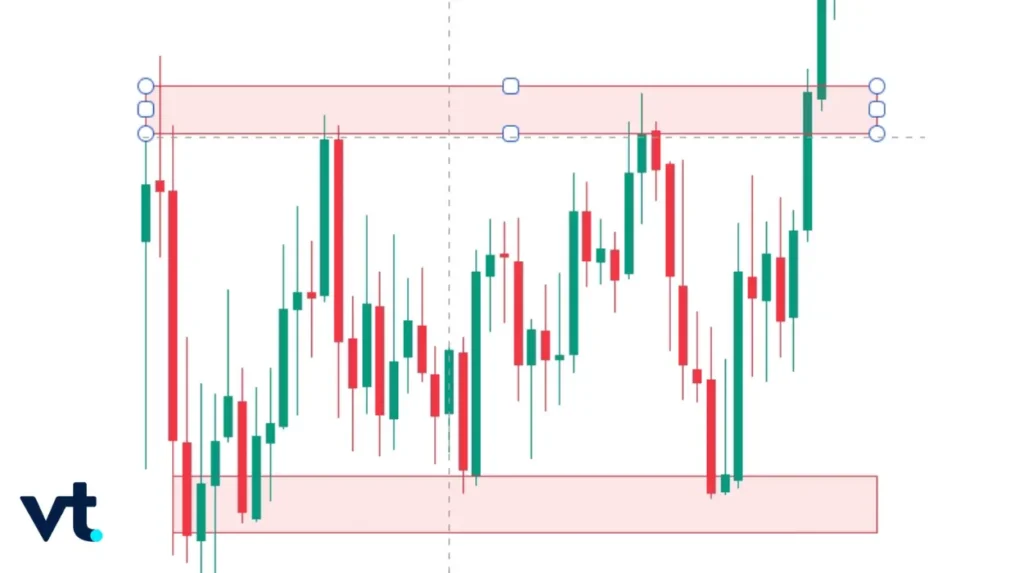
Gold often trades within predictable ranges during stable markets. Identify support and resistance levels, then buy at support and sell at resistance. Range trading works exceptionally well on cent accounts with multiple positions and minimal risk.
News-Driven Trading
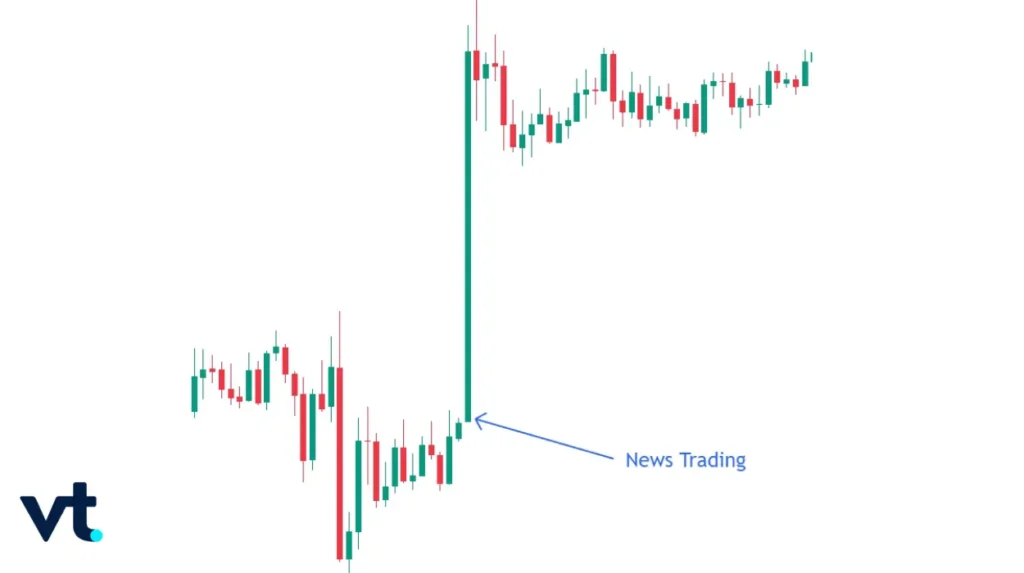
Economic reports, central bank policies, and geopolitical events create significant price movements. Your cent account provides the ideal environment for developing news trading skills before major announcements like US CPI or Federal Reserve decisions.
Advanced Strategies: Taking Your Cent Account Trading Further
Once you’ve mastered basic gold trading on your cent account, consider these more sophisticated approaches:
- Gold-Dollar Correlation Trading
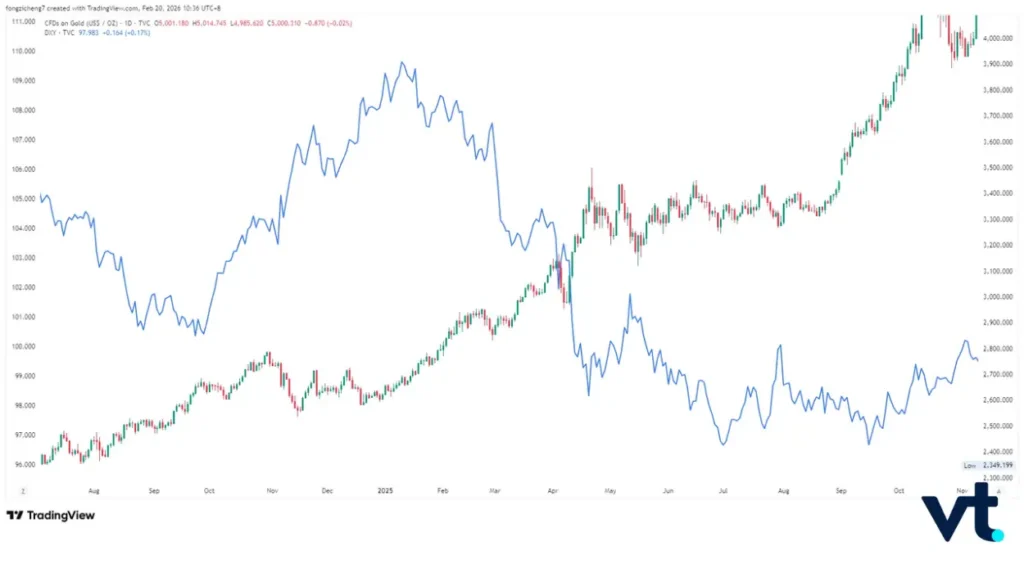
Gold typically exhibits an inverse correlation with the US Dollar Index. Advanced traders can analyse DXY movements to anticipate gold price directions. On your cent account, practise taking positions based on dollar strength/weakness signals, refining your ability to read currency market implications for gold.
- Session-Based Volatility Exploitation
Different trading sessions offer distinct characteristics. The London session opening (08:00 GMT) often brings the day’s highest volatility, while the Asian session tends toward consolidation. Use your cent account to develop session-specific strategies, determining which timeframes align with your availability and risk tolerance.
- Multi-Timeframe Analysis
Professional traders analyse multiple timeframes before entering positions. Practise identifying trends on daily charts, timing entries on 4-hour charts, and refining execution on 1-hour or 15-minute charts. Your cent account provides a forgiving environment for developing this layered analytical approach.
- News Trading Adaptation
Major economic releases (US Non-Farm Payrolls, CPI data, Federal Reserve announcements) create significant gold price movements. Rather than avoiding these events, use your cent account to learn how gold responds. Take small positions based on your analysis, documenting outcomes to build a database of news impact patterns.
Common Precautions to Take with Cent Accounts
Treating the Account as “Play Money”
The most damaging mistake involves approaching a cent account casually. This creates harmful habits including taking trades without analysis, ignoring risk management, and failing to maintain a trading journal. Remember: the purpose is developing professional habits that scale with larger capital.
Excessive Leverage Usage
VT Markets offers leverage up to 500:1 (or 2000:1 in certain countries, terms and conditions apply). Gold can easily move $25 intraday during 2026’s volatile conditions. Using maximum leverage exposes you to account-destroying risk despite the cent account structure. Professional traders typically use 100:1 to 500:1 leverage, emphasising capital preservation.
Staying Too Long in the Comfort Zone
View your cent account as an apprenticeship, not a career. Once you’ve consistently demonstrated profitability over six months with controlled drawdowns, begin planning your transition to standard accounts.
When to Transition from Cent Account to Standard Account
Knowing when you’ve outgrown your cent account requires objective assessment rather than subjective feelings. Consider transitioning when you’ve met these criteria:
Performance Benchmarks:
- Consistent Profitability: Six consecutive months of positive returns
- Controlled Drawdowns: Maximum drawdown under 20% during the evaluation period
- Adequate Sample Size: minimum of 100 completed trades demonstrating your strategy works across various market conditions
- Positive Expectancy: Average winning trade exceeds average losing trade when adjusted for win rate
- Account Growth: You’ve at least doubled your initial deposit through trading profits
Skill Benchmarks:
- Automatic execution of your trading plan without hesitation
- Emotional equanimity regardless of whether recent trades won or lost
- Comprehensive understanding of gold’s fundamental drivers and technical behaviours
- Proven ability to adapt strategies to changing market conditions
- Disciplined record-keeping and regular performance review habits
If you meet these criteria, you’re ready to consider standard accounts. However, the transition should be gradual. Many traders maintain both account types initially, using standard accounts for high-confidence setups while continuing to experiment and refine on cent accounts.
Frequently Asked Questions (FAQs)
Q1: How much money can I realistically make trading gold on a cent account?
With a 50-cent account (5,000 USC), realistic monthly returns for beginners could range from 5-10% ($2.50-$5.00). While these absolute amounts seem modest, the percentage returns demonstrate profitability that scales linearly to larger accounts. A trader consistently achieving 7% monthly on a cent account could theoretically generate $70 monthly on a $1,000 account using identical strategies. Please take note that past performance does not guarantee future results. The primary value isn’t absolute profit, but rather the skill development the cent account provides.
Q2: How does leverage and margins work on VT Markets’ cent account for gold?
Cent accounts on VT Markets can offer leverage up to 500:1 (or 2000:1 in some jurisdictions). However, leverage availability depends on regulatory rules in your country. Always use prudent risk limits and treat leverage as a tool, not a guarantee of profits.
Q3: Can I trade gold on a cent account the same way as a standard account?
Yes, absolutely. At VT Markets, cent accounts provide identical trading conditions: same spreads, same execution speeds, same platform functionality (full MetaTrader 5 access), and same market data. The only difference is position sizing—your lots are proportionally smaller. This means strategies you develop on a cent account translate directly to standard accounts. This parity ensures habits you form support rather than undermine your success when you eventually scale up.
Q4: Is a cent account suitable for experienced traders, or only beginners?
While cent accounts are particularly valuable for beginners, experienced traders also utilise them for:
(1) Testing new trading strategies or expert advisors (EAs) in live market conditions before deploying larger capital;
(2) Evaluating a broker’s execution quality and platform stability;
(3) Practising trading during unfamiliar market conditions; and
(4) Maintaining discipline during periods of extended losses by returning to basics in a lower-pressure environment.
Cent accounts serve any situation where you need genuine market exposure with proportionally reduced risk.
Your Gold Trading Journey Starts Here
The journey from complete beginner to consistently profitable gold trader requires dedication, discipline, and patience. A trading cent account provides the ideal environment for this transformation, offering real market conditions with manageable risk exposure.
At VT Markets, cent accounts are structured to support your development. With a minimum deposit of just $50, access to MetaTrader 5’s complete functionality, leverage up to 500:1 (or 2000:1 in certain countries, terms and conditions apply), and identical execution standards to premium account types, you receive professional-grade infrastructure regardless of your capital level.
Whether you’re fascinated by gold’s role as a monetary metal, attracted to its safe-haven characteristics, or seeking an asset with clear technical patterns, beginning your education on a cent account positions you for long-term success.
Every expert gold trader started as a beginner. The difference between those who succeeded and those who failed often came down to approaching early development with professionalism, discipline, and appropriate risk management. A cent account gives you the perfect training ground to develop these crucial attributes.
Begin your gold trading journey today with a VT Markets cent account.








