





The Shocking Truth About What Global Traders Can’t Stop Buying in 2026
Key Takeaways:
- Crude oil remains the world’s most heavily traded commodity, with daily volumes exceeding 100 million barrels across global markets in 2026
- Energy commodities (crude oil, natural gas, and petroleum products) dominate trading activity, accounting for approximately 60% of global commodity trading volume
- Precious metals like gold and silver continue to attract significant investment demand during times of economic uncertainty
- Agricultural commodities are experiencing unprecedented market volatility due to extreme weather events and changing global supply chains
- Brent crude and WTI crude oil serve as primary benchmarks for energy pricing worldwide
- Understanding traded commodities is essential for portfolio diversification and hedging against economic uncertainty
What Are the Most Traded Commodities in Global Markets?
The question “What are the most traded commodities?” has become increasingly relevant as commodities continue to play a pivotal role in the global economy. In 2026, traded commodities globally represent a multi-trillion-dollar market that influences everything from consumer products to industrial machinery. For traders and investors seeking to gain exposure to raw materials, understanding which commodities dominate trading activity is crucial for making informed decisions that align with specific investment objectives.
Commodities are basic goods that serve as the foundation of economic activity worldwide. These raw materials, which include everything from crude oil to agricultural products, are highly sensitive to supply and demand dynamics, geopolitical events, and weather conditions. The commodity markets have evolved significantly, with futures contracts and exchange-traded funds providing diverse opportunities for market participants to navigate market volatility.
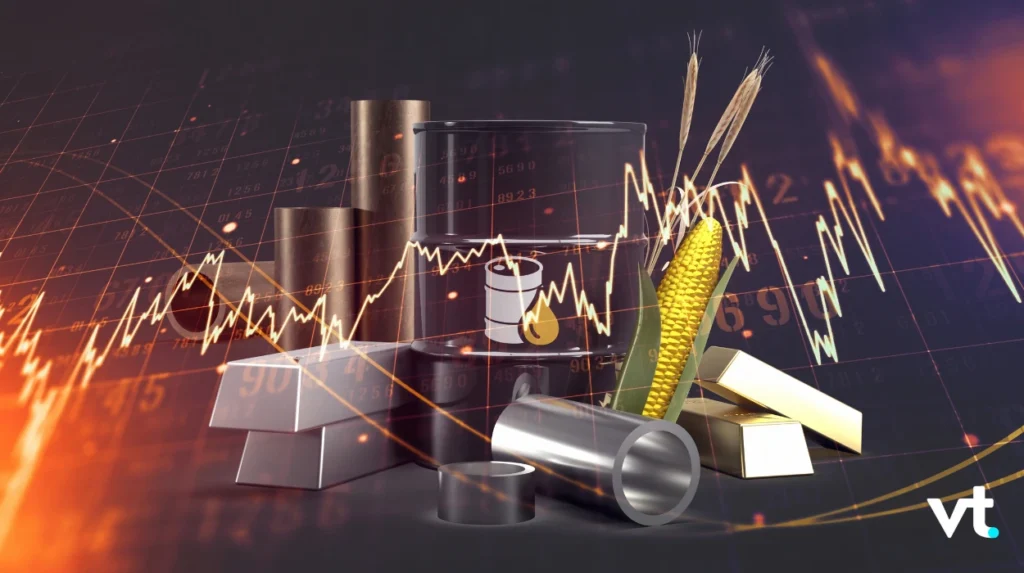
Understanding Commodity Markets and Their Global Significance
Commodity markets function as essential mechanisms where raw materials are bought and sold through various instruments, including futures contracts, spot prices, and trading CFDs. These financial markets enable price discovery and risk management for producers, consumers, and speculators alike. In 2026, the total value of global commodity trading has reached approximately $20 trillion annually, highlighting the massive scale of these markets.
The commodity prices observed in these markets directly impact the global economy, influencing inflation rates, currency valuations, and economic growth patterns. When commodity prices rise, the effects ripple through supply chains, affecting manufacturing costs and ultimately consumer purchasing power. Understanding these interconnections is vital for anyone participating in financial markets.
The Top Traded Commodities: A Comprehensive Overview
1. Crude Oil: The King of Energy Commodities
Crude oil unquestionably holds the title as the most heavily traded commodity worldwide. In 2026, global crude oil trading volume averages approximately 103 million barrels per day, with financial derivative volumes exponentially higher. The underlying commodity serves multiple purposes, from transportation fuels to petrochemical production, making it indispensable for modern civilisation.
Two primary benchmarks dominate crude oil trading:
Brent Crude Oil: Sourced from the North Sea, Brent crude serves as the global pricing benchmark for approximately 60% of internationally traded crude oil. In early 2026, Brent crude prices have fluctuated between $78 and $95 per barrel, reflecting ongoing supply and demand pressures from petroleum exporting countries and major consumers.
West Texas Intermediate (WTI Crude Oil): The primary benchmark for North American crude oil, West Texas Intermediate is traded predominantly on the New York Mercantile Exchange. WTI crude oil typically trades at a slight discount to Brent crude, with 2026 prices ranging from $74 to $91 per barrel.
The energy commodity market for crude oil remains highly volatile due to several factors:
- Production decisions by petroleum-exporting countries
- Geopolitical tensions in major producing regions
- Global demand fluctuations as developing countries industrialize
- Transitions toward alternative energy sources affecting long-term demand projections
- Supply disruptions caused by conflicts or sanctions
2. Natural Gas: The Growing Energy Commodity
Natural gas has emerged as one of the most traded commodities, with 2026 seeing record trading volumes as countries seek cleaner alternatives to coal for power generation and electricity generation. Global natural gas consumption reached approximately 4.1 trillion cubic metres in 2026, with liquefied natural gas (LNG) trade accounting for roughly 540 billion cubic metres.
Natural gas prices demonstrate significant regional variations:
| Region | Average Price (2026) | Primary Trading Hub |
|---|---|---|
| North America | $2.85/MMBtu | Henry Hub (NYMEX) |
| Europe | $11.20/MMBtu | TTF (Netherlands) |
| Asia | $12.40/MMBtu | JKM (Japan/Korea) |
The energy commodity serves crucial roles in power generation, heating, and as feedstock for various industrial applications. The Energy Information Administration projects that natural gas demand will continue growing through 2030, particularly in developing countries where energy infrastructure is expanding rapidly.
3. Gold: The Ultimate Precious Metal
Among precious metals, gold maintains its position as a top-traded commodity, with approximately 3,000 tonnes traded annually through various instruments. In 2026, gold prices have ranged between $2,050 and $2,280 per troy ounce, driven by investment demand during times of economic uncertainty.
Gold serves multiple functions in global markets:
- Store of Value: Central banks hold gold reserves totaling approximately 36,000 tonnes, representing roughly 17% of all above-ground gold
- Investment Asset: Exchange traded funds backed by physical gold contain over 3,100 tonnes
- Industrial Applications: Electronics, dentistry, and other sectors consume roughly 330 tonnes annually
- Jewelry Demand: The largest consumer of gold, with annual demand exceeding 2,000 tonnes
VT Markets provides traders access to gold through multiple instruments, enabling portfolio diversification and hedging strategies during market volatility.
Agricultural Commodities: Feeding the Global Economy
Soybeans: A Versatile Agricultural Commodity
Soybeans rank among the most traded commodities in the agricultural sector, with global production reaching approximately 395 million tonnes in 2026. The versatility of soybeans—used for animal feed, cooking oil, livestock feed, and industrial products—ensures consistent global demand.
Price movements in soybeans are highly sensitive to several supply factors:
- Weather conditions in major producing regions (United States, Brazil, Argentina)
- Export restrictions imposed by governments
- Demand from the European Union and other major importers
- Competition from other agricultural products
In 2026, soybean prices have fluctuated between $11.50 and $14.80 per bushel on the CME Group, reflecting tight global supply and increased demand from food security-conscious nations.
Corn: The Foundation of Food Security
Corn represents another heavily traded commodity with critical importance for food security worldwide. Global corn production in 2026 reached approximately 1.21 billion tonnes, with the United States, China, and Brazil as the largest producers.
The agricultural commodity serves multiple purposes:
- Animal Feed: Approximately 60% of global corn production becomes livestock feed
- Food Products: Direct human consumption and processed foods account for roughly 15%
- Biofuel Production: Ethanol production consumes approximately 15% of global corn supply
- Industrial Applications: Starch, sweeteners, and other industrial products use the remaining 10%
Corn prices in 2026 have ranged from $4.20 to $5.90 per bushel, with extreme weather events causing significant market volatility throughout the year.
Wheat: A Global Staple
Wheat remains indispensable to human diets worldwide, making it one of the most traded commodities in agricultural markets. Global wheat production in 2026 totalled approximately 790 million tonnes, with consumption closely matching production levels.
The commodity is particularly sensitive to geopolitical events, as demonstrated by supply disruptions affecting two countries (Russia and Ukraine) that together account for nearly 25% of global wheat exports. These disruptions have caused wheat prices to range between $5.80 and $7.60 per bushel in 2026.
Precious Metals Beyond Gold
Silver: Industrial and Investment Demand
Silver occupies a unique position among precious metals, serving both as an investment asset and an industrial commodity. Global silver production in 2026 reached approximately 26,500 tonnes, with prices ranging from $23 to $29 per troy ounce.
Industrial applications drive roughly 50% of silver demand:
- Electronics and electrical components
- Solar panels consume approximately 4,000 tonnes of silver annually.
- Medical applications
- Photography and imaging
The remaining demand comes for jewellery, silverware, and investment purposes. Silver’s dual nature as both an industrial metal and precious metal creates unique price movements that differ from gold.
Platinum and Palladium: Automotive Metals
Platinum and palladium are highly specialised precious metals, primarily used in automotive catalytic converters. These other metals demonstrate distinct trading patterns based on automotive industry health and emission regulations.
In 2026, platinum trades between $920 and $1,050 per troy ounce, while palladium ranges from $950 to $1,180 per troy ounce. Both metals face uncertain long-term prospects as electric vehicle adoption accelerates, potentially reducing demand from traditional automotive applications.
Hard Commodities: Metals for Construction and Industry
Iron Ore: Building the Modern World
Iron ore stands as a critical input for steel production, making it one of the top traded commodities in the industrial sector. Global iron ore production exceeded 2.4 billion tonnes in 2026, with Australia, Brazil, and China as the largest producers.
Iron ore prices demonstrate significant volatility based on Chinese demand, which accounts for approximately 70% of global seaborne iron ore trade. In 2026, iron ore prices have ranged from $95 to $135 per tonne, influenced by:
- Chinese economic growth rates and construction activity
- Supply factors from major exporters
- Steel production capacity utilization
- Infrastructure investment policies in developing countries
Copper: The Economic Bellwether
Copper’s widespread use in electricity generation, construction, and electronics makes it a key economic indicator. Often called “Dr. Copper” for its ability to predict economic trends, this commodity will see annual global production of approximately 26 million tonnes in 2026.
Copper prices in 2026 have fluctuated between $8,200 and $9,800 per tonne, reflecting global supply constraints and growing demand from:
- Renewable energy infrastructure
- Electric vehicle production
- Power generation systems
- Industrial machinery and equipment
Trading Commodities: Instruments and Strategies
Traders access commodity markets through multiple instruments, each offering distinct advantages for different specific investment objectives:
Futures Contracts: standardised agreements to buy or sell a specific quantity of a commodity at a predetermined price and date. Futures contracts trade on regulated exchanges like the New York Mercantile Exchange and CME Group, providing high liquidity and transparent pricing.
Exchange Traded Funds (ETFs): Investment vehicles that track commodity prices or commodity stocks, offering simplified exposure without the complexities of futures trading or physical ownership.
Commodity Stocks: Shares of companies involved in commodity production, processing, or distribution. These stocks provide indirect exposure to traded commodities while offering potential dividend income.
Trading CFDs: Contracts for Difference allow traders to speculate on commodity price movements without owning the underlying commodity. VT Markets offers CFD trading on numerous commodities, enabling flexible position sizing and leverage.
Physical Commodities: Direct ownership of raw materials, though this approach involves storage costs, quality concerns, and logistical challenges.
Factors Driving Commodity Prices in 2026
Supply and Demand Dynamics
The fundamental principle of supply and demand remains the primary driver of commodity prices. When global supply tightens due to production disruptions, weather-related crop failures, or export restrictions, prices typically rise. Conversely, oversupply situations or demand destruction lead to price declines.
In 2026, several supply and demand factors are particularly influential:
- Post-pandemic supply chain restructuring affecting global supply
- Energy transitions impacting demand for fossil fuels versus renewable materials
- Population growth and urbanisation are driving demand for agricultural products
- Industrial production cycles affecting raw materials consumption
Geopolitical Events and Tensions
Geopolitical events exert tremendous influence on traded commodities globally, particularly energy commodities and agricultural commodities from conflict zones. The ongoing geopolitical tensions between major powers have created uncertainty regarding trade flows, sanctions, and supply security.
Specific examples from 2026 include:
- Middle East tensions affecting crude oil supplies
- Trade disputes impacting agricultural products exports
- Sanctions affecting natural gas flows between regions
- Strategic metal stockpiling by major economies
Climate and Weather Conditions
Extreme weather events have become increasingly impactful on commodity markets, particularly agricultural commodities. In 2026, major weather-related disruptions included:
- Severe droughts affecting wheat production in North America
- Flooding impacting soybean crops in South America
- Hurricanes disrupting crude oil production in the Gulf of Mexico
- Heatwaves affecting livestock feed availability and quality
These weather conditions create significant market volatility and affect future price movements across multiple commodity sectors.
Currency Fluctuations
Most commodities are priced in US dollars, making currency movements a critical factor for international buyers and sellers. When the dollar strengthens, commodity prices typically face downward pressure as they become more expensive for holders of other currencies. Conversely, dollar weakness often correlates with rising commodity prices.
The Role of Commodities During Economic Uncertainty
During times of economic uncertainty, commodities often serve as portfolio diversifiers and inflation hedges. The inverse relationship between certain commodities and traditional financial assets provides risk mitigation benefits.
In 2026, economic uncertainty stemming from monetary policy transitions, debt concerns, and geopolitical risks has driven investment demand for:
- Precious Metals: Gold and silver as traditional safe havens
- Energy Commodities: Crude oil and natural gas maintaining real value during inflationary periods
- Agricultural Commodities: Essential goods that retain value regardless of economic conditions
However, traders must understand their financial situation and whether such distribution of portfolio assets aligns with their risk tolerance and investment horizon before gaining exposure to these highly volatile markets.
Risks and Considerations for Commodity Trading
Trading commodities involves substantial risks that require careful consideration:
Market Volatility: Commodities are highly volatile, with prices capable of moving 5-10% or more in a single day based on supply disruptions, weather events, or geopolitical developments.
Leverage Risk: Many commodity instruments, particularly futures contracts and CFDs, involve significant leverage that can amplify both gains and losses.
Regulatory Changes: Government policies, export restrictions, and environmental regulations can dramatically impact commodity prices and trading conditions.
Storage and Delivery: Physical commodity ownership involves costs and logistics that many traders underestimate.
Correlation Risks: During market crises, correlations between commodities and other assets may change unexpectedly, reducing diversification benefits.
Before trading commodities, individuals should assess their financial situation, understand local law requirements, and ensure their strategy matches their specific investment objectives. VT Markets provides educational resources and risk management tools to help traders navigate these complex markets.
Regional Differences in Commodity Trading
Commodity markets exhibit significant regional variations in pricing, liquidity, and trading patterns:
North America: Dominated by the New York Mercantile Exchange and CME Group, with deep liquidity in energy commodities, agricultural products, and precious metals.
Europe: major trading centres for Brent crude oil, natural gas (TTF), and agricultural commodities, with an increasing focus on sustainable and ESG-compliant commodity investments.
Asia: Rapidly growing commodity markets, particularly in China, which influences global markets as both the largest consumer of many other commodities and an increasingly important price-setter.
Emerging Markets: Developing countries play growing roles as both commodity producers and consumers, creating new trading opportunities and price discovery mechanisms.
Future Trends in Commodity Trading
Several trends are reshaping commodity markets in 2026 and beyond:
Energy Transition: The shift toward renewable energy is transforming demand patterns for traditional energy commodities while creating opportunities in battery metals, rare earths, and other materials essential for clean energy infrastructure.
Technology Integration: Advanced analytics, artificial intelligence, and algorithmic trading are increasingly prevalent in commodity markets, improving price discovery and execution efficiency.
ESG Considerations: Environmental, social, and governance factors are influencing commodity investment decisions, with increased demand for sustainably produced raw materials.
Supply Chain Resilience: After pandemic-related disruptions, companies and governments are prioritising supply chain diversification, potentially altering traditional trade flows for various commodities.
Climate Adaptation: As extreme weather events become more frequent, commodity markets are developing new instruments and strategies to manage climate-related risks.
Frequently Asked Questions (FAQs)
What are the most traded commodities globally in 2026?
The most traded commodities in 2026 are crude oil (including Brent crude and WTI crude oil), natural gas, gold, silver, corn, soybeans, wheat, copper, and iron ore. Crude oil maintains its position as the single most traded commodity, with daily volumes exceeding 100 million barrels, while precious metals and agricultural commodities see substantial trading activity through futures contracts and exchange-traded funds. Energy commodities collectively account for approximately 60% of global commodity trading volume.
How do geopolitical events affect commodity prices?
Geopolitical events create significant market volatility by disrupting global supply chains, imposing export restrictions, or creating uncertainty about future availability. For example, tensions involving petroleum-exporting countries can cause crude oil prices to spike, while conflicts in major grain-producing regions affect food security and agricultural commodity prices. Sanctions between two countries or trading blocs can redirect commodity flows and create regional price disparities. Traders must monitor geopolitical tensions closely, as these events can cause rapid price movements that impact trading strategies and portfolio values.
What is the difference between rigid commodities and soft commodities?
Hard commodities refer to natural resources that are mined or extracted, including crude oil, natural gas, precious metals, iron ore, and copper. These commodities require significant capital investment for production and have relatively stable supply characteristics. Soft commodities, also known as agricultural commodities, include agricultural products like corn, soybeans, wheat, cotton, and livestock. Farmers grow or raise these commodities, which are highly sensitive to weather conditions, seasonal factors, and biological cycles. Both categories are essential raw materials for the global economy, but they respond differently to supply factors and market dynamics.
How can traders gain exposure to commodity markets?
Traders can gain exposure to commodity markets through several instruments: futures contracts traded on exchanges like the New York Mercantile Exchange or CME Group; exchange-traded funds that track commodity prices or indices; commodity stocks of producers and processors; trading CFDs for leveraged exposure; or physical ownership of certain commodities like precious metals. Each approach offers different risk-reward profiles and suits different specific investment objectives. VT Markets provides access to multiple commodity trading instruments, allowing traders to choose methods that align with their financial situation, risk tolerance, and investment goals. Proper education and risk management are essential regardless of the chosen approach.
Conclusion
Understanding what the most traded commodities are gives vital insights to anyone participating in global markets. The commodity markets in 2026 remain dominated by energy commodities, particularly crude oil and natural gas, while precious metals continue attracting investment demand during economic uncertainty. Agricultural commodities play critical roles in food security, and industrial metals like iron ore and copper drive infrastructure development worldwide.
The complicated relationship between supply and demand, geopolitical events, weather conditions, and economic cycles creates both opportunities and risks for commodity traders. Whether accessing these markets through futures contracts, exchange-traded funds, commodity stocks, or trading CFDs, participants must understand the unique characteristics of each commodity and the factors driving price movements.
As the global economy evolves with energy transitions, climate challenges, and shifting geopolitical landscapes, commodity markets will continue adapting. Traders who stay informed about these developments and employ disciplined risk management strategies are better positioned to navigate the highly volatile but potentially rewarding world of traded commodities globally.








