


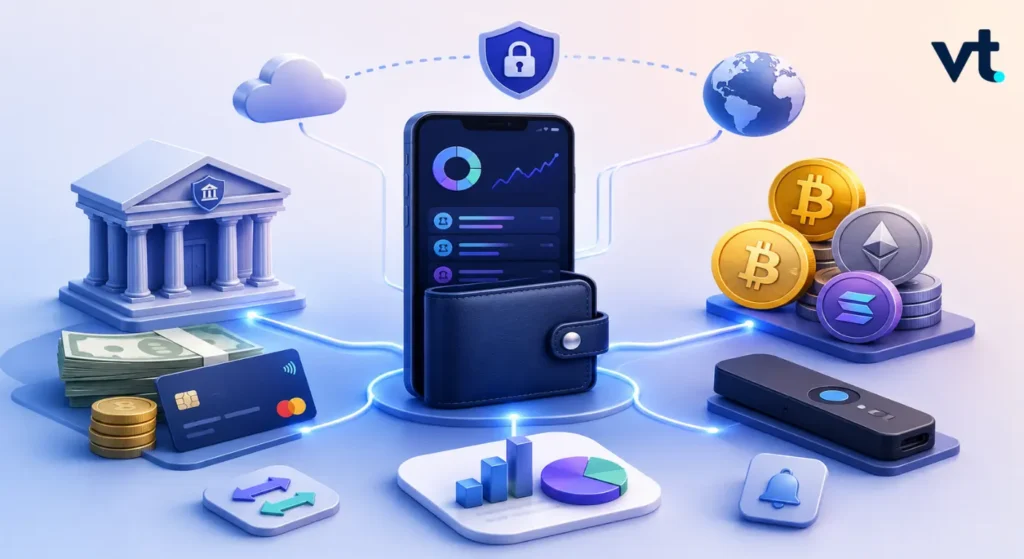
Key Takeaways
- Holding fiat and crypto across separate platforms creates hidden fees, settlement delays, and fragmented security that can affect trader performance.
- A capable digital asset wallet should combine multi-asset support, fast transfers, layered security, and direct trading account integration.
- Security habits such as two-factor authentication and withdrawal address verification remain essential regardless of platform choice.
- VT-Wallet brings fiat and crypto management into one environment connected to MT4 and MT5, supporting major cryptocurrencies and blockchain networks.
In today’s digital economy, managing both fiat and crypto assets efficiently has become increasingly important for traders, investors, and everyday users alike.
As financial ecosystems evolve, users are looking for faster, more secure, and more flexible ways to move between traditional currencies and digital assets with minimal friction.
Understanding Fiat and Crypto Assets
Fiat currencies such as the US Dollar (USD), Euro (EUR), and British Pound (GBP) remain the foundation of traditional finance. They underpin payments, savings, business transactions, and the global banking system that most users still rely on daily.
Cryptocurrencies operate on a different rail. Bitcoin, Ethereum, and stablecoins such as USDT and USDC allow users to transfer and store value across blockchain networks, offering speed, transparency, and around-the-clock settlement that traditional banking does not match. These assets have helped drive the adoption of decentralised finance and digital payments worldwide.
Below are the key differences:
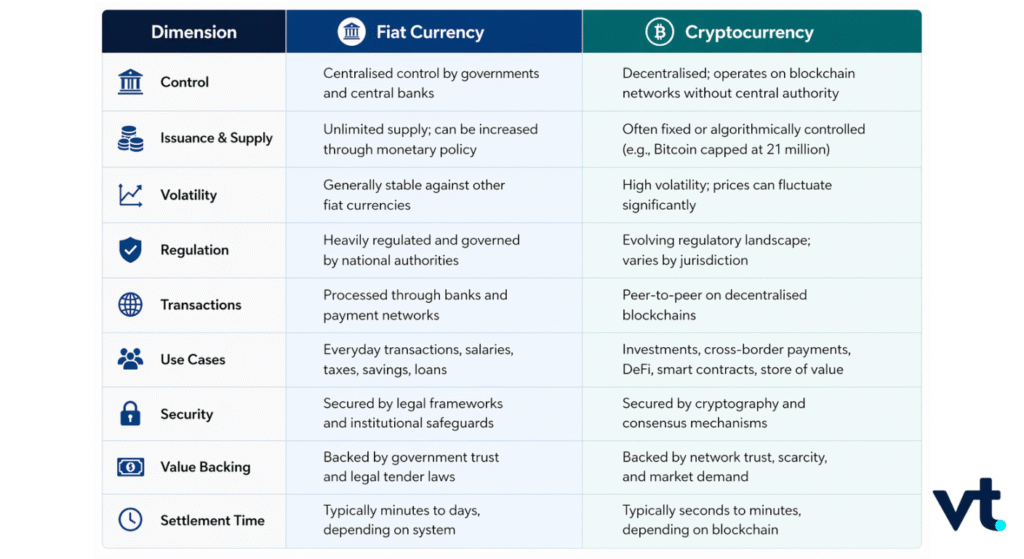
Neither system is replacing the other — for a deeper look at how the two coexist, read our article on Fiat vs Crypto: A Structural Shift or a Parallel System in the Making?. The practical question for active market participants is no longer which to use, but how to hold and move both without losing time or capital in the gaps between platforms.
Challenges in Managing Multiple Asset Types
Managing fiat and crypto assets across separate platforms can create several operational challenges that compound over time:
1. Limited access to fiat channels
In certain regions, users may face restrictions when accessing banking services or fiat payment options, making deposits and withdrawals less convenient and slower to process.
2. High transaction and conversion costs
Moving funds between banks, trading accounts, and crypto wallets can involve multiple fees, including transfer charges, network gas fees, and currency conversion costs that erode returns over time.
3. Slow settlement processes
Traditional banking systems and blockchain networks process transactions at very different speeds. A bank transfer may take a full business day to clear while a blockchain transaction settles in minutes, creating a mismatch that can delay access to capital when it is needed most.
4. Fragmented user experience
Managing assets across multiple platforms often requires users to switch between different apps and accounts, track balances across separate interfaces, and reconcile transactions manually, all of which reduce overall efficiency.
5. Repeated security and verification steps
Users may need to complete identity verification multiple times across different platforms while also managing two-factor authentication, withdrawal limits, and security settings in each environment separately.
For active traders, every minute that capital sits in transit is a minute it cannot respond to the market. A delayed deposit can mean a missed entry. A slow withdrawal can mean a locked-up position.
One way to address these challenges is to consolidate fiat and crypto management into a single digital asset wallet built for active use.
Key Features to Look for in a Digital Asset Wallet
A capable wallet should do more than store assets. It should function as the operational hub for a user’s working capital, bringing together the tools needed to fund, convert, and protect that capital from a single interface.
Before choosing a wallet, it’s worth understanding the structural differences between custodial and non-custodial options. Our article on Centralised vs Decentralised Wallets: Which One Fits Your Crypto Needs? covers the trade-offs in detail.
The following features are now considered baseline expectations rather than premium additions:
1. Unified Fiat and Crypto Access
The ability to manage both fiat balances and major cryptocurrencies within a single platform removes the need to coordinate across separate accounts and reduces the operational overhead of holding diversified assets.
2. Fast Deposits and Withdrawals
Efficient funding methods allow users to move capital quickly between bank accounts, trading accounts, and crypto wallets. This matters most around major economic announcements, market opens, and periods of high volatility when timing can shape execution.
3. Security Infrastructure
Security remains one of the most important aspects of digital finance. Features such as two-factor authentication (2FA), encryption, withdrawal address verification, and risk-based transaction monitoring help protect user funds at every stage of a transaction.
4. Real-Time Accessibility
Modern users expect instant access to their balances, transactions, and transfers across devices. A wallet that only works on desktop or that lags during peak hours creates friction at the worst possible moment.
5. User-Friendly Interface
A clean, intuitive interface shortens the learning curve for newer users and reduces friction for experienced ones. The faster a user can navigate a platform with confidence, the less time they lose to operational errors.
How VT-Wallet Simplifies Fiat and Crypto Management
VT-Wallet is built around the idea that wallet management, conversion, and trading account funding should sit inside a single environment rather than scattered across separate platforms. Through a centralised wallet infrastructure connected directly to MT4 and MT5 accounts, users can manage deposits, withdrawals, transfers, and conversions from one place, without routing through multiple external services.
1. Multi-Asset and Multi-Chain Support
VT-Wallet supports major cryptocurrencies including Bitcoin, Ethereum, USDT, and USDC. It also supports multiple blockchain networks such as Ethereum (ERC20), Tron (TRC20), BSC (BEP20), Solana, and the Bitcoin network.
This multi-chain structure gives users flexibility when selecting networks for deposits and withdrawals. Users can match the chain to their priority, whether that is lower fees on Tron, faster confirmation on Solana, or broader compatibility on Ethereum, depending on the size and urgency of the transaction.
2. Seamless Fund Transfers Across Wallets and Trading Accounts
VT-Wallet enables users to deposit, withdraw, transfer, and convert assets within a single system connected to external wallets and MetaTrader 4 (MT4) or MetaTrader 5 (MT5) accounts. Most transactions are completed within approximately 10 minutes depending on network conditions, which helps reduce the lag between funding a wallet and acting on a market opportunity.
This also simplifies the audit trail for users managing larger transaction volumes.
3. Real-Time Crypto Conversion
VT-Wallet supports crypto-to-crypto conversion between supported assets, with exchange rates refreshed frequently and transactions typically processed within the platform without routing through external exchanges. This allows users to rebalance portfolio allocation, shift into stablecoins ahead of a volatile session, or adjust liquidity positions without juggling multiple accounts.
4. Security and Risk Control
Security sits at the core of VT-Wallet’s infrastructure. The platform is built with a multi-layered security framework that supports user asset protection across every stage of the transaction process.
This includes identity verification and two-factor authentication through OTP and Google 2FA to support secure account access. Withdrawal protection mechanisms, such as address verification and risk-based monitoring, help reduce the risk of unauthorised fund transfers. In addition, continuous blacklist screening adds an extra layer of oversight against suspicious activity, flagging unusual patterns before funds leave the system.
Together, these systems work in coordination to support user funds and maintain a controlled transaction environment, particularly during periods when phishing attempts and account takeover risks tend to rise.
Tips for Managing Fiat and Crypto Assets Efficiently
Beyond choosing the right platform, a few habits separate organised users from the rest:
- Use Secure Platforms: choose platforms that prioritise security features such as authentication systems, withdrawal verification, and transparent risk controls. A platform that is easy to use but lacks visible security infrastructure is a long-term liability.
- Match the Chain to the Transaction: always confirm the destination network matches the receiving wallet address before sending. A deposit sent on the wrong chain is rarely recoverable and is one of the most common and costly mistakes in crypto. Beyond accuracy, compare fees and confirmation times before moving larger sums, since the cheapest chain is not always the fastest, and the fastest is not always the cheapest.
- Use a Single Platform for Wallet, Trading, and Conversion: every external hop between platforms adds cost, delay, and potential security exposure. Consolidating wallet management, trading access, and conversion into one environment reduces all three.
- Keep Security Habits Active: enable two-factor authentication on every account, review your withdrawal address list periodically, and stay alert during volatile sessions when phishing attempts tend to increase. Treat security as an ongoing discipline rather than a one-time setup.
Final Thoughts
The future of finance is not about choosing between fiat and crypto. It is about managing both within a single system, with the speed, security, and flexibility that modern traders rely on. VT-Wallet is built to support that shift, bringing wallet management and trading account funding into one connected environment.
Ready to Simplify Your Crypto Trading?
Open a live account with VT Markets and start managing your fiat and crypto funds in one connected environment with VT-Wallet.
Frequently Asked Questions
1. What is the easiest way to manage fiat and crypto assets together?
The easiest way is to use an integrated wallet platform that supports both fiat and crypto in one environment, ideally with direct connection to a trading account. This removes the need to move funds across multiple banks, exchanges, and external wallets.
2. Why is managing fiat and crypto across separate platforms inefficient?
Each platform typically charges its own fees, processes transactions at different speeds, and requires separate identity verification. Over time, these gaps add cost, delay access to capital, and increase security exposure across multiple accounts.
3. What is the difference between a fiat wallet and a crypto wallet?
A fiat wallet holds government-issued currencies such as USD, EUR, or GBP and connects to traditional banking systems. A crypto wallet holds blockchain-based digital assets such as Bitcoin or Ethereum. Integrated platforms can combine elements of both in a single interface.
4. What features should I look for in a digital asset wallet?
Look for multi-asset and multi-chain support, fast deposits and withdrawals, layered security such as two-factor authentication and withdrawal address verification, real-time accessibility across devices, and an interface that is easy to navigate.
5. What happens if I send crypto on the wrong blockchain network?
A crypto deposit sent on the wrong network is rarely recoverable. Always confirm that the destination network matches the receiving wallet address before sending. For example, sending USDT on the Tron network (TRC20) to an Ethereum (ERC20) address will likely result in lost funds.
6. How can I reduce transaction fees when moving crypto?
Compare network fees and confirmation times across supported blockchains before sending. Tron and Solana typically carry lower fees than Ethereum for stablecoin transfers, though the right choice depends on the receiving platform and the size of the transaction.
7. What is VT-Wallet?
VT-Wallet is a custodial digital asset wallet built by VT Markets that allows users to deposit, convert, transfer, and withdraw cryptocurrencies, with direct integration to MT4 and MT5 trading accounts.
8. Which cryptocurrencies and blockchain networks does VT-Wallet support?
VT-Wallet supports Bitcoin, Ethereum, USDT, and USDC across multiple blockchain networks including Ethereum (ERC20), Tron (TRC20), BNB Smart Chain (BEP20), Solana, and the Bitcoin network.
9. How long do VT-Wallet transactions take?
Most VT-Wallet transactions are completed within approximately 10 minutes, depending on the blockchain network and overall network conditions at the time of the transaction.
10. Can I transfer crypto directly from VT-Wallet to my MT4 or MT5 account?
Yes. VT-Wallet connects directly to MT4 and MT5 trading accounts, allowing users to transfer funds from their wallet to their trading account without routing through external exchanges or banking channels.










