






Key Takeaways
- Copy Trading may generate positive returns, but actual results depend on trading performance, market conditions and other factors.
- Trading strategies, risk management, investment allocation and execution costs can influence Copy Trading results.
- Historical returns, drawdown and trading history are useful indicators when evaluating Signal Providers.
- Copy Trading does not eliminate trading risks. Copiers remain exposed to potential market losses, leverage and execution differences.
- Regularly reviewing copied positions and account performance can help traders stay informed about their trading exposure.
Copy Trading offers an alternative way to participate in financial markets by allowing users to follow and replicate another trader’s positions. While this approach provides access to different trading strategies, its profitability depends on several factors, including the Signal Provider’s performance, market conditions and risk management.
So, is Copy Trading profitable? It may offer opportunities to generate returns, but profits are not guaranteed. Copiers remain exposed to market risks and may experience losses.
Understanding what influences Copy Trading profitability, how to evaluate Signal Providers and the risks involved can help traders make more informed decisions.
Can I Make Money from Copy Trading?
Copy Trading may generate positive returns when copied positions perform favourably. However, the outcome depends on several factors, including the Signal Provider’s trading strategy, market conditions, investment allocation and copy settings.
When a copied position moves in a favourable direction, it may contribute to a positive trading result. Conversely, unfavourable market movements may result in losses. Therefore, Copy Trading does not guarantee profits, and past performance does not indicate future results.
Consider a simplified example in which a trader allocates USD 1,000 to copy a Signal Provider:
| Description | Amount |
|---|---|
| Initial investment | USD 1,000 |
| Profits from winning trades | +USD 150 |
| Losses from losing trades | -USD 50 |
| Net trading result | +USD 100 |
| Ending balance | USD 1,100 |
In this example, the account records a net gain of USD 100, equivalent to a 10% return on the initial investment before applicable trading costs and other charges.
This example is for illustration only and does not represent expected returns. Actual results may vary depending on the copied trades, market conditions, execution prices and associated costs. If losses exceed gains, the account may record a negative return instead.
Key Factors That Affect Copy Trading Profitability
Several factors can influence Copy Trading results. Understanding them can help traders assess potential risks and make more informed decisions.
1. Trading Strategy and Risk Management
A Signal Provider’s trading strategy can influence how copied trades perform. Some providers focus on short-term trading, while others adopt longer-term approaches. These differences can affect trading frequency, holding periods and overall market exposure.
Beyond the trading approach itself, risk management also plays an important role. Consider how a provider manages position sizes, uses stop-loss orders and controls exposure across different instruments. Strategies that target higher returns may also involve greater risks, making it important to understand how potential losses are managed.
Being aware of common pitfalls can also help Copiers assess these strategies more carefully.
Understanding common pitfalls can help Copiers make more informed decisions. Read 5 Common Mistakes to Avoid When Copy Trading to learn about potential mistakes and considerations when following trading strategies.
2. Market Conditions
Even a well-defined trading strategy may perform differently as market conditions change. For example, a trend-following strategy may be more suited to a strong directional market, while its performance could differ during sideways market conditions.
External developments can also influence trading outcomes. Economic announcements, interest rate decisions and geopolitical events may create volatility and affect open positions. As a result, a Signal Provider’s historical performance may not reflect how the same strategy performs under different market conditions.
3. Investment Amount and Copy Settings
While a Signal Provider’s strategy and market conditions influence trading performance, the amount allocated to Copy Trading also affects how gains and losses translate into monetary results.
A larger allocation may increase the financial impact of both profitable and losing positions. Meanwhile, copy settings can influence how trades are replicated, including position sizes and margin requirements.
Understanding these settings before copying a strategy can help traders assess their potential exposure and determine whether the allocation is appropriate for their risk tolerance.
4. Trading Costs and Execution Differences
A Copier’s results may differ from a Signal Provider’s performance due to trading costs and execution conditions. These may include:
- Spreads: The difference between buying and selling prices.
- Commissions: Charges that may apply to certain accounts or instruments.
- Slippage: The difference between the expected and actual execution price.
- Execution Timing: Copied positions may be opened or closed at different prices or times.
These factors may affect overall returns, particularly for strategies involving frequent trades or volatile markets.
How to Choose the Right Signal Provider for Copy Trading
Choosing a Signal Provider involves more than comparing reported returns. Traders should review the provider’s historical performance, trading behaviour and risk exposure to understand how their strategy operates.
When comparing providers, it is useful to consider their trading approach, consistency and suitability for your risk tolerance. Our guide on How to Choose the Right Strategy Provider provides further guidance on evaluating available options.
Some important indicators to review include:
| Metric | What to Consider |
|---|---|
| Historical Returns | Review performance across different periods rather than relying on recent results alone. |
| Maximum Drawdown | Examine previous declines from peak to trough to understand historical downside exposure. |
| Win Rate | Consider the proportion of profitable trades alongside the average size of winning and losing trades. |
| Trading History | Review how long the provider has been active, their trading frequency and typical holding periods. |
| Strategy Consistency | Assess whether the provider follows a relatively consistent trading approach across different market conditions. |
| Risk Exposure | Consider position sizing, leverage and exposure across different instruments. |
No single metric can determine whether a Signal Provider will remain profitable. Reviewing these indicators together may provide a more balanced understanding of their trading approach.
For a closer look at the indicators used to assess providers, read How to Evaluate Copy Trading Providers: Key Metrics Every Trader Should Know.
Is Copy Trading Suitable for Beginners?
Copy Trading may provide beginners with an opportunity to observe how other traders approach financial markets and gain exposure to different trading strategies without making every trading decision themselves.
However, Copy Trading does not remove the need to understand trading fundamentals. Beginners should become familiar with concepts such as leverage, margin, position sizing and drawdown before allocating funds.
It is also important to remember that experienced traders can make losses. A provider’s trading decisions may not suit every Copier’s financial situation or risk tolerance.
If you are new to Copy Trading, understanding the process is a useful starting point. This includes learning about the roles of Copiers and Signal Providers, how trades are replicated and the risks involved. Read A Complete Beginner’s Guide to Copy Trading in 2026 to learn more about the fundamentals before getting started.
How to Start Copy Trading with VT Markets
Getting started with Copy Trading on VT Markets involves setting up a Copy Trading account, reviewing available Signal Providers and configuring your copying preferences.
Follow these steps to get started through the VT Markets App.
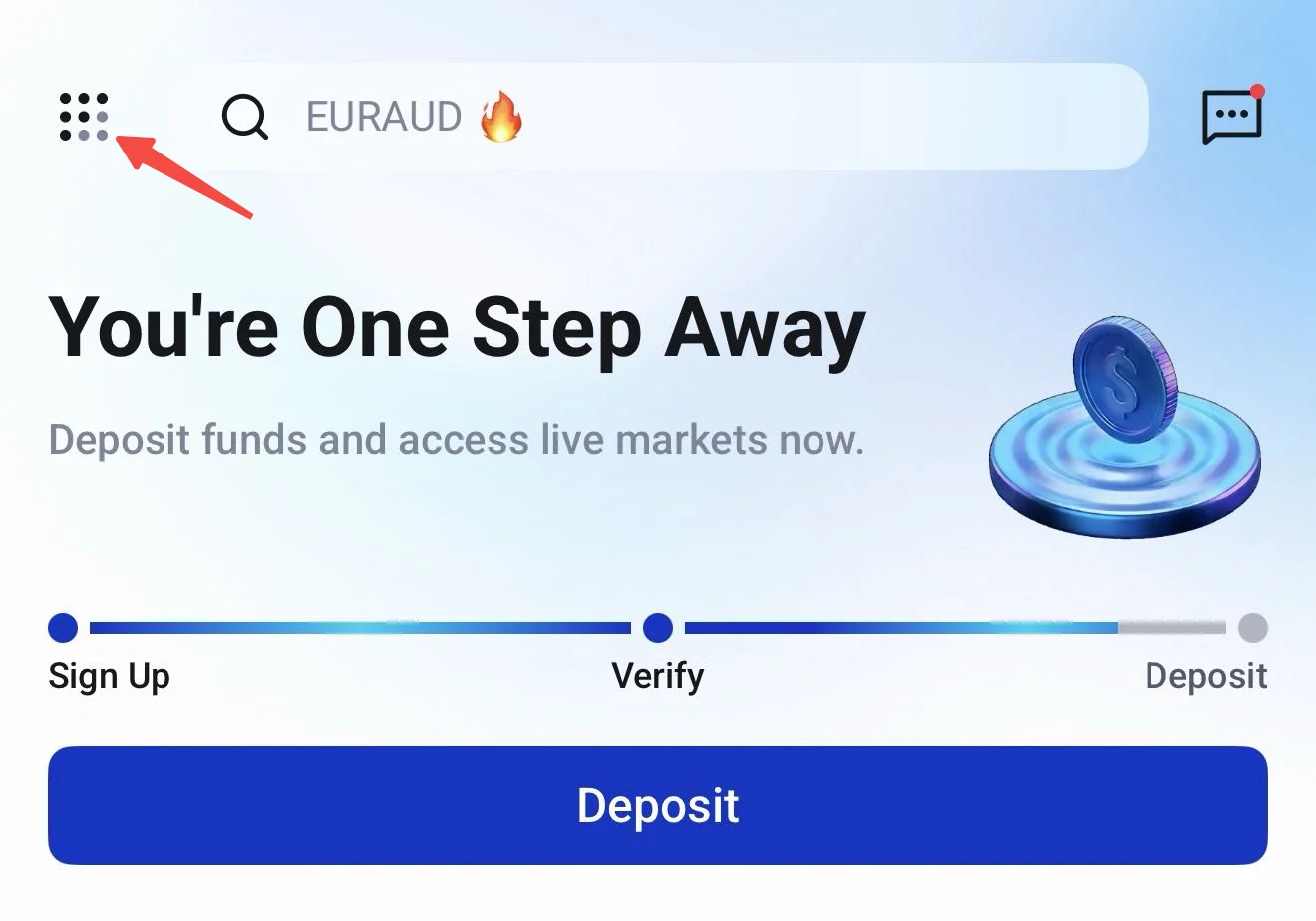
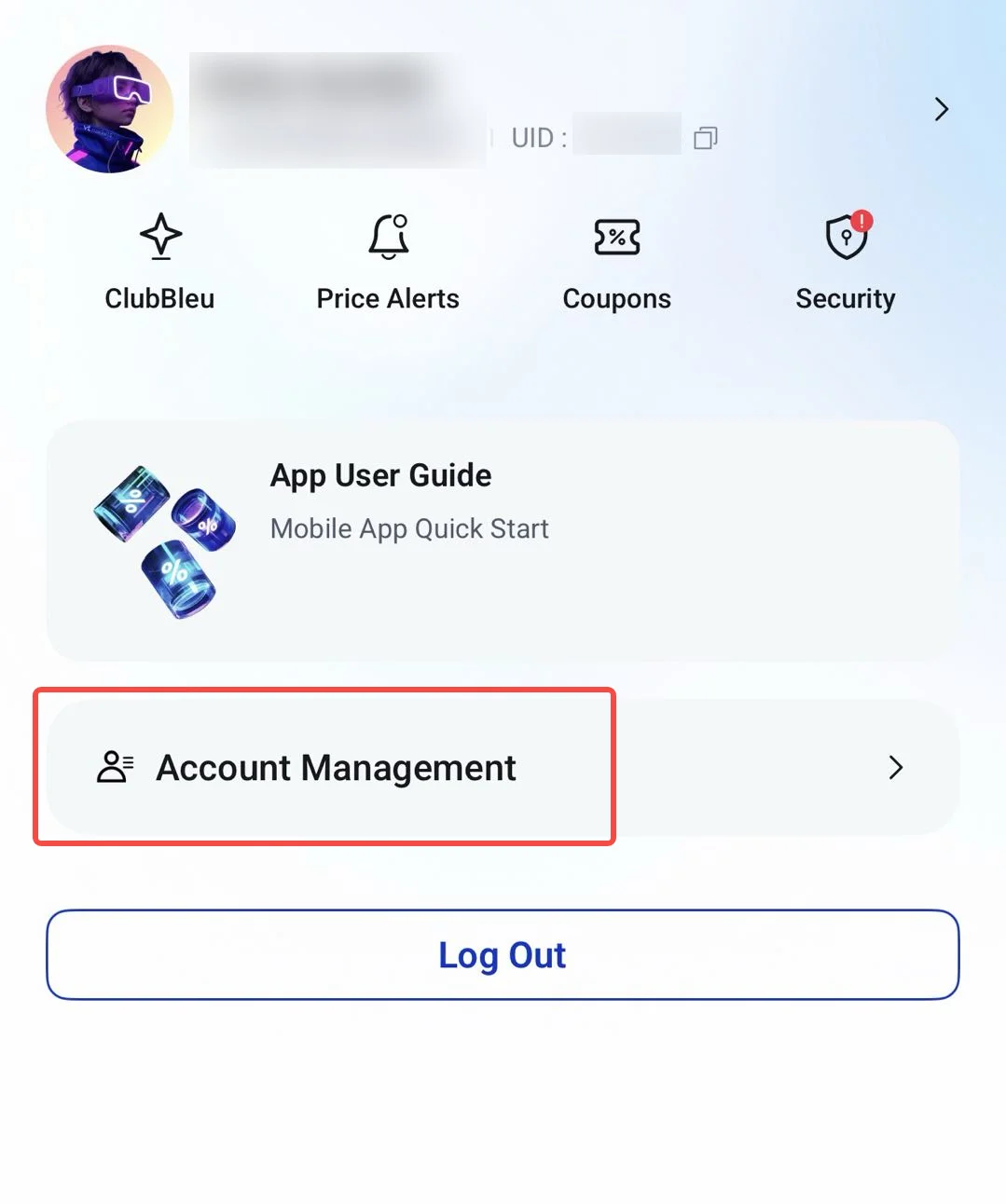
Step 1: Open the VT Markets App
Log in to the VT Markets App and navigate to Settings → Account Management.
Step 2: Open a Copy Trading Account
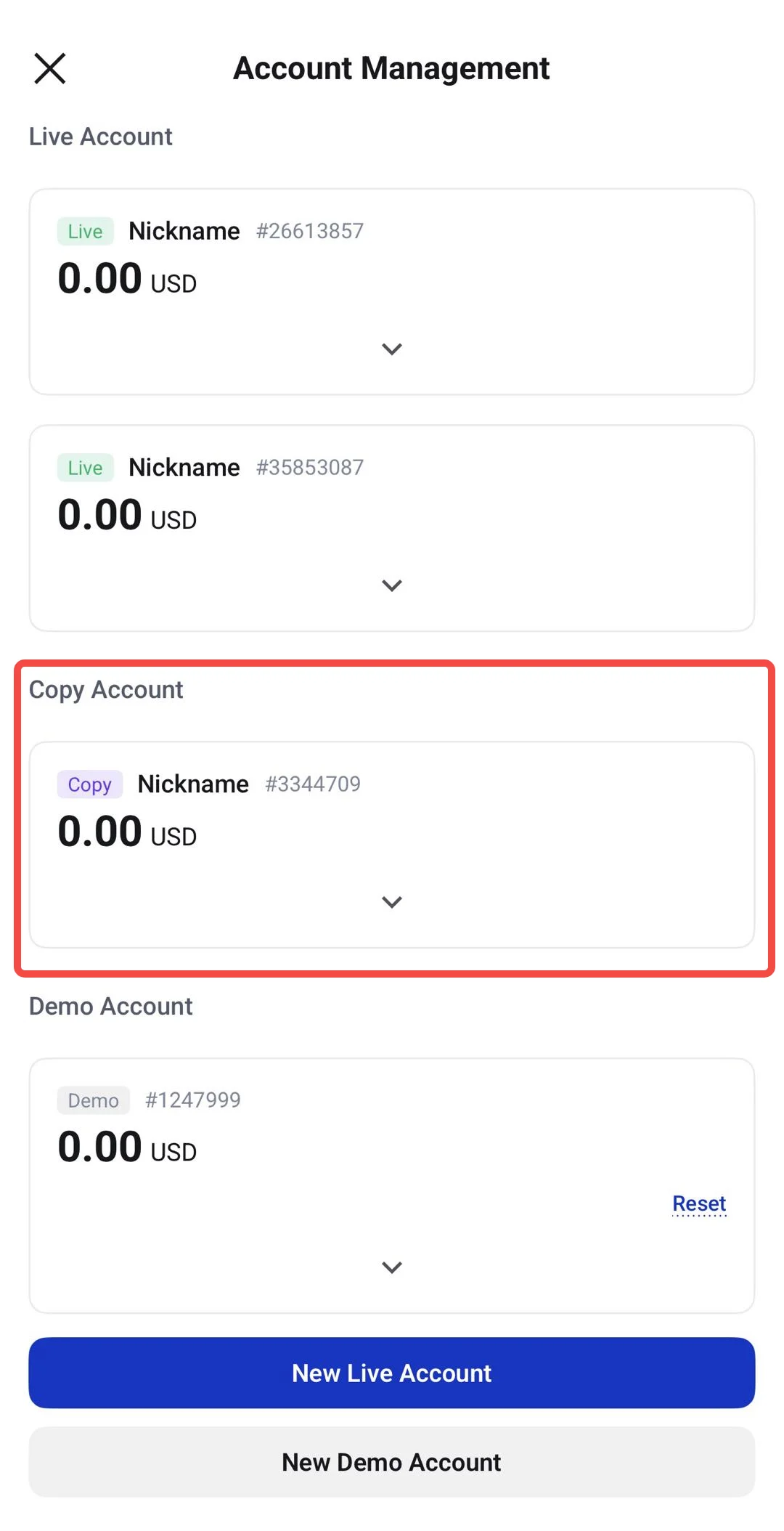
- If you do not have a Copy Trading account, create a new live account and select Copy Trading as the account type. For registration instructions, refer to our guide on How to Download and Register an Account on the VT Markets App.
- If you already have a Copy Trading account, switch to that account to continue.
Step 3: Explore Signal Providers
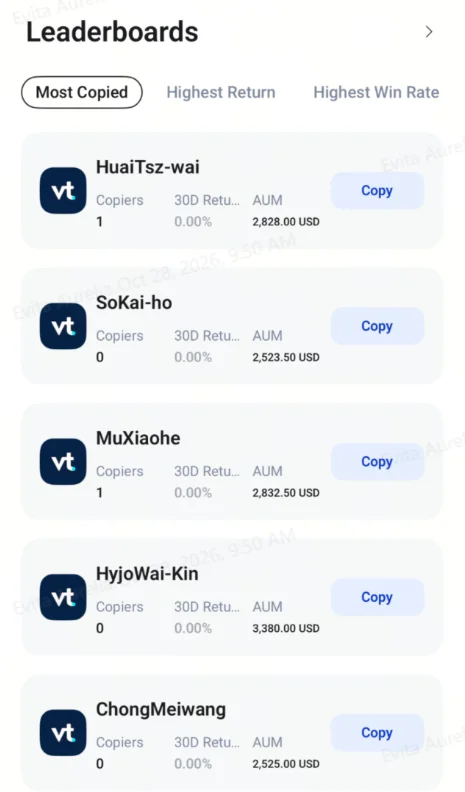
Browse the Copy Leaderboard to discover available Signal Providers. You can compare providers using categories such as Most Copied, Highest Return and Highest Win Rate.
These rankings provide different ways to explore providers but should not be treated as indicators of future performance.
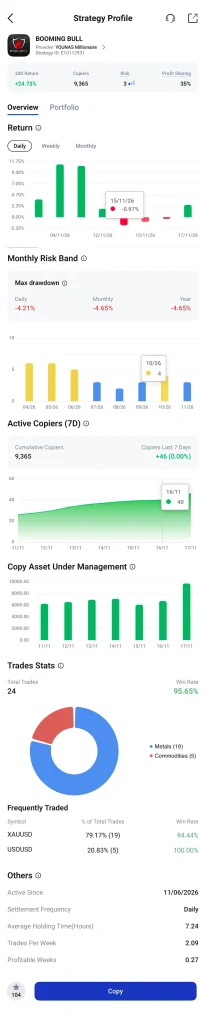
Step 4: Review a Signal Provider
Select a provider to review their performance, trading history, portfolio and available risk indicators.
Consider these details alongside your trading preferences and risk tolerance before deciding whether to copy their strategy. Historical performance does not guarantee future results.
Step 5: Set Your Copying Preferences
Choose the amount you intend to allocate and configure the available copy settings. Review these settings carefully to understand how copied position sizes are calculated before proceeding.
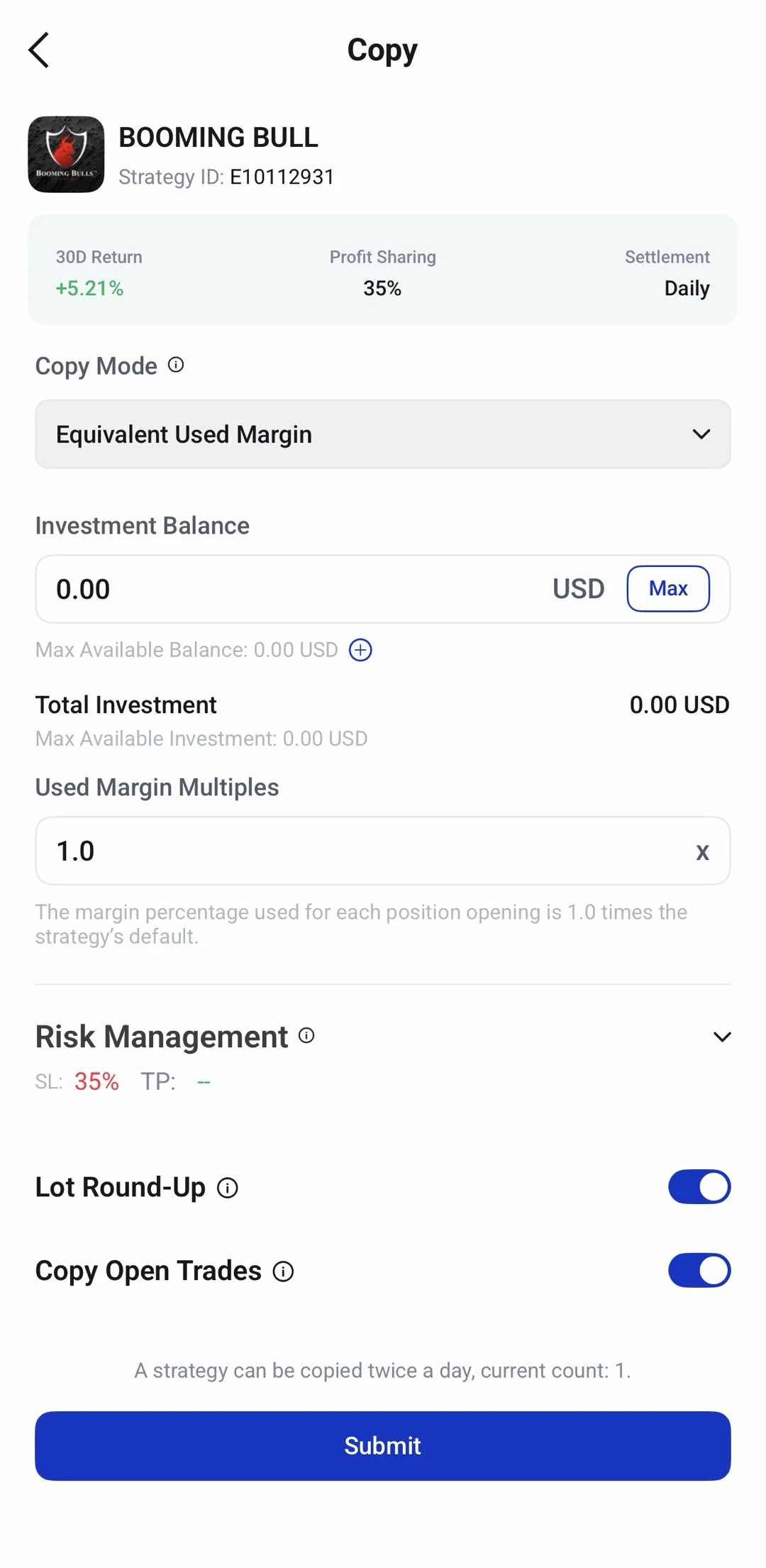
Step 6: Start Copying Trades
Once you have reviewed your selection and copying preferences, click Submit to proceed with copying the selected Signal Provider’s trades.
Step 7: Monitor Your Account
Regularly review your account performance and copied positions. You can adjust your settings or stop copying when needed, subject to the available platform controls and procedures.
Copy Trading involves the risk of loss. Monitoring your account and understanding your trading exposure remain important throughout the process.
Start Your Copy Trading Journey
Explore Signal Providers, compare trading strategies and manage your copying preferences through the VT Markets App.
Start Copy Trading with VT Markets today
Frequently Asked Questions
Can beginners make money from Copy Trading?
Copy Trading may provide beginners with exposure to different trading strategies, but it does not guarantee profits. Copied positions may result in gains or losses depending on the Signal Provider’s trading decisions and market conditions. Beginners should understand the associated risks before allocating funds.
How much money do I need to start Copy Trading?
The minimum amount required may vary depending on the broker, account requirements and applicable minimum investment or copy settings. Traders should review the relevant requirements before getting started.
Is Copy Trading better than manual trading?
Neither approach is inherently better. Copy Trading allows users to replicate another trader’s positions, while manual trading gives traders more direct control over their trading decisions. Each approach involves different considerations, and suitability depends on individual experience, objectives and risk tolerance.
Can I lose money through Copy Trading?
Yes. Copy Trading involves market risk, and copied positions may result in losses. Market volatility, leverage, trading costs and execution differences may also affect the outcome. Traders should consider these risks before copying a strategy.
How do I choose a Signal Provider?
Traders may review several indicators when evaluating a Signal Provider, including historical returns, drawdown, trading history, strategy consistency and risk exposure. These indicators can help assess past trading performance and approach, but they do not predict or guarantee future results. It is important to consider the overall strategy and associated risks rather than relying on any single metric.





