






Key Takeaways
- The Dow Jones Industrial Average closed at 46,590.24 on Nov 17 2025, marking an 11-13.1% year-to-date increase
- The index comprises 30 blue-chip companies with a divisor of 0.16242563904928 as of October 30 2025
- Goldman Sachs represents the largest component with ~$167B market capitalisation as of March 2025
- The Dow Jones index has shown volatility in November 2025, dropping over 2% from recent highs
- Technology stocks, particularly Cisco and Nvidia, have significantly influenced recent market movements
- The Nasdaq Composite reached 22,708.07 on Nov 17 2025, demonstrating continued tech sector strength
Understanding the Dow Jones Industrial Average Index: A Comprehensive Overview
The Dow Jones Industrial Average stands as one of the most recognisable and influential indices boursiers in the global financial markets. Created on May 26, 1896, by Charles Dow and Edward Jones, the DJIA has evolved from tracking just 12 industrial companies to representing 30 of the largest and most influential publicly traded companies in the United States.
As we navigate through November 2025, the Dow Jones index continues to serve as a critical barometer for investors seeking to understand broader market trends and the overall health of the American economy. The dow jones en direct provides real-time insights into market movements, making it an essential tool for both institutional and retail investors.
What Makes the Dow Jones Index Unique?
Unlike other major indices boursiers such as the S&P 500, the Dow Jones Industrial Average employs a price-weighted methodology. This means that higher-priced stocks exert greater influence on the index’s movements, regardless of the company’s overall market capitalisation. As of October 30 2025, the Dow Divisor stands at 0.16242563904928, meaning every $1 change in price in a particular stock equates to a 6.156663-point movement in the index.
2025 Market Performance: Analysing the Dow Jones En Direct
Current Market Position
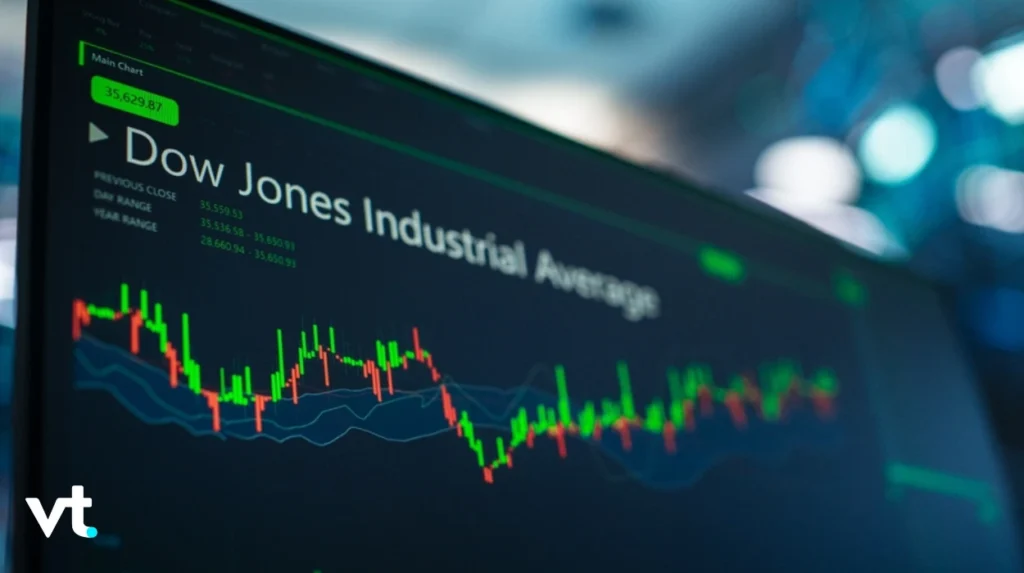
On Monday, Nov 17 2025, the Dow Jones closed at 46,590.24, representing a decline of 557.24 points or 1.18% for the day. This downturn was primarily driven by losses in artificial intelligence chip manufacturers, with Cisco and Nvidia experiencing significant pressure ahead of quarterly earnings announcements. The period from Nov 14 2025 through Nov 17 2025 has seen heightened volatility, with investors recalibrating expectations around Federal Reserve rate cuts and technology sector valuations.
Year-to-Date Performance Metrics
According to the latest data published in November 2025, the Dow Jones Industrial Average has delivered returns ranging between 11% and 13.1% year-to-date. This performance demonstrates resilience despite experiencing its first losing week in four during early November 2025. The index reached a record high on Nov 12 2025, closing at 47,927.96 after climbing for four consecutive trading days.
| Performance Metric | Value | Time Period |
|---|---|---|
| YTD Return | 11-13.1% | Jan 1 – Nov 17 2025 |
| Lowest Close (Nov) | 46,590.24 | Nov 17 2025 |
| Highest Close (Nov) | 48,000+ | Nov 13 2025 |
| Average Daily Volume | Varies | November 2025 |
| Current Divisor | 0.16242563904928 | Oct 30 2025 |
The 30 Components: Examining Dow Jones Indices Constituents
Composition and Sector Representation
As of September 2025, the dow jones industrial average index consists of 30 carefully selected blue-chip companies representing leadership across vital economic sectors. The Wall Street Journal editors maintain responsibility for constituent selection, prioritising market prominence and economic significance. These constituents commonly referred to as “blue-chip stocks” have demonstrated sustained growth and maintain excellent reputations within their respective industries.
Top Performing Components
The composition of the index reflects the modern American economy’s shift from traditional industrial manufacturing to technology and services-driven sectors. Goldman Sachs, as of March 2025, represented the largest component by market capitalisation at approximately $167B. Interestingly, whilst Apple boasted a market capitalisation of ~$3.3T at the time, it fell outside the top 10 components due to the price-weighted methodology employed by the index.
Key Sector Distribution:
- Technology companies (including Cisco, Apple, and Microsoft)
- Financial services (Goldman Sachs, JPMorgan)
- Healthcare (Johnson & Johnson, Amgen)
- Consumer goods (Coca-Cola, Procter & Gamble)
- Industrial manufacturers (Boeing, Caterpillar)
Comparing Major Indices: Dow Jones vs Nasdaq Composite
Nasdaq Composite Performance in 2025
The Nasdaq Composite closed at 22,708.07 on Nov 17 2025, declining 0.84% for the day. The tech-heavy index has demonstrated remarkable strength throughout 2025, with year-to-date increases reaching approximately 22% by mid-November 2025. However, the index has fallen more than 5% from its recent record high, reflecting investor concerns about stretched valuations in the technology sector.
On Nov 14 2025, the Nasdaq Composite showed resilience by posting a modest 0.13% gain to settle at 22,900.59, snapping a three-day losing streak. This performance contrasts with the dow jones indices, which experienced a 309.74-point decline on the same day.
Market Breadth and Sector Rotation
The period from Monday to today has witnessed significant sector rotation, with investors moving away from high-growth technology stocks and shifting towards more defensive sectors. This rotation has impacted both the Dow Jones and Nasdaq Composite, though the effects have been more pronounced in tech-heavy indices.
Managing Your Investment Strategy: Understanding Market Events
The Impact of Economic Events on Stock Market Performance
Throughout November 2025, several key events have influenced market performance. Federal Reserve Governor Christopher Waller backed a quarter-percentage-point rate cut in December 2025 as a strategic move to stave off weakness in the labour market. This announcement on Monday significantly influenced trading behaviour across all major indices boursiers.
Technical Analysis Tools for Tracking the Dow Jones En Direct
Modern investors have access to sophisticated tools for monitoring the dow jones en direct. These include:
- Real-time Price Charts: Track minute-by-minute changes from anchor time to close
- Volume Indicators: Monitor trading volume to gauge market sentiment
- Moving Averages: Identify trends over various time periods
- Tooltip Features: Hover over data points for detailed information
- Pin Tooltip Functions: Lock specific data points for comparison
Important Note: When using trading platforms, be aware that some interfaces may restrict certain functions. For instance, you might need to delete right click options or manage long press settings to access specific features. These technical details become important when creating custom charts or managing multiple data streams simultaneously.
Bearish Trends and Market Corrections: Navigating Volatility
Recent Bearish Pressure
The stock market has experienced increased volatility in November 2025, with the S&P 500 falling more than 2% during the month after posting gains for six consecutive months. The technology sector within the S&P 500 declined by 5% through mid-November, falling nearly 7% from its high. This bearish sentiment has spilled over into the dow jones index, though the impact has been somewhat muted due to the index’s diversified composition.
Understanding Long Bull Run Cycles
Despite recent volatility, it’s essential to view current market conditions within the context of the broader long bull run that has characterised much of the past decade. The Dow Jones Industrial Average has posted an annualised return of approximately 8.90% between January 1980 and November 2023, closely mirroring the S&P 500’s 8.91% return over the same period.
VT Markets: Your Partner in Navigating Indices Boursiers
Trading the Dow Jones Index with VT Markets
For investors looking to capitalise on movements in the dow jones industrial average, VT Markets offers comprehensive trading solutions. The platform provides access to real-time market data, advanced charting tools, and competitive spreads on major indices including the DJIA. Whether you’re tracking the dow jones en direct or executing trades based on technical analysis, VT Markets delivers the infrastructure necessary for informed decision-making.
Educational Resources and Market Analysis
VT Markets recognises that successful investing in indices boursiers requires continuous education. The platform offers regular market analysis, covering everything from individual company earnings reports to broader macroeconomic trends affecting the stock exchange. This commitment to investor education helps traders understand complex market dynamics and make more informed decisions.
Price-Weighted vs Market-Cap Weighted Indices
The Mechanics of Price Weighting
The dow jones industrial average’s price-weighted methodology creates unique characteristics that distinguish it from market-capitalisation-weighted indices. In a price-weighted index, a $200 stock has twice the influence of a $100 stock, regardless of the companies’ respective market values. This means that a 1% price change in a high-priced stock creates a more significant impact on the index than the same percentage change in a lower-priced stock.
Implications for Investors
This methodology has important implications for investors tracking the dow. When high-priced constituents like Goldman Sachs or Cisco experience volatility, the entire index feels the impact more acutely. Conversely, massive companies with lower share prices may have limited influence on day-to-day index movements despite their economic significance.
Historical Context: The Evolution of Dow Jones Components
Changes Over Time
Since its creation in 1896, the composition of the dow jones index has changed 59 times as of November 8, 2024. These changes reflect the evolving nature of the American economy, from an industrial powerhouse to a technology and services-driven leader. General Electric held the longest presence on the index, first appearing in 1896 and finally being removed in 2018, though it was dropped and re-added twice between 1898 and 1907.
Recent Inclusions and Deletions
The list of constituents receives regular updates to ensure the index remains representative of the contemporary economy. Recent years have seen increased weighting towards technology and healthcare sectors, with companies like Amazon and Salesforce joining the ranks of traditional industrial giants. These inclusion decisions are made by a committee comprising three representatives from S&P Dow Jones Indices and two representatives from the Wall Street Journal.
Trading Hours and Market Mechanics
Understanding Market Hours
The dow jones index is calculated based on trading activity during regular market hours, typically from 9:30 AM to 4:00 PM EST. The close of the trading day represents the final price used in index calculations, though after-hours trading can provide insights into the next day’s likely opening direction.
The Role of Stock Exchanges
The companies comprising the Dow Jones Industrial Average are listed on major exchanges, primarily the New York Stock Exchange. These exchanges provide the infrastructure for price discovery, ensuring transparent and efficient markets. Understanding how exchanges operate, including concepts like the bid-ask spread and market makers, helps investors better interpret dow jones en direct movements.
Dividends and Total Returns: Beyond Price Appreciation
The Dogs of the Dow Strategy
The ten components with the largest dividend yields are commonly referred to as the “Dogs of the Dow.” This popular investment strategy involves purchasing these high-yielding stocks at the start of each year and rebalancing annually. Many constituents of the dow jones industrial average offer attractive dividend yields, providing investors with income alongside potential capital appreciation.
Calculating Total Returns
When evaluating the performance of the dow, it’s crucial to consider total returns, which include both price appreciation and dividends received. Whilst the widely reported index level reflects only price movements, total return calculations provide a more comprehensive picture of investor outcomes. Companies like Procter & Gamble, which has been in the index since 1932, have delivered substantial value through consistent dividend payments over extended periods.
Global Economic Factors Influencing the Dow Jones Index
International Trade and Geopolitical Events
The constituents of the dow jones industrial average maintain significant international operations, making the index sensitive to global economic conditions. Trade policies, currency fluctuations, and geopolitical events all influence the performance of multinational corporations represented in the index. Recent mentions of tariffs in earnings calls, whilst declining from earlier in 2025, continue to factor into corporate planning and investor sentiment.
Central Bank Policies
Federal Reserve decisions regarding interest rates represent perhaps the most significant macroeconomic influence on the stock market. The anticipated quarter-point rate cut in December 2025 reflects the Fed’s balancing act between supporting economic growth and managing inflation. These policy decisions ripple through financial markets, affecting everything from corporate borrowing costs to the relative attractiveness of stocks versus bonds.
Technology Sector Dominance and Its Impact
AI and Semiconductor Companies
The technology sector’s weight within major indices boursiers has grown substantially in recent years. Companies like Nvidia, though not a Dow Jones component, significantly influence market sentiment and often drive correlated moves across indices. Cisco, which is part of the dow jones industrial average, represents the index’s exposure to networking and communications technology.
Valuation Concerns
As of November 2025, investors have grown increasingly concerned about stretched valuations in the technology sector. The debate surrounding artificial intelligence investments centres on whether companies can generate sufficient profits to justify enormous capital expenditures. This scepticism has contributed to recent volatility, with the Nasdaq Composite experiencing sharper declines than the more diversified dow jones index.
Practical Tips for Tracking the Dow Jones En Direct
Utilising Modern Trading Platforms
Contemporary trading platforms offer numerous features for monitoring the dow jones en direct:
- Customisable Charts: Set your preferred anchor time and drag indicators to analyse specific periods
- Alert Systems: Receive notifications when the index reaches predetermined price levels
- Multi-Screen Layouts: Monitor multiple indices simultaneously, comparing the Dow Jones to the Nasdaq Composite and S&P 500
- Mobile Applications: Track markets on the go with real-time updates pushed to your device
Understanding Market Data
When reviewing dow jones en direct information, pay attention to:
- Opening and closing prices: Reflect market sentiment at crucial trading junctures
- Intraday highs and lows: Indicate volatility and potential support/resistance levels
- Volume: Higher trading volume typically accompanies significant price movements
- Breadth indicators: The number of advancing versus declining stocks provides context beyond the index level
Risk Management in Index Investing
Diversification Strategies
Whilst the dow jones industrial average provides exposure to 30 leading companies, prudent investors recognise the value of broader diversification. VT Markets and other platforms facilitate access to various indices boursiers, allowing investors to spread risk across different markets, sectors, and geographies.
Position Sizing and Stop-Loss Orders
Managing risk requires disciplined position sizing. Rather than concentrating investments in single stocks or indices, investors should determine appropriate allocations based on their risk tolerance and investment horizon. Stop-loss orders can help limit downside exposure, automatically triggering sales if positions decline beyond predetermined thresholds.
The Future of the Dow Jones Industrial Average
Potential Changes on the Horizon
As the economy continues evolving, further changes to the list of dow jones components seem inevitable. The committee responsible for constituent selection regularly reviews the index’s composition to ensure it accurately represents the contemporary American economy. Future additions may include more technology-focused companies, whilst traditional industrial firms could face removal if their economic significance diminishes.
Long-Term Investment Perspective
Despite short-term volatility, the dow jones industrial average has demonstrated remarkable resilience throughout its 129-year history. From the Great Depression to the 2008 financial crisis and beyond, the index has weathered numerous economic storms. Investors with long time horizons can potentially benefit from this historical trend, though past performance never guarantees future results.
Frequently Asked Questions (FAQs)
1. What is the difference between the Dow Jones Industrial Average and the Nasdaq Composite?
The dow jones industrial average comprises 30 large-cap stocks weighted by price, whilst the Nasdaq Composite includes over 3,000 companies traded on the Nasdaq stock exchange and is weighted by market capitalisation. The Nasdaq typically has higher exposure to technology companies, making it more volatile than the dow. As of Nov 17 2025, the Dow closed at 46,590.24 whilst the Nasdaq Composite settled at 22,708.07.
2. How often does the composition of the Dow Jones change?
Changes to the dow jones components occur irregularly, typically every few years. The index has undergone 59 compositional changes since its inception in 1896, with the most recent adjustments reflecting the increasing importance of technology and healthcare sectors. A committee comprising representatives from S&P Dow Jones Indices and the Wall Street Journal makes these decisions based on factors including company reputation, sustained growth, and investor interest.
3. Why has the Dow Jones experienced increased volatility in November 2025?
The increased volatility stems from several factors: concerns about stretched technology sector valuations, expectations regarding Federal Reserve interest rate policies, and profit-taking after six consecutive months of gains. The dow jones index fell 557.24 points on Nov 17 2025, driven primarily by losses in artificial intelligence-related stocks like Cisco and Nvidia. Additionally, the broader stock market has experienced rotation away from high-growth technology stocks towards more defensive sectors.
4. How can I start investing in the Dow Jones Industrial Average?
Investors cannot directly purchase “the dow jones index,” but can gain exposure through several methods: buying shares of all 30 constituent companies, investing in exchange-traded funds (ETFs) that track the DJIA, trading index futures or options, or using contracts for difference (CFDs) through platforms like VT Markets. Each approach has distinct risk-return characteristics and cost structures, so investors should carefully consider their objectives before choosing a method.
Navigating the Indices Boursiers Landscape
The dow jones industrial average remains a cornerstone of financial markets, providing investors with crucial insights into the health of the American economy. As we progress through November 2025, the index faces headwinds from technology sector volatility and evolving monetary policy, yet maintains its position as an essential benchmark for measuring market performance.
Understanding the mechanics of the dow jones index—from its price-weighted methodology to the significance of its 30 components—empowers investors to make more informed decisions. Whether tracking the dow jones en direct for day trading opportunities or taking a long-term investment perspective, the DJIA offers valuable signals about broader market trends.
For traders and investors seeking to capitalise on movements in indices boursiers, platforms like VT Markets provide the tools, resources, and support necessary for success. By combining thorough market analysis with disciplined risk management, investors can navigate the complexities of today’s financial markets with greater confidence.
As always, successful investing requires continuous learning, adaptation to changing market conditions, and a clear understanding of one’s financial goals and risk tolerance. The dow jones industrial average will undoubtedly continue evolving alongside the economy it represents, offering opportunities for those prepared to engage with its movements thoughtfully and strategically.








