






After a red-hot start to the year, Wall Street is hitting that part of the climb where the air gets thinner. Earnings are still growing, but the sprint is slowing. The S&P 500 notched a 13.6% jump in Q1 and 10.3% in Q2, but the next two quarters are expected to cool to 7.6% and 7.0%. It’s a solid pace, yet far from the double-digit surges that fuel easy rallies.
The one wrinkle this quarter: analysts actually nudged Q3 forecasts slightly higher in July, something we haven’t seen since Q2 2024. Energy and Tech led the optimism, but Health Care slipped. With valuations sitting at 22 times forward earnings, the market has little room for stumbles. Higher tariffs or softening demand could flip sentiment fast.
The Fed is now stepping into the picture in a bigger way. July’s jobs report landed with a thud: just 73,000 jobs added against 110,000 expected, and prior months revised down by 258,000.
Wage growth is losing steam, temporary hiring is fading, and the labour market is loosening more quickly than many thought.
Traders are pricing a 90–95% chance of a September cut and roughly 62 basis points of easing by year-end. That puts two or three cuts in play, taking rates toward 4% by early 2026. The market likes the idea of easier policy, but it’s happening for the wrong reason. Growth worries are driving it, not a clean victory over inflation.
Trade tensions are simmering just below boiling point. On August 12, the pause on U.S.–China tariffs is due to expire. If it does, we’re looking at tariffs snapping back to around 80% on many goods. President Trump has already doubled tariffs on Indian imports to 50% and is considering targeted duties on Canadian and Mexican goods. Tech, autos, and industrials are most at risk.
The semiconductor sector is in the spotlight, with Trump threatening 100% tariffs unless U.S. chip production ramps up.
That’s unleashed a wave of record-breaking investment — Apple, TSMC, Nvidia, GlobalFoundries, and Texas Instruments are collectively pledging hundreds of billions to build U.S. capacity. It’s a long-term play for supply chain security, but in the short run it could crimp free cash flow, pressure margins, and test investor patience.
War Talks in Focus
Geopolitics could throw the market a curveball — in either direction. Trump is pushing for a resolution to the Russia–Ukraine war, and signals from Moscow suggest talks could be on the table.
The Gaza conflict may also be inching toward a shift, with key Arab states and the EU calling for Hamas to cede control. Any breakthrough here could pull oil prices lower, cool inflation, and give sectors like airlines, transport, and consumer discretionary some breathing room.
Meanwhile, the Fed’s balance sheet has shrunk from $9 trillion to $6.7 trillion, with quantitative tightening expected to end near $6.2 trillion in early 2026. Liquidity will stay tight until then, and quantitative easing is still a long way off unless the economy tips into a deep recession. The months ahead will be about balancing acts — the potential lift from Fed cuts or peace breakthroughs on one side, and the drag from slower earnings, trade shocks, and a weaker jobs market on the other.
Price Movements of the Week
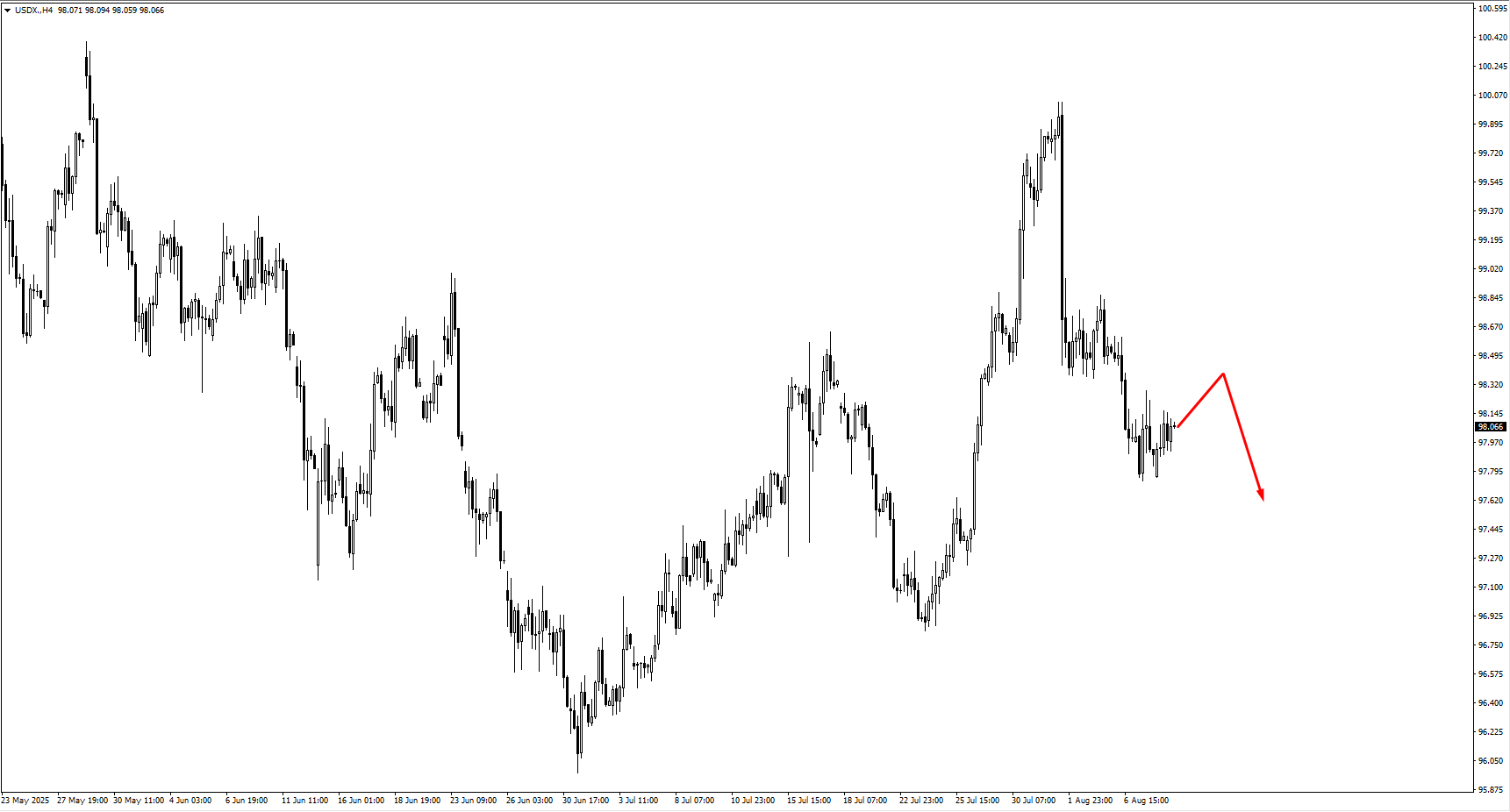
Currency and commodity markets are shaping up for an active week as several instruments move into key technical zones. The USD Index is holding in a consolidation phase, with traders watching 98.50 for potential selling pressure and 97.40 as the next downside checkpoint if momentum turns.
A softer dollar could feed into EURUSD strength, where buyers may step in at 1.1580 or 1.1545, with 1.1750 as the next upside target. Sterling shows a similar setup; GBPUSD support is seen at 1.3355 and 1.3300, while 1.3560 could act as the next ceiling.
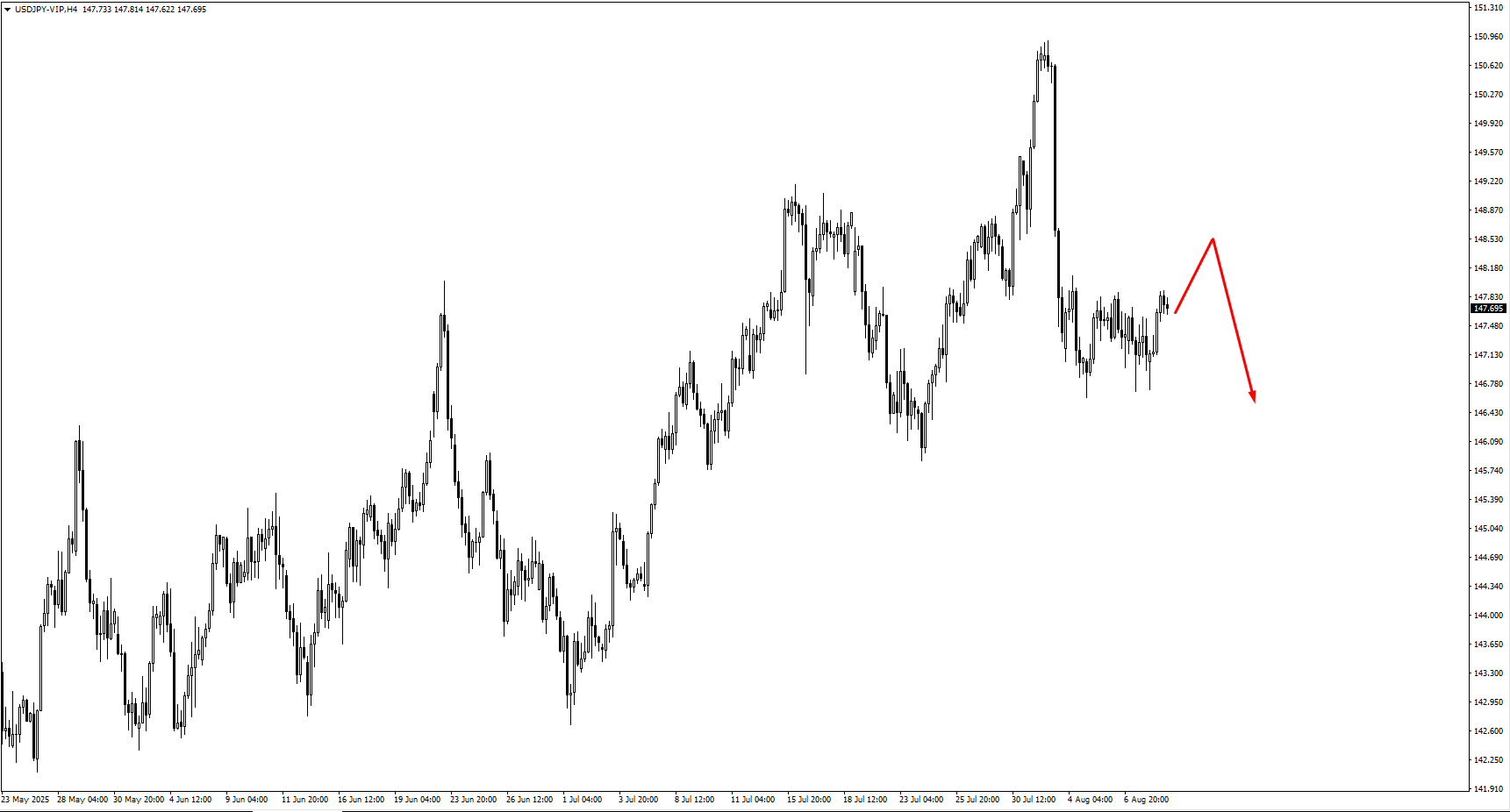
In the yen market, USDJPY’s recent upward drift has traders eyeing 148.75 and 149.30 for signs of reversal. USDCHF could face sellers if it pushes past 0.8117 or 0.8150.
Across the commodity-linked pairs, AUDUSD is nearing 0.6570, a level that could attract bears, while NZDUSD’s next test lies at 0.6015. For USDCAD, buyers may re-emerge near 1.3675 if the recent decline deepens.

USOil remains under pressure, currently testing $63.35. A break lower opens the door to $61.15, particularly if consolidation patterns form here.
Gold’s rally has $3,430 in sight, a fresh zone to watch for profit-taking or reversal cues.
The S&P 500 has erased last week’s bearish tone and is pushing toward a potential new all-time high, with $6,630 marked as the next major reaction point.

Bitcoin has broken out above its channel top and, after a period of consolidation, could advance toward $121,400. Natural Gas sits at $2.90; holding here could spark a rebound, while a drop to $2.55 may follow if momentum falters.
In each case, price behaviour around these levels will be critical. Sharp rejections could fuel reversals, while clean breaks on strong volume may set the stage for trend extensions. With macro risks from the Fed, tariffs, and geopolitical events still live, traders may want to blend technical signals with the broader market backdrop before committing to positions.
Key Events of the Week
This week’s macro calendar is light but still carries a few releases that could sway market sentiment.
On Tuesday, 12 August, Australia’s cash rate decision is due, with forecasts pointing to a trim from 3.85% to 3.60%. If the Australian dollar tests 0.6570 while the USD Index is pressing its support, AUDUSD could come under renewed selling pressure. The same day, U.S. CPI is expected at 2.8% year-on-year, up slightly from 2.7%. That inflation print will be closely watched as it could influence the Fed’s pace of rate cuts after September.
Thursday, 14 August, brings the UK’s monthly GDP, forecast at 0.2% versus -0.1% previously. While that marks an improvement, the outlook remains clouded by global headwinds. The same day, U.S. producer prices are seen rising 0.2% after a -0.5% drop, a potential signal of inflationary pressures building at the wholesale level.
Friday, 15 August, rounds off with U.S. retail sales and preliminary University of Michigan consumer sentiment. Retail sales are forecast to grow 0.5%, a shade below June’s 0.6%, while sentiment is expected at 62.2 from 61.7. Both readings will offer a read on the health of the U.S. consumer, which remains central to the growth outlook and, by extension, the Fed’s policy path.
Looking ahead, traders will also have one eye on next week’s events: Canada’s trimmed CPI on August 19, New Zealand’s official cash rate decision on August 20, and the Jackson Hole Symposium on August 22, which could deliver fresh central bank signals on rates and growth.










