





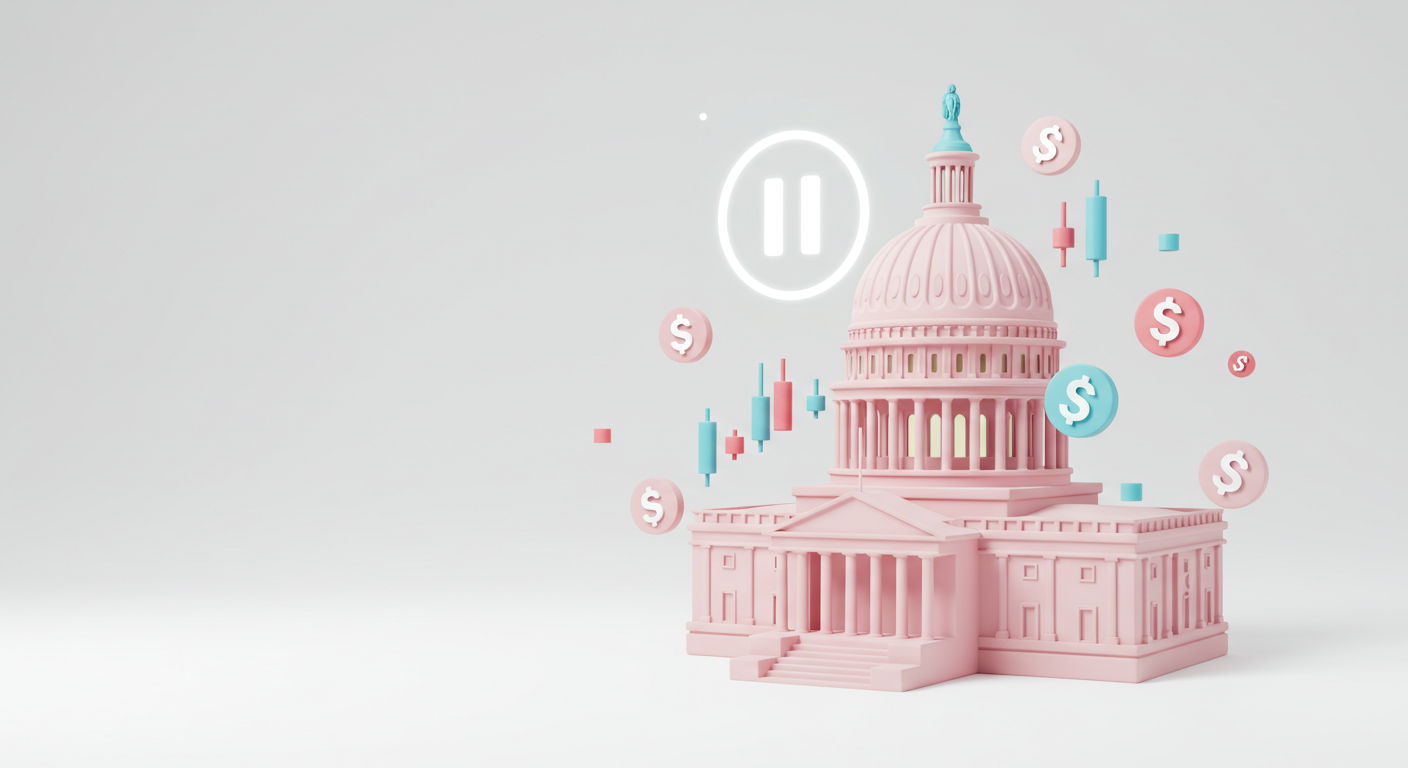
The threat of a US government shutdown has re-emerged in 2025, once again raising questions about fiscal discipline and political gridlock in Washington. When lawmakers fail to reach an agreement on spending bills, parts of the federal government are forced to halt operations.
While shutdowns vary in length and severity, their impact on markets can be immediate, often creating uncertainty that spills across equities, currencies, and commodities.
For traders, the focus is less on day-to-day politics and more on the knock-on effects of liquidity, volatility, and sentiment. Markets dislike uncertainty, and shutdowns offer plenty of it.
From delayed economic data releases to furloughed workers, the signal to investors is often one of dysfunction at the heart of government.
Impact on Equities
Equity markets tend to soften in the run-up to shutdown deadlines, as institutional investors trim risk and retail traders react to headlines.
Historically, the S&P 500 has seen muted or negative performance during prolonged shutdowns, although the market often rebounds quickly once funding is restored.
Companies with direct exposure to government contracts, such as defence and infrastructure firms, can be more immediately affected.
Yet shutdowns rarely alter the broader earnings picture. For this reason, some traders use the sell-offs as an opportunity to buy into weakness, anticipating a relief rally once the political standoff ends. Timing, however, is everything, and patience is key during volatile sessions.
Currency Market Sensitivity
The US dollar is highly sensitive to shutdown risks. In past episodes, the greenback has weakened as traders priced in the possibility of slower economic growth and policy delays.
The situation can create opportunities in major pairs such as EURUSD and GBPUSD, with risk-sensitive currencies often gaining at the dollar’s expense.
Another layer of complexity arises from delayed economic data releases.
If agencies are unable to publish inflation or employment figures, the Federal Reserve has less visibility on the economy, which in turn feeds uncertainty into currency markets.
Commodities in Focus
Commodities also react to shutdown scenarios. Gold often benefits from safe-haven flows when fiscal dysfunction dominates headlines, as investors seek protection against volatility.
Oil, on the other hand, may see choppy trading depending on how shutdowns affect energy demand forecasts and broader risk sentiment. The link is less direct, but the uncertainty factor alone can move prices in short bursts.
Cautious Outlook for Traders
A government shutdown is rarely long enough to derail the US economy, but even short disruptions can create pockets of volatility. Traders should expect sudden moves in the dollar, tighter liquidity in equities, and safe-haven demand in gold.
Longer standoffs raise the risk of missed debt payments and deeper market stress, though history shows shutdowns typically end with a compromise.
For now, traders would do well to monitor deadlines closely, keep an eye on dollar crosses, and remain flexible. Shutdowns create uncertainty, but they also create opportunity for those able to navigate the noise with discipline.










