






As earnings season unfolds, markets are not just reacting to numbers. They are searching for clues about how consumers are behaving beneath the surface. In that search, a handful of global brands carry outsized importance.
This week, Apple and Nike stand out as two very different tests of US demand. One reflects premium, planned spending tied to technology and lifestyle ecosystems. The other captures discretionary behaviour shaped by seasonality, confidence, and everyday budget choices.
Shifts in consumer spending around key calendars and seasonal events often appear before earnings confirm them.
By watching how consumers prioritise lifestyle purchases versus discretionary ones, traders can form early views on demand trends ahead of results.
Apple and Nike sit at opposite ends of that spending spectrum, making them a useful lens for understanding how consumer behaviour is evolving as financial conditions remain tight.
Lifestyle Spending Versus Discretionary Demand
Apple and Nike sit at opposite ends of the consumer spending spectrum, making them a useful lens for evaluating shifts in demand.
Apple reflects higher-income spending and global tech demand, tied closely to lifestyle choices that tend to be planned rather than impulsive. Purchases such as smartphones, tablets, and services subscriptions are often budgeted in advance and renewed over longer cycles.
Nike, by contrast, sits closer to seasonal and discretionary spending habits. Apparel and footwear purchases are more sensitive to timing, promotions, and shifts in consumer confidence.
What This Contrast Signals For Traders
This contrast matters for investors and traders alike.
Apple often signals whether premium consumers continue to spend despite higher costs of living. Nike reveals how flexible everyday spending has become, especially when budgets are under pressure.
Viewed together, the two offer a clearer picture of how consumer behaviour is evolving across income levels and spending priorities. Earnings reports from brands such as Nike and Apple then serve to confirm or challenge those expectations.
What Apple Earnings Say About Demand
Apple earnings extend beyond hardware sales. They offer insight into pricing power, global consumption patterns, and the durability of premium spending.
Even when device demand slows, Apple’s services segment often provides stability through subscriptions and ecosystem engagement.
When Apple shows resilience, markets tend to interpret it as a sign that higher-income consumers remain willing to spend. This supports broader risk sentiment.
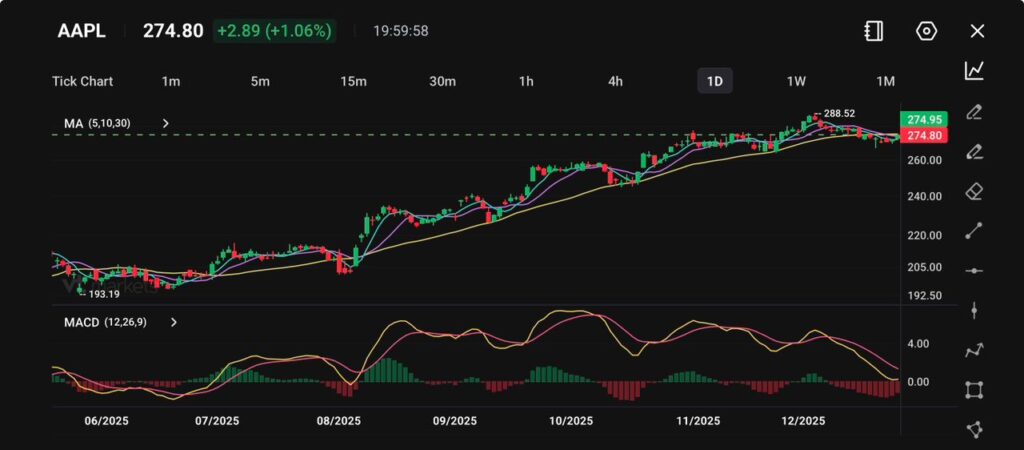
Apple continues to trade near elevated levels, supported by a longer-term uptrend despite recent consolidation.
Price structure suggests resilience in premium demand, though momentum has softened as markets reassess valuation sensitivity to rates.
When weakness emerges, it raises questions about global demand and whether consumers are delaying large-ticket purchases.
What Nike Earnings Reveal About The Everyday Consumer
Nike earnings tell a more grounded story. As a discretionary brand tied closely to apparel and footwear, Nike reflects shifts in household priorities.
Inventory levels, promotional activity, and regional demand trends offer insight into how consumers manage spending under pressure.
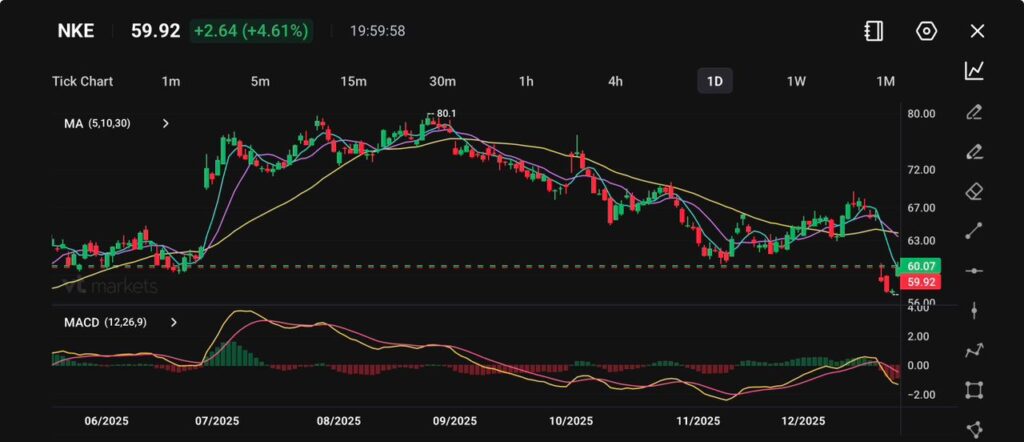
Nike’s price action shows a loss of momentum following earlier rebounds, with moving averages rolling over and momentum indicators remaining cautious.
The chart reflects ongoing pressure on discretionary spending as investors weigh margin risk against signs of demand stabilisation.
Softness at Nike often points to caution rather than collapse. Higher living costs can lead households to delay or reduce non-essential purchases. Strength, by contrast, suggests confidence remains intact. This makes Nike a valuable indicator for tracking the health of everyday consumption.
Reading The Gap Between Premium And Discretionary
The contrast between Apple and Nike matters. Strong Apple earnings alongside softer Nike results suggest a split economy.
Higher-income consumers remain insulated, while broader households adjust spending habits. When both companies struggle, markets tend to reassess growth expectations more sharply.
This gap also influences sector performance. Apple’s guidance shapes sentiment across technology stocks. Nike’s outlook informs expectations for consumer discretionary names.
Together, they help frame the balance between resilience and restraint in the US economy.
Apple Vs Nike: A Snapshot Of US Demand
| Category | Apple | Nike |
| Primary Exposure | Global tech demand and premium spending | Discretionary spending and household confidence |
| Core Revenue Drivers | Devices, services, ecosystem lock-in | Footwear, apparel, brand-led demand |
| Consumer Segment | Higher-income and global consumers | Broad-based, middle-income households |
| Sensitivity To Rates | Indirect via valuations and upgrade cycles | Direct via disposable income |
| Inflation Impact | Absorbed through pricing power | Felt through margins and discounting |
| What Weakness Signals | Slowing global demand | Consumers cutting non-essential spend |
| What Strength Signals | Durable premium confidence | Willingness to spend beyond essentials |
When Leadership Signals Confidence
Beyond earnings data, markets also pay attention to leadership behaviour. Tim Cook, the chief executive of Apple, has long-standing ties to Nike and recently increased his exposure to the company through a share purchase.
Insider buying does not guarantee performance, but it adds context. A senior executive with visibility into global consumption choosing to add exposure to a discretionary brand suggests confidence in longer-term demand rather than short-term momentum. Cook’s position offers a unique bridge.
Apple provides insight into premium and global spending. Nike reflects everyday consumer behaviour.
From a macro perspective, this connection reinforces the earnings narrative. Premium demand remains intact. Discretionary spending faces pressure, but it has not disappeared. Leadership behaviour aligns with the view that consumers are adjusting, not retreating.
What Traders May Take From AAPL And NKE
For traders using CFDs, Apple and Nike present very different opportunities. The choice often comes down to trading style, risk appetite, and time horizon rather than which company looks stronger on paper.
Apple tends to appeal to traders who prefer liquid, trend-driven assets. Its size, consistent volume, and sensitivity to broader market sentiment make it suitable for traders who follow index direction, rate expectations, or longer-term momentum.
Moves in Apple often align with shifts in yields, technology sentiment, and risk appetite, which can suit swing or position-based strategies.
Nike, by contrast, may attract traders who focus on shorter-term volatility around earnings, consumer data, or shifts in discretionary spending. Its price action can react more sharply to changes in demand outlook, margins, or inventory trends.
This can suit traders who look for tactical opportunities driven by sentiment changes rather than broad market trends.
Viewed together, Apple and Nike offer choice rather than confirmation. One reflects stability and premium demand. The other highlights sensitivity to consumer confidence. For CFD traders, this contrast helps frame how different assets can fit different strategies, even within the same earnings season.
For full view of upcoming economic events, check out VT Market’s Economic Calendar.
A Cautious Outlook
The earnings story is still unfolding. Traders watching Apple and Nike are not just reacting to past results, but positioning for what the next phase of earnings season may reveal about demand in the months ahead.Apple and Nike remain effective demand barometers in an uncertain environment, but their signals do not arrive at the same time.
Nike has already reported its second-quarter results, offering an early read on discretionary spending and household confidence. Apple, by contrast, is still awaiting its January earnings release, leaving the premium end of the consumer spectrum yet to be tested.This staggered timeline matters. Nike’s results suggest consumers are adjusting spending habits rather than retreating outright. Apple’s upcoming earnings will help confirm whether higher-income and global consumers continue to support demand through services growth and upgrade cycles.
Together, they will complete a fuller picture of US demand as the new year begins.










