







Market Recap for September
September was dominated by a major shift in Federal Reserve expectations, as stronger US employment and inflation data pushed markets to price in a higher probability of another rate increase. Expectations for a September hike rose sharply ahead of the FOMC meeting, setting the stage for the Fed’s first rate increase in more than three years.
The Federal Reserve delivered a 25-basis-point hike, lifting rates to 3.75%–4.00%. The decision was widely anticipated, but the accompanying projections kept markets focused on the possibility of another increase before year-end. The median year-end rate projection of 4.1% suggested policymakers remained cautious about inflation risks.
The immediate market reaction followed traditional patterns, with the US dollar and Treasury yields moving higher. However, equities showed greater resilience than expected, with the S&P 500 and Nasdaq reaching fresh highs despite a stronger dollar and elevated yields.
For latest updates on these highlighted assets, follow our daily market analysis.
Key Themes
- Markets repriced ahead of the Fed decision. Strong employment and inflation data drove expectations for a September hike before policymakers delivered the decision. As a result, the main market reaction came from the Fed’s guidance rather than the rate move itself.
- A hawkish Fed failed to derail equity momentum. Higher rates typically pressure risk assets, but surprisingly, equities continued to rise as investors focused on AI infrastructure, earnings growth and technology investment.
- Lower oil prices eased inflation concerns. Brent crude retreated from earlier highs near $108 towards $100 by month-end, reducing one of the key risks to the inflation outlook.
Dollar Navigates a Higher-Rate Environment
The US dollar strengthened in September as markets adjusted to a more hawkish Federal Reserve outlook, with rate expectations becoming the main driver of currency movements.
The September rate increase itself was largely anticipated after stronger employment and inflation data pushed markets to price in a higher probability of a hike before the FOMC meeting. The more important signal came from the Fed’s communication, with policymakers indicating that further tightening remained possible if inflation pressures persisted.
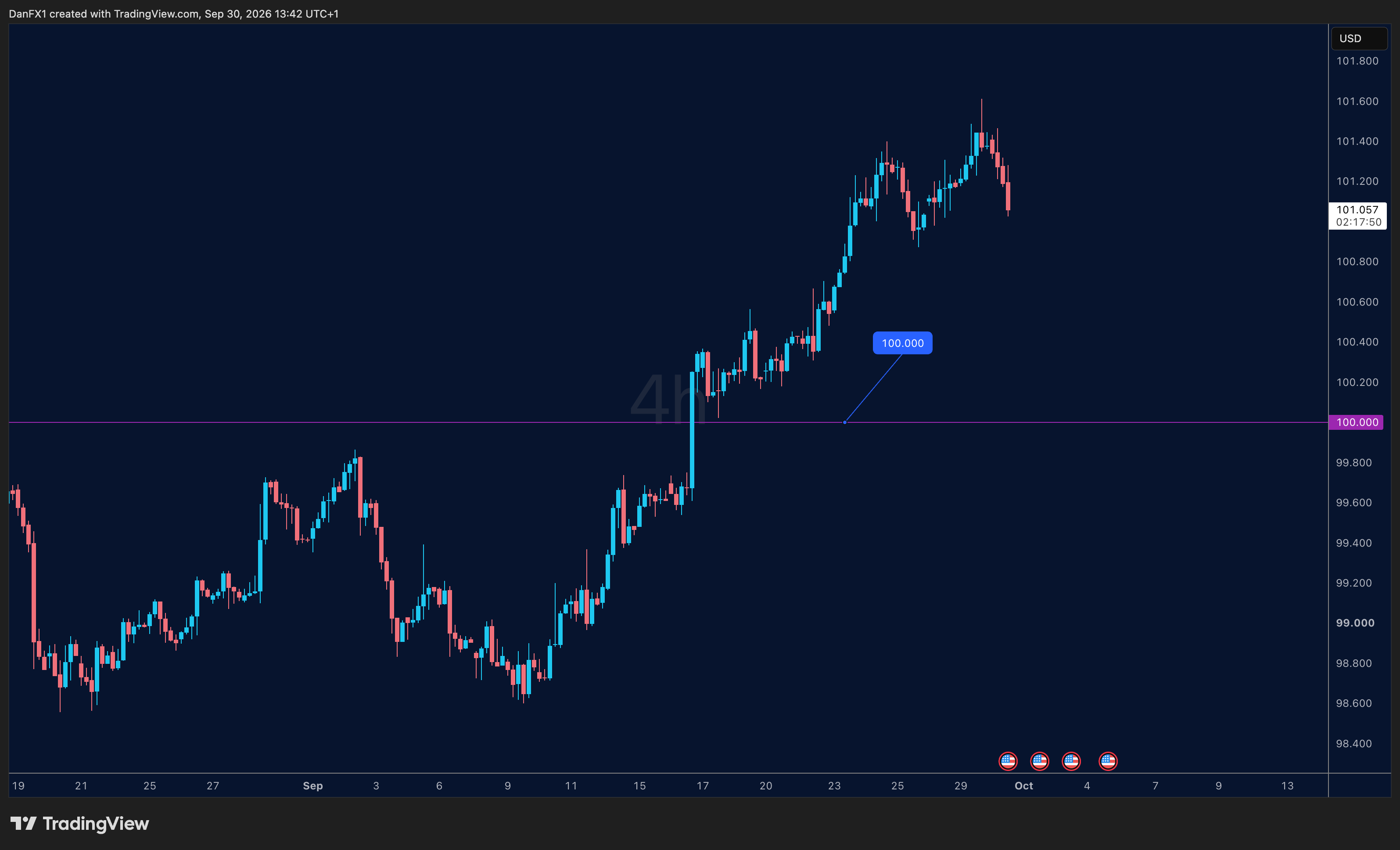
The dollar index (DXY) broke above the 100 level for the first time in nearly seven weeks, reversing much of the weakness seen in August. Improving market positioning also supported the move, with leveraged funds gradually increasing dollar exposure ahead of the Fed decision.
EUR: EURUSD moved lower towards the 1.14 area as the widening policy gap between the Fed and other major central banks supported the dollar.
JPY: USDJPY remained volatile as higher US yields supported the pair, while yen demand and potential intervention risks limited further upside.
The dollar enters October with momentum, but future moves will depend on whether inflation and labour-market data continue supporting expectations for a higher-for-longer Fed policy stance.
Oil Retreats as Supply Risks Ease
Oil markets moderated in September as earlier supply concerns began to fade, although geopolitical risks continued to keep energy markets sensitive to headlines.
Brent crude (UKOUSD) had previously climbed towards USD108 as traders priced in potential disruptions linked to Middle East tensions and shipping risks. By the end of September, prices had eased towards USD100 as immediate concerns over supply interruptions reduced.
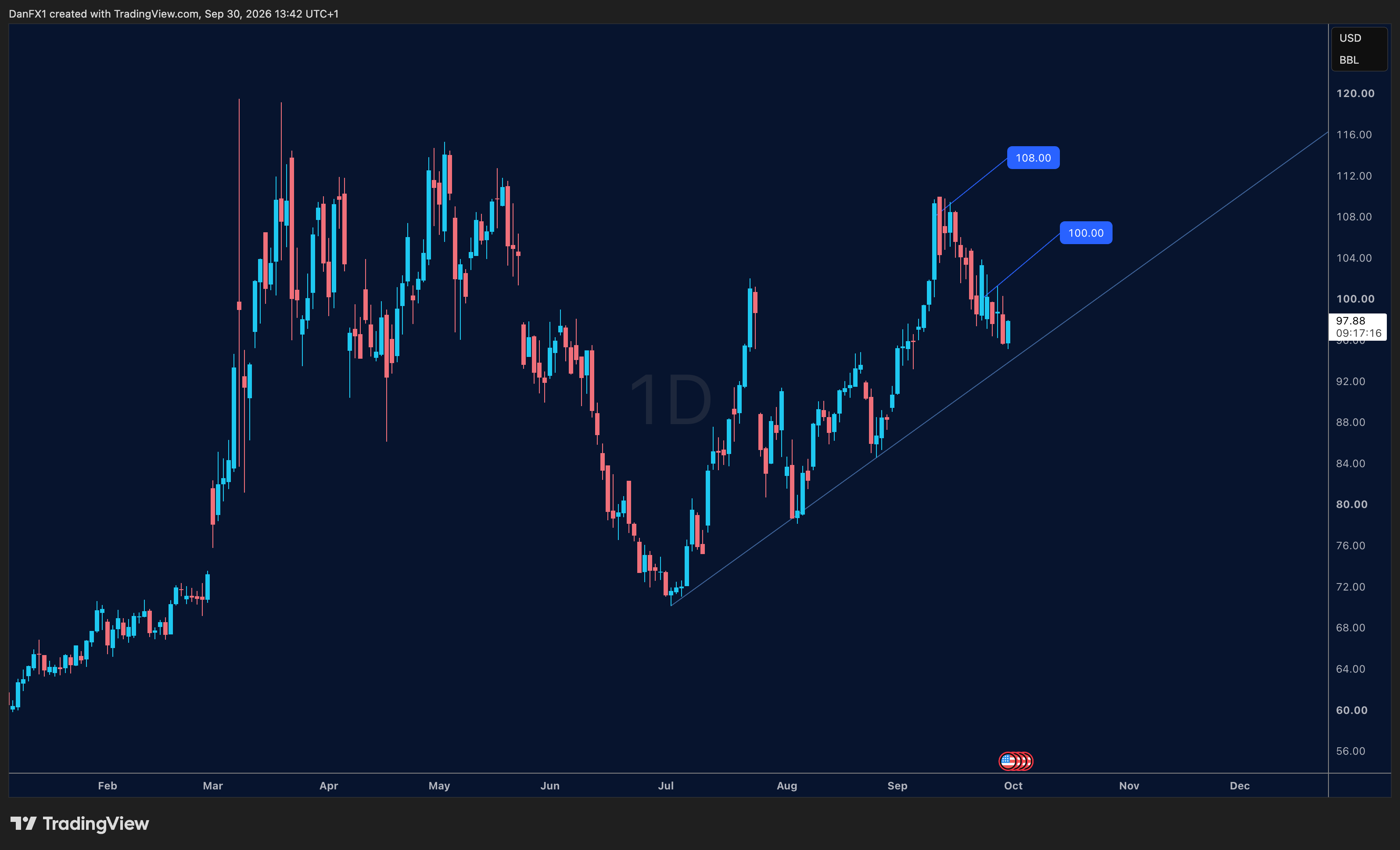
The decline in oil prices provided some relief to the inflation outlook. Energy costs have been one of the more persistent contributors to headline inflation, meaning a sustained pullback in crude prices could help reduce pressure on consumers and give central banks greater flexibility.
However, the broader supply risk has not disappeared. Shipping activity through key routes remains closely monitored, and renewed escalation could quickly restore the geopolitical premium.
Oil therefore remains caught between two competing forces: improving inflation conditions on one side and ongoing geopolitical supply risks on the other.
AI Optimism Keeps Equities Resilient
Equity markets continued their rally in September despite higher Treasury yields, a stronger dollar and a more hawkish Federal Reserve outlook.
The S&P 500 and Nasdaq reached fresh record highs during the month, challenging the traditional relationship between tighter monetary policy and risk assets. While higher rates typically increase pressure on valuations, investors remained focused on corporate earnings and the long-term growth potential of AI-related investment.
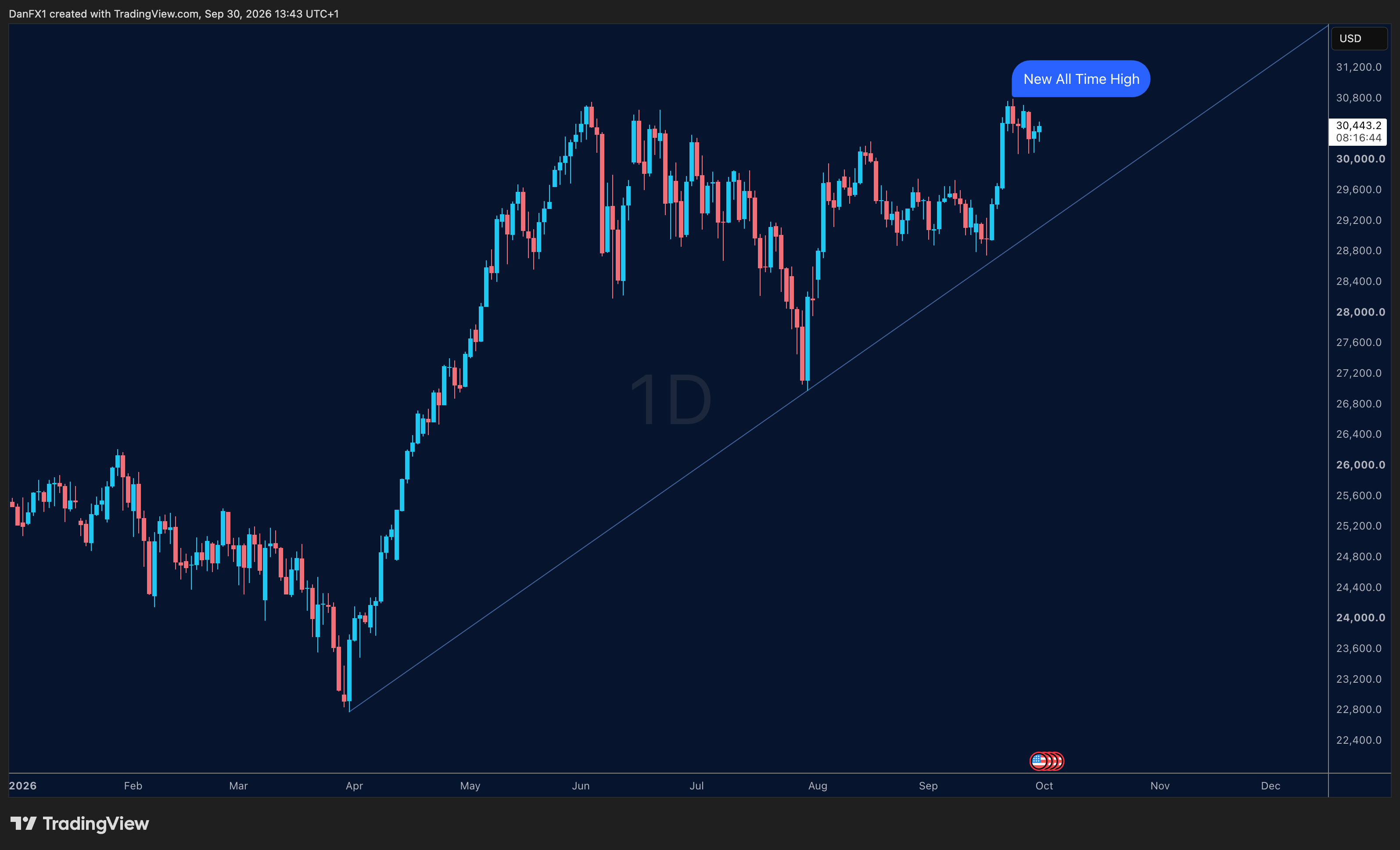
AI infrastructure remained the dominant theme behind the rally. Semiconductor companies and technology firms linked to data centres, cloud computing and artificial intelligence investment continued to attract strong investor interest.
Several major technology names like Intel, AMD, and Qualcomm posted significant gains as markets focused on the potential returns from continued AI spending. The focus has increasingly shifted from whether companies will invest in AI, towards whether those investments can generate sufficient revenue growth to justify current valuations.
For equities, the key question entering October is whether earnings results can continue supporting the current momentum, particularly as markets become more sensitive to disappointing guidance or renewed pressure from bond yields.
Gold Balances Rate Pressure Against Safe-Haven Demand
Gold (XAUUSD) experienced a volatile September as investors weighed opposing forces from monetary policy, currency movements and broader uncertainty.
The precious metal initially came under pressure following the Federal Reserve decision, falling more than 1% as higher Treasury yields and a stronger US dollar reduced demand for non-yielding assets. Gold briefly moved towards USD 4,240 after trading above USD 4,365 earlier in the session.
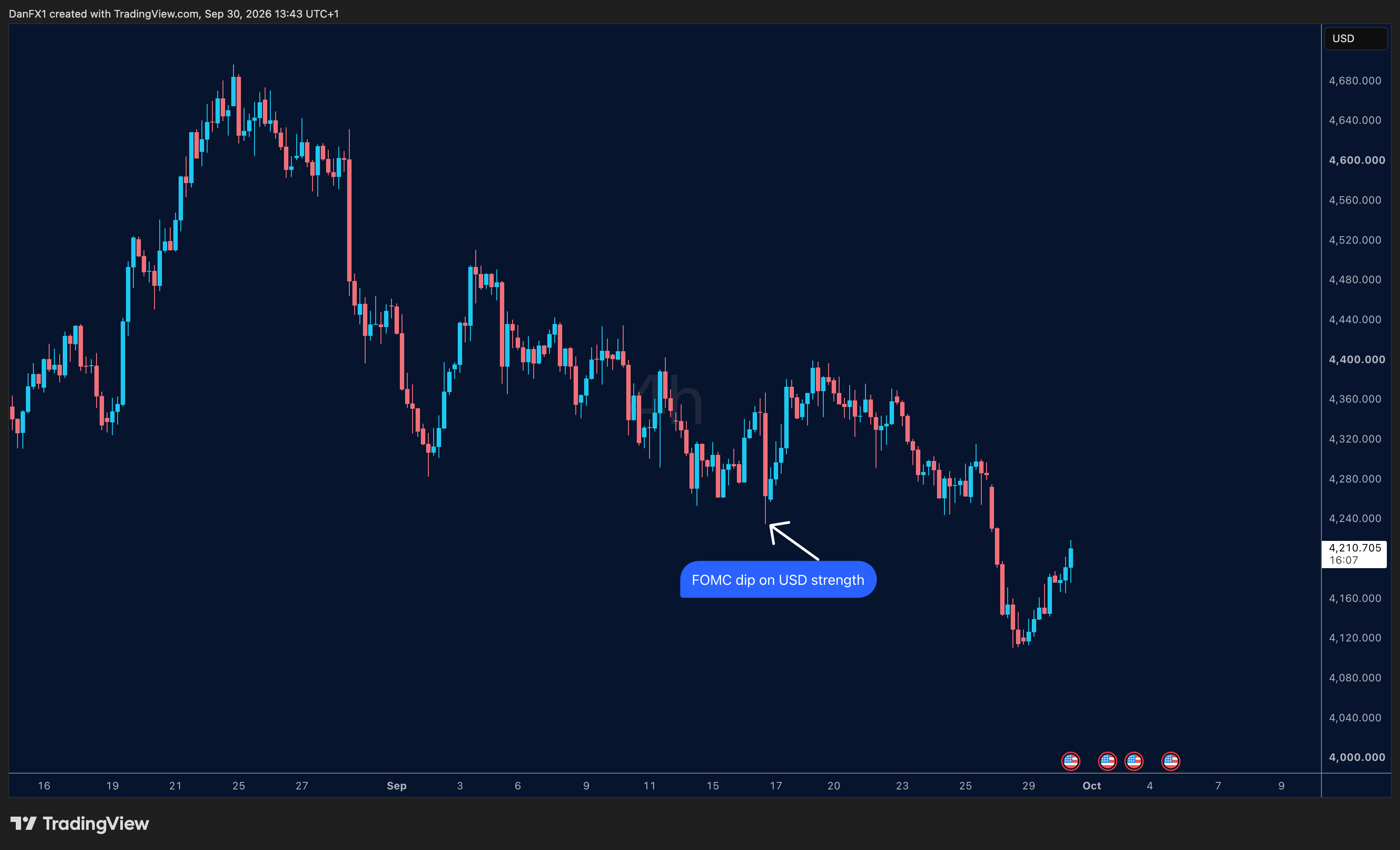
However, downside pressure remained limited as broader market risks continued to support demand for defensive assets. Fiscal concerns, geopolitical uncertainty and expectations for long-term inflation risks provided underlying support despite the Fed’s tighter policy stance.
The decline in oil prices also reduced some immediate inflation concerns, allowing markets to reassess the balance between restrictive monetary policy and safe-haven demand.
Gold’s outlook remains closely tied to the path of interest rates, with higher yields creating pressure while uncertainty continues to support demand.
Gold is available to trade as a XAUUSD CFD at VT Markets. Explore 24/7 Gold markets.
Bitcoin Rebounds as Institutional Demand Returns
Bitcoin delivered one of its stronger monthly performances in September, recovering from earlier weakness as institutional demand and improving market sentiment supported digital assets.
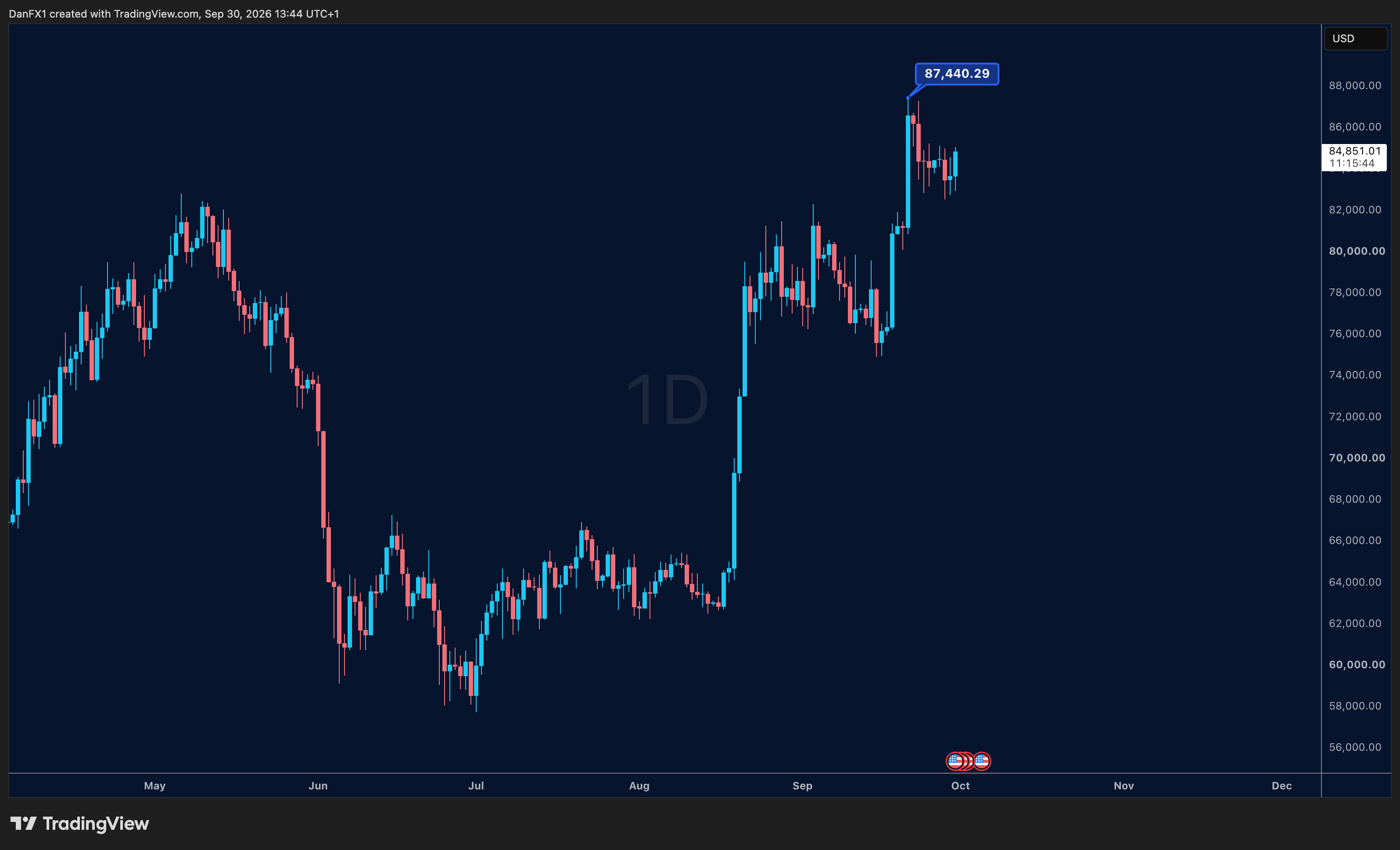
Bitcoin climbed from the high USD70,000 range in early September to above USD86,000 later in the month. The move coincided with renewed inflows into crypto investment products, particularly Bitcoin and Ethereum funds, suggesting continued interest from institutional investors.
Regulatory developments also remained supportive. Progress surrounding the CLARITY Act kept attention on the future framework for digital assets in the US, with investors watching how clearer rules around market structure and crypto classifications could influence institutional involvement.
Bitcoin (BTCUSD) and Ethereum (ETHUSD) moved largely in sync during the recovery, while broader participation across digital assets suggested improving appetite beyond the largest cryptocurrencies.
However, tighter financial conditions remain an important counterforce. Crypto markets will continue to depend on liquidity conditions, institutional flows and regulatory developments as October begins.
October presents a more difficult test for markets: can equities continue rising despite a stronger dollar and a hawkish Fed stance, or will tighter financial conditions eventually weigh on sentiment?
Early Signals for October
October begins with an important question for markets: can equities continue to absorb higher rates and a stronger dollar, or will tighter financial conditions begin to weigh on risk appetite?
PCE and GDP Offer Mixed Signals for the Fed
Personal Consumption Expenditures (PCE) inflation and GDP data landed on the final day of September with a mixed signal for the Fed. ADP jobs rose to 90K versus 73K expected, up sharply from 36K previously, while gross domestic product (GDP) growth accelerated to 2.2% against expectations of 1.5%.
Inflation was softer. Core PCE rose 0.2% month-on-month, below the 0.3% forecast, while the GDP Price Index came in at 6.1% versus 6.4% expected. The combination of stronger growth and cooler inflation gives the Fed some room to remain patient after September’s rate hike.
The focus now shifts to Friday’s NFP report. Strong labour data could reinforce the case for keeping rates restrictive, while softer employment growth could give the Fed more room to wait before considering another hike.
AI earnings Face a Higher Bar
Equity markets enter October with valuations supported by strong AI-related momentum, but Q3 earnings will test whether investment in AI infrastructure, semiconductors and data centres can continue translating into sustainable growth.
- Equities: Earnings results and corporate guidance will determine whether AI-driven momentum can continue despite higher yields and a stronger dollar.
- Gold: Fed expectations, Treasury yields and geopolitical risks remain the key drivers as gold balances rate pressure against defensive demand.
- Bitcoin: ETF flows, institutional participation and regulatory developments such as the CLARITY Act will shape whether September’s recovery can extend.
Trade tensions remain a risk for sentiment.
The Trump-Xi meeting reduced immediate concerns around further tariff escalation, but several issues remain unresolved, including technology restrictions, rare earths and Taiwan. Further developments in US-China relations could influence risk sentiment, commodities and safe-haven demand throughout October.
Taken together, October’s market direction will depend on how investors balance stronger economic growth against softer inflation, tighter financial conditions and geopolitical uncertainty. The Fed outlook, Q3 earnings and developments in global trade will remain key drivers across currencies, commodities and risk assets.
For a full view of upcoming economic events, check out VT Markets’ Economic Calendar.








