


 Insights
  VT
VT 


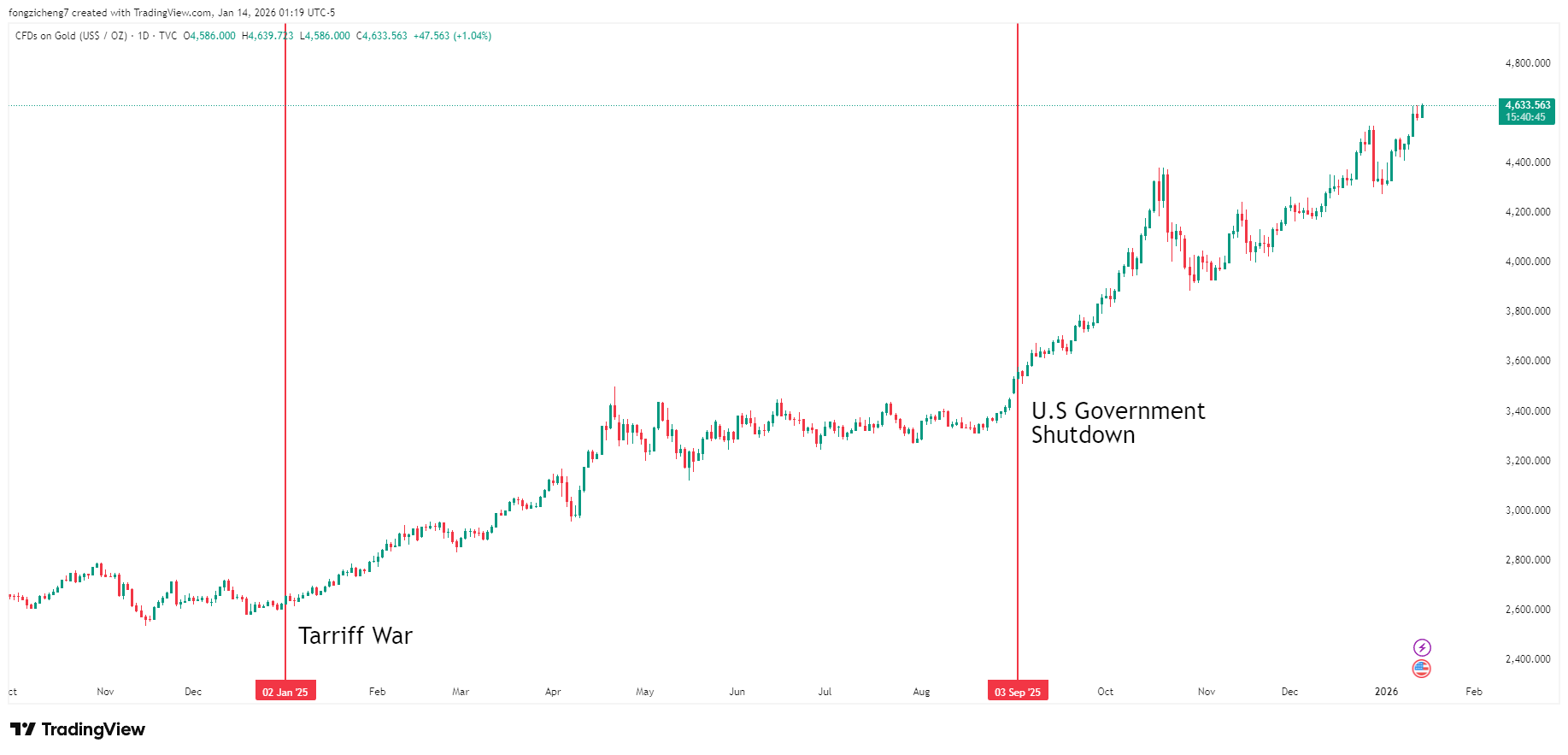
Gold remains one of the most misunderstood assets in global financial markets. It is often analysed as a commodity driven by supply and demand, yet its true relevance lies elsewhere. Gold is first and foremost a monetary asset, not an industrial one.
In 2026, gold continues to matter because it sits at the intersection of money, trust, and systemic risk. It performs a role that no fiat currency, bond, or equity can fully replicate.
Historically, gold tends to perform best during periods of:
- Monetary uncertainty, when central bank credibility is questioned
- Currency debasement, as fiat currencies lose purchasing power over time
- Geopolitical fragmentation, when global coordination weakens
Unlike equities or bonds, gold does not rely on earnings, dividends, or political alignment. Its value is derived from what it is not:
- Not a liability
- Not tied to any single government
- Not dependent on a payment or settlement system
In a world increasingly shaped by fiscal dominance, geopolitical blocs, and the weaponisation of finance, gold continues to function as neutral monetary collateral.
Source: Tradingview
The Macro Regimes That Drive Gold
Gold does not move randomly. Its long-term trends are driven by a small number of macroeconomic variables that traders must understand.
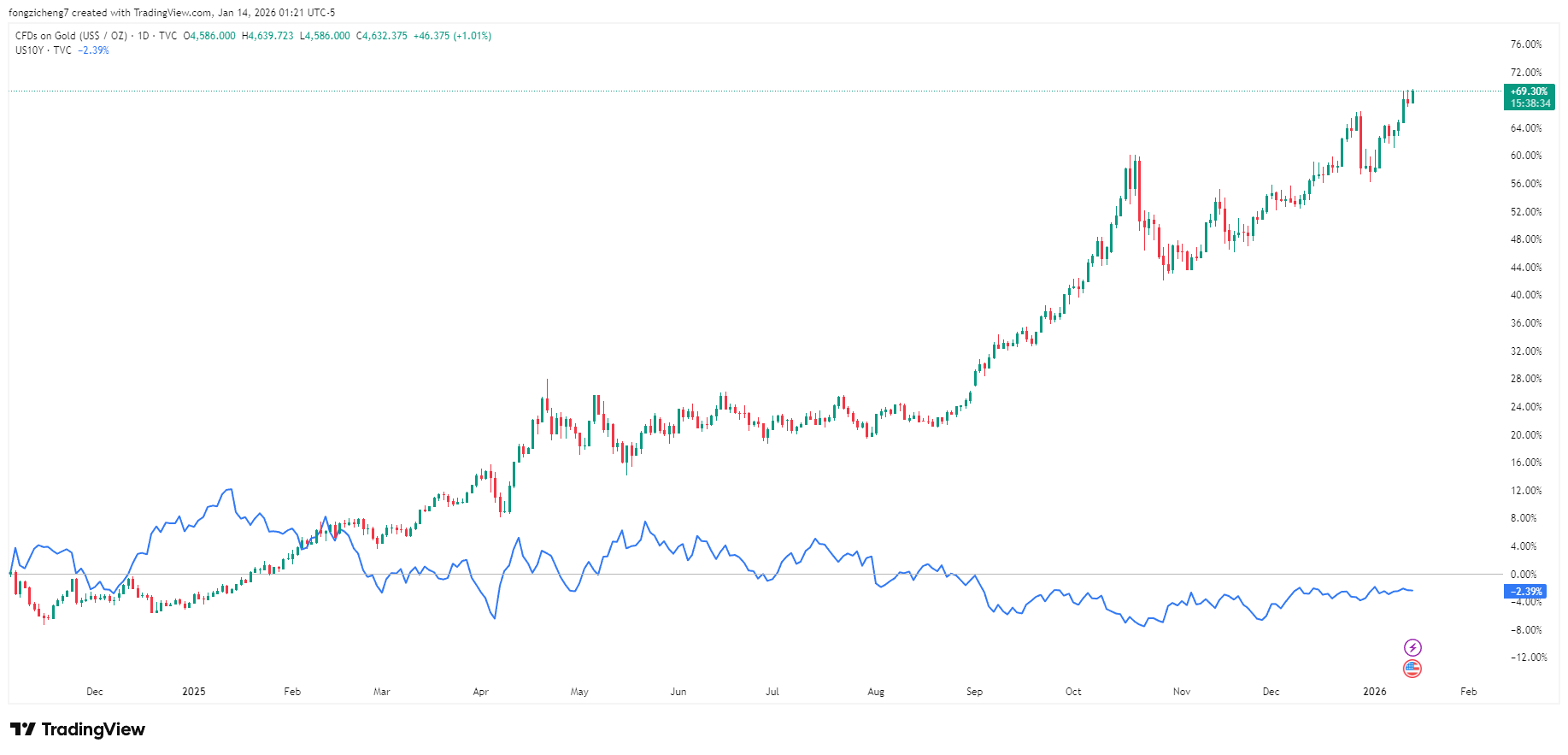
Real Yields (Not Nominal Yields)
Gold is highly sensitive to real interest rates, defined as nominal yields minus inflation.
- When real yields fall or are capped, gold becomes more attractive
- When real yields rise, the opportunity cost of holding gold increases
Nominal yields alone are misleading. What matters is purchasing power, not headline interest rates.
Source: Tradingview
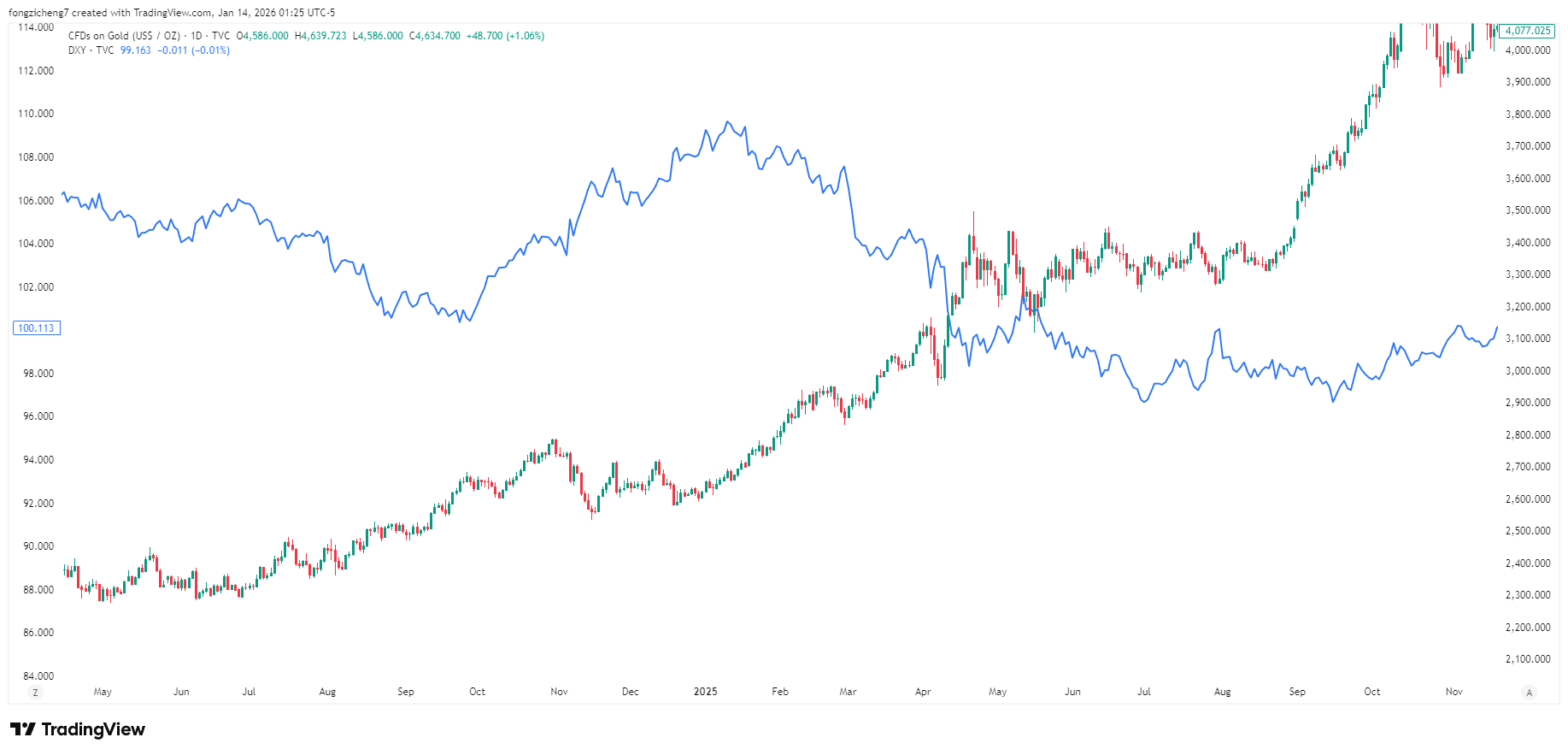
US Dollar Trend vs US Dollar Volatility
Gold’s relationship with the US dollar depends heavily on context:
- A strong, trending US dollar typically pressures gold
- A volatile or range-bound dollar often supports gold
It is not simply about dollar strength, but how that strength is expressed.
Source: Tradingview
Liquidity Cycles
Gold responds directly to global financial conditions:
- Loose liquidity and expanding central bank balance sheets favour gold
- Tight liquidity and restrictive policy environments suppress it
Gold tends to thrive when liquidity risk is asymmetric and confidence in policymakers begins to erode.
Central Banks & Structural Demand
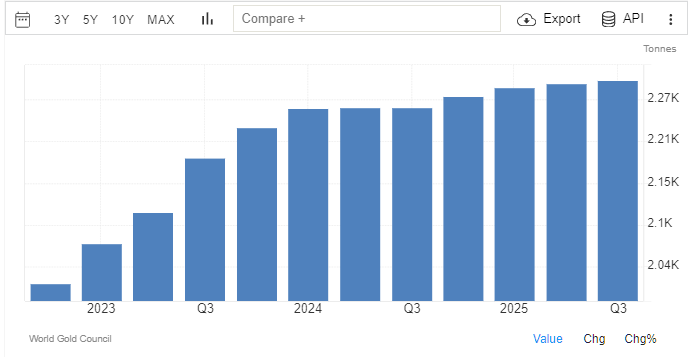
One of the most important structural shifts of the past decade has been the growing role of central banks in the gold market.
Central Banks as Price-Insensitive Buyers
Central banks do not buy gold for short-term profit. Their motivations include:
- Reserve diversification
- Balance sheet resilience
- Sovereign risk reduction
This creates a layer of persistent, non-speculative demand that supports gold over the long term.
China’s Long-Term Reserve Strategy
China has steadily increased its gold reserves as part of a broader strategy to:
- Reduce reliance on the US dollar
- Strengthen monetary sovereignty
- Hedge geopolitical and financial risk
This demand is strategic rather than cyclical, making it more durable than traditional investment flows.
Source: Trading Economics
Gold as a Non-Sanctionable Asset
Unlike foreign reserves held in other currencies, gold:
- Cannot be frozen
- Cannot be sanctioned
- Cannot be digitally blocked
In an increasingly fragmented global system, this characteristic makes gold uniquely attractive to sovereign holders.
Gold vs Other Assets (Relative Performance)
Gold should always be analysed relative to other major asset classes, not in isolation.
Gold vs USD
Gold typically performs best when the dollar is:
- Weak
- Sideways
- Volatile
A strong and stable dollar usually acts as a headwind.
Gold vs Equities
- Equities thrive on growth, optimism, and expanding earnings
- Gold thrives on uncertainty and capital preservation
They serve fundamentally different roles within a portfolio.
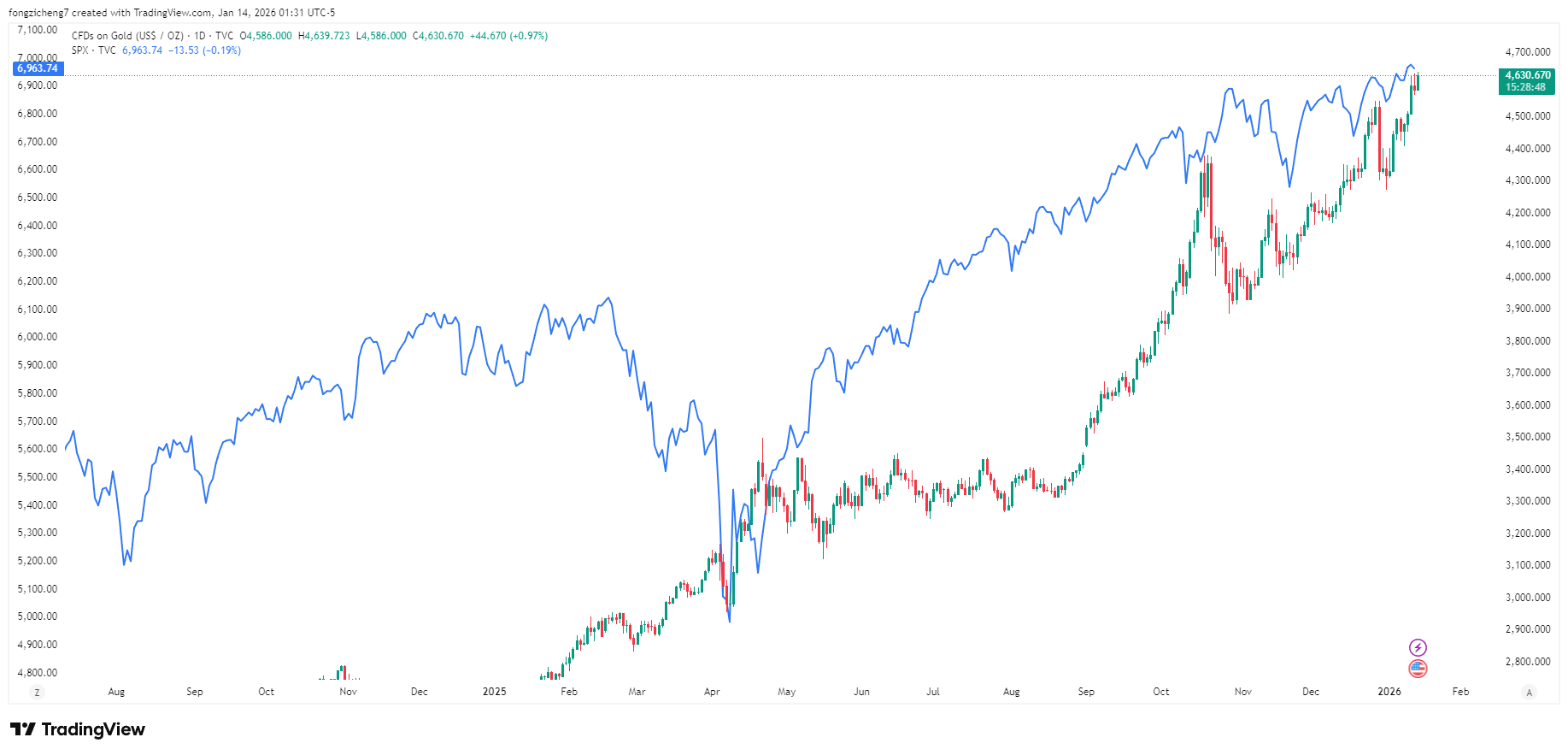
Source: Tradingview
Gold vs Bonds
When bond yields fail to compensate investors for inflation risk, gold becomes more attractive as a store of value.
Gold vs Bitcoin
Bitcoin competes with gold narratively rather than functionally:
- Bitcoin is a high-volatility, speculative asset
- Gold is a low-duration, reserve monetary asset
They may coexist, but they serve very different purposes.
Trading Gold in 2026
Trading gold successfully is less about precision and more about context.
Gold Performs Best When:
- Real interest rates are falling or capped
- The US dollar is weak or range-bound
- Investors are seeking protection gradually rather than panicking
Slow, defensive positioning tends to suit gold trends best.
Gold Is Hardest to Trade When:
- Real yields are rising
- The US dollar is in a strong, directional trend
- Central bank policy is clear, predictable, and credible
Clarity reduces gold’s appeal as a hedge.
Risk Management Matters More Than Accuracy
Gold can move sharply during volatility spikes. Traders who focus solely on being “right” often underestimate:
- Sudden liquidity shifts
- Sharp pullbacks within established trends
- Temporary dislocations driven by positioning
Survival comes from discipline, position sizing, and patience — not prediction.
The Core Takeaway for 2026
For traders, gold in 2026 is not about complexity. It is about:
- Respecting the macro backdrop
- Trading in the direction of the dominant trend
- Avoiding noisy, low-conviction periods
- Remaining disciplined during pullbacks rather than chasing breakouts
Gold rewards patience and context — not impulse.









