







U.S – Venezuela Tension: Repositioning After the Initial Shock
US action in Venezuela last weekend delivered another Trump-led market shock, resulting in the removal and arrest of President Nicolás Maduro. Markets initially reacted to the headline in their usual manner, before beginning to rationalise and reassess what the event means and whether it brings any material changes to growth, inflation, and asset pricing.
Once markets settle, the dominant question for investors is no longer what happened, but how to reposition now that the headline shock has passed.
The Initial Market Response
The first trading session followed a familiar pattern. Risk appetite dipped briefly as investors moved towards safe-haven assets, while sectors directly exposed to geopolitics, such as energy and defence, outperformed. What was notable, however, was that broader equity markets did not panic. Volatility increased, but not dramatically, and liquidity remained intact.
On Tuesday, markets were already beginning to stabilise. Generally, investors view geopolitical shocks as regional or sector-specific events, not systemic ones, when they fail to translate into broader financial stress. As a result, investors tend to move away from broad de-risking and towards selective rotation, favouring assets with potential upside from the new environment created by the headline event.
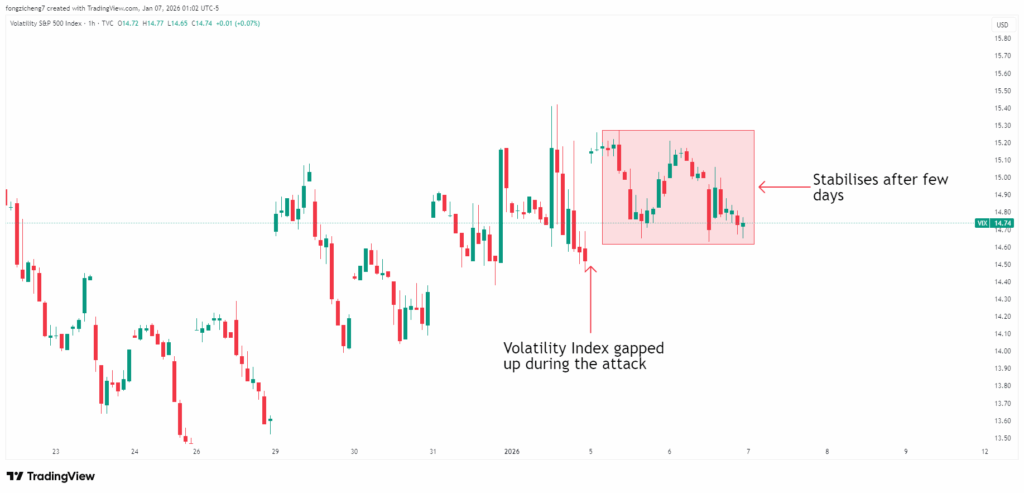
Source: Tradingview, Volatility Index Chart
Energy-related stocks held on to their gains, defence shares remained firm, while rate-sensitive and cyclical sectors showed little evidence of sustained damage.
Why Crude Stay Calm After the Venezuela Event
Oil remained the focal point, given Venezuela’s vast reserves, yet crude’s response was restrained. After an initial uptick, prices settled at recent levels, signalling no immediate structural change.
Bearishly, global supply is ample, demand growth uneven, and spare capacity elsewhere limits the impact of any Venezuelan disruption. Even a complete halt in Venezuelan output would be a small fraction of global supply.
On the bullish side, political change could eventually allow Venezuelan production to recover, but years of underinvestment and deteriorating infrastructure mean new barrels would take time to reach the market.
Traders appear to treat the events as short‑term policy noise and a medium‑term conditional option, rather than a trigger for a sustained rally. This favours tactical trades: companies exposed to Venezuelan assets may carry a premium, and refiners processing heavy crude could adjust expectations if future supplies rise.
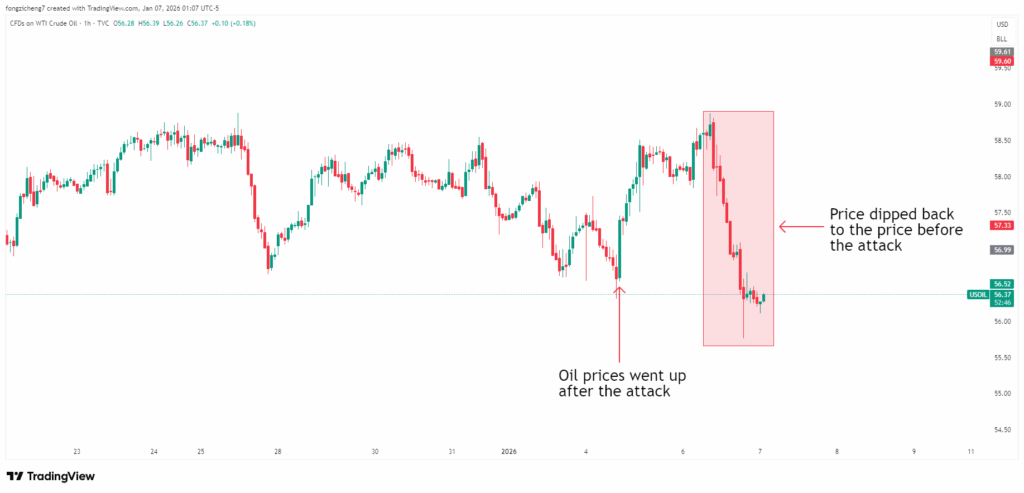
Source: Tradingview, WTI Chart
Safe Havens
Safe-haven assets followed a predictable pattern. Gold gapped up and rose sharply during the initial period of uncertainty, as investors sought protection against geopolitical risks. However, it began to settle once markets stabilised and attention returned to fundamentals such as interest rates and growth expectations.
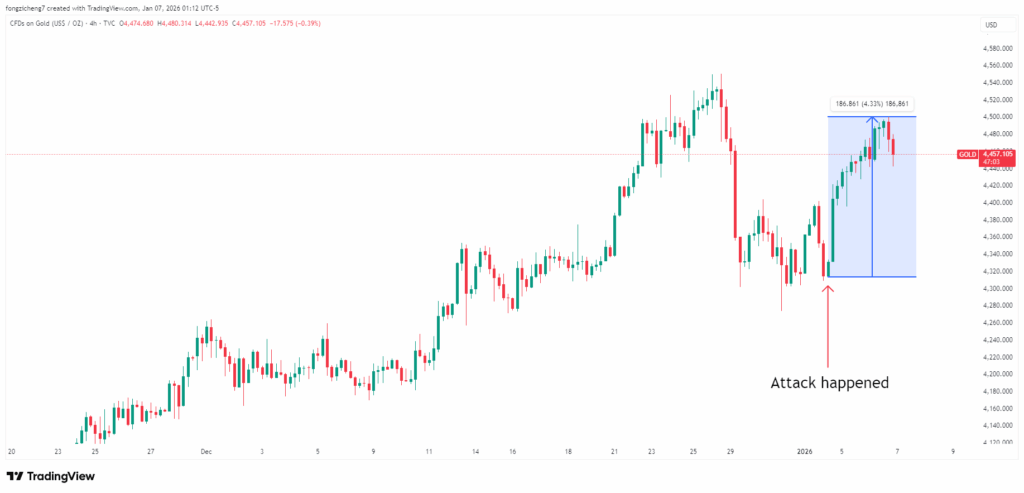
Source: Tradingview, Gold Chart
Currencies told a similar story. The USD benefited briefly from risk aversion but lost momentum as fears of escalation eased. Both moves suggest that investors view the situation as serious but contained, rather than as a trigger for a larger crisis, such as a global recession or renewed inflationary pressure.
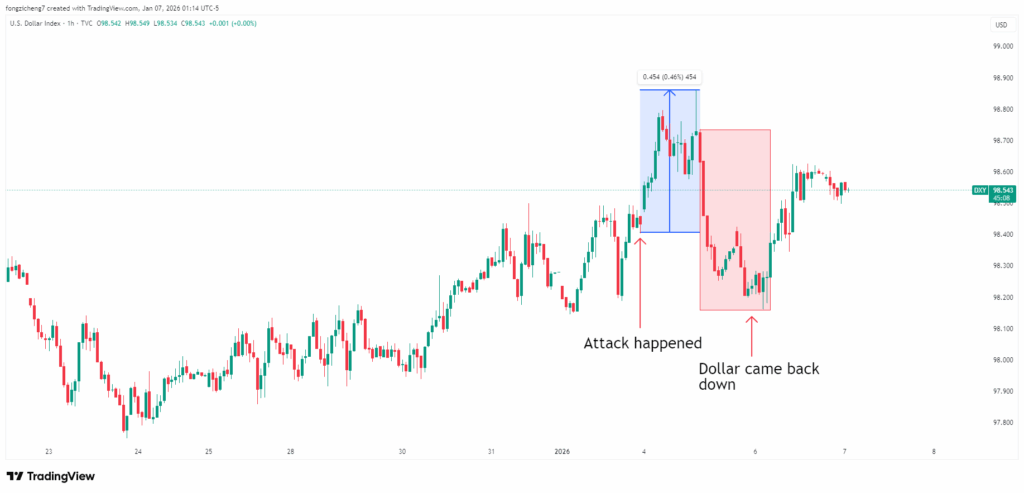
Source: Tradingview, Dollar Chart
For portfolio construction, this is a moment to reassess hedges. Large, reactive safe-haven positions often make sense during periods of uncertainty, but once the market gains clarity, the cost of holding them rises. Many investors may choose to reduce safe-haven exposure while retaining volatility protection, in case conditions deteriorate further.
Repositioning
The market is contending with two key factors. The first is near‑term instability, including protests or retaliatory actions that could affect sentiment and generate short‑term volatility. The second is longer‑term reconstruction, driven by US policy, foreign investment, and the potential reintegration of Venezuelan energy into global supply chains.
The danger for investors is conflating these timelines. The structural story may evolve positively over several years, but short‑term challenges persist. Investors should maintain selective exposure to beneficiaries of political change, while balancing this with hedges against renewed volatility.
What Traders Need To Know
The initial shock, rapid stabilisation, and swift shift from fear to indifference are clear. Oil’s muted reaction, the early peak in safe‑haven assets, and resilient equity markets all point to a reassessment rather than a sustained move away from risk. Investors and traders should watch for short‑term volatility spikes driven by headlines, while longer‑term positioning should be guided by policy signals and market access.
Create a live VT Markets account today to access our platform features, including market insights and educational content.
Disclaimer
The views and opinions expressed in this article are those of Ross Maxwell, Market Analyst at VT Markets. They reflect his professional analysis and insights on current market conditions and do not necessarily represent the official position of VT Markets. This commentary is provided for informational purposes only and should not be construed as financial advice.








