




Nvidia has staged a remarkable comeback after Jensen Huang was reinstated as chief executive officer, sending its shares surging nearly 30% and triggering a sharp rebound across US technology stocks. The announcement comes just days after a brutal Wall Street sell-off pushed major indices into correction territory, raising hopes that Nvidia could become the catalyst for a broader market recovery.
Nasdaq 100 futures jumped approximately 7% following the announcement, briefly triggering a trading halt as investors rushed to reassess their positions. Yet despite the enthusiasm, both Nvidia and the Nasdaq remain under significant technical pressure, leaving traders to question whether the rally marks the beginning of a recovery or simply a temporary reprieve from the recent market downturn.
Why Did Jensen Huang Return as Nvidia CEO?
Nvidia reinstated Jensen Huang as CEO, president and board director with immediate effect, reversing a decision that had unsettled investors earlier this month. Huang resigned on 12 November following reports concerning his personal conduct and US national security issues, introducing uncertainty over the semiconductor giant’s leadership and strategic direction.
The reversal came just six days after chairman Harvey Jones indicated that the board had no intention of bringing Huang back. According to reports, discussions with senior US officials helped reassure directors that his reinstatement would not pose a national security risk, while President Donald Trump had also publicly supported his return.
Although an independent investigation remains ongoing, Huang’s reinstatement removes a significant source of uncertainty surrounding Nvidia. For investors, the development shifts attention away from immediate leadership concerns and back towards the company’s position in the global artificial intelligence industry.
Nvidia Stock Surges Nearly 30% as Wall Street Rebounds
The market response was immediate. Nvidia shares surged from Friday’s closing level near USD 126 towards the mid-USD 160 range, representing a gain of approximately 25% to 30% before prices retreated slightly from their initial highs.
The recovery also spread across the broader technology sector, with Nasdaq 100 futures climbing approximately 7%. The rapid advance briefly triggered a trading halt, highlighting the intensity of buying interest following the announcement.
The rebound followed one of Wall Street’s most difficult sessions in recent years. On Friday, the S&P 500 declined approximately 3.7%, while the Nasdaq Composite dropped around 5.3%. Both the S&P 500 and Dow Jones entered correction territory, highlighting the severity of the recent stock market sell-off. Nvidia itself had fallen approximately 14%, with newly listed Anthropic shares also declining around 9%.
However, the recent market downturn was not driven solely by Nvidia’s leadership crisis. Concerns over excessive AI spending, elevated technology valuations and the possibility of an AI stock market bubble had already weakened investor confidence, alongside expectations of further Federal Reserve interest rate increases.
Huang’s return addresses one important concern, but whether it can restore confidence across the broader equity market remains uncertain.
Can Nvidia’s Rally Reverse the Stock Market Crash?
vidia’s influence extends far beyond its own share price. As a major supplier of advanced AI computing infrastructure and an influential constituent of US equity indices, its performance can significantly affect investor sentiment towards the broader AI investment value chain.
A sustained Nvidia recovery could encourage investors to return to semiconductor stocks and other AI-related companies that suffered heavy losses during the recent sell-off. Stronger participation across these sectors could, in turn, support the Nasdaq and potentially improve sentiment towards the wider US stock market.
However, the distinction between a relief rally and a sustainable recovery remains important. Investors may initially respond to positive headlines by closing bearish positions or buying heavily discounted shares, but these movements do not necessarily indicate that the underlying market outlook has improved.
For Nvidia’s rebound to develop into a broader recovery, traders would likely need to see stronger buying participation across major technology stocks, improving technical structures and greater confidence in the economic outlook. Without these developments, the latest surge could lose momentum as quickly as it emerged.
Nasdaq 100 Technical Analysis: Key Levels to Watch
Despite the sharp rebound in futures, the Nasdaq 100 remains within a broader downtrend. The daily chart shows a sequence of lower highs and lower lows since its October peak near 31,400, reflecting persistent selling pressure.
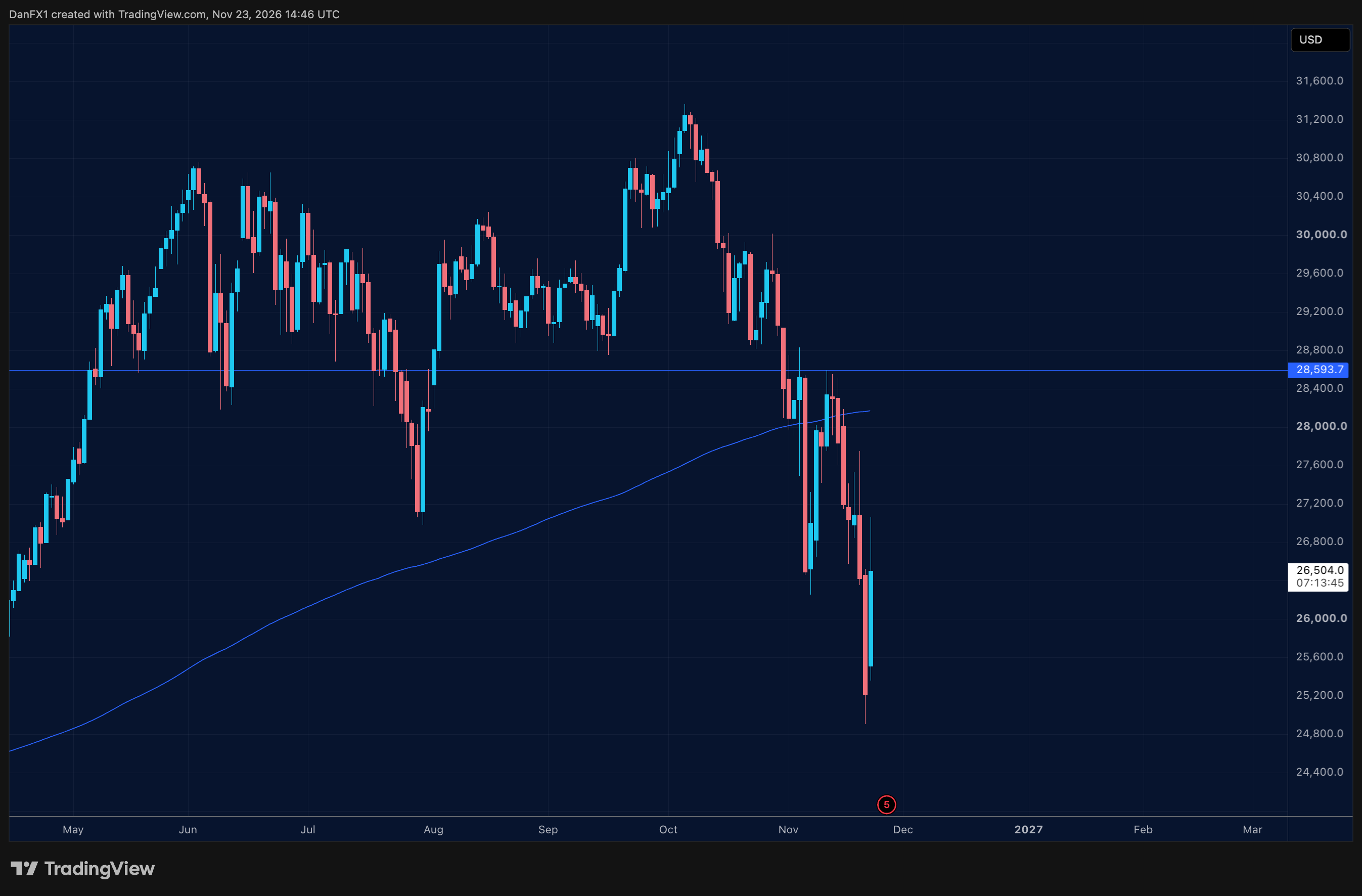
The index subsequently declined towards 24,900, representing a fall of approximately 20% from its peak. More importantly, prices remain below the declining 200-day simple moving average (SMA), currently positioned near 28,100, suggesting that the longer-term bearish trend has yet to reverse.
The immediate technical focus is whether the Nasdaq can recover above 28,100 and subsequently break resistance near 28,600. A sustained move beyond these levels, accompanied by higher highs and higher lows, could provide stronger evidence that buying momentum is returning.
Conversely, failure to reclaim these resistance areas could leave the index vulnerable to renewed selling pressure, with the recent low near 24,900 remaining an important downside reference.
Nvidia Technical Analysis: Is NVDA Still in a Downtrend?
Nvidia’s technical structure presents a similar challenge. Despite the nearly 30% rally, the stock remains in a downtrend after forming successive lower highs and lower lows from its October peak near USD 243.
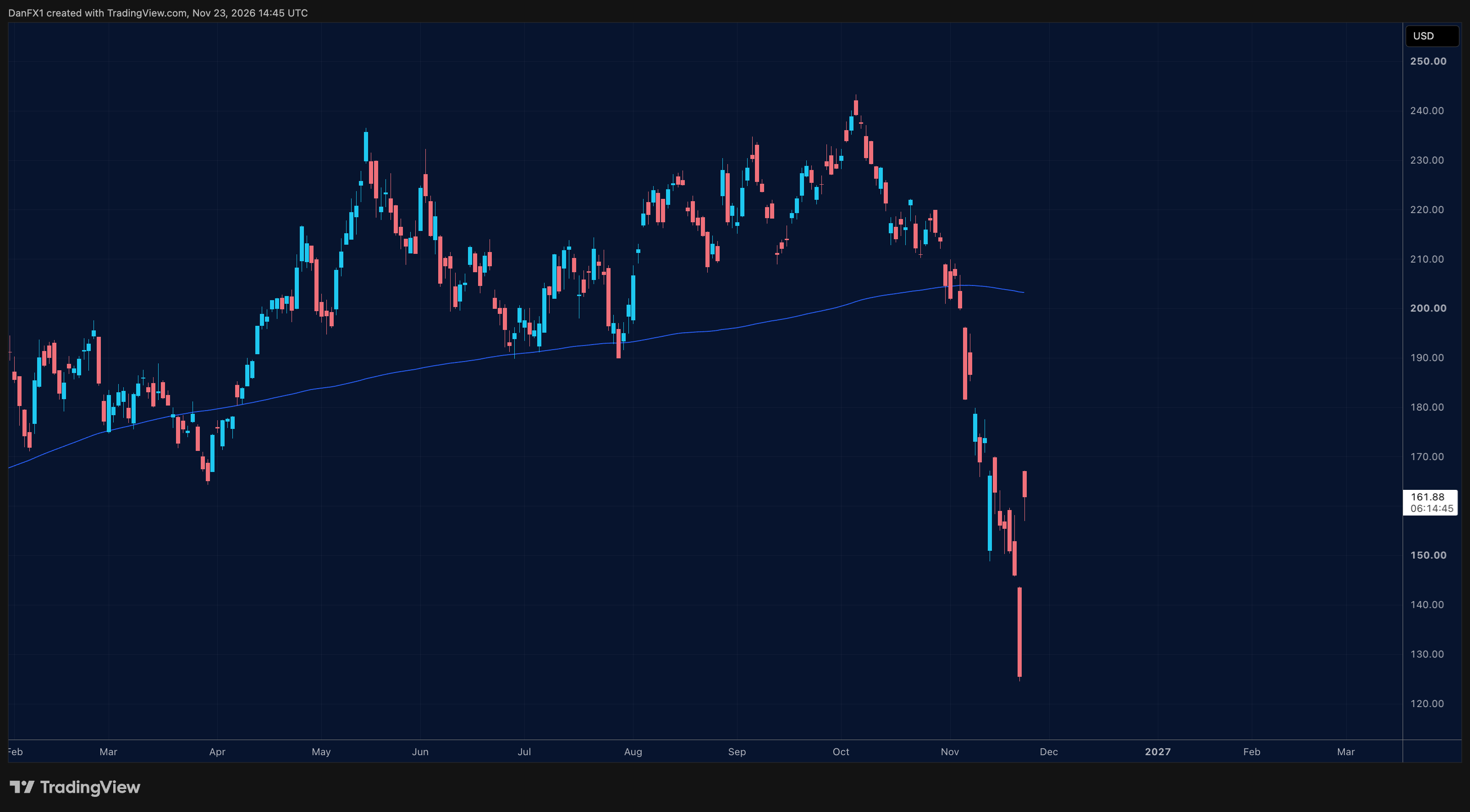
The stock also remains below its declining 200-day SMA near USD 203, indicating that the recent rebound has not yet reversed the longer-term bearish structure.
Following Friday’s low near USD 125, Nvidia’s announcement-driven rally pushed prices towards the mid-USD 160 range. This area now represents an immediate resistance zone, where traders may assess whether buyers can sustain momentum or whether profit-taking begins to emerge.
A sustained recovery above the recent rebound highs could open the possibility of a move towards higher resistance levels, including the 200-day SMA. However, confirmation of a bullish reversal would require Nvidia to establish a consistent sequence of higher highs and higher lows rather than relying on a single sharp price movement.
What Could Prevent the Stock Market From Recovering?
While Huang’s return has improved sentiment, several uncertainties could continue to influence the market.
The Federal Reserve remains a major concern, with expectations of another interest rate increase at its 9 December meeting. The supplied market brief indicates that investors have priced in approximately a 90% probability of a hike, keeping pressure on growth-oriented technology stocks. Changes in interest rate expectations could therefore influence whether the latest market rebound can sustain its momentum.
Meanwhile, questions surrounding the sustainability of AI infrastructure spending remain unresolved. Although Nvidia’s leadership uncertainty has eased, investors continue to assess whether substantial investments in artificial intelligence can generate sufficient long-term returns.
Regulatory developments could also reintroduce volatility. Huang is scheduled to appear before a US House committee on 1 December, followed by Nvidia’s general counsel on 2 December, as investigations involving export controls and alleged chip smuggling continue.
These events, alongside the upcoming Federal Reserve decision, could determine whether investors maintain their renewed appetite for technology stocks or return to a more defensive stance.
Is Nvidia Leading a Market Recovery or Just a Relief Rally?
Jensen Huang’s return has delivered a powerful boost to Nvidia and the broader technology sector at a time when investor confidence was under considerable pressure. However, the market’s initial enthusiasm has yet to translate into a confirmed reversal of the prevailing downtrend.
For traders, the next important signals will come from Nvidia’s ability to sustain gains above its recent rebound levels and the Nasdaq 100’s response around the 28,100 and 28,600 resistance areas.
A sustained breakout accompanied by improving market participation could strengthen the case for a broader recovery. Until then, the latest rally remains vulnerable to renewed volatility as investors balance Nvidia’s leadership developments against persistent economic and regulatory uncertainties.
Trade NVDA with VT Markets
Nvidia’s record earnings highlight the continued expansion of AI computing, while its recent price volatility demonstrates how quickly market expectations can change.
With VT Markets, traders can access Nvidia share CFDs and monitor price movements in both rising and falling markets without owning the underlying shares. Monitor NVDAUSD price movements, analyse technical levels and respond to market changes with trading tools designed for global markets.
Create a live VT Markets account today to access market insights, educational content, and new trading opportunities across different markets.
Frequently Asked Questions (FAQ)
Why did Jensen Huang return as Nvidia CEO?
Jensen Huang was reinstated as Nvidia CEO following a board reversal of his earlier departure. According to reports cited in the analyst brief, discussions with senior US officials helped address national security concerns surrounding his return, although regulatory investigations remain ongoing.
Why did Nvidia stock surge nearly 30%?
Nvidia shares surged nearly 30% following Huang’s reinstatement, as investors welcomed the removal of leadership uncertainty. The announcement also boosted technology stocks, with Nasdaq 100 futures rising approximately 7%.
Can Nvidia’s rally help end the stock market crash?
Nvidia’s recovery could improve investor confidence and support a broader rebound in technology stocks. However, a sustained market recovery would require stronger buying participation, improving technical trends and reduced concerns over interest rates and AI valuations.
Is Nvidia stock still in a downtrend?
Despite its sharp rebound, Nvidia remains below its declining 200-day simple moving average near USD 203. The stock would need to establish higher highs and higher lows to provide stronger confirmation of a bullish trend reversal.
What are the key Nasdaq 100 levels to watch?
The Nasdaq 100 faces important resistance near 28,100 and 28,600. A sustained breakout above these levels could strengthen the recovery outlook, while failure to overcome resistance may expose the index to renewed selling pressure towards 24,900.
What could affect Nvidia stock next?
Upcoming US congressional interviews on 1 and 2 December, the Federal Reserve’s 9 December interest rate decision and ongoing concerns about AI infrastructure spending could influence Nvidia’s next major price movement.





