






Currency movements often feel sudden, but the Indian rupee’s rise or fall against the US dollar is usually the result of multiple global and domestic forces acting together. For many participants, this creates confusion. If equities are strong, shouldn’t the currency also strengthen? In reality, USDINR is influenced by a wider range of economic factors that go beyond domestic equity performance. Currency markets reflect global capital movements, differences in interest rates, trade balances, and energy costs; these often have an effect long before these factors appear in equity indices.
Equities and Currencies Don’t Always Move Together
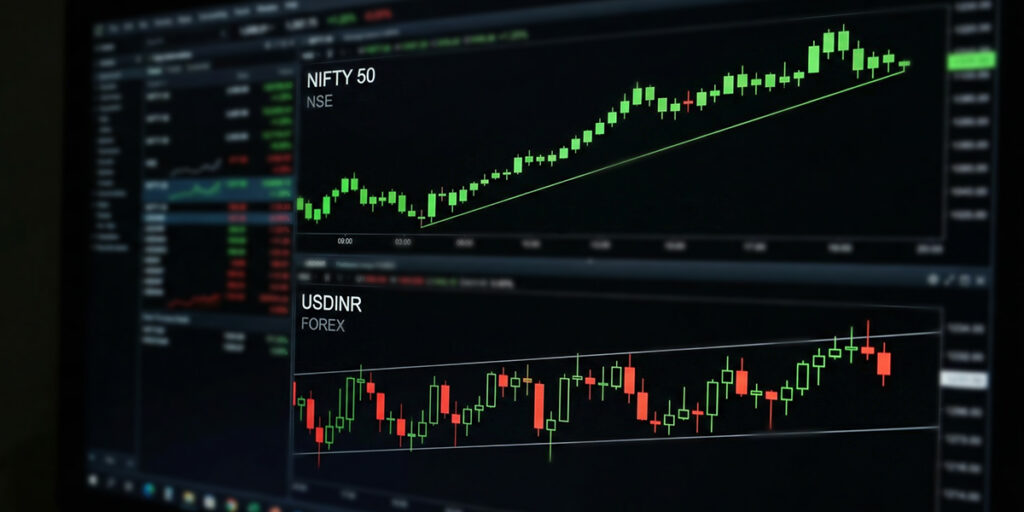
While equities and currencies can sometimes move in the same direction, they are different markets. Indian equities represent expectations for domestic growth, earnings trends, and sector performance. On the other hand, USDINR shows India’s place in the global capital and trade markets. A rise in equities, driven by local factors such as banking strength, infrastructure spending, or earnings growth, does not guarantee a stronger rupee if global forces are also boosting the US dollar. Often, USDINR responds to external pressures first, while equities adjust afterward.
Macro Force #1: US Dollar Strength and Interest Rate Expectations

One of the main drivers of USDINR is US monetary policy. When US interest rates are high or expected to remain high for an extended period, global capital tends to move toward dollar-denominated assets. Increased yields on US Treasuries make holding dollars more appealing compared to emerging market currencies. Even if India’s economic growth stays strong, interest rate differences still play a role. As long as US rates remain high, the dollar keeps its structural support, putting ongoing pressure on currencies like the INR. This situation shows why USDINR can keep rising even when Indian stocks are performing well.
Macro Force #2: Crude Oil Prices and India’s Import Dependency
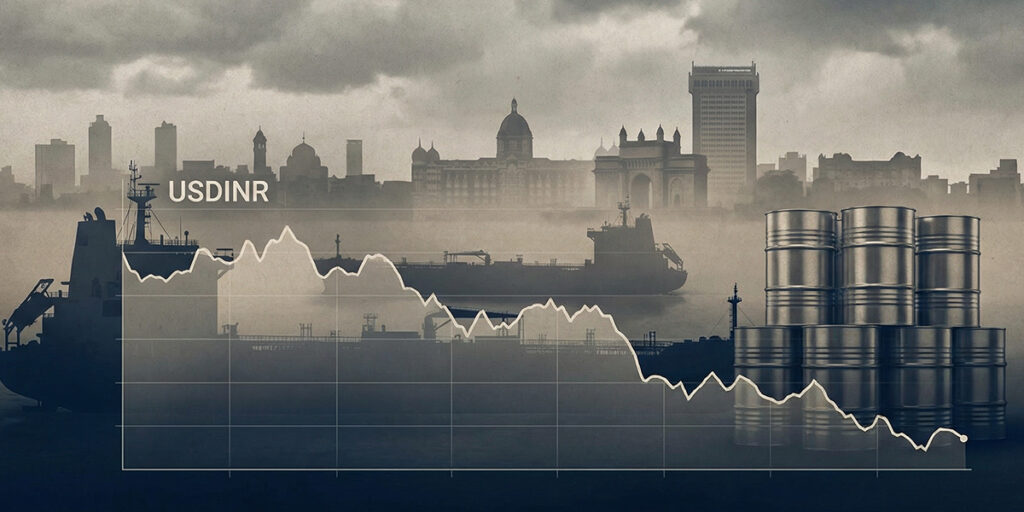
India imports approximately 85% of its crude oil requirements, making energy prices a critical variable for the rupee.
When crude oil prices rise:
- India’s import bill increases.
- Dollar demand rises as oil is priced in USD.
- The trade deficit widens.
- Pressure builds on USDINR.
Due to this, USDINR often reacts more directly to movements in oil prices than to equity market strength. Even if equities are supported by domestic growth or liquidity, rising crude prices can offset those positives at the currency level.
This structural dependence means that oil acts as a persistent headwind for INR, especially during global energy upcycles.
Macro Force #3: FII Flows and Global Capital Movement

Foreign Institutional Investors (FIIs) primarily use US dollars when investing in Indian equities and bonds.
When FIIs:
- Buy Indian assets-USD is converted into INR, which supports the rupee.
- Sell Indian assets-INR is converted back into USD, increasing the demand for dollars.
Importantly, capital outflows typically show up in USDINR before they appear in equity indices. This is why the currency market can serve as an early warning signal, even when the main equity indices seem strong. Periods of global risk aversion, rising US yields, or geopolitical uncertainty often lead to FII outflows, which can weaken the INR, even if domestic investors (DIIs) continue to support equity prices.
Macro Force #4: RBI’s Role

A common misconception is that the Reserve Bank of India (RBI) actively targets a “strong rupee.” In reality, the RBI’s primary objective is currency stability, not appreciation.
The RBI focuses on:
- Reducing excessive volatility
- Ensuring orderly market functioning
- Preventing disruptive, one-sided moves
Intervention typically occurs during sharp or disorderly moves rather than long-term trends. If USDINR weakens gradually due to structural or global factors, the RBI may allow that adjustment rather than resist it aggressively. This approach helps preserve foreign exchange reserves while maintaining credibility in currency markets.
Macro Force #5: Trade Deficit and Current Account Dynamics
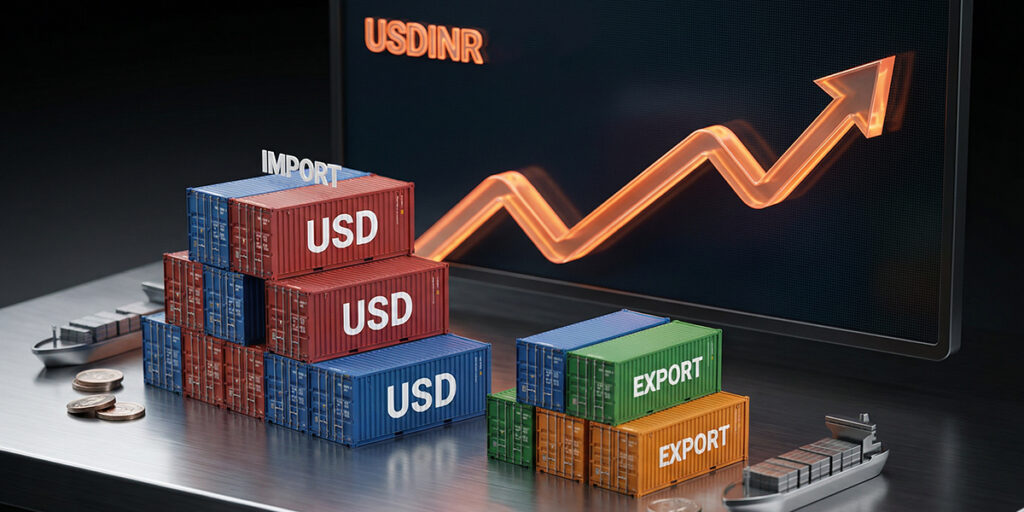
India’s trade balance plays a structural role in shaping USDINR over time.
The trade deficit tends to widen when:
- Crude oil prices rise.
- Export growth slows
- Global demand weakens
A persistent trade deficit implies net dollar outflows, which naturally exert upward pressure on USDINR. Unlike equity flows, which can be cyclical, trade flows are structural and continuous.
This is why the rupee often weakens during global slowdowns or commodity price spikes, even if domestic equities remain supported by internal demand.
Macro Force #6: Global Dollar Index (DXY)
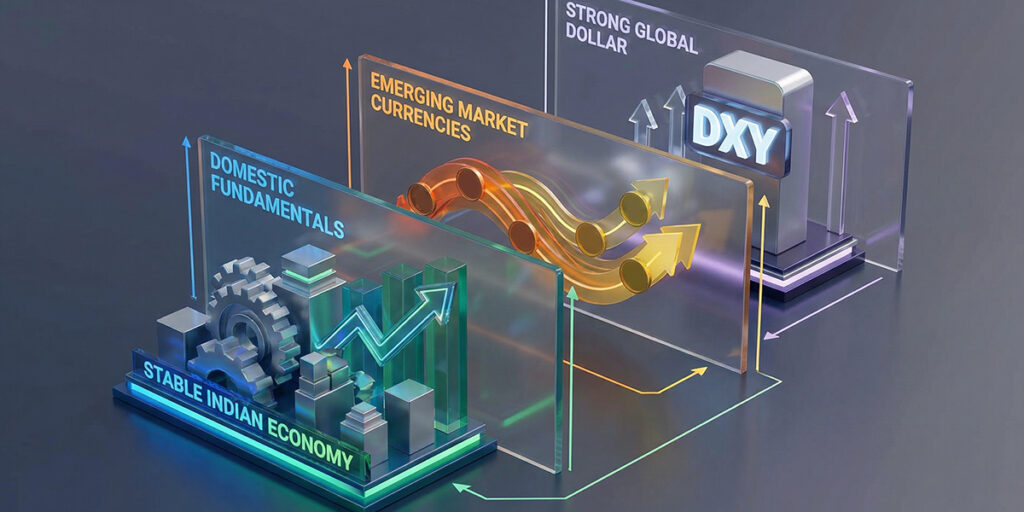
USDINR does not trade on its own. It is part of the larger group of emerging market currencies and often follows trends in the US Dollar Index (DXY).
When DXY strengthens:
Most emerging market currencies come under pressure.
INR performance should be compared to its peers, not viewed alone.
A weakening INR during a time of strong DXY does not automatically mean domestic weakness. It shows the global strength of the dollar, which impacts almost all currencies outside the US at the same time. Understanding USDINR within the context of global dollar cycles is important for correct interpretation.
What Traders, Investors, and Businesses Should Watch Going Forward
For market participants, focusing only on equity performance can be misleading when evaluating currency risk. A multi-factor approach is necessary.
Key variables to monitor include:
- US inflation and interest rate expectations
- Crude oil price trends and energy supply dynamics
- FII flows across equities and bonds
- RBI intervention patterns and FX reserve levels
- India’s trade deficit and current account balance
- Broad US dollar strength via DXY
USDINR is best understood as a macro barometer, reflecting global liquidity, trade flows, and capital allocation decisions.
Bottom Line
A strong Indian equity market does not ensure a strong rupee. The USDINR is influenced by global factors that often surpass local confidence. This is especially true during times of high US rates, increasing crude prices, and strong dollar trends. For traders, USDINR can provide early hints about global risk sentiment. For investors, it emphasizes the importance of returns adjusted for currency changes. For businesses, it highlights the need for active currency risk management.
Create a live VT Markets Account & start trading








