






The US earnings season is one of the most dynamic periods for traders. As publicly listed companies announce their quarterly financial results, markets typically react with increased volatility and significant price movements, presenting both opportunities and risks. But successful trading during earnings season isn’t just about chasing big numbers. It’s about reading the market’s reaction to expectations, sentiment, and forward-looking guidance.
Let’s explore how traders can carefully handle this period effectively using key strategies, insights, and risk controls.
What Is the US Earnings Season?
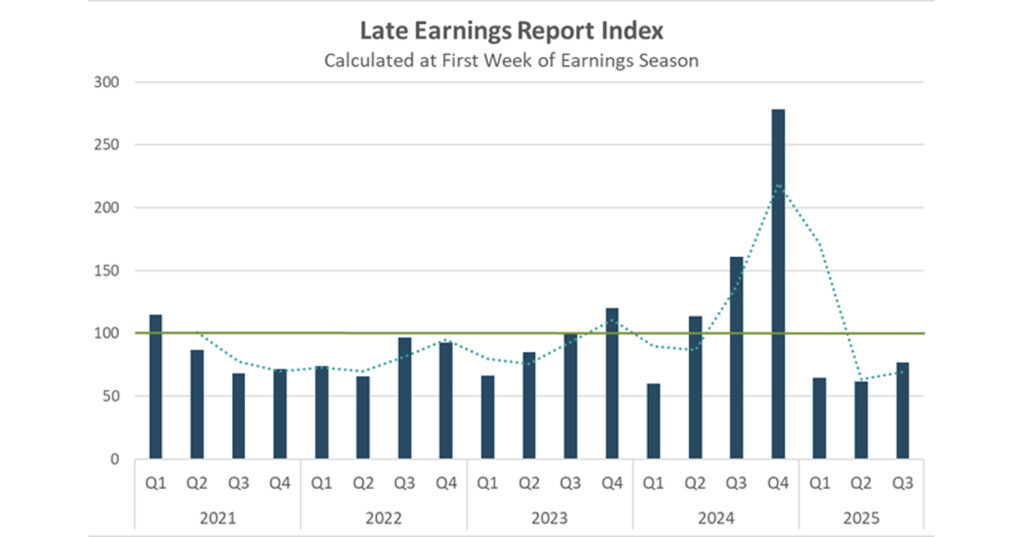
The US earnings season occurs quarterly, typically beginning in mid-January, April, July, and October, when most publicly traded companies release their quarterly financial results. These earnings reports include important metrics such as
- Revenue
- Earnings Per Share (EPS)
- Net profit margins
- Forward guidance
What matters most is not just the numbers themselves, but how they compare to analyst expectations and what the company predicts for the future.
For instance, a company might report strong revenue growth; however, if its guidance is weak, the stock price can still drop. On the other hand, moderate results accompanied by optimistic guidance can improve market sentiment and lead to price increases.
High Time for Traders

Earnings reports can trigger major price movements in not just individual stocks but entire sectors. A positive or negative earnings surprise can shift investor sentiment dramatically. But more often than not, it’s the forward guidance, not the headline EPS or revenue figure, that moves markets the most.
Valuation concerns can significantly impact a company’s stock performance. A company might exceed earnings estimates; however, if investors view its stock as overvalued, the market reaction could still be negative. For example, in Q1 2025, Palantir outperformed expectations in revenue and earnings per share (EPS) but experienced an 8% decline in after-hours trading due to worries about its high valuation. Contradictorily, Alphabet not only beat earnings expectations but also announced a share buyback and a dividend, which positively influenced its stock price. This illustrates how investor sentiment and shareholder-oriented strategies can drive post-earnings reactions.
Smart Strategies for Trading Earnings
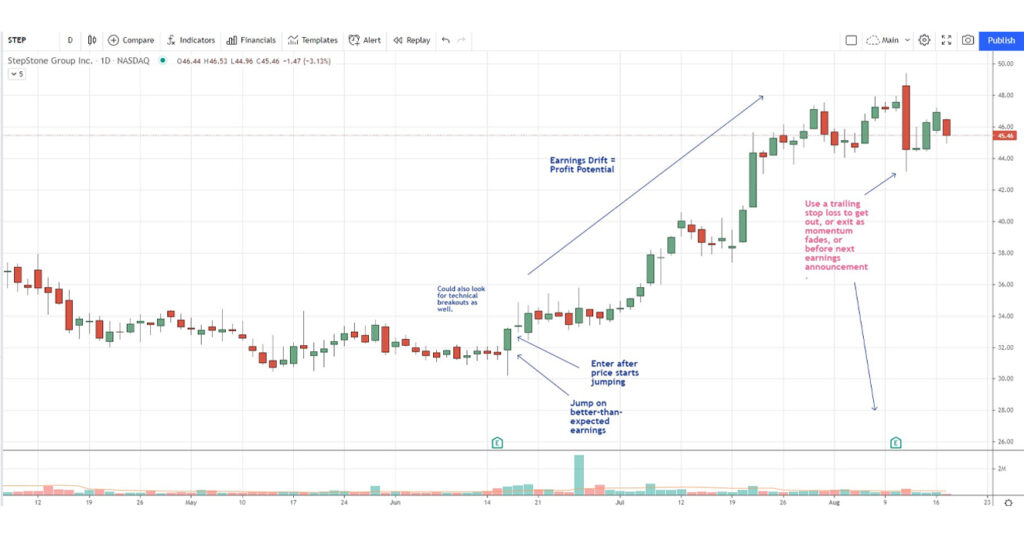
There are generally two main approaches to trading earnings: positioning before the report in anticipation of results, or trading the reaction after the numbers are out. The former can yield substantial gains if your call is right, but it also comes with higher uncertainty. A more risk-conscious strategy is to take a partial position before earnings, and then add or reduce based on how the market reacts after the release.
Timing is everything. Make use of earnings calendars to track upcoming reports and align your entry and exit plans. Studying options data can also help you assess how much volatility is expected. Compare the implied volatility (from options prices) with historical volatility during past earnings to gauge whether the market may be overpricing or underpricing the move.
Technical analysis becomes particularly relevant. Stocks often consolidate in the days leading up to earnings, forming clear support and resistance levels. These zones can act as breakout points once the earnings are released.
Making Sense of the Reports

It’s important to look beyond the headline figures. Analysts and professional traders examine several factors: how earnings per share (EPS) compare to consensus forecasts, whether revenue growth meets market expectations, the trend in profit margins, and the tone of the company’s forward guidance.
Sometimes, a company may report impressive results but still disappoint investors due to overly high expectations or vague guidance. A lack of forward guidance is typically viewed negatively, as it indicates uncertainty or a lack of clarity from management. Conversely, even a small earnings beat can lead to an increase in the stock price if it is accompanied by optimistic forecasts and clear insights into growth.
Managing Risk in a Volatile Environment

Earnings season is inherently volatile, making risk management essential for long-term success. Traders should avoid overexposing themselves to any single position. Instead, they should use stop-loss orders set just beyond technical levels, maintain moderate position sizes, and define their risk-to-reward ratios before entering any trade.
It’s also wise to refrain from making impulsive decisions immediately after an earnings release. Stocks can be erratic in the minutes and hours that follow a report, often experiencing price swings before a clear direction is established. Waiting for confirmation of the trend direction typically leads to better outcomes than reacting based on initial price movements.
Tools That Can Help
To trade earnings season effectively, leverage the right tools. Earnings calendars help you stay ahead of scheduled reports. Volatility analysis tools can offer insights into potential price swings. Technical charts help you identify breakout or breakdown zones, and real-time news feeds or sentiment trackers give you a pulse on market psychology.
Final Thoughts

Trading during earnings season is about preparing for potential scenarios and managing them with discipline. Data matters, but interpretation matters more. A well-thought-out strategy, supported by the right tools and risk controls, can help traders find consistency and opportunity amid the chaos.
If you’re ready to navigate the next earnings wave, do it with a platform that provides both insight and precision. VT Markets delivers institutional-grade execution, advanced charting tools, and a suite of features to help you trade smarter during earnings season and beyond.








