





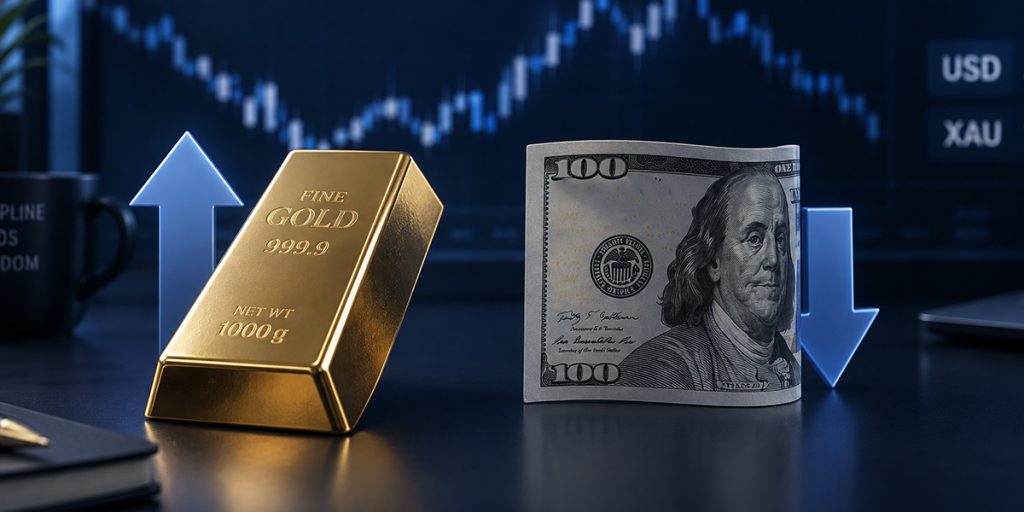
Gold and the US Dollar have had a close relationship for decades. Traders watch the two markets closely because gold tends to come under pressure when the US Dollar gains strength, while a weaker dollar can support gold prices.
On the surface, the relationship looks simple, but several forces sit behind it. Interest rates, real yields, inflation expectations, Federal Reserve policy and investor demand can all influence gold.
For a trader focusing on XAUUSD, understanding the gold-dollar relationship can help make sense of some of the biggest moves in the gold market.
The Basic Relationship Between Gold and the US Dollar
Gold is traded and quoted internationally in US Dollars & this creates a natural connection between the value of the dollar and the price of gold.
Imagine the US Dollar strengthens against other major currencies; gold becomes more expensive for buyers using those currencies. This can reduce demand and put pressure on the metal. Gold becomes relatively cheaper for international buyers when dollar weakens. That can support demand and give gold room to move higher.
This is the basic reason traders describe gold and the dollar as having an inverse relationship. But there is an important point to remember:
Gold does not always move opposite to the US Dollar.
There are times when both assets rise together, especially when investors are looking for safety during periods of financial or geopolitical uncertainty. The relationship is useful, but it should not be treated as a fixed rule.
Real Yields: The Missing Piece in the Gold-Dollar Relationship
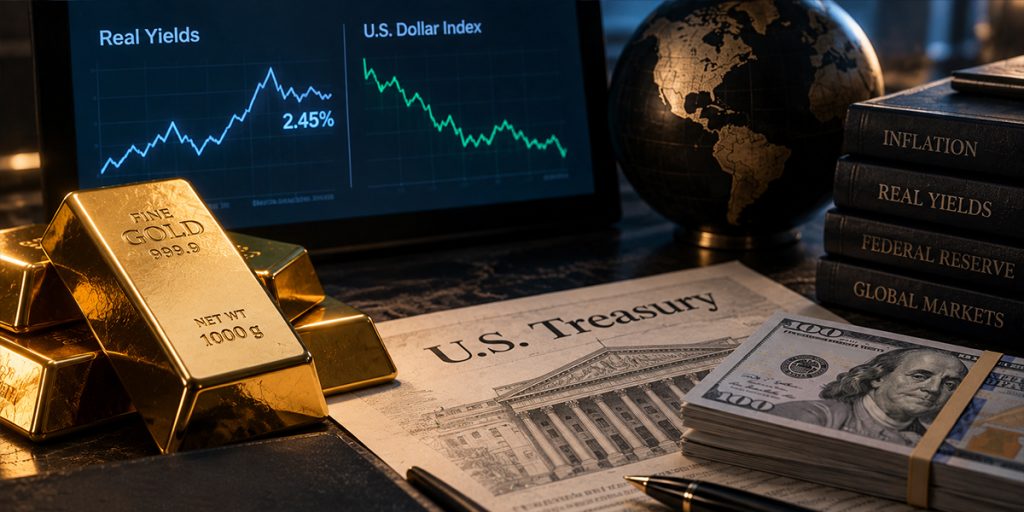
Looking only at the US Dollar does not tell the whole story. Real yields can give traders a better view of what is happening beneath the surface.
Gold does not pay interest or a coupon. US Treasury securities do. When inflation-adjusted Treasury yields rise, investors have a stronger incentive to hold interest-bearing assets. This increases the opportunity cost of holding gold.
When real yields fall, that opportunity cost can decline, making gold more attractive in comparison.
According to the Federal Reserve Economic Data, the market yield on the inflation-indexed 10-year US Treasury was around 2.45% on September 2.
The relationship can be viewed in simple terms:
- Higher real yields can put pressure on gold.
- Lower real yields can support gold.
- A stronger US Dollar can weigh on gold.
- A weaker US Dollar can support gold.
These relationships are not promised. Gold can still rise when real yields are high or fall when they are low. Market conditions are important, and several factors can influence the price at the same time.
How the Federal Reserve Influences Gold
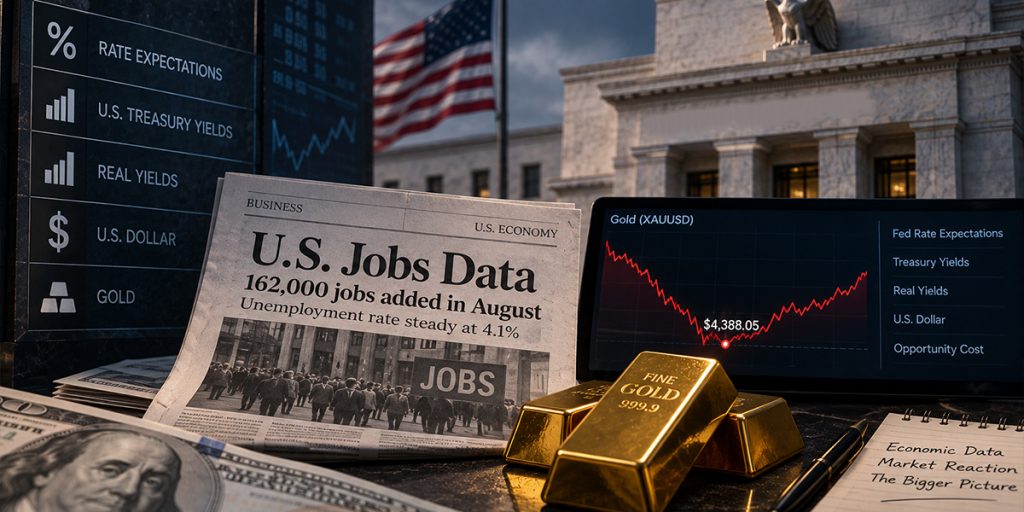
The Federal Reserve is one of the key links between the US economy, interest rates, the dollar and gold.
Economic data can change expectations about what the Fed might do with interest rates. Those expectations can then impact Treasury yields and the US Dollar, creating another route through which economic news can influence gold.
The latest US jobs data provides a good example.
The Bureau of Labor Statistics reported that 162,000 nonfarm jobs were added in August, well above the consensus estimates ranged from 53,000 to 58,000. The unemployment rate remained at 4.1%.
The strong jobs number was initially viewed as a hawkish signal. A resilient labour market could give the Federal Reserve more room to maintain or raise interest rates.
Gold reacted and it fell to around $4,388.05 before recovering more than half of the decline.
The reaction was not simply about the number of jobs.
The market was considering what the report could mean for:
- Federal Reserve rate expectations
- US Treasury yields
- Real yields
- The US Dollar
- The opportunity cost of holding gold
That chain matters when trying to understand why gold reacts to economic data.
Why Gold Can Rise Even When the Dollar Rises
The inverse relationship between gold and the dollar has exceptions.
There can be periods when both gold and the US Dollar rise. It happens when investors are seeking safety and demand for defensive assets increases. This is why looking at the dollar alone can lead to an incomplete view of the gold market.
A stronger dollar may create pressure on gold, but if safe-haven demand is strong enough, gold can still move higher.
What Should Traders Watch When Trading Gold?
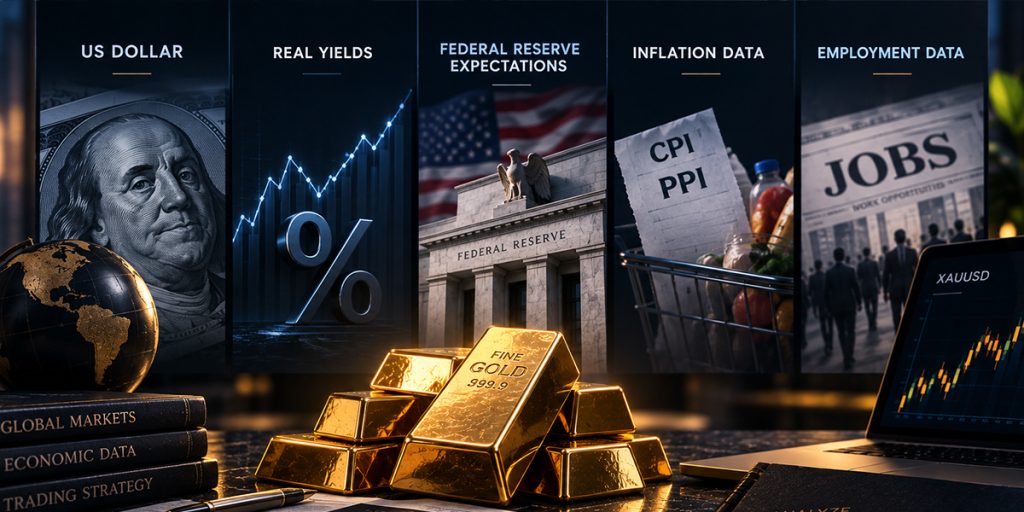
Major moves can become easier to understand when several parts of the market are viewed together.
US Dollar
The dollar remains one of the most important factors for gold. Traders should consider watching what drives the move.
Real Yields
Real yields show the inflation-adjusted return available from US Treasury securities. Changes in real yields can influence the opportunity cost of holding gold.
Federal Reserve Expectations
Expectations for rate hikes or cuts can affect the dollar and bond markets. Gold can react as these expectations change.
Inflation Data
US inflation reports such as PPI and CPI can influence expectations for future Federal Reserve policy.
Employment Data
Jobs reports provide an important view of the US economy. They can also influence expectations around interest rates. Traders should remember that the first payroll figure can be revised.
Gold Trading Is About More Than One Correlation
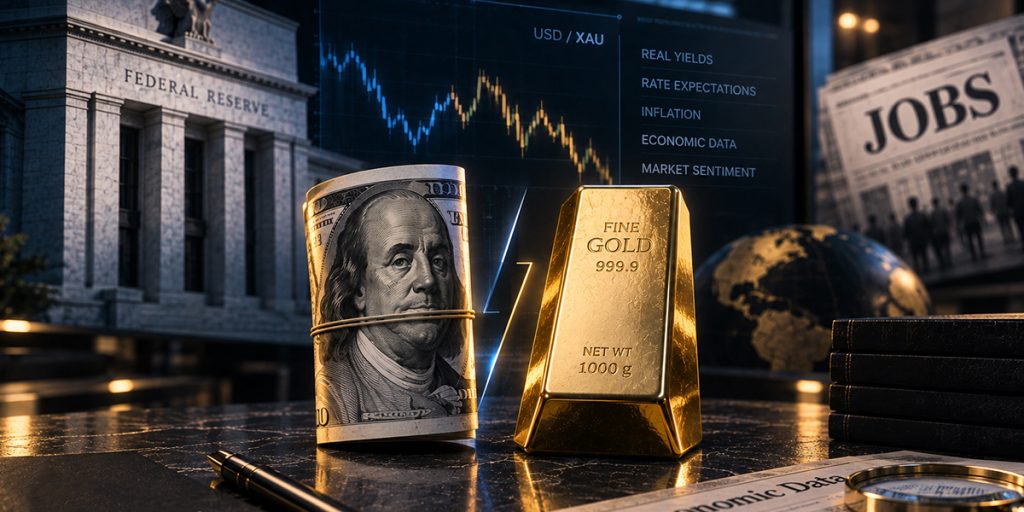
The relationship between gold and the US Dollar is one of the most useful starting points for understanding the precious-metals market.
Gold does not simply respond to the dollar. The metal responds to the reasons behind those moves. A stronger jobs report can increase expectations for higher interest rates. Those expectations can push Treasury yields higher and strengthen the dollar. Higher real yields can then increase the opportunity cost of holding gold.
At the same time, inflation concerns, geopolitical uncertainty or safe-haven demand can support gold. This leads to several forces can be pushing gold in different directions at the same time.
What the Gold-Dollar Relationship Means for Traders
The US Dollar and gold have a relationship that has stood out across financial markets for years.
Real yields, interest-rate expectations, inflation, Federal Reserve policy and investor sentiment can all change the direction of gold. Economic data can trigger a quick reaction, while revisions and changing expectations can alter the picture later.
The recent US jobs report is a good reminder. A stronger-than-expected headline initially pushed gold lower, but the metal recovered a significant part of the move. The reaction showed that traders were not simply responding to the jobs number. They were reassessing the wider interest-rate and policy outlook.
Final Takeaway

Gold and the US Dollar tend to move in opposite directions, but there is no rule that says they must. The relationship is impacted by several forces, with real yields, Federal Reserve expectations, inflation, economic data and market sentiment playing an important role.
So, the next time you see gold falling as the dollar rises, don’t stop at the correlation.
Start trading now — click here to create your real VT Markets account.








