





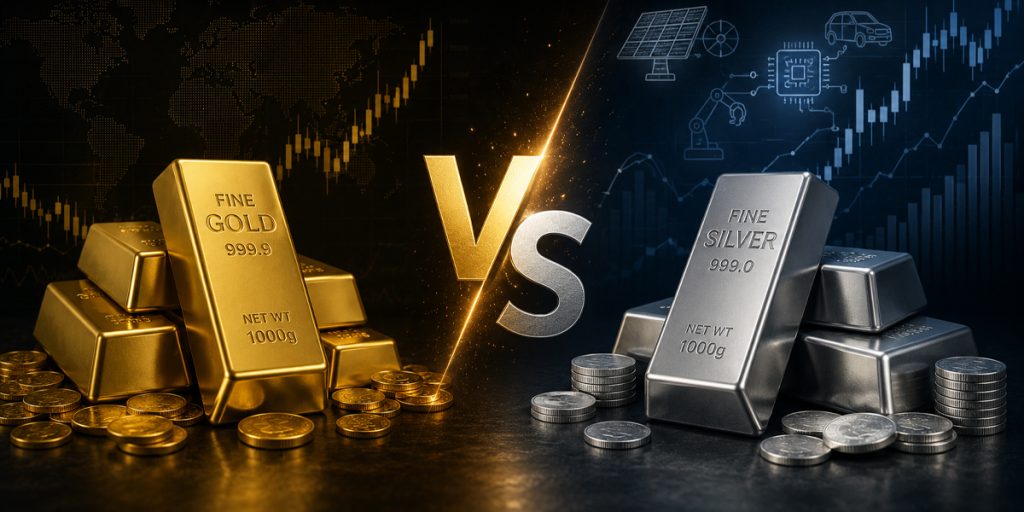
Gold or Silver? The question isn’t which metal is better; it’s why the market is choosing one over the other.
Precious metals have entered the second half of 2026 under very different circumstances than many investors had expected at the start of the year. Following months marked by heavy geopolitical tensions, changes in expectations around US monetary policy, persistent inflation concerns, and fluctuating industrial demand, both gold and silver have suffered sharp corrections despite their long-term bullish narratives remaining largely intact.
Gold, the world’s ultimate safe-haven asset, has surrendered part of its earlier gains as markets reassessed the outlook for US interest rates. At the same time silver has endured an even deeper correction, weighed down by investor caution despite continued structural demand from industries such as solar energy, electric vehicles, and artificial intelligence.
At first glance, both metals appear to be under pressure. But a closer look reveals a more interesting story. The factors driving gold and silver today are fundamentally different, creating distinct opportunities depending on market conditions and a trader’s objectives.
In the second half of 2026, traders are no longer asking about the deserving place of precious metals in their portfolios, they are asking which metal is better positioned for the next major move.
Precious Metals Entering a New Phase

The first half of 2026 reminded investors that even traditional safe-haven assets are not immune to changing macroeconomic expectations.
Gold prices have pulled back from their earlier peaks as stronger energy prices and inflation has caused the markets to expect a more aggressive Federal Reserve. The CME FedWatch Tool currently indicates growing expectations of additional interest rate hikes, reducing the appeal of non-yielding assets such as gold.
Silver has also come under selling pressure, declining sharply than gold. Yet unlike gold, silver is influenced by two powerful forces. It behaves as both a precious metal and an industrial commodity.
This dual identity makes silver more volatile but also creates opportunities that gold simply cannot offer. While investors often purchase gold during periods of uncertainty, silver benefits when industrial production accelerates.
That distinction could become increasingly important in the remaining months of 2026.
Gold: Stability in an Uncertain World
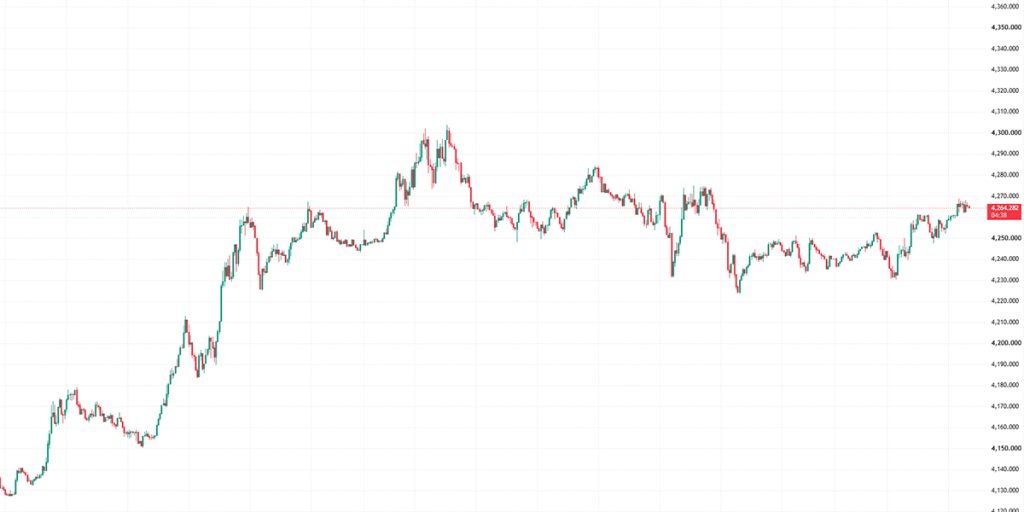
Gold is still holding its position as one of the world’s most trusted defensive assets.
The capital naturally flows toward gold whenever financial markets face uncertainty due to geopolitical conflicts, inflation risks, or economic slowdowns. The prices may have softened during recent months, but the underlying demand picture is still remarkably resilient.
Central banks continue accumulating gold reserves as part of long-term diversification strategies, reinforcing confidence in the metal’s structural value. At the same time, seasonal jewellery demand from countries such as India is expected to provide additional support heading into the festive season.
Analysts currently identify the ₹1,33,000–₹1,35,000 range on MCX Gold as a significant support zone, while resistance remains near ₹1,50,000 per 10 grams.
Some market participants around the world think that gold may still be heading towards $3,700 an ounce before stronger buying activity shows up later in the year. This means that for traders, although gold may not produce immediate spectacular returns, it does still provide something just as important: stability for a portfolio when there is uncertainty.
Silver: The Metal with Two Engines
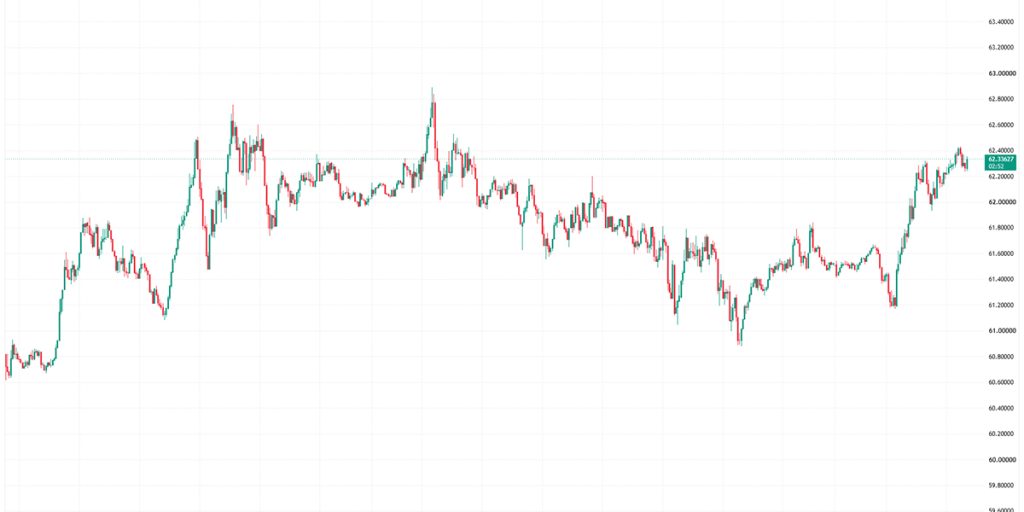
Gold is driven by investor sentiment, but silver tells a different and broader story.
Silver is one of the few precious metals directly linked to technological innovation since half of global silver demand now comes from industrial applications.
Silver has exceptional electrical conductivity & it has been required in Solar panels, electric vehicles, semiconductors, AI infrastructure, medical equipment, and advanced electronics
This means silver doesn’t simply respond to fear, it also responds to growth.
Following a correction of more than 23% during the previous quarter, many analysts believe silver may be approaching an attractive accumulation zone.
Current expectations suggest COMEX silver could find support between $53–$55 per ounce, with resistance around $65, while MCX Silver is expected to find support near ₹2,00,000 per kilogram.
If global manufacturing activity strengthens during the second half of the year and monetary policy gradually becomes more accommodative, silver could outperform gold from a percentage-return perspective.
The trade-off, however, is higher volatility.
Unlike gold, silver often experiences larger price swings, requiring stronger risk management and greater patience from traders.
Gold vs Silver: A Side-by-Side Comparison
| Primary Role | Safe-haven asset | Precious and industrial metal |
| Volatility | Lower | Higher |
| Main Demand Driver | Central banks, investors, jewellery | Industrial demand, technology, investors |
| Performs Best During | Economic uncertainty | Economic recovery and industrial growth |
| Risk Level | Moderate | High |
| Potential Upside in H2 2026 | Stable | Relatively stronger according to market analysts |
Which Metal Should Traders Watch?
There is no universal answer for this question.
Gold remains one of the safe haven assets available for traders seeking stability, capital preservation, and protection against geopolitical uncertainty.
On the other hand, silver offers a compelling opportunity for those comfortable with higher volatility and looking for potentially stronger returns.
Rather than viewing gold and silver as competitors, experienced traders should treat them as complementary assets serving a different purpose within a diversified portfolio.
Final Thoughts
The debate between gold and silver is not going to end anytime sooner! Both metals fulfil different roles in today’s financial markets.
While gold represents confidence during uncertainty, silver reflects optimism about economic growth and technological progress.
As H2 2026 unfolds, interest rate expectations, Federal Reserve policy, geopolitical developments, central bank activity, and industrial demand will remain the linchpins shaping both markets.
For traders, the opportunity lies not in choosing a winner once and for all, but in understanding when each metal is most likely to outperform.
Whether you’re following gold’s resilience or silver’s growth potential, staying informed and adapting to changing market conditions will be essential to lead the months ahead.
Start trading now — click here to create your real VT Markets account.










