





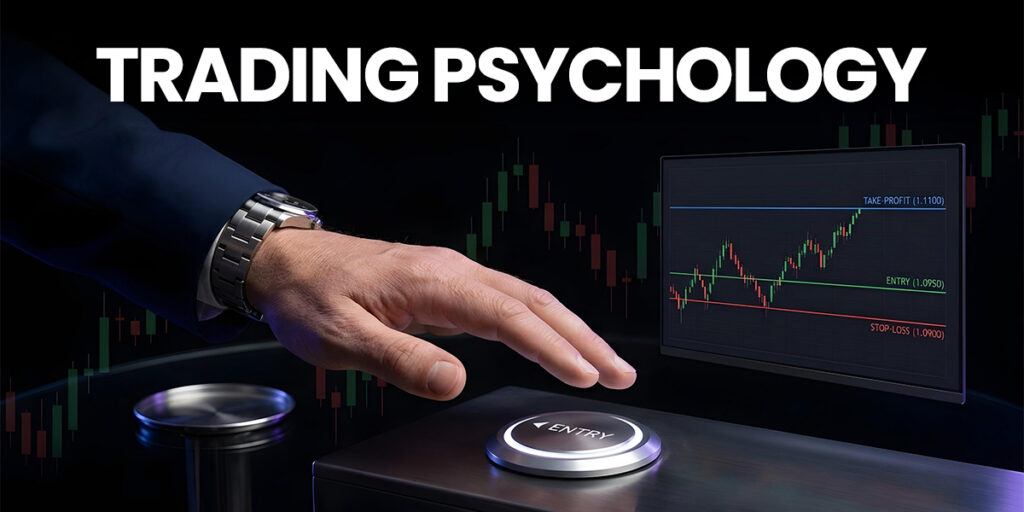
Many people have a mindset that trading is primarily about strategy & numbers: analyzing charts and checking the indicators and forecasts. But in reality, one of the most powerful factors driving trading decisions is emotion.
From minor fear and greed to overconfidence and the ever-famous FOMO, the psychological and mental state of a trader influences how we buy, hold, or sell assets. The best of the best strategies can fail if a trader doesn’t know how to control and keep aside his emotions.
Trading psychology
The few traders who do consistently win the game of trading are those who have developed the appropriate psychological mindset that enables them to be consistent winners. There are certain beliefs, attitudes, and psychological characteristics that are essential to conquering the world of trading.
About Markets & About Yourself
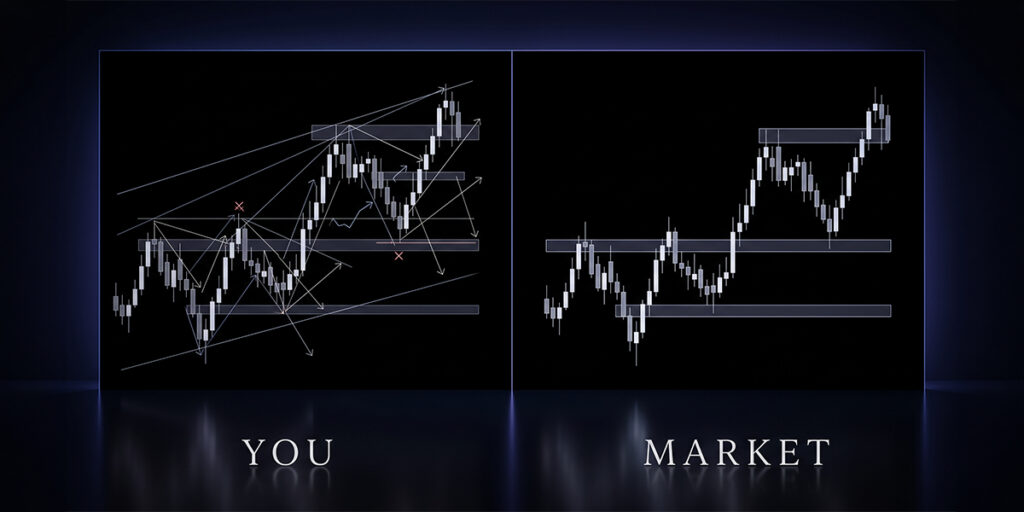
Your beliefs and attitudes regarding the market can include notions like thinking that it is biased against you. Such negative and incorrect beliefs can affect your ability to trade effectively. If you view the market as being set up to harm you, then you are not perceiving it accurately, and as a result, you cannot expect to assess market opportunities.
Our perceptions of ourselves are major components of trading psychology. One common trait that nearly all successful traders possess is self-confidence. Successful traders have a solid, fundamental belief in their capability to be successful traders, a conviction that remains intact despite a few or even several losing trades.
On the other hand, unsuccessful traders wrestle with persistent self-doubt. Unfortunately, if you see yourself as an unsuccessful trader, plagued by bad luck or similar thoughts, that perception often becomes a self-fulfilling cycle. Traders who question their abilities frequently hesitate to enter trades, leading them to miss important trading opportunities.
Winning traders have a healthy respect for the fact that even their best market analysis may sometimes not match up with future price movements. Nonetheless, they possess an overall confidence in their ability as traders: a confidence that enables them to easily initiate trades whenever a genuine opportunity arises.
Traders’ Psychological Principles in Forex Trading
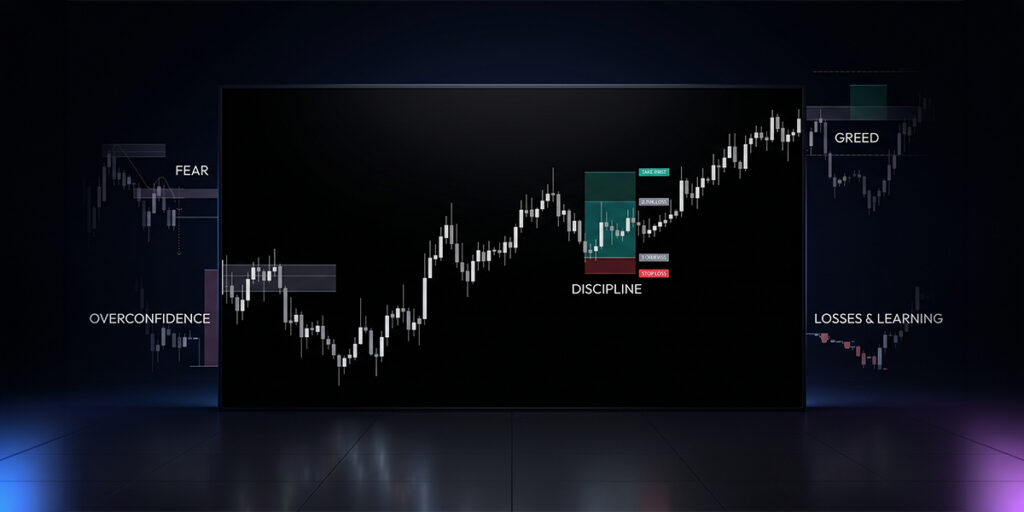
1. Emotions Should Be Managed, Not Ignored
The objective is not to become emotionless, but to learn how to manage emotions under market pressure. Traders who suppress fear, frustration, or excitement often end up making impulsive decisions during volatile market conditions.
Fear, greed, and overconfidence influence trading decisions far more than many traders realize. The key is emotional awareness. A professional trader recognises emotional reactions, evaluates whether they are based on market logic or personal bias, and responds with discipline instead of impulse. Sometimes, a brief pause before entering or exiting a trade can prevent costly mistakes.
2. Fear and Greed Never Disappear
Successful traders do not eliminate fear & greed, they build structured systems that help control them.
Fear appears when traders’ close profitable trades too early, hesitate to enter valid setups, or panic during sudden price fluctuations. Greed can push traders to overleverage, hold losing positions longer than planned, or ignore risk management rules during strong market momentum.
The difference between emotional traders and consistent traders lies in awareness. Experienced forex traders understand exactly when emotions begin influencing their decisions and rely on their trading plans to stay grounded.
3. Discipline Is Often Uncomfortable
Discipline in forex trading means following your strategy even when emotions encourage you to do otherwise. It means respecting your stop-loss levels, waiting patiently for high-probability setups, and avoiding unnecessary trades during uncertain market conditions.
Many traders struggle not because their strategy fails, but because they fail to remain disciplined. The discomfort of waiting, accepting losses, or missing trades is part of the trading process. Consistency is built through repetition and controlled decision-making, not through chasing every market movement.
Traders who learn discipline with smaller accounts often carry the same professional habits as their capital grows.
4. Confidence Must Stay Controlled
Unchecked confidence can quickly become dangerous. A series of winning trades often creates the illusion that the market has become predictable, leading traders to increase position sizes, loosen risk controls, or abandon their trading rules.
The forex market rewards consistency, not overconfidence. Every trade carries its own probability, regardless of previous success. Professional traders maintain stable risk management practices whether they are coming from a winning streak or a losing period.
Long-term success comes from respecting the market continuously, not from assuming mastery over it.
5. Losses Are Part of the Learning Process
Even the most experienced traders experience drawdowns and unsuccessful trades. What matters most is how traders respond to those losses. Traders who view losses emotionally often begin making reactive decisions such as revenge trading, avoiding valid setups, or abandoning strategies too quickly. In contrast, disciplined traders treat losses as valuable feedback.
Keeping a trading journal, reviewing mistakes, and analyzing whether a loss came from poor execution or normal market conditions can provide important insights for future improvement. A losing trade does not always mean a bad strategy; sometimes it simply reflects the unpredictable nature of the market.
In forex trading, growth often comes not from avoiding losses entirely but from learning how to manage and learn from them effectively.
In a nutshell
Trading is risky, and it may not be everyone’s cup of tea. However, for those who are serious about building a long-term journey in the financial markets, developing the right trader mindset is just as important as learning technical strategies.
Traders who learn to manage emotions, avoid common psychological mistakes, and understand their own strengths and weaknesses are often better equipped to make rational decisions under pressure. Through discipline, self-awareness, and emotional intelligence, you can unleash the potential of your trader DNA and develop a healthy trader mindset.
Create a live VT Markets account today to access our platform features, including market insights and educational content.








