






Have you ever noticed the common factor among traders who consistently win? They all have a good trading plan. A solid trading plan acts as an emotional bodyguard, making decisions before panic sets in and preventing you from rash decisions when your account balance fluctuates.
A trading plan serves as your personal guideline, showing the exact moments to enter and exit trades (for both gains and losses), the amount to risk, and the currency pairs to focus on. A well-defined trading plan eliminates emotion from the process by establishing clear, predetermined rules to adhere to. This sets apart a professional trader who approaches the market as a business from a gambler who views it as a casino. Your plan acts as your balancing force when the market turns volatile, and your emotions start to take control.
Let’s examine the different components of a trading plan and understand how it can optimize your trading behaviour and cultivate a stress-free trading environment. While there are many variations in creating trading plans, the framework below should be suitable for most traders.
Analyse your qualities & flaws.

Understand your strengths and weaknesses closely. How much capital do you possess that you could afford to lose in trading? This isn’t about fostering negativity; it’s about being truthful with yourself. If a loss of $100 on a trade prevents you from sleeping at night, then that $100 is too much for you to sacrifice. Most successful traders risk only 1-2% of their accounts on each trade.
Define Your Trading Style
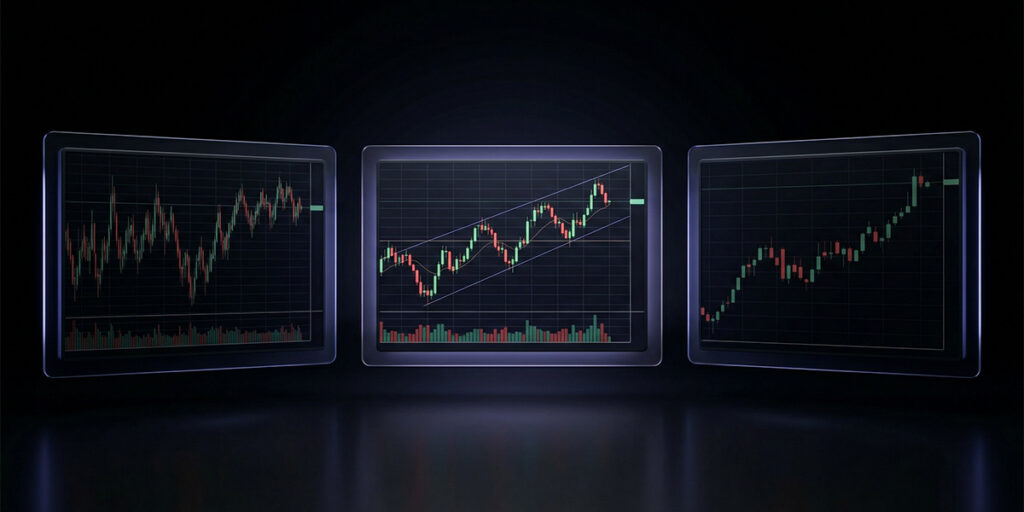
A trading style is an extension of the trader’s personality, mindset, and approach to risk. It determines how you interact with the market daily.
Your chosen trading style should align with your personal preferences, lifestyle, cultural mindset, and emotional tolerance. For instance, someone with limited screen time may not find day trading practical; on the other hand, a trader who enjoys active involvement may find long-term strategies less engaging. It is equally important to consider your financial goals and time horizon. When your trading style reflects who you are and how you operate, it becomes easier to maintain discipline, manage emotions, and execute your plan effectively.
Choose Your Instruments Wisely

Trying to engage with too many instruments at once can be overwhelming for a new trader. It leads to scattered focus, and a limited understanding of how each asset behaves. Experts’ advice is to start with a select group of major currency pairs such as EUR/USD, GBP/USD, and USD/JPY. These pairs are highly liquid, relatively stable, and provide a balanced level of market activity.
It allows traders to develop a deeper understanding of how they respond to economic news, their volatility patterns, and the times of day when they are most active. As traders become confident with major pairs, they can gradually explore additional instruments. However, it is worth noting that many experienced professionals choose to specialize in just a few pairs throughout their careers, prioritizing depth of understanding over breadth of exposure.
Set up your entry and exit rules.
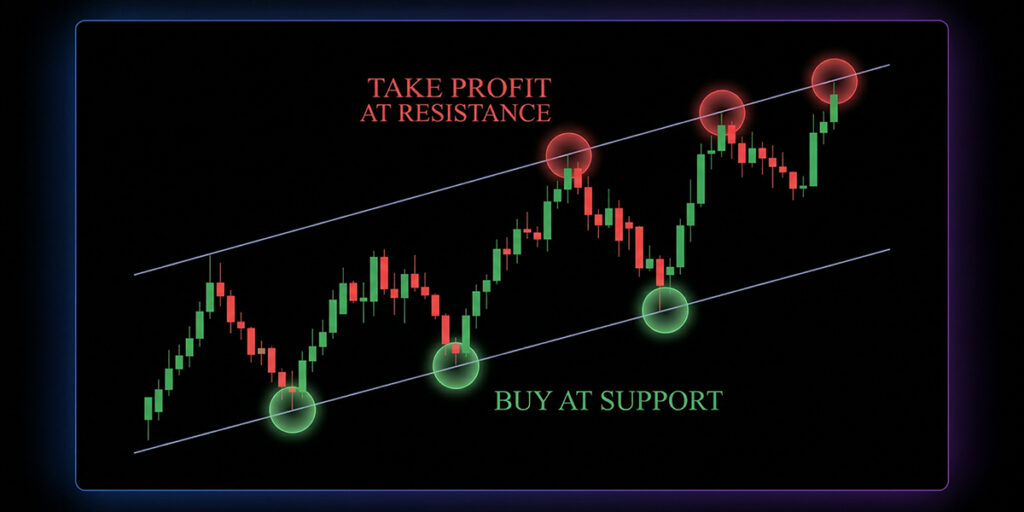
The lack of clearly defined rules makes decisions become emotional, inconsistent, and difficult to manage. Your entry and exit criteria should be simple, structured, and easy to follow. Never make decisions out of intuition; instead, define specific conditions for entering a trade. A well-defined plan ensures that any trader reviewing your chart would understand exactly why a trade was taken.
Plan Your Escape Routes
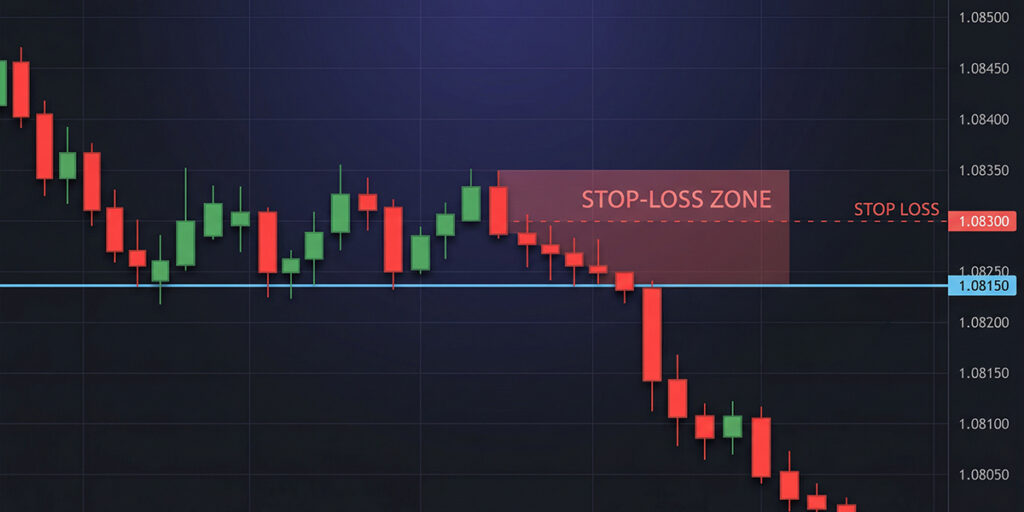
Losses are inevitable and completely normal in trading. The only thing that separates a disciplined trader from an inconsistent one is how well they manage losses when they are wrong. It is essential to define the exit if the trade does not go as planned. Stop-loss levels should be based on clear technical structures, such as support and resistance, rather than arbitrary amounts or round numbers. Ultimately, a well-planned exit strategy ensures that risk is controlled, decisions remain objective, and trading becomes more structured and sustainable.
Maintain a trading journal.
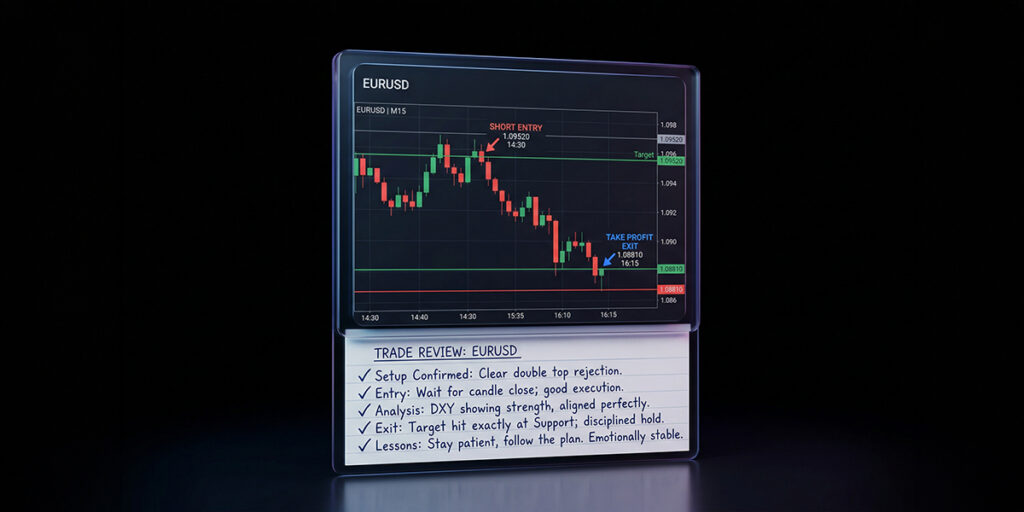
Keeping a trading journal is one of the most effective tools for long-term improvement. Consider it as a personal record that helps you in the decision-making process.
Document every trade in detail: the reason for entry, your expectations, and even your emotional state at the time. Capturing screenshots alongside your notes can be especially valuable, as it provides an accurate reference beyond memory, which can often be influenced by outcomes. A trading journal shifts your perspective from simply participating in the market to actively learning from it.
Why do you need a trading plan?
A trading plan serves as a structured framework that guides decision-making and helps maintain consistency in an otherwise unpredictable market environment. Most traders react emotionally to market movements without a clear plan. This can lead to impulsive decisions and inconsistent results.
For example, a profitable trade can quickly turn into a loss if there is no predefined exit strategy. Such situations & their fear may cause traders to close positions prematurely, while greed can lead them to hold onto losing trades in the hope of a reversal.
A well-defined trading plan helps mitigate these challenges by creating clear rules for entry, exit, risk management, and position sizing. Experienced traders rely on structured plans not only to manage risk but also to maintain discipline, recognizing that consistency and control are far more important than short-term gains.
Create a live VT Markets account today to access our platform features, including market insights and educational content.








