





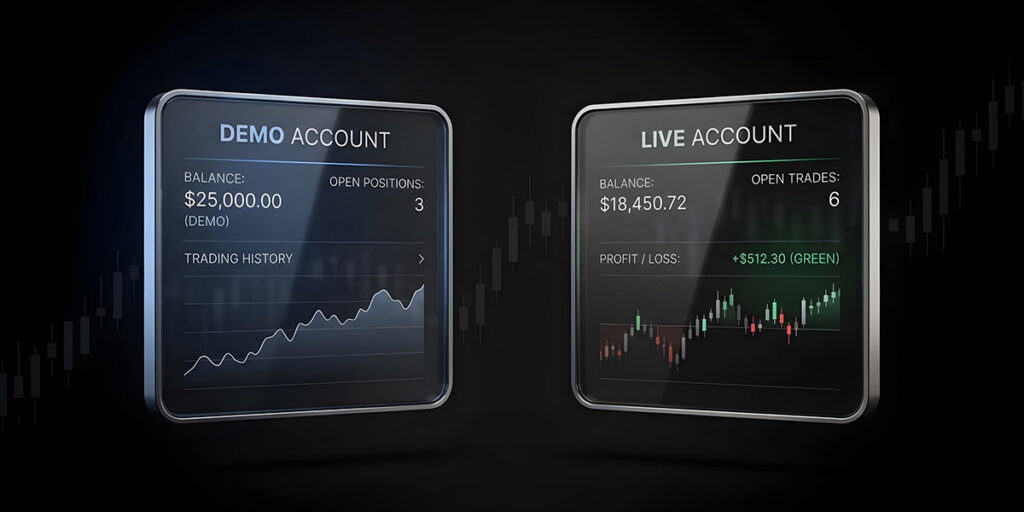
It would be great if everything in life had a demo session to practice! We are not sure about “EVERYTHING” but Trading has a demo session. It’s basically a short period where traders could test themselves without risk. For example, it’s like taking the car for a spin before buying it.
A demo trading account offered by brokers like VT Markets allows beginner traders to practice trading without real money. These accounts mimic real market conditions and provide virtual funds to trade different financial instruments.
When you open a live trading account, you’re investing real money in the markets, and your trades will have consequences. If you make a smart trade, you can potentially make real profits. However, if you make a bad trade, you can also potentially lose real money.
So, to sum it up, a demo account is like playing a video game, while a live trading account is like playing for keeps, with no reset button. A deeper understanding of demo accounts & live accounts helps traders to make the right moves in the trading environment easily.
Demo Account Vs Live Account
Emotions Vs Execution: A demo account allows traders to practice in a risk-free environment without emotional pressure. In a live account, fear, greed, hesitation, and overconfidence become real factors that can influence decision-making.
Market Discipline: Traders take unnecessary risks on demo accounts because there are no real consequences. A live account demands discipline, patience, and adherence to a structured plan, as every decision directly impacts actual funds.
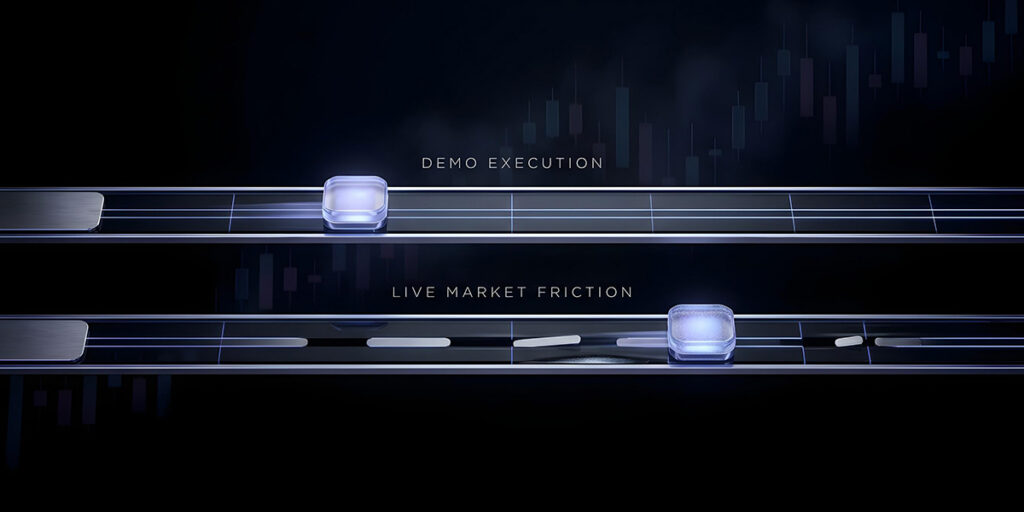
Order Execution & Slippage: Demo accounts offer smooth execution under simulated conditions. Live accounts reflect real market environments where spreads fluctuate, slippage may occur, and liquidity can vary during volatile periods.
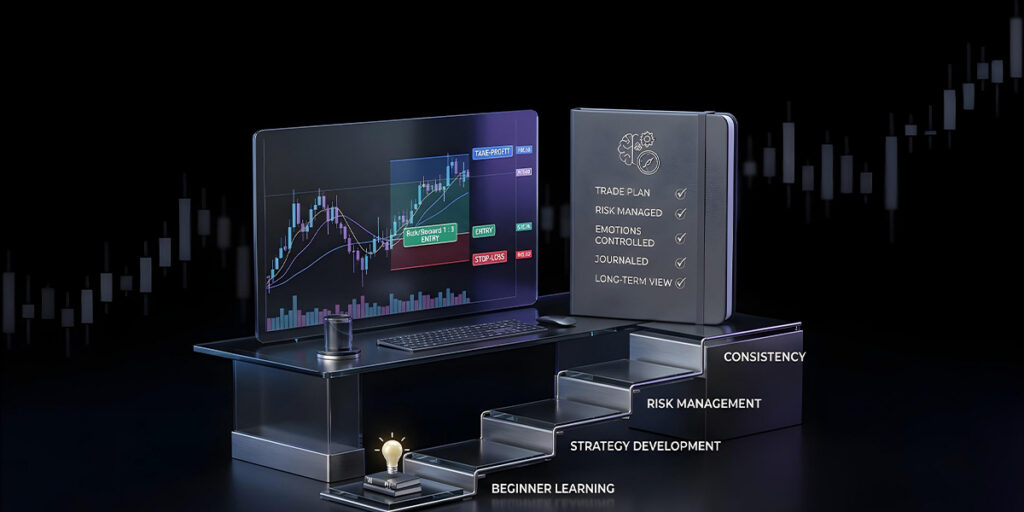
Risk Management: Losses are theoretical and easily reset in a demo account. In a live account, preserving capital becomes the priority, making proper position sizing, stop-loss placement, and risk-reward planning essential.
Psychological Development: Many traders perform well in demo mode but struggle when transitioning to live trading. This is because live markets test emotional resilience as much as technical ability.
Learning Vs Earning Phase: A demo account should be viewed as a training ground for building strategy and confidence. A live account is where execution quality, consistency, and risk control determine long-term success.
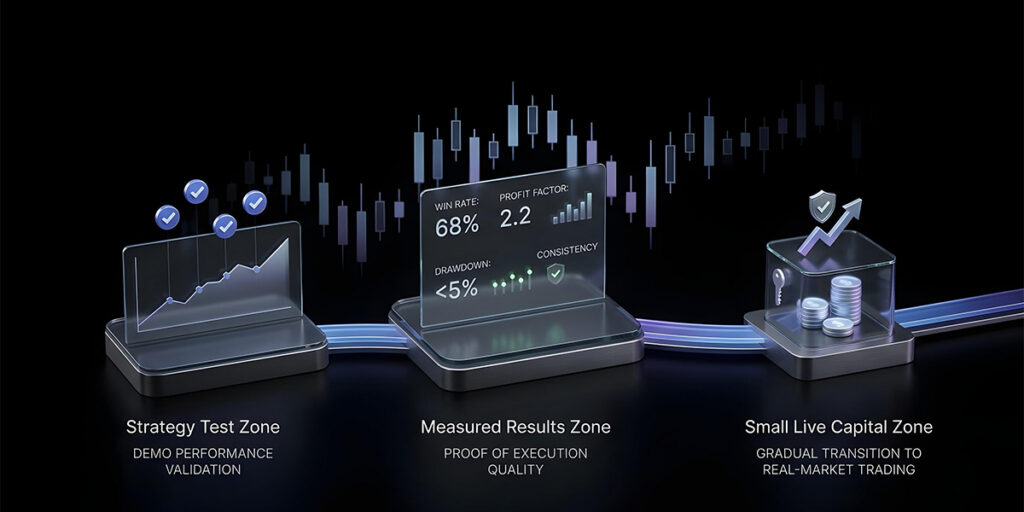
Performance Measurement: Demo results can highlight whether a strategy has potential, but only live trading reveals whether a trader can apply that strategy consistently under real market conditions.
Best Approach for Traders: The most effective path is to use a demo account to develop skill and confidence, then transition to a small live account to gradually build real-market experience.
The Difference in execution
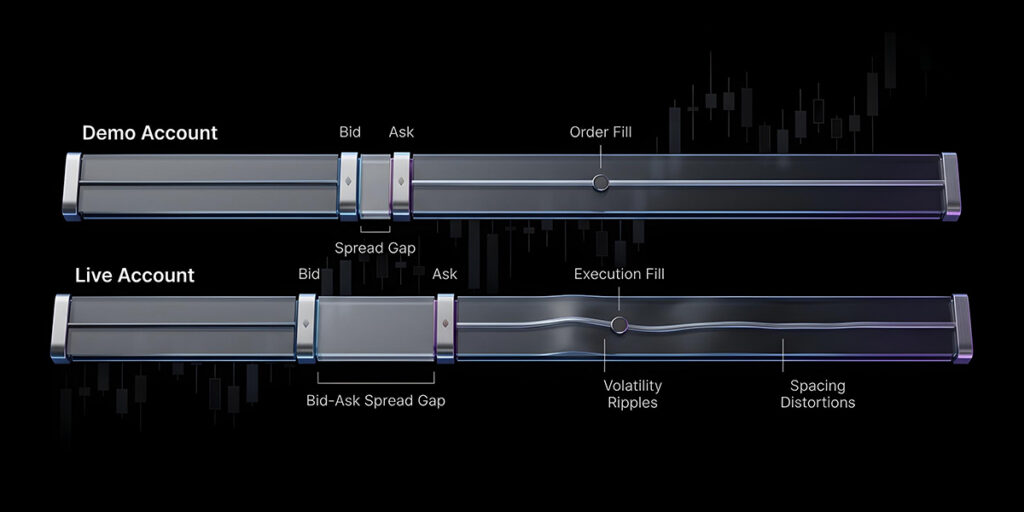
There are a couple of major differences here to grasp. Spread is the difference between the bid price and the ask price of an asset, and it’s an important factor to consider when trading. The spread is the cost of executing a trade, and it can have an impact on your profits or losses, especially if you’re a frequent trader.
The spreads are artificially low or even zero in a demo account to give traders a more favorable trading environment. With low or zero spreads, traders can execute trades more easily and with less impact on their profits.
The spreads are reflective of the real market conditions in live trading accounts. Various factors influence spreads, including market volatility, supply and demand, and overall market conditions. As a result, the cost of executing a trade can be higher or lower in a live account than in a demo account. When using a live trading account, traders also experience slippage, which is the difference between the expected price of a trade and the actual price at which the trade is executed. Slippage can occur when the market is volatile or when there’s a sudden surge in demand for a particular asset.
When to move from demo to live trading
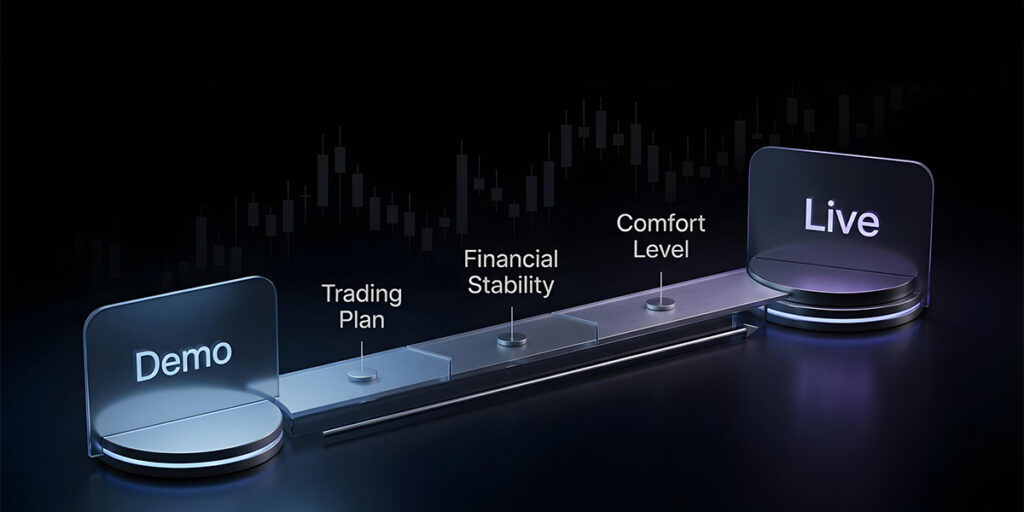
If you’ve spent several months using a demo account and are confident in your trading strategies and understanding of the markets, you might be prepared to move on to live trading. Having a strong grasp of the markets and the financial instruments you want to trade is important. If you believe in your knowledge and your capability to make well-informed trading choices, you could be ready to make the switch.
Before transitioning to live trading, it’s important to have a smart trading plan. This should include your goals, risk tolerance, and strategies for managing your trades.
Trading Plan: The first step is having a clear and structured trading plan that outlines your financial goals, risk tolerance, entry and exit strategies, and overall approach to managing trades.
Financial Stability: Assess your financial situation before committing real funds. Trading with live capital carries real consequences, so you should only use money you can afford to risk without affecting your day-to-day financial responsibilities.
Comfort Level: Move to live trading when you feel comfortable with your strategy, platform, and risk management skills. If hesitation or uncertainty remains, it may be wiser to continue refining your approach on a demo account until you are fully prepared.
Create a live VT Markets account today to access our platform features, including market insights and educational content.








