






The 2024 US presidential election sparked a wave of enthusiasm across the cryptocurrency market. Bitcoin surged to record highs following Donald Trump’s victory, as investors anticipated a more crypto-friendly administration and greater regulatory support.
The excitement extended beyond Bitcoin. Just days before Trump’s inauguration in January 2025, the Official Trump (TRUMPUSD) meme coin launched, attracting substantial speculative interest.
Fast forward to October 2026, and the cryptocurrency landscape looks considerably different.
Bitcoin has retreated significantly from its peak, while TRUMPUSD has lost nearly 98% of its value. With the US midterm elections approaching on 3 November 2026, investors are reassessing whether political developments could reignite cryptocurrency enthusiasm.
However, these two assets may respond differently to the same election outcome. While Bitcoin remains heavily influenced by monetary policy and institutional demand, TRUMPUSD is more directly exposed to political sentiment surrounding Donald Trump. For traders looking to navigate these dynamic conditions, understanding fiat vs crypto market dynamics is crucial when evaluating risk exposures.
How Has Bitcoin Performed During Previous US Midterm Elections?
Historically, US midterm election years have coincided with significant Bitcoin corrections, followed by recoveries over the subsequent 12 months.
Looking at the previous three election cycles, Bitcoin delivered positive returns in the year following each midterm.
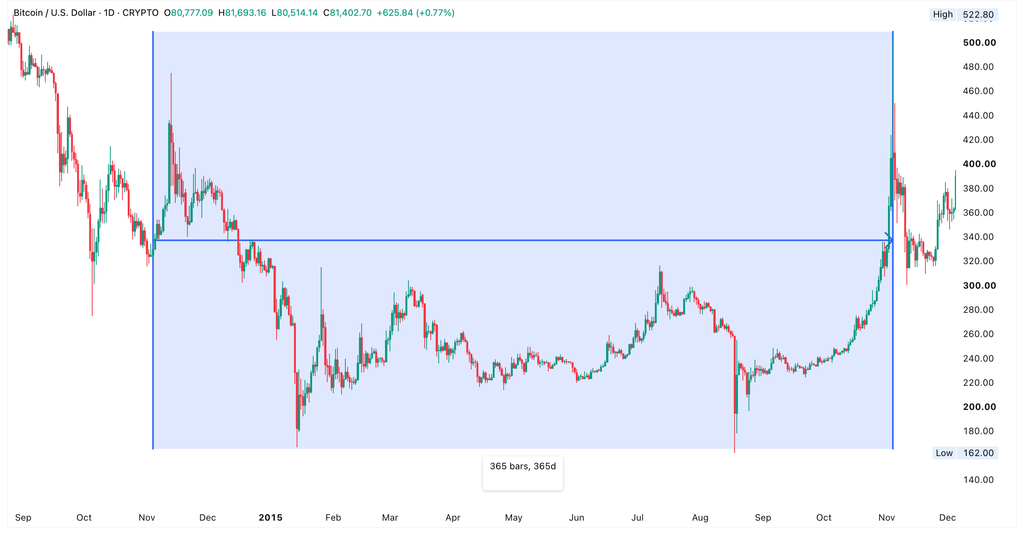
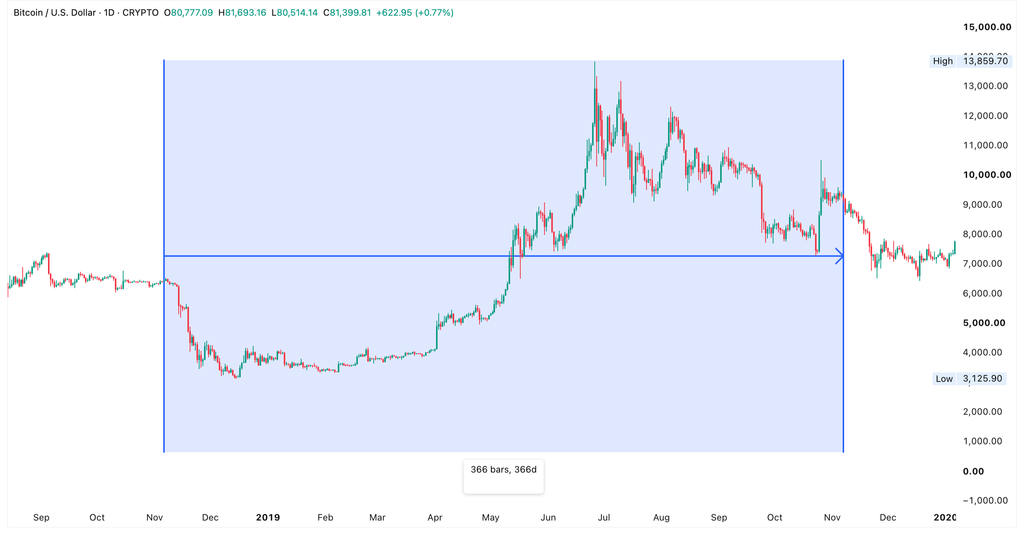
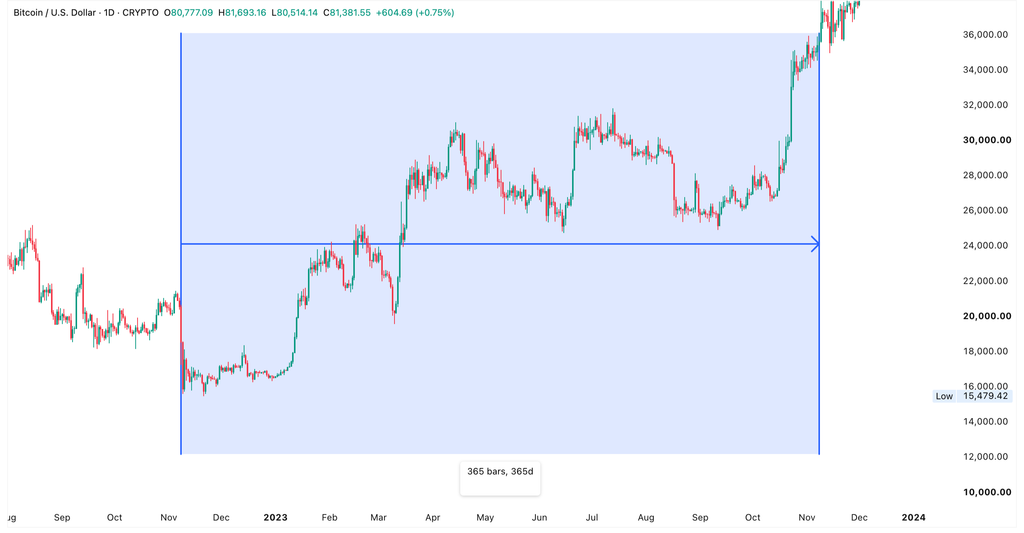
| US midterm election | Bitcoin return over the following 12 months |
| November 2014 | 49.25% |
| November 2018 | 113.15% |
| November 2022 | 132.57% |
Past performance does not guarantee future results.
The historical figures may appear encouraging, but they should not be interpreted as evidence that midterm elections directly trigger cryptocurrency rallies. Following the 2018 elections, Bitcoin initially declined approximately 45.5% within the first month before eventually recovering, while the 2022 midterms coincided with the collapse of cryptocurrency exchange FTX, which intensified an already challenging market environment.
These developments demonstrate how Bitcoin’s trajectory can be shaped by monetary conditions, liquidity, and cryptocurrency-specific events regardless of the political outcome. Beginners looking to navigate market entries can consult our guide on how to trade crypto for beginners. Nevertheless, the upcoming midterms could influence longer-term market expectations, particularly if the election results alter the balance of power in Congress.
A Democratic-controlled Congress, for instance, could make it more difficult for the Trump administration to advance additional cryptocurrency legislation, although the president would retain executive authority and influence over federal regulatory priorities. For Bitcoin, the significance of the election therefore lies less in Trump’s personal popularity and more in whether the political outcome changes expectations surrounding regulatory developments, economic policy, and institutional participation. Market sentiment can also be evaluated through tools like the Bitcoin Fear and Greed Index analysis.
TRUMPUSD: From Political Hype to a 98% Decline
Unlike Bitcoin, TRUMPUSD has no historical track record across previous US election cycles. Launched on 17 January 2025, just three days before Trump’s inauguration, the token quickly attracted speculative demand as investors sought exposure to the excitement surrounding his return to the White House. Prices surged from below $10 to an all-time high of approximately $74.59, briefly pushing the token’s market capitalisation above $14 billion.
The initial enthusiasm quickly faded, however, with TRUMPUSD falling to approximately $7.14 by 7 April 2025, representing a decline of more than 90% from its peak. Despite the correction, the token remained highly responsive to political developments, as demonstrated on 23 April 2025 when an announcement offering major token holders an exclusive dinner with President Trump triggered a rally of more than 60%.
Although the announcement temporarily revived speculative demand, the rally failed to establish a lasting recovery, with TRUMPUSD subsequently declining towards $1.69 by October 2026. The price movements illustrate how the token’s performance has been driven primarily by political associations, promotional events and speculative positioning rather than the broader institutional adoption trends influencing Bitcoin.
Bitcoin vs TRUMPUSD: How Different Have Their Performances Been?
Despite both cryptocurrencies experiencing substantial declines, TRUMPUSD’s losses have been considerably more severe.
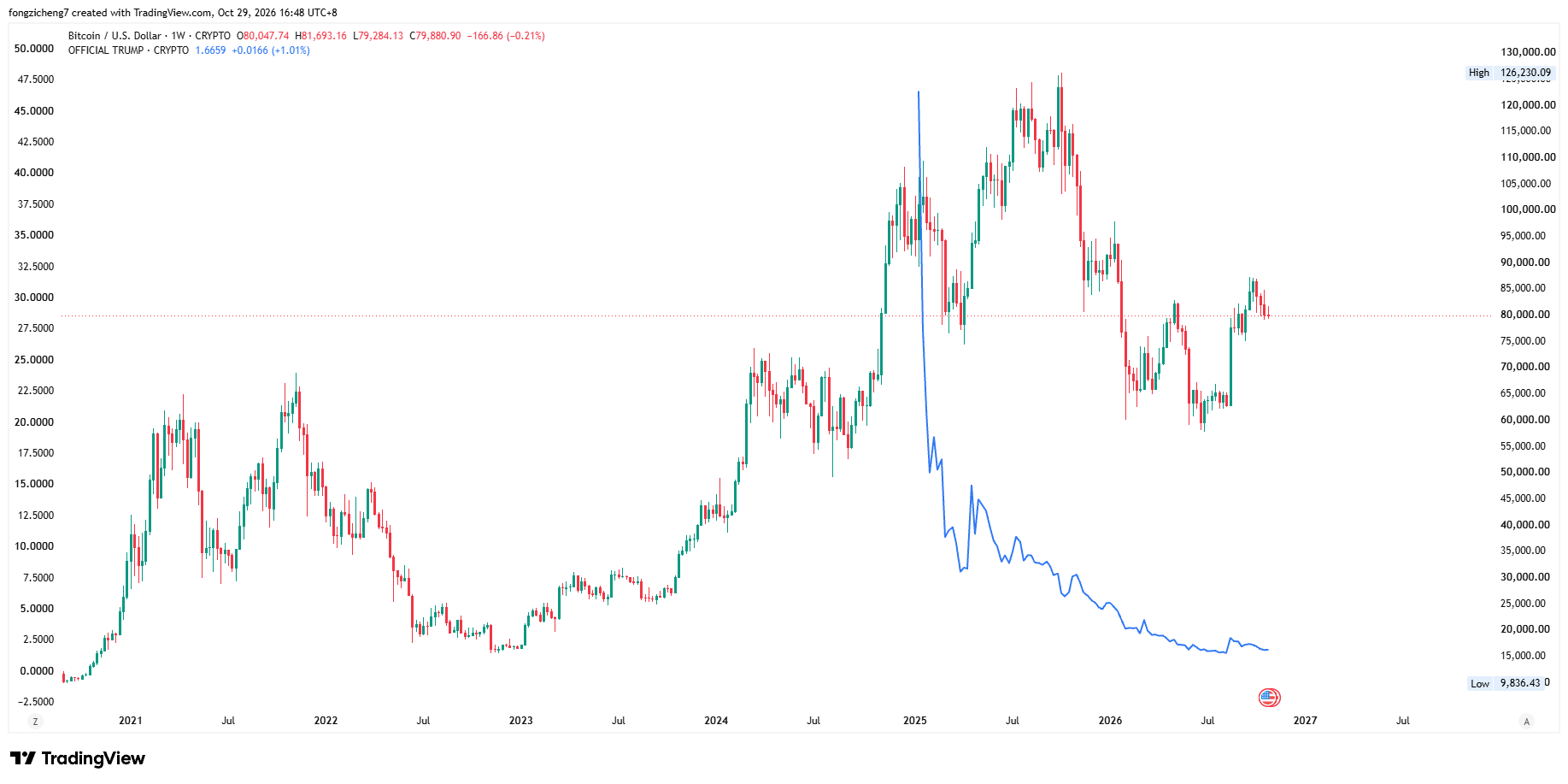
According to Reuters/Ipsos polling, Trump’s approval rating declined from approximately 47% when he took office in January 2025 to around 32% by 26 October 2026. During the same period, TRUMPUSD lost approximately 96% of its value, compared with a decline of around 21% for Bitcoin. The contrast raises the possibility that weakening political sentiment may have contributed to reduced speculative interest in the Trump-associated token.
However, the simultaneous declines do not establish a direct correlation between Trump’s approval rating and TRUMPUSD’s price performance. The sharp rally following the April 2025 token-holder dinner announcement demonstrates that promotional developments can generate substantial buying interest even when broader political approval remains under pressure. Traders exploring alternative asset comparisons often evaluate macro correlations such as Bitcoin vs Gold: Which is the Better Store of Value in 2025? or broader cross-asset relationships like Gold vs S&P 500.
Why Is Bitcoin Under Pressure?
Three developments help explain Bitcoin’s recent weakness.
- Federal Reserve policy and the US dollar
With US interest rates at 3.75%–4.00% and the US Dollar Index approaching 102.50, tighter financial conditions have weighed on investor appetite for risk-sensitive assets. To understand why currency strength affects global liquidity, see why does DXY rise in uncertain markets?. A stronger dollar and elevated interest rates make speculative investments less attractive, which is why active traders closely monitor strategies for how to trade interest rate expectations.
- Institutional outflows
US spot Bitcoin ETFs recorded approximately $772 million in outflows between 22 and 23 October, reversing more than $1 billion in earlier weekly inflows. This suggests weakening institutional demand, which could make a sustained recovery more difficult. For a complete look at digital assets and market structures, refer to our overview on BTCUSD and altcoins: everything you need to know.
- Geopolitical and inflation risks
Elevated oil prices and geopolitical tensions in the Middle East could sustain inflationary pressure, potentially encouraging the Federal Reserve to maintain restrictive monetary policy. Energy traders can explore the underlying macro drivers in 10 factors that affect crude oil prices. Inflation trajectory remains pivotal; see our complete Consumer Price Index guide and analysis on US Treasury yields and gold: why traders watch real rates.
Why Is TRUMPUSD Facing Greater Challenges?
While Bitcoin remains vulnerable to macroeconomic developments, TRUMPUSD faces additional challenges stemming from declining speculative interest and its concentrated token ownership structure. Approximately 80% of the original one-billion-token supply was allocated to project-affiliated entities, creating concerns about the potential impact of future token releases on the market.
As of October 2026, roughly 282 million tokens were circulating, while approximately 496 million had already been unlocked but were not classified as circulating. Another 222 million tokens remained locked, leaving a substantial amount of supply that could potentially become available to the market.
The token’s unlock schedule adds another layer of uncertainty. Approximately 205,000 tokens are scheduled to unlock daily across two insider allocations, equivalent to roughly $10 million in nominal monthly supply at recent prices. A further 28.7 million tokens, valued at approximately $48 million, are scheduled to unlock on 18 November. Although token unlocks do not necessarily lead to immediate selling, additional available supply could limit the sustainability of any recovery if investor demand remains weak.
At the same time, Trump’s upcoming token-holder gala could provide a short-term catalyst for renewed speculative activity. Traders may anticipate increased demand ahead of the 12 November qualification cutoff, although interest could weaken after the deadline, particularly with the sizeable 18 November token unlock taking place before the event on 22 November.
These competing developments suggest that TRUMPUSD could experience substantial short-term volatility around political and promotional events, but sustaining any rally may prove difficult without stronger underlying demand to absorb the available token supply.

How Could the US Midterm Elections Affect Bitcoin and TRUMPUSD?
With the elections approaching, market expectations already reflect the possibility of changes in congressional control.
As of 26 October, Polymarket figures indicated substantial expectations of Democratic gains.
This matters because financial markets frequently react to differences between anticipated and actual outcomes, rather than election results alone.
However, Bitcoin and TRUMPUSD have different exposures to these political developments.
| Election scenario | Bitcoin | TRUMPUSD |
| Democrats control both chambers | Muted or mixed reaction. Attention may shift towards monetary policy and regulation. | Negative bias possible as greater congressional oversight could weigh on sentiment. |
| Divided Congress | Neutral to mildly positive. Macro conditions and institutional flows may remain more influential. | Temporary relief possible, although supply concerns remain. |
| Republicans retain both chambers | Positive surprise possible if investors anticipate greater regulatory support. | Potential sharp speculative rally, although token supply could limit sustained gains. |
A Democratic-controlled Congress could introduce greater legislative constraints on the Trump administration, potentially affecting expectations for future cryptocurrency reforms.
However, Bitcoin’s direction would still depend heavily on interest rates, institutional investment and broader risk sentiment.
For TRUMPUSD, an election outcome perceived as favourable to Trump could generate a more immediate speculative reaction.
Nevertheless, even a substantial rally may prove difficult to sustain without sufficient demand to absorb future token supply.
Key Price Levels Traders Should Watch
Beyond political developments, technical price levels could provide additional insight into how markets respond to election-related volatility. Traders can learn foundational chart analysis via our guide on technical analysis basics: a simple guide to reading trading charts and study price action frameworks through how to read candlestick charts.
As of 28 October, Bitcoin was trading near the $78,450 monitored area.
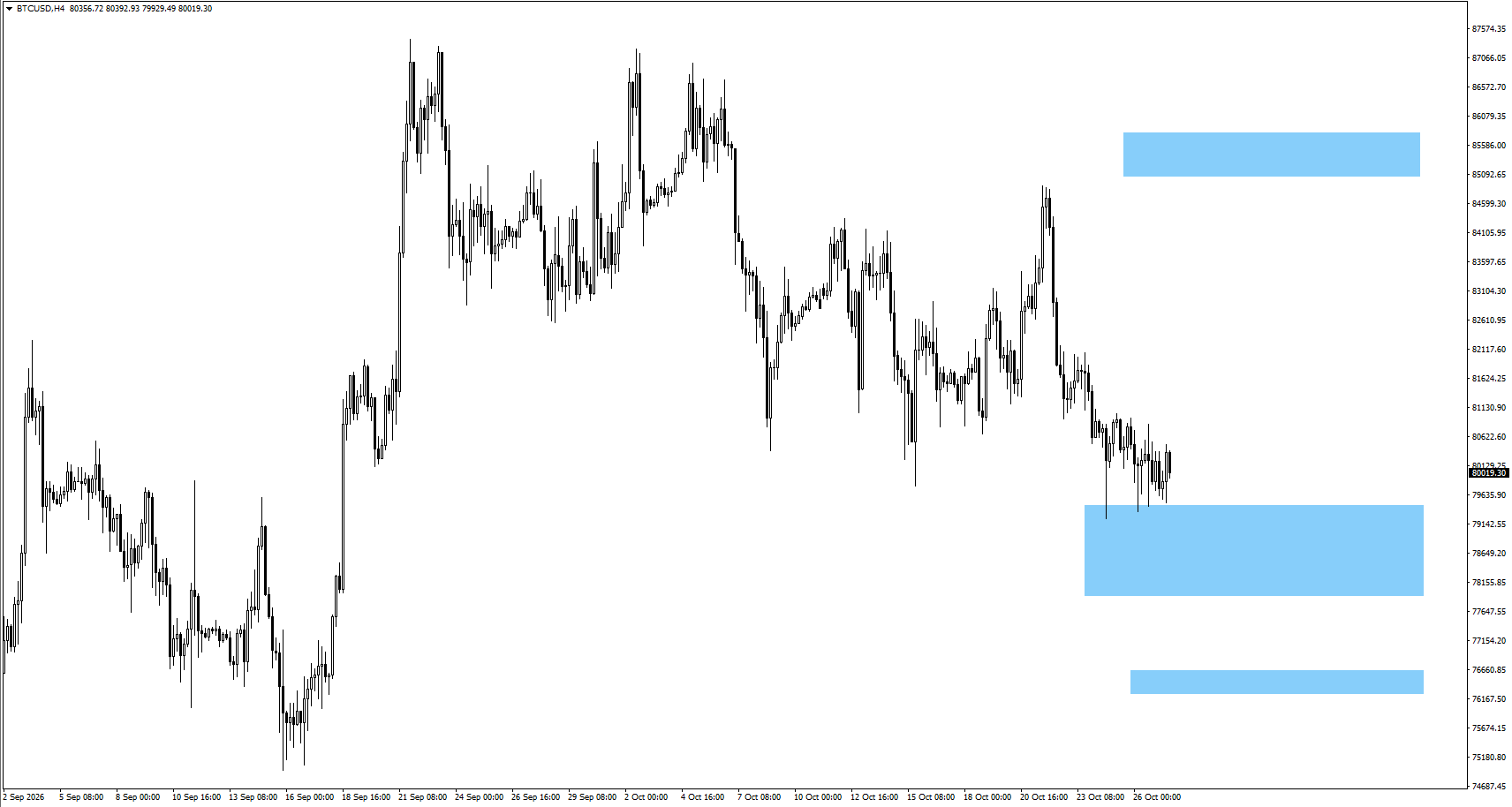
If Bitcoin continues declining, analysts are monitoring $76,450 for potential bullish price action. A sustained recovery would require stronger buying interest, while a failure to hold support could indicate continued downside pressure. Identifying multi-timeframe trends can be refined using strategies outlined in mastering forex trend markets: how to spot and trade them.
For TRUMPUSD, traders should monitor political announcements, trading volume, and the response to upcoming token-related events rather than relying solely on election headlines. Implementing strict risk protocols is critical; read our essential trade risk management tips before entering volatile positions.
What Should Crypto Traders Watch Next?
The 2026 US midterm elections could introduce another period of volatility for the cryptocurrency market, although Bitcoin and TRUMPUSD are likely to respond to different underlying forces. Bitcoin remains primarily influenced by monetary policy, institutional demand and broader financial conditions, while TRUMPUSD faces a more complex combination of political sentiment, speculative interest and future token supply.
For traders executing across diverse market environments, explore a complete guide to VT Markets CFD trading or consider low-capital testing using a trading cent account. Passive or automated market participants can also look into VT Markets forex copy trading to diversify execution styles across market volatility. Advanced platform setup instructions can be found in our MetaTrader 5 download guide.
Monitoring how market expectations, liquidity, and price action evolve may prove more valuable than attempting to predict the election result itself. The same political headline could generate two very different market reactions, making it essential to understand the factors driving each asset before navigating election-related volatility.
Frequently Asked Questions (FAQ)
- How do US midterm elections typically impact Bitcoin’s price?
Historically, Bitcoin has often experienced price consolidation or corrections leading up to US midterm elections, followed by positive returns in the 12 months post-election. However, these recoveries are generally driven by broader macroeconomic conditions, liquidity, and central bank policy rather than the election results alone.
- Why is TRUMPUSD reacting differently to the election compared to Bitcoin?
Bitcoin’s price is primarily influenced by macroeconomic factors like Federal Reserve interest rates, inflation data, and institutional ETF flows. In contrast, TRUMPUSD is a meme coin whose value is heavily driven by political sentiment surrounding Donald Trump, promotional events (such as token-holder galas), and speculative retail trading.
- What are the main macroeconomic pressures currently affecting Bitcoin?
Bitcoin faces headwinds from high interest rates, a strong US Dollar Index (DXY), persistent inflation concerns linked to energy prices, and institutional capital outflows from spot Bitcoin ETFs.
- How do token unlocks affect the price of TRUMPUSD?
Token unlocks releases previously locked tokens into the circulating supply. For TRUMPUSD, scheduled daily insider unlocks and major upcoming supply releases increase the total available tokens in the market, which can create downward price pressure if demand is not strong enough to absorb the new supply.
- What key technical levels should crypto traders monitor during the elections?
For Bitcoin, traders are monitoring key support around the $76,450 to $78,450 price levels. For TRUMPUSD, traders should focus on sudden spikes in trading volume and news catalysts around token-holder event cutoffs rather than technical indicators alone.
Start trading now — click here to create your real VT Markets account.



