





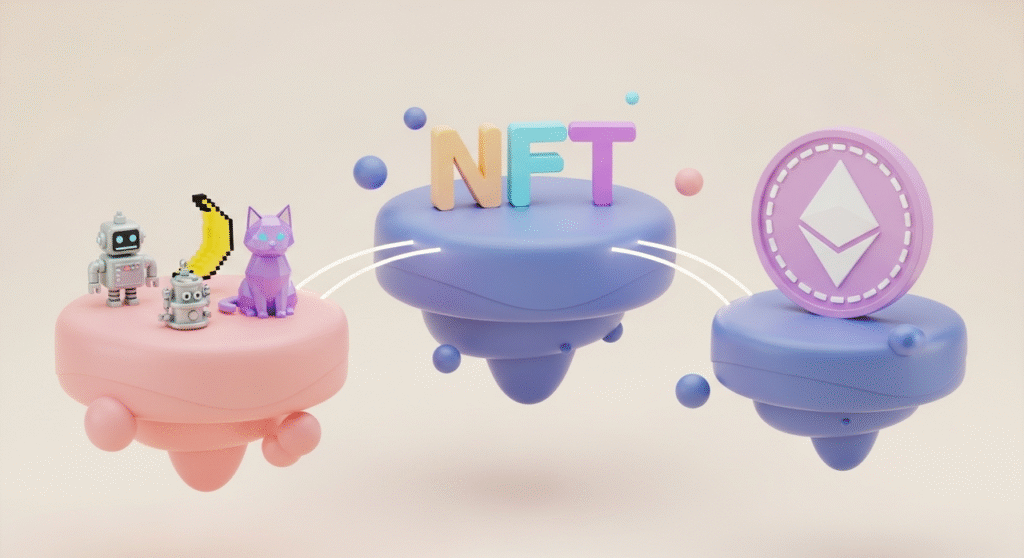
Non-Fungible Tokens (NFTs) were once synonymous with art market auction action, celebrity endorsements, and a seemingly overnight digital gold rush. While the speculative frenzy has subsided, NFTs have not disappeared. Instead, they have settled into a more nuanced role within the broader blockchain economy, one that reveals how digital ownership, online communities, and programmable finance intersect.
For many newcomers, NFTs were not just collectibles but a first encounter with digital assets. Buying one typically requires setting up a crypto wallet, acquiring cryptocurrency, and interacting with blockchain platforms. This onboarding pathway helped expand awareness of major crypto assets including Bitcoin and emerging smart-contract platforms, many of which are now actively traded in global markets.
The ‘Non-Fungible’ Nature of NFTs
Non-Fungible Tokens are unique digital assets recorded on a blockchain that verify ownership of a specific item, most commonly digital art, collectibles, music, or virtual goods. Unlike cryptocurrencies, where each unit is interchangeable, every NFT has distinct characteristics and cannot be exchanged on a one-to-one basis with another token.
Rather than containing the asset itself, an NFT typically stores metadata and a link to the underlying file, along with an immutable record of ownership. In effect, the token acts as a digital certificate of authenticity secured by decentralised infrastructure.
Minting: How NFTs Are Created
An NFT is created through a process known as minting, in which a new token is generated and recorded on a blockchain. During minting, a smart contract assigns a unique identifier to the asset, links it to its metadata, and permanently registers ownership on the network.
Minting requires payment of transaction fees (commonly called “gas fees”) in the blockchain’s native cryptocurrency. For example, NFTs created on the Ethereum network typically require payment in Ether, while those on Solana use SOL. This requirement reinforces the close relationship between NFTs and cryptocurrencies, as participation in NFT markets almost always necessitates holding the underlying digital currency.
Once minted, the NFT can be transferred, sold, or stored in a digital wallet like any other blockchain asset, with all transactions recorded transparently on the ledger.
Smart Contracts Essential for NFT and Cryptocurrency
Smart contracts is a self-executing code deployed on a blockchain that underpin both cryptocurrencies and NFTs, but they serve different roles.
In Decentralised Finance, crypto utilises smart contracts typically to automate financial functions. From wallet payments into more programmable functionality thanks to blockchain, native cryptocurrency like Ethereum, Cardano, Solana, Avalanche, Polkadot can power an entire ecosystem of decentralised applications (DeFi, NFTs, games, etc.).
These systems operate behind the scenes, enabling NFT platforms to function reliably at scale. An interconnected structure tied to NFT usage can translate into higher demand for underlying cryptocurrencies, a dynamic closely watched by traders and market participants interested in increasing crypto-related portfolios. Explore Crypto CFDs on VT Markets.
When Did NFTs Peak?
Adoption Drivers and Market Surge
NFTs first appeared in the late 2010s but reached peak visibility between 2020 and early 2022. Their rise reflected a convergence of cultural adoption and speculative investment during a period of heightened online activity and abundant liquidity.
| Cultural Drivers | Market Drivers |
| Celebrity creators and collectors (e.g., Grimes, Snoop Dogg, Jay Chou) brought mainstream attention. | Rapid price appreciation encouraged short-term traders |
| High-profile sales such as Beeple’s US$69 million artwork validated NFTs as serious assets. | Pandemic-era liquidity and low interest rates boosted risk appetite. |
| Media coverage framed NFTs as the future of art, gaming, and digital ownership. | Easy-to-use marketplaces lowering technical barriers for retail investors |
| Brands and entertainment companies launched NFT projects. (e.g. Nike’s .SWOOSH) | Online communities amplified hype and coordinated purchases to drive demand |
| Profile-picture NFTs became online status symbols. From Cryptopunk to now. | Some investors viewed NFTs as early-stage crypto investments. |
During this period, NFTs were frequently framed as the future of art, gaming, and digital identity — narratives that drew both collectors and investors forward.
Are NFTs Still Valuable Today?
Market Consolidation After the Hype Cycle
The NFT market today is significantly smaller than at its peak, but it remains active. Activity is concentrated around projects with strong communities, multi-utility purpose, recognisable intellectual property, or credible institutional support.
Bored Ape Yacht Club is often cited as an example of community-driven value retention, where ownership extends beyond a digital image into a broader ecosystem of events, media initiatives, and commercial rights.
Similarly, corporate experimentation continues. Brands such as Nike have explored tokenised digital goods and virtual merchandise, signalling potential applications in loyalty programmes, gaming, and online commerce.
NFT Culture and the Rise of Community Tokens
Beyond traditional NFT collections, the cultural momentum surrounding digital ownership has also fueled interest in related crypto assets, particularly community-driven or metaverse-oriented tokens.
Download the VT Markets app to monitor how real-time NFT-native projects are doing in the CFD space.
Although these tokens are not NFTs themselves, they often coexist within the same digital ecosystems, benefiting from similar drivers: social engagement, viral attention, and speculated volatility. Their popularity underscores how NFT adoption expanded participation in the broader crypto market, encouraging users to explore a wide spectrum of digital assets beyond collectible tokens.
NFTs as the Front Door to the Digital Asset Economy
The speculative frenzy surrounding NFTs may have faded, but their broader significance endures. By translating complex blockchain technology into tangible digital ownership, NFTs helped millions of users take their first steps into decentralised systems.
Today, they represent a maturing segment of the digital asset landscape, one shaped less by hype and more by practical use cases, community dynamics, and integration with mainstream commerce. For observers of financial innovation, NFTs offer a clear illustration of how cultural trends, technology, and markets converge.
Most importantly, NFTs demonstrate that digital assets are not limited to currencies alone. They are part of a wider ecosystem where programmable ownership, decentralised finance, and tokenised economies intersect that continues to evolve alongside the global cryptocurrency market.
Start exploring crypto CFD trading with VT Markets today as a gateway into a portfolio of digital assets.










