





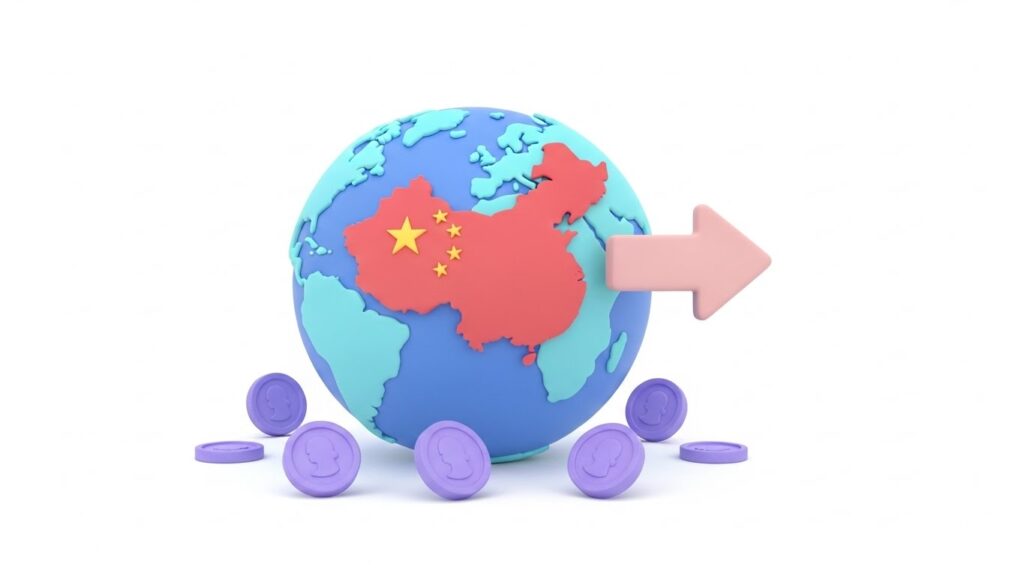
In the midst of global trade tensions and market noise surrounding former President Trump’s controversial tariff policies, a notable development is unfolding in China. Despite facing tariffs on its exports, China has reported a record trade surplus of over $1.2 trillion. This surplus underscores the resilience of China’s export economy and positions the nation as a dominant player in global trade, even amid headwinds.
China’s Record Trade Surplus
In January 2026, China reported a staggering trade surplus exceeding $1.2 trillion, a figure that not only highlights the country’s export strength but also paints a picture of its economic position relative to the rest of the world. A trade surplus occurs when a country exports more than it imports, accumulating foreign currency as a result. For China, this surplus means more yuan (CNY) are being exchanged for foreign currencies.
The global dynamics around China’s high export numbers illustrate the continued tension in the U.S-China trade war while revealing how China is transforming its role in emerging markets across Asia and Africa, bolstering its trade competitiveness in key sectors.
1. The Impact on Currency Markets: The Yuan’s Role
One of the most immediate effects of China’s growing trade surplus is on the forex market. China’s accumulation of foreign currency puts downward pressure on the yuan, as it has more currency than it needs for imports. There is growing speculations about Yuan appreciation, with many arguing that a stronger yuan would help reduce global trade imbalances and relieve pressure on China’s trading partners, particularlt emerging markets. This strengthening of the yuan could extend to global currency markets, potentially influencing the value of emerging market currencies relative to the U.S. dollar (USD) and the euro (EUR).
For traders, this provides an important opportunity to monitor the yuan’s movements closely against major currencies.
2. Asian Equity Markets: Trade Relations
The performance of Asian equity markets is another area heavily influenced by China’s trade surplus. Traditionally, strong Chinese data often leads to rallies in Asian indices, as investors gain confidence in the broader region’s economic prospects. With China’s robust export figures, indices such as the China 50 and China 50 FTSE stand to benefit the most. The health of the Chinese economy, as reflected in its trade surplus, will directly influence the performance of these indices, offering a glimpse into China’s ongoing economic growth and its potential to lead Asia.
As Chinese companies pivot away from the U.S. market and focus on emerging markets, especially in Asia, the region stands to gain from economic momentum. China’s growing trade dominance could threaten local manufacturers across regions, leading to sector and industry transformations as the surplus remains concentrated in goods.
3. Commodity Markets: The Ripple Effect
China’s industrial activities are key drivers in the global commodities market. As the world’s largest consumer of raw materials like copper and rare earths, China’s economic health has a direct bearing on materials markets. A large trade surplus often signals a robust industrial base, with continued demand for these materials to fuel China’s manufacturing sector.
However, the reliance on Chinese demand for commodities means that any shift in its economic trajectory, such as a slowdown in industrial output, could send ripples through global supply chains. Tracking China’s industrial activity and trade figures is crucial, as these can significantly impact the price movements of key raw materials.
For more market commentary, explore the latest live update on VT Markets.
China’s Export Surplus: A Bigger Economic Transformation
While China’s growing trade surplus underscores its continued competitiveness on the global stage, it is a double-edged sword for emerging markets and Asian market indices.
On one hand, the surplus strengthens China’s economic ties with emerging markets, especially in Asia, which stands to benefit from cost-efficient Chinese exports compared to tariff-affected alternatives. Chinese companies are increasingly focusing on these markets as they shift away from the U.S. consumer base. Notably, China has ramped up its exports of gasoline cars, further expanding its global trade footprint.
On the downside, however, the trade surplus primarily concentrated in goods, could spark protectionist policies from countries seeking to shield local industries from the growing dependency on China. The rise of tariffs and trade restrictions could create friction in global trade, limiting China’s ability to expand its influence in certain markets.
Domestic Vulnerabilities and the Need for Diversification
China’s heavy reliance on exports leaves its own economy vulnerable to external shocks, such as changes in global demand or changes in trade policy. As the global landscape evolves, this exposure could create significant challenges for China’s growth trajectory. For many countries that have long relied on the manufacturing sector, particularly driven by China’s trade policies, the need to pivot toward other industries is becoming more apparent. To reduce their dependency on China’s economic engine, these nations must embrace diversification. However, the restructuring required for such a shift could pose short-term economic risks, as regions navigate the challenges of transitioning from one dominant industry to others.
Key Takeaways
In short, China’s growing trade surplus and its impact on the global economy are complex and multifaceted. While the positive effects on equity markets, particularly in Asia, are evident, the vulnerabilities—both domestically within China and for its trading partners—should not be overlooked. The evolving dynamics of global trade present both opportunities and risks, and it remains critical for market participants to stay informed as these trends continue to unfold.
Stay updated on the latest price movements in key Asian markets on the VT Markets App.








