






Key Points
- Gold (XAUUSD) trades around $4,155.50, down 0.38%, as selling pressure keeps prices below the $4,200 psychological level.
- A stronger US dollar and elevated Treasury yields continue to weigh on gold, reducing demand for the non-yielding metal.
- Oil prices above $100 per barrel have intensified inflation concerns, raising expectations that the Federal Reserve could maintain restrictive interest rates.
- US headline CPI is expected to increase by approximately 3.6% year-on-year in September, putting inflation and monetary policy back in focus.
- US CPI on 14 October and PPI on 15 October could influence gold’s next direction, with stronger inflation likely extending losses and softer readings supporting a recovery.
Market Move
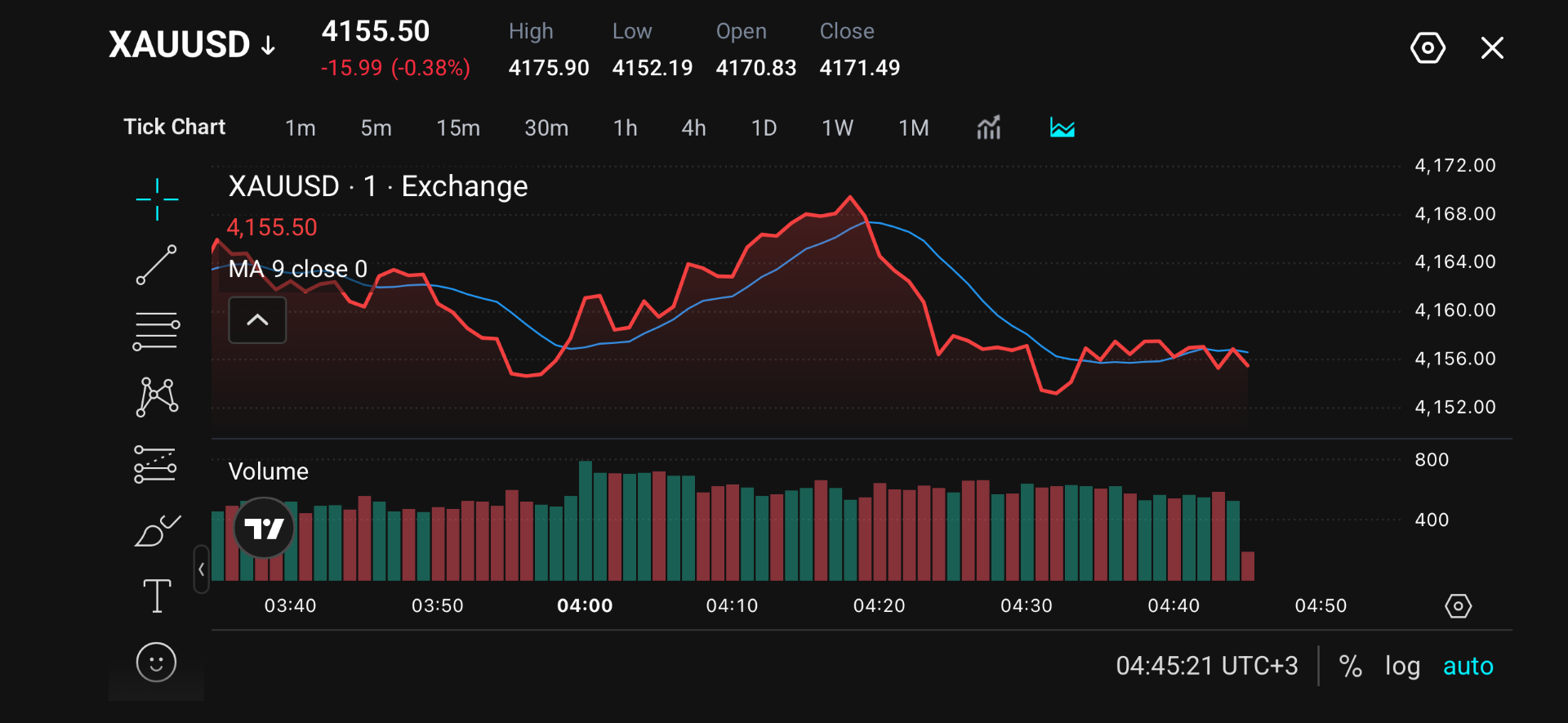
On Monday, gold declined by approximately 0.6% to $4,169.10 per ounce, reversing earlier gains as the dollar strengthened and inflation concerns returned. The selling pressure continued, with XAUUSD at $4,155.50, down $15.99 or 0.38%.
In the latest trading session, gold traded above $4,160 before recovering towards $4,168–$4,170. However, the rebound lost momentum, sending prices sharply lower towards $4,153. Following the decline, gold attempted to stabilise near $4,155–$4,157, but buying momentum remained limited. The short-term moving average also flattened, suggesting consolidation rather than a confirmed recovery.
The recent price action highlights a market struggling to regain upward momentum, with traders increasingly focused on whether inflation data will strengthen the dollar or provide an opportunity for recovery.
Why Traders Are Watching
Two upcoming US inflation reports could determine whether gold extends its decline or begins recovering. The US Consumer Price Index (CPI), scheduled for Wednesday, 14 October, is expected to show headline inflation rising by approximately 3.6% year-on-year in September. The Producer Price Index (PPI), scheduled for Thursday, 15 October, will also provide further insight into inflation pressures faced by US businesses. Both releases will heavily influence gold prices.
Oil prices above $100 per barrel also play a significant role. Although geopolitical instability can support gold’s safe-haven appeal, rising oil prices may also strengthen expectations of tighter monetary policy. This creates competing pressures for gold, with safe-haven demand potentially offset by the stronger US dollar and higher yields.
Key Trading Levels
| Level | Price | Technical significance |
| Resistance 2 | $4,230 | Upper boundary of the recovery zone |
| Resistance 1 | $4,200 | Psychological barrier and key recovery level |
| Near-term resistance | $4,170–$4,175 | Recent trading range and potential selling zone |
| Current price | $4,155.50 | Chart reference |
| Support 1 | $4,150 | Immediate downside level |
| Support 2 | $4,100 | Next major psychological support |
A sustained move below $4,150 would suggest that bearish momentum remains in control, potentially opening the way towards $4,100.
On the upside, gold would first need to recover above $4,170–$4,175 before challenging $4,200. A decisive break above $4,200, supported by improving momentum, could shift attention towards $4,230.
Bullish and Bearish Setups
| Scenario | Key Trigger | Potential Price Target |
| Bullish | Softer-than-expected CPI or PPI weakens the US dollar, while gold holds $4,150 and breaks above $4,170–$4,175. | $4,200, followed by $4,230 |
| Bearish | Hotter-than-expected inflation strengthens the US dollar and Treasury yields, pushing gold below $4,150. | $4,100 |
A bullish recovery could develop if softer US inflation reduces expectations of further Federal Reserve tightening, allowing gold to regain momentum above $4,170–$4,175 and potentially challenge $4,200.
Conversely, bearish pressure could intensify if CPI and PPI exceed expectations, supporting the dollar and driving XAUUSD below $4,150 towards $4,100. With gold currently trading around $4,155.50 in the chart, the upcoming inflation releases could determine whether prices stabilise or extend their recent decline.
Disclaimer
The price levels and market scenarios above reflect the author’s assessment at the time of writing. They do not represent financial advice or an official recommendation from VT Markets. Traders should conduct their own analysis and manage risk carefully.
Gold Prediction: What Could Drive Prices?
Softer-than-expected CPI and PPI readings could drive gold higher by weakening the US dollar and lowering Treasury yields, potentially allowing XAUUSD to recover. Rising geopolitical tensions and stronger safe-haven demand could also support gold prices.
Conversely, hotter-than-expected inflation could push gold lower by reinforcing expectations of a hawkish Federal Reserve and keeping interest rates elevated. A stronger US dollar, rising Treasury yields and persistent inflation concerns driven by oil prices above $100 per barrel could increase selling pressure.
Trade Gold CFDs with VT Markets
Gold remains one of the most actively monitored markets as traders assess changes in inflation expectations, interest-rate outlooks and global risk sentiment.
With VT Markets, traders can monitor XAUUSD price action alongside USDX, forex, indices and other global CFD markets.
The platform provides tools to monitor price movements, analyse charts and track key technical levels as market conditions develop.
Start trading gold CFDs with VT Markets today.
Why Trade Gold CFDs with VT Markets?
Gold CFDs allow traders to follow price movements in the precious metal without owning physical gold.
This flexibility allows traders to monitor how gold responds to major market drivers, including inflation data, central bank policy expectations and movements in the US dollar.
With VT Markets, traders can access gold price movements alongside other CFD markets through one trading account.
Explore all Gold products at VT Markets Trade Gold CFDs | Trade Gold 24/7 | Open account today
Frequently Asked Questions (FAQ)
Why is gold falling below $4,200?
Gold is facing pressure from a stronger US dollar, elevated Treasury yields and concerns that persistent inflation could encourage the Federal Reserve to maintain restrictive monetary policy. These conditions can reduce demand for non-yielding assets such as gold.
Will gold prices rise after US CPI?
Gold could rise if CPI comes in below expectations and leads to a weaker dollar or lower Treasury yields. However, a stronger inflation reading could extend selling pressure, particularly if markets increase expectations of further interest rate hikes.
When will US CPI and PPI data be released?
The September US CPI report is scheduled for 14 October 2026, while PPI is due on 15 October 2026. Both releases are scheduled for 8:30 a.m. Eastern Time.
Could gold fall towards $4,100?
Gold could move towards $4,100 if prices break below $4,150 and selling pressure persists. Stronger-than-expected US inflation, a rising dollar or higher Treasury yields could contribute to such a decline.
Start trading now — click here to create your real VT Markets account.








