






Key Points
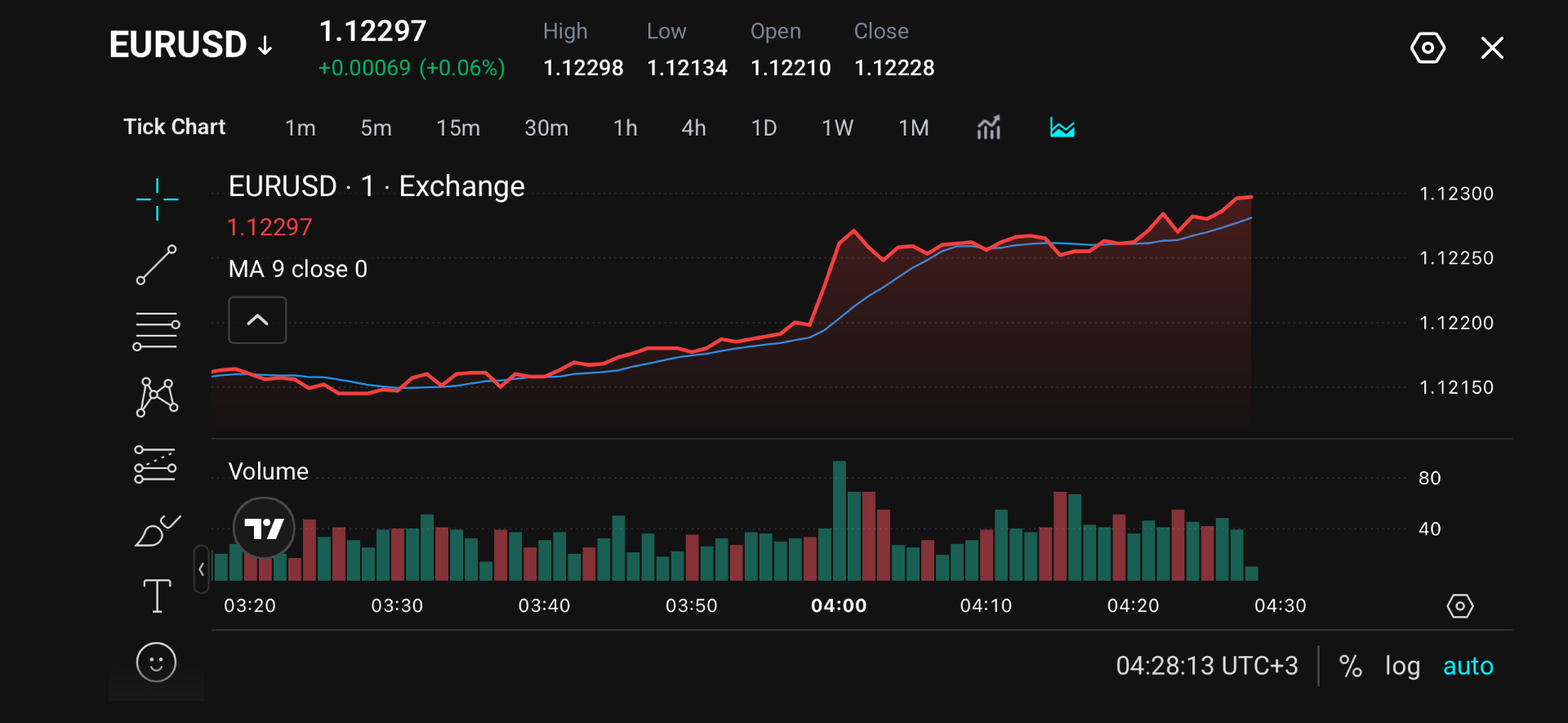
- EURUSD rebounded from 1.12134 and is testing resistance near 1.12300.
- 1.12250 and 1.12200 are the main support levels to watch if the rebound loses momentum.
- Buyers have regained some short-term control after the pair moved back above 1.12200.
- US Treasury yields and Fed expectations remain key drivers for the dollar.
- French fiscal concerns and eurozone debt risks continue to weigh on the euro outlook.
Market Move
EURUSD strengthened during the latest intraday session, rising from a low of 1.12134 to approximately 1.12297. After the initial surge, EURUSD consolidated around 1.12250 to 1.12270 before pushing higher again. The latest move has taken the price towards 1.12300, leaving the pair close to its intraday high.
The next test is whether buyers can convert this short-term momentum into a clean break above 1.12300. Failure there could leave the pair vulnerable to another pullback, particularly if US yields remain elevated or concerns surrounding European fiscal conditions intensify.
Why Traders Are Watching
The short-term recovery comes against a more complicated broader backdrop for the euro. Concerns surrounding French public finances have weighed on euro sentiment, while high US Treasury yields continue to provide underlying support for the dollar. These pressures have made sustained EURUSD rebounds more difficult even when expectations for tighter Federal Reserve policy ease.
However, the latest chart shows that buyers have regained some control in the very short term. The move above 1.12200, followed by consolidation above the rising 9-period moving average, suggests that selling pressure has temporarily eased.
Key Trading Levels
| Level | Area | Technical Significance |
| 1.123 | Immediate resistance | Psychological level just above the current price and session high |
| 1.12298 | Intraday high | Highest price shown on the chart |
| 1.1225 | Near-term pivot | Consolidation area following the 04:00 breakout |
| 1.122 | Initial support | Former breakout area and short-term psychological level |
| 1.1215 | Secondary support | Area repeatedly traded before the breakout |
| 1.12134 | Intraday low | Lowest price recorded during the displayed session |
EURUSD is approaching a key short-term resistance zone around 1.12300, which sits just above the session high at 1.12298. A sustained break above this area could signal that the current rebound is extending. On the downside, 1.12250 is the first area to watch, as it marked the consolidation zone after the earlier breakout.
Below that, 1.12200 acts as an important near-term support and former breakout area. If price falls through this level, attention could shift towards 1.12150, followed by the intraday low at 1.12134.
Bullish and Bearish Setups
| Setup | Trigger | Confirmation / Next Area |
| Bullish | Break and hold above 1.12300 | Price remains above the rising 9-period moving average, with stronger volume supporting a continuation higher. |
| Pullback | Retreat towards 1.12250 | Buyers defend the consolidation area and price holds above the rising moving average, keeping the intraday structure constructive. |
| Bearish | Break below 1.12200 | Loss of the breakout zone could expose 1.12150, followed by the session low at 1.12134. |
For a bullish scenario to develop, a confirmed move beyond 1.12300 could indicate that buyers are extending the breakout rather than simply testing resistance. Continued momentum would be more convincing if volume increases alongside the move.
A bearish setup would develop if the price breaks below 1.12200. It would weaken the current rebound and suggest that sellers are regaining control, potentially opening the way towards 1.12150 and the session low at 1.12134.
Disclaimer
The price levels and market scenarios above reflect the author’s assessment at the time of writing. They do not represent financial advice or an official recommendation from VT Markets. Traders should conduct their own analysis and manage risk carefully.
EURUSD Prediction: Next Major Drivers?
EURUSD could extend its recovery if US Treasury yields ease, the dollar loses momentum and expectations for tighter Federal Reserve policy continue to fade. Softer US inflation or labour-market data could reinforce that view, while signs of stabilisation in European bond markets may also support the euro.
On the downside, EURUSD could come under renewed pressure if US yields remain elevated, Fed officials push back against easier policy expectations or upcoming US data proves stronger than expected. Persistent concerns over France’s fiscal position and wider eurozone debt risks could also weigh on the currency.
For now, the pair remains highly sensitive to the balance between US rate expectations and eurozone fiscal confidence. These factors could determine whether the current intraday recovery develops into a more sustained EURUSD rebound.
Trade EURUSD with VT Markets
EURUSD is one of the world’s most actively traded forex pairs, offering traders exposure to changing expectations surrounding the European Central Bank, Federal Reserve, inflation, economic growth and global risk sentiment.
With VT Markets, traders can monitor EURUSD price movements, analyse technical trends and manage positions through platforms including MetaTrader 4, MetaTrader 5 and the VT Markets App.
Start a live trading account today and explore Forex pairs, gold and more.
FAQ
What is the EURUSD outlook today?
EURUSD is showing a short-term recovery after rebounding from its intraday low. Momentum has improved, but the broader outlook still depends on US Treasury yields, Federal Reserve expectations and confidence in the eurozone economy.
Why is EURUSD moving higher?
The latest rebound reflects a recovery in euro demand and some easing in immediate dollar momentum. Softer expectations around US monetary tightening can support EURUSD, although elevated Treasury yields may continue to limit the upside.
Is EURUSD bullish or bearish right now?
The short-term bias is mildly bullish based on the latest price action. However, the broader trend remains sensitive to macroeconomic developments, especially changes in US rate expectations and concerns surrounding European fiscal conditions.
What factors are affecting the euro against the US dollar?
Key EURUSD drivers include Federal Reserve and European Central Bank policy expectations, US Treasury yields, eurozone inflation, French debt concerns, economic data and overall market risk sentiment.
Why are France’s debt concerns important for EURUSD?
Concerns about France’s fiscal position can weigh on confidence in the euro, particularly if government borrowing costs rise or investors become more cautious about eurozone debt risks. This can create additional pressure on EURUSD.
Can EURUSD continue to recover?
Further recovery is possible if US yields ease, the dollar weakens and concerns around European debt conditions stabilise. Renewed dollar strength or worsening eurozone fiscal concerns could limit the rebound.
Start trading now — click here to create your real VT Markets account.








