






Unlock Massive Profits in 2025: The Ultimate Guide to Mastering Commodity Exchange Traded Funds That Wall Street Doesn’t Want You to Know
The global commodities market has reached unprecedented heights in 2025, with trading volumes exceeding $120 trillion annually. Commodities trading refers to the buying and selling of raw materials like oil, gold, and agricultural products and plays a key role in portfolio diversification by offering exposure to different sectors of the financial markets. As traditional investment avenues become increasingly volatile, savvy investors are turning to commodity trading to diversify their portfolios and capitalize on raw materials that power our modern world. Whether you’re interested in crude oil, precious metals, or agricultural products, understanding how to trade commodities effectively has never been more crucial.
Key Takeaways
- Commodity trading offers exposure to essential raw materials including energy, metals, and agricultural products
- Multiple trading methods exist: CFDs, ETFs, futures contracts, and direct commodity trading accounts
- Commodity trading is easily accessible through an online platform, offering convenience and a wide range of trading tools
- Best commodity trading platforms provide advanced tools, competitive margin rates, and regulatory protection
- Risk management is essential when dealing with volatile market conditions in commodity markets
- Canadian investors benefit from regulated brokers under the Canadian Investment Regulatory Organization oversight
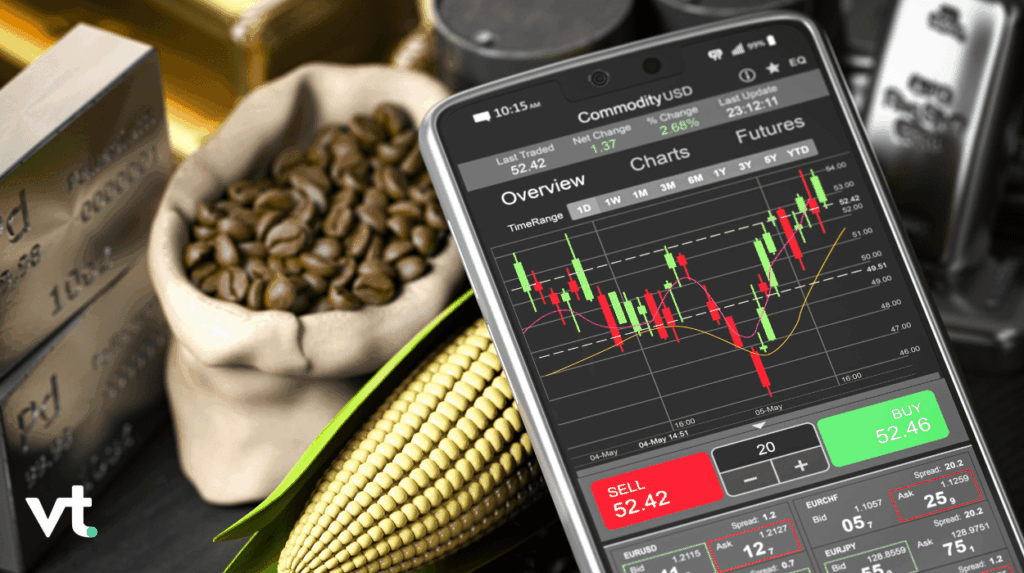
What Are Commodities and Why Trade Them?
Commodities represent raw physical assets that serve as the foundation of global commerce. These underlying assets include everything from crude oil and natural gas to precious metals like gold and silver, agricultural products, and soft commodities. The beauty of commodity trading lies in its inherent value – these are tangible assets that maintain intrinsic worth regardless of market sentiment.
When you trade commodities, you’re essentially speculating on the price movements of these essential raw materials. The commodities market operates on the principle of supply and demand, making it an attractive option for experienced traders and newcomers alike. Unlike stocks that depend on company performance, commodity prices reflect global economic conditions, weather patterns, geopolitical events, and industrial demand.
The Appeal of Commodity Markets
The commodity markets offer several compelling advantages:
Inflation Hedge: Raw materials typically maintain their value during inflationary periods, protecting your purchasing power when traditional currencies weaken.
Portfolio Diversification: Adding exposure to commodities reduces correlation with traditional stock and bond markets, creating a more balanced investment approach. Investors can gain exposure to commodities through various methods, such as ETFs, futures, or commodity-related stocks, to diversify their portfolios.
Global Economic Participation: Commodity trading allows you to participate in worldwide economic growth, particularly in emerging markets where natural resources demand continues rising.
Understanding Different Types of Commodities
Energy Commodities
Energy commodities dominate trading volumes, with crude oil leading the charge. West Texas Crude Oil and Brent crude represent the two primary oil benchmarks, each responding to different supply and demand dynamics. Natural gas has gained significant traction, particularly as countries transition toward cleaner energy sources while maintaining fossil fuel dependencies.
The energy sector’s volatility creates numerous opportunities for traders who understand market fundamentals. Geopolitical tensions, production decisions by major oil-producing nations, and seasonal demand fluctuations drive substantial price movements.
Precious Metals: The Safe Haven Assets
Gold silver have served as key precious metals for trading and stores of value for millennia, maintaining their appeal even in our digital age. These precious metals often move inversely to equity markets, providing portfolio protection during uncertain times. Central bank policies, interest rates, and global economic stability directly influence precious metals pricing.
Beyond gold and silver, platinum and palladium offer additional opportunities, particularly given their industrial applications in automotive manufacturing and electronics production.
Agricultural Products and Soft Commodities
Agricultural products encompass everything from grains and livestock to tropical commodities like coffee and cocoa. These markets respond to weather patterns, crop reports, and global food demand. Primary agricultural products like wheat, corn, and soybeans form the foundation of global food security.
Soft commodities including coffee, sugar, and cotton offer unique trading opportunities driven by seasonal patterns, weather conditions, and changing consumer preferences.
How to Trade Commodities: Your Options Explained
Commodity CFDs: The Most Accessible Approach
Contract for Difference (CFD) trading has revolutionized commodity access for retail traders. When you trade commodity CFDs, you don’t own the underlying commodity but instead speculate on price movements. This approach offers several advantages:
Leverage Opportunities: CFD trading allows you to control larger positions with smaller capital requirements, amplifying potential profits (and risks).
No Physical Delivery: Unlike futures contracts, commodity CFDs eliminate concerns about physical delivery, making them ideal for speculative trading.
Flexible Positioning: You can easily take long or short positions, profiting from both rising and falling prices.
Lower Capital Requirements: Compared to futures trading, CFDs require significantly less initial capital.
Fast Execution: Benefit from fast execution of trades, ensuring timely order fulfillment and efficient trading performance.
Guaranteed Stop Orders: Use guaranteed stop orders as a risk management tool to limit potential losses, even during volatile market conditions.
Commodity Exchange Traded Funds (ETFs)
Commodity ETFs provide an excellent entry point for investors seeking diversified exposure to commodities without the complexity of direct trading. These investment vehicles may track the prices of underlying commodities or include commodity stocks as part of their holdings, offering liquid, transparent access to commodity markets.
Commodity ETFs eliminate the need for specialized knowledge about futures markets or storage considerations. They trade like stocks, making them accessible through standard brokerage accounts. However, they may not perfectly track underlying commodity prices due to management fees and tracking errors.
Direct Commodity Trading Through Specialized Accounts
A dedicated commodity trading account offers the most comprehensive access to commodity markets. These accounts typically provide access to futures markets, spot prices, and various derivative instruments, and often allow traders to access a huge range of commodities and trading instruments.
When selecting a regulated broker for your commodity trading account, consider factors like margin rates, commission fees, available markets, and regulatory oversight. The Canadian Investment Regulatory Organization ensures that licensed brokers meet stringent standards for client protection and operational integrity.
Choosing the Best Commodity Trading Platforms
Essential Features to Consider
The best commodity trading platforms combine advanced functionality with user-friendly interfaces. Key features include:
Real-Time Market Data: Access to live spot prices, futures prices, and market depth information ensures you can make informed trading decisions.
Advanced Charting Tools: Technical analysis capabilities help identify trends and trading opportunities across different commodities.
Risk Management Tools: Stop-loss orders, take-profit levels, and position sizing tools protect your capital.
Options Trading Capabilities: Some platforms support options trading, enabling advanced strategies such as speculation, hedging, and complex options strategies.
Mobile Access: Modern trading platforms offer full functionality across desktop and mobile devices.
Award-Winning Trading Platforms: What Sets Them Apart
Award-winning trading platforms distinguish themselves through superior execution speeds, competitive pricing, and comprehensive market coverage. These platforms typically offer:
- Access to major indices and individual commodity markets
- Low spreads that minimize trading costs
- Robust regulatory compliance
- Extensive educational resources
- Professional-grade trading tools
VT Markets stands among the leading providers, offering award-winning trading platforms that cater to both beginner and experienced traders. Their comprehensive approach includes access to commodity markets alongside forex pairs and other financial products. CMC Markets is another leading online trading platform, recognized for its broad market coverage, advanced technology, fast execution, and strong regulatory status, making it a top choice for active traders.
Popular Commodities for Canadian Traders
Energy Markets: Oil and Natural Gas
Energy commodities represent the largest segment of commodity trading. Crude oil, particularly West Texas and Brent crude benchmarks, attracts massive trading volumes due to its economic significance. Canadian traders have particular advantages in energy markets given Canada’s substantial oil and natural gas production.
Natural gas trading has gained prominence as countries balance environmental concerns with energy security needs. Price volatility in natural gas markets creates numerous trading opportunities, particularly during seasonal demand peaks.
Precious Metals: Traditional Safe Havens
Gold and silver maintain their positions as primary precious metals for trading and investment. These metals respond to various factors including:
- Central bank monetary policies
- Inflation expectations
- Geopolitical uncertainty
- Industrial demand (particularly for silver)
Beyond gold and silver, other precious metals like platinum and palladium offer specialized trading opportunities tied to automotive and industrial demand.
Agricultural Markets: Feeding the World
Agricultural products represent essential commodities with consistent global demand. Major categories include:
Grains: Wheat, corn, soybeans, and other staple crops
Livestock: Cattle, hogs, and poultry
Soft Commodities: Coffee, sugar, cotton, cocoa
These markets respond to weather patterns, crop reports, global food demand, and government agricultural policies.

Understanding Commodity Market Dynamics
Supply and Demand Fundamentals
Commodity prices ultimately reflect the balance between supply and demand. Understanding these fundamentals helps predict price movements:
Supply Factors: Weather conditions, production capacity, geopolitical stability in producing regions, and technological advances affect supply levels.
Demand Factors: Economic growth, population increases, industrial development, and changing consumption patterns drive demand.
Seasonal Patterns and Cycles
Many commodities exhibit predictable seasonal patterns. Agricultural products follow planting and harvest cycles, while energy commodities respond to seasonal heating and cooling demands. Understanding these patterns helps inform trading strategies and timing decisions.
Geopolitical and Economic Influences
Global events significantly impact commodity prices. Trade disputes, sanctions, political instability in producing regions, and currency fluctuations create trading opportunities for those who monitor international developments. For international traders, foreign exchange rates can significantly impact commodity prices, as changes in currency values affect the cost and profitability of cross-border transactions.
Interest rates particularly affect commodity markets, as lower rates typically support commodity prices while higher rates can suppress demand and prices.
Risk Management in Commodity Trading
Understanding Market Volatility
Commodity markets are inherently volatile, with prices capable of dramatic swings based on various factors. This volatility creates profit opportunities but also substantial risks that must be managed carefully.
The most volatile market conditions often occur during:
- Geopolitical crises affecting major producing regions
- Extreme weather events impacting agricultural production
- Major economic announcements affecting global demand
- Supply disruptions from natural disasters or political events
Position Sizing and Leverage Management
Proper position sizing represents the foundation of successful commodity trading. Never risk more capital than you can afford to lose, and always consider how leverage amplifies both profits and losses.
When trading commodity CFDs or using margin accounts, understand that leverage can quickly magnify losses during volatile market conditions. Conservative position sizing helps ensure trading longevity.
Diversification Strategies
Spreading risk across different commodities and sectors reduces portfolio volatility. Consider diversification across:
- Energy, metals, and agricultural sectors
- Different geographic regions
- Various time horizons (short-term trades vs. long-term positions)
- Multiple trading strategies
Technical Analysis for Commodity Trading
Key Technical Indicators
Technical analysis plays a crucial role in commodity trading. Popular indicators include:
Moving Averages: Help identify trend directions and potential reversal points
Relative Strength Index (RSI): Indicates overbought or oversold conditions
MACD: Signals potential trend changes and momentum shifts
Support and Resistance Levels: Identify key price levels for entry and exit decisions
Chart Patterns and Trend Analysis
Commodity charts often display recognizable patterns that suggest future price movements. Common patterns include:
- Head and shoulders formations
- Triangle patterns (ascending, descending, symmetrical)
- Flag and pennant continuations
- Double tops and bottoms
Understanding these patterns, combined with fundamental analysis, creates a comprehensive approach to commodity trading.
Regulatory Environment for Canadian Traders
Canadian Investment Regulatory Organization (CIRO) Oversight
The Canadian Investment Regulatory Organization provides essential investor protection through comprehensive regulation of investment dealers and trading platforms. When selecting a commodity trading platform, ensure your chosen provider operates under CIRO oversight.
CIRO regulation includes:
- Capital adequacy requirements
- Client segregation of funds
- Regular audits and compliance monitoring
- Dispute resolution mechanisms
Tax Considerations for Commodity Trading
Canadian commodity traders must understand tax implications of their trading activities. Generally, frequent trading may be classified as business income, while longer-term investments might qualify for capital gains treatment. Consult with tax professionals to understand your specific situation.
Advanced Trading Strategies
Spread Trading Techniques
Spread trading involves simultaneously buying and selling related commodities to profit from price differences. Popular spread strategies include:
Calendar Spreads: Trading different expiration months of the same commodity
Inter-commodity Spreads: Trading related commodities (like crude oil vs. heating oil)
Geographic Spreads: Trading the same commodity in different markets
Seasonal Trading Approaches
Many commodities exhibit predictable seasonal price patterns based on production cycles, demand variations, and storage considerations. Successful seasonal traders identify these patterns and position accordingly.
For example:
- Natural gas typically peaks during winter heating seasons
- Agricultural products often follow planting and harvest cycles
- Precious metals may show strength during geopolitically uncertain periods
News-Based Trading Strategies
Commodity markets react strongly to news events. Developing strategies around economic announcements, weather reports, geopolitical developments, and industry data releases can create profitable opportunities.
Key news sources include:
- Economic data releases (GDP, inflation, employment)
- Weather forecasts affecting agricultural production
- Geopolitical developments in producing regions
- Industry reports and inventory data
Technology and Tools for Modern Commodity Trading
Algorithmic Trading and Automation
Modern commodity trading increasingly incorporates algorithmic trading strategies. These automated systems can:
- Execute trades based on predefined criteria
- Monitor multiple markets simultaneously
- Implement complex risk management rules
- Operate without emotional biases
While algorithmic trading offers advantages, it requires sophisticated understanding of market dynamics and programming skills.
Mobile Trading Applications
Today’s commodity traders demand mobile access to markets. Leading platforms provide full trading functionality through smartphone and tablet applications, enabling:
- Real-time price monitoring
- Trade execution from anywhere
- Push notifications for market events
- Portfolio management tools
Data Analytics and Market Intelligence
Successful commodity trading relies on comprehensive market data and analysis. Modern platforms provide:
- Real-time and historical price data
- Fundamental analysis tools
- Economic calendars
- Market sentiment indicators
Getting Started: Your Commodity Trading Journey
Education and Preparation
Before beginning commodity trading, invest time in education. Understanding market dynamics, trading strategies, and risk management principles forms the foundation for success.
Resources for learning include:
- Online courses and webinars
- Market analysis reports
- Trading simulators for practice
- Industry publications and news sources
Selecting Your Trading Platform
Choosing the right trading platform significantly impacts your commodity trading success. Consider factors like:
Regulation and Safety: Ensure your chosen platform operates under appropriate regulatory oversight
Market Access: Confirm access to your preferred commodity markets
Trading Costs: Compare commission fees, spreads, and margin rates
Technology: Evaluate platform reliability, speed, and available tools
Support: Consider customer service quality and educational resources
VT Markets provides comprehensive commodity trading solutions, combining regulatory compliance with advanced trading technology and competitive pricing.
Starting Capital and Risk Management
Determine appropriate starting capital based on your financial situation and risk tolerance. Never invest money you cannot afford to lose, and always maintain emergency funds outside your trading account.
Implement strict risk management from your first trade:
- Set maximum risk per trade (typically 1-2% of account balance)
- Use stop-loss orders consistently
- Avoid emotional decision-making
- Keep detailed trading records
Future Trends in Commodity Trading
Environmental, Social, and Governance (ESG) Considerations
ESG factors increasingly influence commodity markets. Climate change concerns affect energy markets, while sustainability requirements impact agricultural and mining sectors. Forward-thinking traders monitor ESG trends for long-term investment opportunities.
Technology Integration
Blockchain technology, artificial intelligence, and machine learning continue transforming commodity trading. These innovations improve market transparency, reduce settlement times, and enable more sophisticated trading strategies.
Emerging Market Opportunities
Developing economies create new commodity demand patterns, particularly for industrial metals and energy resources. Understanding global economic development trends helps identify emerging trading opportunities.
Frequently Asked Questions
1. What is the minimum capital required to start commodity trading?
The minimum capital requirements vary significantly depending on your chosen trading method. For commodity CFDs, many platforms allow starting with as little as $100-$500, though $2,000-$5,000 provides more flexibility for proper risk management. Direct futures trading typically requires $5,000-$25,000 minimum, while commodity ETFs can be purchased with any amount through standard brokerage accounts. Remember that having more capital allows for better risk management and position sizing.
2. Are commodity markets more volatile than stock markets?
Generally, yes. Commodity markets tend to exhibit higher volatility than broad stock market indices due to factors like weather dependency, geopolitical risks, supply disruptions, and the physical nature of underlying assets. However, this volatility creates both opportunities and risks. Energy commodities like crude oil can experience 3-5% daily price swings, while precious metals typically show moderate volatility. Proper risk management becomes even more crucial when trading commodities.
3. Can I trade commodities through my regular stock brokerage account?
Most traditional stock brokers offer limited commodity exposure through ETFs and some futures contracts, but dedicated commodity trading platforms typically provide broader market access and specialized tools. Platforms like those offered by VT Markets provide comprehensive commodity trading capabilities alongside traditional financial products. Check with your current broker about commodity availability, but consider specialized platforms for serious commodity trading.
4. How do interest rates affect commodity prices?
Interest rates significantly impact commodity markets through several mechanisms. Lower interest rates typically support commodity prices by reducing storage costs, making alternative investments less attractive, and often weakening the domestic currency (making commodities cheaper for foreign buyers). Conversely, higher interest rates can suppress commodity demand by increasing economic costs and strengthening currency. Additionally, many commodities are priced in US dollars, so Federal Reserve policy changes particularly impact global commodity markets.








