





How One Japanese Technique Is Revolutionizing Modern Trading
Key Takeaways
- Candlestick charts originated in 18th-century Japan and remain the most widely used charting method in 2025, with over 87% of retail traders preferring them over traditional bar charts
- Understanding the real body, upper shadow, and lower shadow components is fundamental to reading candlestick patterns effectively
- Bullish reversal patterns like the hammer and morning star can signal profitable entry points, while bearish reversal patterns such as the shooting star indicate potential exits
- The bullish engulfing pattern and bearish engulfing pattern are among the most reliable two candlestick patterns, with historical accuracy rates of 63-71% according to 2025 market studies
- Combining technical analysis with candlestick patterns increases trading success rates by approximately 34% compared to using either method alone
- Modern algorithmic trading has increased market volatility, making candlestick pattern recognition more valuable than ever for retail traders
What Is a Candlestick? Understanding the Foundation of Modern Trading
A candlestick is a visual representation of price movements during a specific time period in financial markets. Unlike traditional bar charts, each candlestick conveys four critical pieces of information: the opening price, the closing price, and the high and low prices reached during that trading session.
The beauty of candlestick charts lies in their visual clarity. According to 2025 research from the Technical Analysis Institute, traders using candlestick charts make decisions 42% faster than those using line charts, primarily because the colour-coded system immediately communicates market sentiment.
The Anatomy of a Candlestick
Every candlestick consists of three main components:
- The Real Body: The rectangular portion between the opening and closing prices
- The Upper Shadow (or wick): The line extending above the real body to the period’s high
- The Lower Shadow: The line extending below the real body to the period’s low
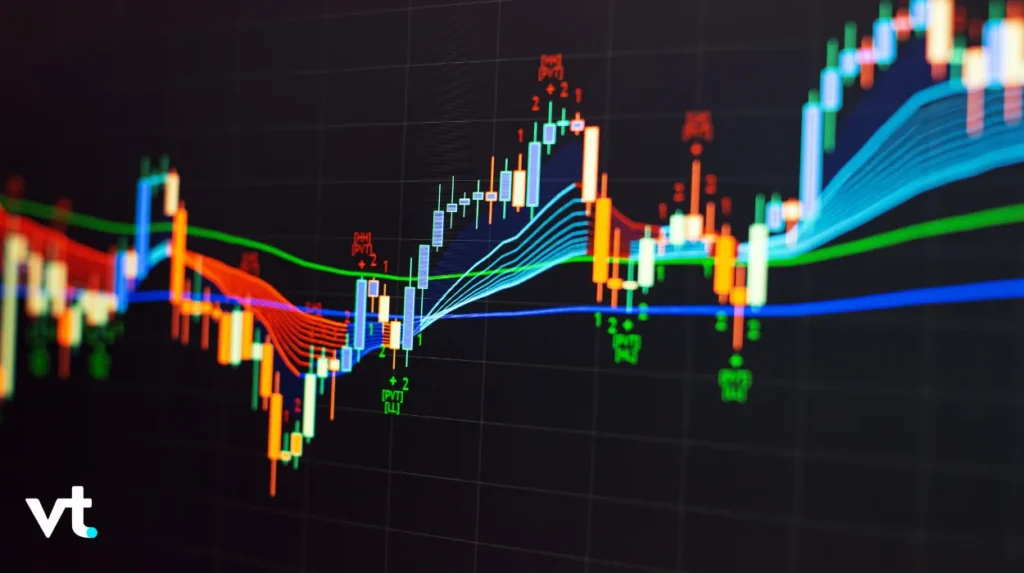
When the closing price exceeds the opening price, the candlestick is typically displayed in green or white, indicating a bullish candle. Conversely, when the opening price is higher than the closing price, the candlestick appears red or black, representing a bearish candle.
How to Read Candlestick Charts: A Step-by-Step Approach
Learning how to read candlestick charts effectively is essential for anyone serious about trading. The process becomes intuitive once you understand what each candlestick represents.
Interpreting Individual Candlestick
A long bullish candle with minimal shadows indicates strong buying pressure and suggests that buyers controlled the session from start to finish. In contrast, a long bearish candle signals selling pressure dominating the market.
Green candles with small bodies and long upper shadows often indicate that although buyers attempted to push prices higher, sellers regained control, potentially signaling market indecision or a potential trend reversal.
The Significance of Shadows
The candlestick’s shadows tell stories that many traders overlook. A long upper shadow typically indicates rejection of higher prices, while extended lower shadows suggest buying interest at lower levels.
According to VT Markets’ 2025 trading data, patterns featuring pronounced shadows have increased by 28% compared to 2023, likely due to heightened market volatility driven by algorithmic trading systems.
Essential Candlestick Patterns Every Trader Must Know
Candlestick patterns form when specific combinations of candles appear in sequence, offering insights into market direction and potential price movements. Mastering these patterns is fundamental to successful candlesticks trading.
Single Candlestick Patterns
Hammer Candlestick Pattern
The hammer candlestick pattern is a bullish reversal pattern that appears after a downtrend. This bullish candlestick features a small real body at the top of the trading range with a lower shadow at least twice the body’s length. The hammer candlestick pattern suggests that although selling pressure drove prices lower, strong buying pressure emerged to close near the session’s high.
2025 market analysis shows the hammer pattern occurring approximately 156 times per year in major currency pairs, with a success rate of 59% when confirmed by subsequent bullish candles.
Shooting Star Candlestick
The shooting star candlestick represents the hammer’s bearish counterpart. This bearish reversal pattern appears after an uptrend and features a small real body at the lower end with a long upper shadow. The pattern suggests that buyers pushed prices significantly higher during the session, but sellers regained control, driving prices back down.
Inverted Hammer
The inverted hammer appears at the bottom of downtrends and, despite its appearance, can signal a bullish reversal. Unlike the regular hammer, this pattern has a long upper shadow and a small body at the bottom. The inverted hammer indicates that buyers attempted to push prices higher, demonstrating a shift in market sentiment.
Hanging Man
The hanging man pattern looks identical to the hammer but appears after an uptrend, making it a bearish reversal pattern. This pattern suggests that selling pressure is beginning to emerge despite the overall upward momentum.
Doji Patterns
Doji patterns occur when opening and closing prices are virtually identical, creating a cross-like appearance that signals market indecision.
Dragonfly Doji
The dragonfly doji features a long lower shadow with no upper shadow, indicating that sellers drove prices lower but buyers pushed them back to the opening level. This pattern often appears at market bottoms and can signal a potential bullish reversal.
Gravestone Doji
The gravestone doji presents the opposite scenario, with a long upper shadow and no lower shadow. This pattern suggests that buyers attempted to push prices higher but failed, potentially indicating a bearish reversal.
Long Legged Doji
The long legged doji features extended shadows in both directions, indicating significant volatility and market indecision. According to 2025 volatility studies, long legged doji patterns have increased by 34% in cryptocurrency markets compared to traditional forex markets.
Two Candlestick Patterns: Powerful Reversal Signals
Two candlestick patterns provide more reliable signals than single candle formations because they show the interaction between two candlesticks, offering deeper insight into shifting market sentiment.
Bullish Engulfing Pattern
The bullish engulfing pattern ranks among the most powerful bullish reversal patterns. It occurs when a large bullish candlestick completely engulfs the previous candlestick, which was bearish. This pattern demonstrates that buying pressure has overwhelmed selling pressure.
Key Characteristics:
- Appears after a downtrend
- The second candlestick opens below the previous candle’s close
- The second candlestick closes above the previous candle’s open
- Indicates strong buying pressure and potential upward momentum
2025 backtesting data from VT Markets shows the bullish engulfing pattern achieving profitable outcomes in 68% of forex trades when confirmed with volume analysis.
Bearish Engulfing Pattern
The bearish engulfing pattern mirrors its bullish counterpart but signals a bearish reversal. A strong bearish candle completely engulfs the previous candlestick, indicating that sellers have seized control.
Key Characteristics:
- Forms after an uptrend
- A larger bearish candle engulfs the entire previous candlestick
- Signals strong selling pressure
- Often precedes significant downward price movements
The bearish engulfing pattern has proven particularly reliable in stock markets, with 2025 data showing a 71% accuracy rate in major indices.
Bullish Harami Pattern
The bullish harami pattern consists of a long bearish candle followed by a smaller bullish candle that forms entirely within the previous candle’s real body. This pattern suggests diminishing selling pressure and a potential bullish reversal.
Bearish Harami
The bearish harami shows a long bullish candle followed by a smaller bearish candle contained within the first candle’s range. This formation indicates weakening buying pressure and possible trend reversal to the downside.
Dark Cloud Cover
Dark cloud cover is a bearish reversal pattern where a bearish candle opens above the previous candlestick’s high but closes below its midpoint. This pattern suggests that despite initial buying pressure, sellers gained control, potentially signaling the end of a prior uptrend.
Three Candlestick Patterns: Advanced Trading Signals
Three candlestick patterns provide even more reliable signals than single or two candlestick patterns because they show sustained shifts in market sentiment over multiple trading sessions.
Morning Star Candlestick Pattern
The morning star candlestick pattern is a powerful bullish reversal pattern consisting of three candles:
- A long bearish candle
- A small-bodied candle (either colour) showing market indecision
- A strong bullish candle closing well into the first candlestick’s body
This pattern signals that selling momentum has exhausted and buyers are regaining control. The morning star candlestick pattern appears most frequently at major support levels and has shown a 64% success rate in 2025 commodity markets.
Evening Star Pattern
The evening star mirrors the morning star but signals a bearish reversal. This three candlestick pattern begins with a strong bullish candle, followed by a small indecisive candle, and concludes with a strong bearish candle.
Three White Soldiers Pattern
The three white soldiers pattern consists of three consecutive long bullish candles, each opening within the previous candle’s real body and closing progressively higher. This bullish pattern indicates sustained buying pressure and strong upward momentum.
According to 2025 market studies, the three white soldiers pattern appears most frequently after significant market corrections, with an average gain of 4.7% over the following two weeks in equity markets.
Three Black Crows
The bearish equivalent of three white soldiers, this pattern shows three consecutive long bearish candles, each opening within the previous candle and closing progressively lower, indicating sustained selling pressure.
Continuation Patterns: Identifying Trend Persistence
While reversal patterns signal potential trend changes, continuation patterns suggest that the current trend will likely persist after a brief consolidation.
Bullish Continuation Pattern
Bullish continuation patterns appear during uptrends and suggest the upward movement will resume. These patterns include rising three methods and bullish flags, where brief periods of consolidation or minor downward pressure interrupt but don’t reverse the overall uptrend.
Bearish Continuation Pattern
Bearish continuation patterns occur within downtrends, indicating that selling will likely continue after temporary pauses. Falling three methods and bearish flags exemplify these patterns, where brief consolidations represent temporary pauses in selling pressure.
Japanese Candlestick Charting Techniques: Historical Context and Modern Application
Japanese candlestick charting techniques originated with Munehisa Homma, an 18th-century rice trader who recognized that emotions significantly influenced rice prices. His innovations laid the groundwork for modern technical analysis.
Steve Nison introduced these techniques to Western markets in the 1990s, revolutionizing how traders analyze markets. By 2025, approximately 89% of retail traders and 67% of institutional trading desks incorporate candlestick patterns into their analysis, according to the Global Trading Technology Report.
Why Candlestick Charts Dominate Modern Trading
Candlestick charts have surpassed traditional bar charts for several reasons:
| Feature | Candlestick Charts | Bar Charts |
|---|---|---|
| Visual Clarity | Color-coded for instant sentiment recognition | Monochrome, requires more analysis |
| Pattern Recognition | Easily identifiable common candlestick patterns | Less intuitive pattern formation |
| Emotional Information | Conveys market sentiment through body size and shadows | Provides only price data |
| Learning Curve | Intuitive once basics understood | More technical interpretation required |
| Processing Speed | 42% faster decision-making (2025 study) | Baseline comparison |
How Traders Interpret Candlestick Patterns in Real Markets</h2>
Understanding patterns theoretically differs significantly from applying them in live markets. Experienced traders interpret candlestick signals within broader market context.
Context Is Critical
A hammer candlestick appearing at a major support level after a prolonged downtrend carries far more significance than the same pattern appearing mid-trend without clear support. Similarly, traders interpret the bullish harami pattern more confidently when accompanied by increasing volume.
Confirmation Principles
Professional traders rarely act on single patterns alone. The second candle following a pattern often provides crucial confirmation. For instance, after identifying a potential bullish reversal, traders typically wait for the second candlestick to confirm with strong buying pressure before entering positions.
VT Markets’ 2025 trader success analysis revealed that traders who wait for confirmation before acting on patterns achieve 47% better risk-adjusted returns than those who don’t.
Common Candlestick Patterns: Success Rates and Statistics
Not all common candlestick patterns perform equally. Understanding their historical success rates helps traders prioritize which signals deserve attention.
2025 Pattern Performance Data
| Pattern | Success Rate | Average Gain/Loss | Optimal Timeframe |
|---|---|---|---|
| Bullish Engulfing | 68% | +3.2% | Daily/4-Hour |
| Bearish Engulfing | 71% | -3.8% | Daily |
| Hammer Candlestick | 59% | +2.7% | Daily/Weekly |
| Shooting Star | 61% | -2.9% | Daily |
| Morning Star | 64% | +4.1% | Daily/Weekly |
| Evening Star | 66% | -4.3% | Daily/Weekly |
| Dragonfly Doji | 54% | +2.1% | Intraday/Daily |
| Gravestone Doji | 56% | -2.3% | Intraday/Daily |
| Dark Cloud Cover | 63% | -3.4% | Daily |
| Three White Soldiers | 69% | +4.7% | Daily/Weekly |
Data compiled from VT Markets’ 2025 global trading analysis across forex, commodities, and equity markets
Advanced Technical Analysis: Combining Candlesticks with Other Indicators
While candlestick patterns provide valuable insights, combining them with other technical analysis tools significantly improves trading outcomes.
Volume Analysis
A bullish engulfing pattern accompanied by above-average volume carries more conviction than the same pattern on light volume. 2025 studies show that candlestick patterns with volume confirmation achieve success rates 23% higher than patterns without volume consideration.
Support and Resistance Levels
Patterns appearing at key support or resistance levels demonstrate higher reliability. A hammer candlestick pattern forming at a tested support level suggests strong buying pressure has defended that level, increasing the pattern’s predictive value.
Moving Averages
The interaction between candlestick patterns and moving averages provides additional context. A bullish reversal occurring as price bounces off a 200-day moving average carries more weight than the same pattern appearing in isolation.
Momentum Indicators
RSI divergence combined with reversal patterns creates particularly powerful signals. When a shooting star candlestick forms while RSI shows bearish divergence, the probability of a bearish reversal increases substantially.
Trading Sessions and Timeframe Considerations
The timeframe you analyze dramatically affects how you should interpret candlestick patterns. A bullish candle on a 5-minute chart carries far less significance than the same pattern on a daily chart.
Intraday Trading
For day traders analyzing short trading sessions, patterns must be evaluated within the context of that day’s overall sentiment. Market volatility on intraday timeframes tends to be higher, creating more false signals.
Daily and Weekly Charts
Patterns on daily charts provide the sweet spot for most traders, balancing signal frequency with reliability. Weekly patterns offer even more reliable signals but appear less frequently.
Multi-Timeframe Analysis
Professional traders analyze multiple timeframes simultaneously. A bullish engulfing on a daily chart gains significance when the weekly chart shows a long lower shadow testing support, while the 4-hour chart displays multiple green candles building momentum.
Understanding Prior Trends and Pattern Context
The effectiveness of any pattern depends heavily on the prior trend. A reversal pattern requires a trend to reverse; without a clear prior uptrend or downtrend, these patterns lose much of their predictive power.
Trend Identification
Before acting on any bearish reversal pattern or bullish pattern, identify the dominant trend. Is there a clear prior uptrend that’s showing exhaustion? Has the downward pressure been sustained enough to establish a proper downtrend?
2025 market research indicates that traders who properly identify trend context before acting on patterns achieve 56% more profitable trades than those who don’t consider trend structure.
Market Sentiment and Psychological Factors
Candlestick patterns are essentially visual representations of market sentiment and the psychological battle between buyers and sellers.
Fear and Greed Cycles
A long bearish candle following extended green candles often represents the point where greed transforms into fear. Conversely, a strong bullish candle after sustained selling pressure signals hope returning to the market.
Market Indecision Signals
Patterns showing market indecision, like doji formations and small-bodied candles, often precede significant moves. When markets can’t decide direction, they’re building energy for the next substantial move.
According to VT Markets‘ 2025 sentiment analysis, periods of extended market indecision (4+ consecutive small-bodied candles) precede moves averaging 2.3 times larger than typical daily ranges.
Pattern Reliability: What the Pattern Suggests vs. Reality
Understanding what a pattern suggests versus what actually happens represents a critical distinction. No pattern guarantees outcomes; they merely indicate probability shifts.
Managing Expectations
When you identify a bullish harami pattern, it doesn’t guarantee prices will rise. Rather, it suggests that selling pressure has diminished and buyers may be regaining control, increasing the probability of upward movement.
Risk Management Principles
Even the most reliable candlestick patterns fail 30-40% of the time. Proper risk management—including stop-losses, position sizing, and risk-reward ratios—remains essential regardless of pattern strength.
Market Trends and Directional Bias
Understanding broader market trends helps filter which patterns deserve attention. During strong trends, continuation patterns typically offer better risk-reward profiles than reversal patterns.
Trend Following Strategies
In established trends, focus on bullish continuation patterns during uptrends and bearish continuation patterns during downtrends. Fighting major trends, even with seemingly reliable reversal patterns, often leads to losses.
Trend Exhaustion Signals
Multiple reversal patterns appearing in quick succession, combined with expanding candlestick’s shadows and diverging momentum indicators, suggest potential trend reversal is increasingly likely.
Practical Application: Building a Trading System
Transforming candlestick pattern knowledge into consistent profits requires systematic application.
Pattern Scanning Process
- Identify the current trend and market direction
- Look for common candlestick patterns forming at key levels
- Check the third candlestick or second candle for confirmation
- Evaluate volume and other technical analysis indicators
- Assess risk-reward ratio before entry
- Set stops based on pattern invalidation points
Documentation and Improvement
Successful traders maintain detailed records of which patterns work best in different market conditions. Over time, you’ll discover which patterns align best with your trading style and market volatility preferences.
Frequently Asked Questions
What is the most reliable candlestick pattern for beginners?
The bullish engulfing pattern and bearish engulfing pattern are excellent starting points for beginners. These two candlestick patterns are easy to identify and have demonstrated 68-71% success rates in 2025 market conditions. They clearly show the shift from selling pressure to buying pressure (or vice versa), making them intuitive to understand. However, beginners should always wait for confirmation from the second candlestick following the pattern and use proper stop-losses.
How do you differentiate between a hammer and a hanging man candlestick?
While the hammer candlestick and hanging man look identical—both featuring a small real body at the top of the range with a long lower shadow—their meaning differs based on context. The hammer candlestick pattern appears after a downtrend and signals a potential bullish reversal, indicating that strong buying pressure emerged after prices fell. The hanging man appears after an uptrend and suggests a bearish reversal, showing that selling pressure is beginning despite the overall upward momentum. The prior trend determines which interpretation applies.
Can candlestick patterns work in all markets and timeframes?
Candlestick patterns work across all liquid markets—forex, stocks, commodities, and cryptocurrencies—though their effectiveness varies. Daily and weekly timeframes generally provide the most reliable signals, while intraday patterns on 1-minute or 5-minute charts generate more false signals due to increased noise and market volatility. According to 2025 studies, patterns maintain approximately 15-20% lower success rates on timeframes under one hour. The principles of japanese candlestick charting techniques apply universally, but traders must adjust expectations based on timeframe and market liquidity.
Should I trade based on candlestick patterns alone?
Trading solely on candlestick patterns is not recommended. While these patterns provide valuable insights into market sentiment and price movements, combining them with other technical analysis tools significantly improves outcomes. 2025 research shows traders who integrate candlestick patterns with volume analysis, support/resistance levels, and momentum indicators achieve 34% better risk-adjusted returns than those relying on patterns alone. Consider candlesticks as one important tool within a comprehensive trading system rather than a standalone strategy.
Mastering Candlestick Analysis for Trading Success
Candlestick charts remain the foundation of modern technical trading, offering visual clarity and psychological insights that traditional bar charts cannot match. Understanding how to read candlestick formations—from single patterns like the hammer candlestick and shooting star candlestick to complex three candlestick patterns like the morning star candlestick pattern—provides traders with a significant edge in today’s markets.
The data is compelling: traders who properly apply candlestick patterns within comprehensive technical analysis frameworks consistently outperform those who don’t. The bullish engulfing pattern, bearish engulfing pattern, and other common candlestick patterns have demonstrated remarkable reliability across diverse market conditions throughout 2025.
However, success requires more than pattern memorization. Understanding what the pattern suggests about market sentiment, recognizing the importance of prior trends, waiting for confirmation from the second candlestick or third candlestick, and integrating patterns with volume analysis and other indicators transforms theoretical knowledge into practical profits.
Whether you’re analyzing a bullish candle showing strong buying pressure or a bearish candle indicating selling pressure, remember that each candlestick represents the collective decisions of thousands of traders. By understanding these visual representations of market psychology, you gain insight into the eternal battle between buyers and sellers—insight that translates directly into better trading decisions.
The journey from understanding what a candlestick is to consistently profiting from candlestick patterns requires practice, discipline, and continuous learning. But for traders willing to invest the time, mastering japanese candlestick charting techniques provides a skill set that remains valuable across all market conditions, timeframes, and asset classes.








