




Key Points
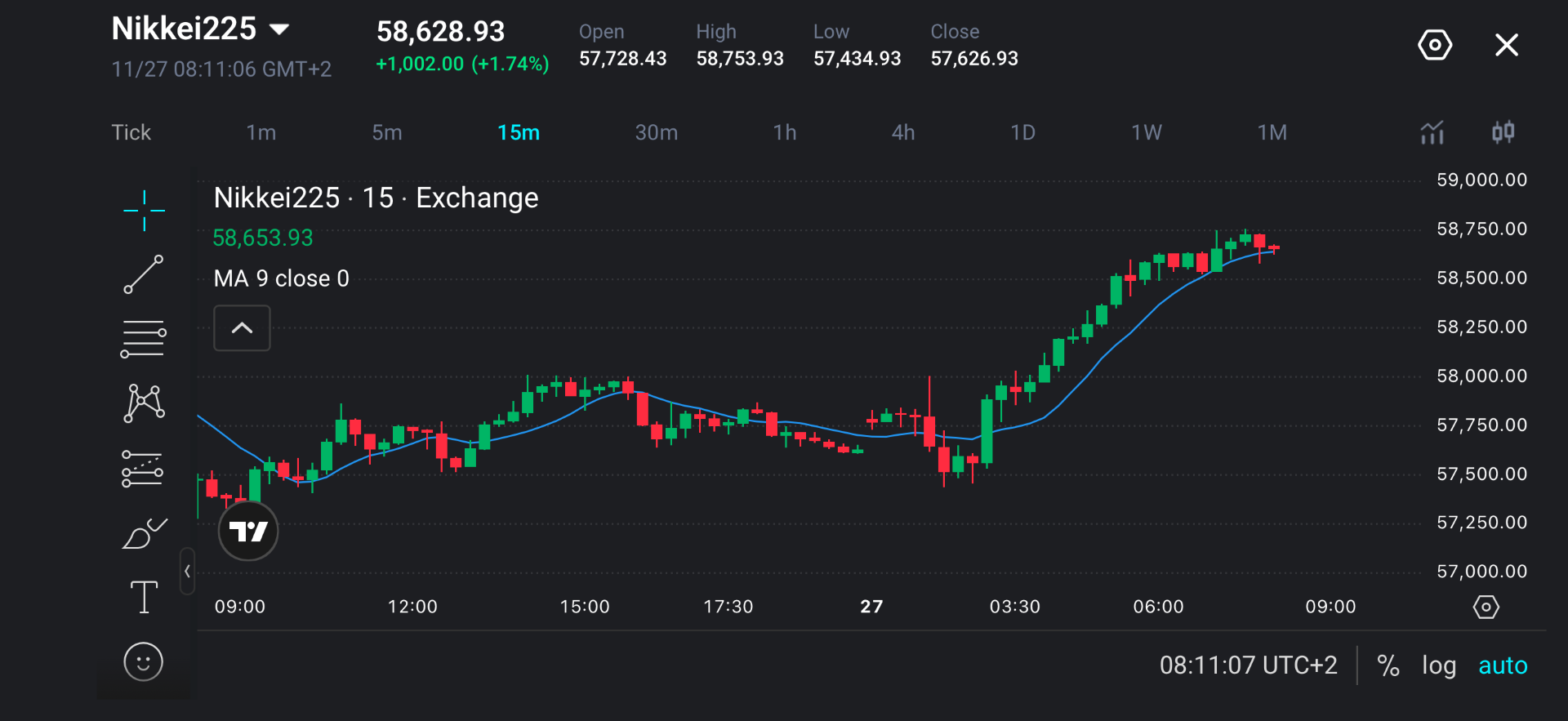
- Nikkei225 gained 2.12% to above 58,700, supported by improving sentiment towards technology and AI-related shares.
- South Korean and Chinese equities also advanced, extending the regional recovery.
- Tokyo core inflation accelerated to 2.9%, compared with 2.6% in October and expectations of 3.0%.
- AI-sector performance, yen movements and Bank of Japan policy expectations remain central to the outlook.
Market Move
Nikkei225 traded higher on Friday, 27 November, as stronger US stock futures and renewed buying in AI-related shares lifted sentiment ahead of Wall Street’s shortened post-Thanksgiving session.
Nikkei225 climbed 2.12% to above 58,700, alongside broad gains across Asian markets. South Korea’s KOSPI jumped 4.23% to 4,910.47, while Hong Kong’s Hang Seng Index rose 2.05% to 22,685.50. Mainland China’s Shanghai Composite gained 2.95% to 3,576.45.
Renewed dip-buying helped the index recover some of its recent losses, although the rebound followed a sharp technology-led sell-off earlier in November.
Why Traders Are Watching
Recent economic data have shifted attention towards domestic inflation and the Bank of Japan’s next policy decision. Tokyo core consumer prices, which exclude fresh food, rose 2.9% year on year in November, up from 2.6% in October but slightly below the 3.0% forecast. Persistent price pressures reinforce expectations of a possible Bank of Japan rate hike in December, although the market impact will depend on how much tightening investors have already priced in.
The Trump administration’s proposal for new tariffs on 14 trading partners, including Japan, adds uncertainty for exporters. Depending on the final terms, higher duties could weaken Japanese manufacturers’ competitiveness in the US market or squeeze margins if companies absorb part of the additional cost. Traders will watch the proposed rates and any exemptions to assess the potential earnings impact.
These domestic and trade-related pressures come as investors reassess the sustainability of AI investment. Renewed buying in semiconductor and technology shares could support Nikkei225, but the interaction between BOJ policy, yen movements and global technology sentiment will remain central to whether the rebound can continue.
Key Trading Levels
| Level | Significance |
| 60,000 | Major psychological reference above the current recovery. |
| 59,500 | Intermediate upside reference if buying momentum continues. |
| 59,000 | Next round-number test. |
| 58,700 | Current reference area. |
| 58,500 | Nearby round-number level for assessing pullback strength. |
| 58,000 | Lower psychological reference if the rebound loses momentum. |
Nikkei225 is trading around 58,700, placing it between the nearby 58,500 and 59,000 reference levels. Price behaviour around this band could help traders assess whether the initial advance is developing into consolidation or attracting profit-taking.
Bullish and Bearish Setups
| Setup | Trigger | Confirmation |
| Bullish | Sustained break above 59,000 | Price holds the breakout on a retest and technology shares remain firm. |
| Extended recovery | Advance through 59,500 towards 60,000 | Gains broaden beyond a small group of index heavyweights. |
| Pullback recovery | Retreat towards 58,500 | Buyers defend the area and establish a higher intraday low. |
| Bearish | Break below 58,500 | A recovery attempt fails to reclaim the level. |
| Deeper decline | Sustained move below 58,000 | Selling expands across technology and other major sectors. |
Bullish scenario: A confirmed move above 59,000 could create room towards 59,500, followed by 60,000. Continued semiconductor strength and broader participation would improve confidence in the move.
Bearish scenario: A failed rebound below 58,500 could bring 58,000 into focus. Renewed AI-sector selling or a sharp appreciation in the yen could reinforce downside pressure.
Disclaimer
The price levels and market scenarios above reflect the author’s assessment at the time of writing. They do not represent financial advice or an official recommendation from VT Markets. Traders should conduct their own analysis and manage risk carefully.
Nikkei225 Prediction: What Should Traders Watch Next?
Upcoming developments that could influence Nikkei225 include:
- AI and semiconductor sentiment: Sustained buying in US technology shares could support Japanese chip-related companies. Renewed concerns about valuations or AI spending returns could interrupt the recovery.
- Bank of Japan policy expectations: Policymaker commentary will help traders assess whether stronger Tokyo inflation increases the likelihood of further tightening. The next BOJ policy meeting is scheduled for 17–18 December.
- Japanese inflation data: November’s nationwide CPI report, scheduled for 18 December, will offer a broader view of price pressures beyond Tokyo.
- The yen and bond yields: Currency appreciation or higher Japanese yields could offset improving global equity sentiment, particularly for exporters and highly valued growth stocks.
Nikkei225 could extend its recovery if AI-related buying persists and gains spread across more sectors. However, stronger monetary tightening expectations or renewed technology weakness could limit follow-through.
Trade Nikkei225 with VT Markets
Traders looking to follow movements in Japan’s equity market can access Nikkei 225 index CFDs through VT Markets.
Trading index CFDs allows traders to take positions on both rising and falling market prices without owning the underlying shares. Through the VT Markets trading platforms, traders can monitor market movements, apply technical indicators and manage their positions using risk management tools.
Start a live trading account today and explore Forex pairs, gold, 24/7 trading and more.
Frequently Asked Questions (FAQs)
Why is Nikkei225 rising?
It’s rising due to renewed AI-related buying and stronger US stock futures. Broad gains across Asian equities also suggest improving regional sentiment.
How does Tokyo inflation affect Nikkei225?
Tokyo inflation provides an early indication of Japanese price trends. Stronger inflation can increase expectations of BOJ tightening, influencing bond yields, the yen and equity valuations.
Does a stronger yen always push Nikkei225 lower?
No. A stronger yen can reduce the translated value of exporters’ overseas earnings, but it can also lower import costs. The overall effect depends on the reason for the currency move and which sectors lead the market.
What would make the recovery more convincing?
Sustained gains across semiconductor shares, broader market participation and successful retests of breakout levels would strengthen the recovery case. A rally concentrated in a few heavily weighted stocks may be more vulnerable to reversal.





