






Key Points:
- EUR/USD extends losses as ISM Services PMI and stronger US hiring bolster dollar demand.
- Eurozone inflation has reached the ECB’s 2% target, easing pressure for policy changes and weighing on the euro.
- Traders await Eurozone sentiment data and US job cuts and jobless claims for fresh direction.

EUR/USD extended its losses for a third session, down around 0.10%, as the dollar strengthened on a robust ISM PMI reading and solid US jobs data. Meanwhile, Eurozone inflation eased and stayed close to the ECB’s target, weighing on the single currency. The pair trades near 1.1677 and looks set to close below 1.1700.
In Europe, the bloc’s Harmonised Index of Consumer Prices (HICP) rose at an annual rate of 2%, meeting the ECB’s target, while underlying HICP remained slightly elevated. Combined with disappointing German retail sales data for November, this pressured the euro.
For now, EUR/USD is being driven more by incoming US data and the dollar’s tone than by fresh developments in the euro area. Until the Fed provides clearer signals on how far it is willing to ease policy, or Europe shows more convincing signs of cyclical momentum, any upside in the pair is likely to be gradual rather than dramatic.
Technical Analysis
EUR/USD is trading around 1.16790 in Thursday’s Asian session. Price remains below the moving averages, signalling bearish momentum, and the widening gap between them suggests the euro is notably weaker than the dollar and could extend lower.
The next support sits near 1.16500. If the pair breaks below this level, it may open the door to further downside.
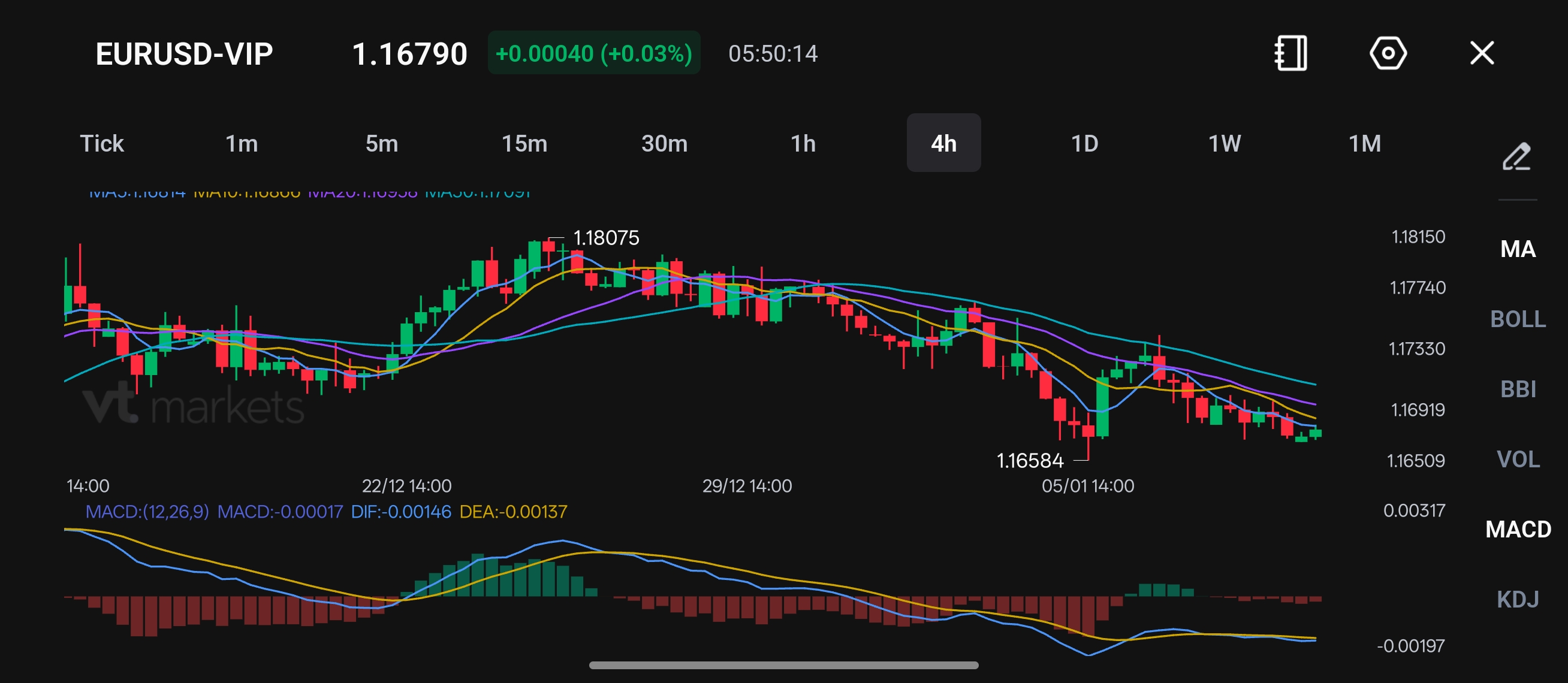
The MACD signal line remains in negative territory, below the 50 level, and the histogram has been printing bearish bars for some time. This suggests EUR/USD is firmly bearish and is not offering attractive long opportunities unless the trend shifts.
Short setups have a higher probability, but it is generally better to wait for a retracement before looking to sell.
Cautious Outlook as Fed Stays on Hold
From a monetary policy standpoint, the mixed data keeps the Federal Reserve in a wait-and-see mode ahead of its 27–28 January meeting. Stronger services activity argues against a swift move towards aggressive easing, but signs of labour-market cooling still support the case for gradual rate cuts. Markets remain broadly aligned with a cautious easing path, with traders currently pricing in around two rate cuts in 2026.
Learn more about trading on VT Markets.








