



Key Takeaways
- Gold prices hit an all-time high above US$5,400 per ounce in January 2026, before correcting to trade closer to the US$4,100–4,300 range by mid-year, according to market data trackers.
- Central banks added an estimated 244 tonnes of gold reserves in Q1 2026 alone, well above the five-year average, according to the World Gold Council.
- Total global gold demand reached 1,231 tonnes in Q1 2026, worth a record US$193 billion, representing a 74% year-on-year increase in value.
- Gold’s value comes from a rare mix of scarcity, physical properties, cultural trust, and its role as a store of value that has outlasted every fiat currency in human history.
- Roughly 216,000–220,000 tonnes of gold have ever been mined, with only around 54,000–64,000 tonnes of known gold deposits left in the ground.
- Gold remains a popular safe haven asset during periods of economic uncertainty, market volatility, and a weaker dollar — though, like any asset, it carries trade-offs worth understanding before you invest.
What Makes Gold Valuable in the First Place?
Unlike shares or bonds, gold has no earnings report, no dividend, and no government promise behind it. Yet it has functioned as a medium of exchange, a unit of account, and a store of value for longer than any national currency in circulation today, and it remains a premier store of value in the global economy. So what makes gold valuable enough to outlast every monetary system built around it? Its intrinsic value is often tied to its physical durability, scarcity, and long-standing safe-haven role.
The short answer is that a combination of relative rarity, durability, divisibility, and — crucially — a perceived value agreed upon by societies for millennia gives gold its enduring worth, as explained by Investopedia’s long-running analysis of why gold has always had value. Gold is rare enough to be precious and useful as a medium of exchange. It does not rust, corrode, or decay, meaning all the gold ever mined is still, in some form, in circulation today, which helps preserve the value of gold against inflation because supply cannot expand quickly.
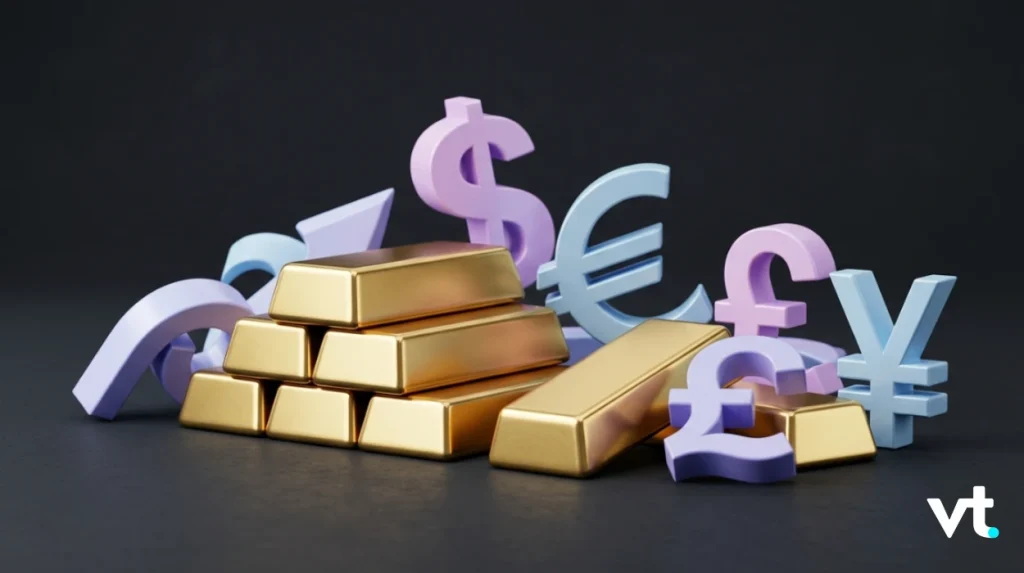
Why Is Gold So Valuable? The 4,000-Year Obsession Behind the World’s Most Trusted Asset
Gold has survived empires, currency collapses, and global financial system crises that wiped out paper fortunes overnight — and somehow, it still remains the most trusted asset. With gold prices smashing fresh records throughout 2026 and central banks buying at the fastest pace in over a decade, the question on everyone’s mind is simple: why is gold so valuable, and will it stay that way?
This guide breaks down the history, the chemistry, and the 2026 market data behind gold’s enduring appeal — and what it means if you’re considering investing in gold today.
A Brief History of Gold and the Gold Standard
Gold’s monetary story stretches back to early coins struck in the ancient kingdom of Lydia around 600 BCE and gold artifacts found in Egyptian tombs dating back even further. In history, gold served as a currency standard for centuries before fiat money. As the BBC’s exploration of gold’s psychological pull notes, humans have prized gold across virtually every civilisation in history, regardless of whether those societies ever contacted one another – a striking clue that gold’s appeal may be more deeply rooted than simple convention.
The formal gold standard linked the value of currency directly to gold and was widely adopted in the 19th century, when it began to take hold across major economies with national currencies and paper money that was convertible into a fixed weight of gold. The system finally ended in 1971 when the U.S. abandoned the gold standard, ushering in the modern fiat currency era. Between 1971 and 1980, the gold price rose from US$35 to over US$800 as markets adjusted to the post-gold-standard era. Yet even after the gold standard disappeared, central bank reserves of gold never went away — a sign of how deeply embedded gold’s role in the global financial system remains. Mansa Musa’s gold spending in 14th-century Egypt is one reminder that gold could reshape whole economies.
Gold’s Physical Properties: Why Chemistry Loves Gold Too
Gold’s physical properties are a major part of the story. It has a relatively low melting point for a metal (1,064°C), making it easy to shape into gold coins, bars, and gold jewellery. It is also one of the most malleable and ductile elements known, and gold’s excellent conductivity makes it indispensable in smartphones, satellites, and connectors where corrosion-free reliability matters. Among the noble metals, gold is uniquely resistant to tarnish — it simply doesn’t react with oxygen the way other precious metals like silver can.
Interestingly, gold’s usefulness now stretches into nanotechnology too. Gold nanoparticles are being researched for targeted drug delivery systems in cancer treatment, leveraging gold’s biocompatibility and chemical stability — a modern twist on an ancient story of usefulness driving demand.
Why Is Gold So Valuable in 2026? A Snapshot of the Current Gold Market
The gold market in 2026 has been one of the most dramatic in recent memory. A major driver behind pricing is global demand, since stronger buying pressure tends to lift values against limited supply. Gold touched an all-time high of roughly US$5,589 per ounce on 28 January 2026, before a sharp correction saw it dip below US$4,100 by June, according to multiple market trackers and financial data providers. Speculation can also amplify short-term swings, which helps explain sharp volatility even in a strong market.
Gold Prices in 2026: The Numbers So Far
| Metric | 2026 Figure (approx.) |
|---|---|
| All-time high (Jan 2026) | ~US$5,400–5,589/oz |
| Mid-year trading range (June 2026) | ~US$4,100–4,300/oz |
| Q1 2026 total gold demand | 1,231 tonnes (+2% YoY) |
| Q1 2026 demand value | US$193 billion (+74% YoY) |
| Q1 2026 bar & coin demand | 474 tonnes (+42% YoY) |
| Central bank net purchases, Q1 2026 | 244 tonnes |
Source: World Gold Council, Gold Demand Trends Q1 2026
Analysts remain divided on where gold prices head next. Some major banks have pencilled in year-end 2026 targets between US$4,900 and US$6,300 per ounce, citing economic data, persistent inflation concerns, and continued central bank buying as key drivers. Others caution that if interest-rate cuts stall, prices rise less sharply than recently seen. Either way, gold’s role at the centre of financial market discussions has rarely been higher.
Central Banks and the Global Race for Gold Reserves
If you want a single, reliable signal of gold’s enduring importance, look at what central banks are doing rather than what retail headlines say. According to the World Gold Council, central banks have accumulated an average of around 1,000 tonnes of gold per year over the past four years — roughly double the average from the prior decade, with these reserves held partly for financial stability, especially in periods of market stress.
Top Official Gold Reserves by Country (2026)
| Rank | Country / Institution | Approx. Gold Reserves (tonnes) |
|---|---|---|
| 1 | United States | 8,133.5 |
| 2 | Germany | 3,350.3 |
| 3 | IMF | 2,814.1 |
| 4 | Italy | 2,451.8 |
| 5 | France | 2,437.0 |
| 6 | Russia | ~2,311.0 |
| 7 | China | ~2,313.4 |
| 8 | India | ~880.5 |
Source: World Gold Council / IMF International Financial Statistics, 2026
Together, the top 10 official holders account for roughly 70% of all gold reserves held by financial institutions worldwide. The US dollar‘s dominant position has not stopped countries with significant gold reserves, particularly emerging-market central banks, from steadily diversifying away from dollar-denominated assets — a trend that accelerated after the freezing of certain sovereign reserves in 2022. This is part of why central banks are widely considered the most consistent, least price-sensitive buyers in the gold market today.
Gold’s Role as a Safe-Haven Asset Amid Economic Uncertainty
Gold’s reputation as a safe haven asset is not just folklore — it shows up repeatedly in the data. When financial markets wobble, when geopolitical tensions flare, or when economic crises hit confidence in the global economy, physical gold and gold ETFs alike tend to see renewed inflows. Why gold is valuable points to this same pattern: gold’s price often moves inversely to confidence in traditional financial assets, particularly during periods of market volatility.
This is one reason many investors hold a small allocation to gold within broader investment portfolios, alongside more traditional investments like equities and bonds, as a diversification tool rather than a core holding.
Gold vs Paper Money: Why Gold Continues to Outlast Fiat Currencies
Unlike fiat currencies, which derive their worth from government decree and can be printed in unlimited quantities, gold’s supply grows slowly and predictably. Annual mine production typically adds only 1–2% to the existing global gold supply each year — a natural brake that paper money simply doesn’t have.
This scarcity is central to gold’s value. When a central bank expands the money supply, the purchasing power of its currency can erode; gold remains comparatively insulated because no government can simply “print” more of it. That’s also why, historically, gold has been used to settle international debts between nations when trust in a single currency wasn’t enough – a store-of-value role that gold still retains to this day.
How Is Gold Used? Jewellery, Industry, and Investment
Globally, gold demand breaks down into a few key categories: gold jewellery consumption (historically the largest single use, valued for its colour, lustre, durability, and cultural significance); investment demand (physical gold, coins, and gold ETFs); central bank purchases; and a smaller technology and industrial slice that includes electronics such as connectors and circuit boards. Gold producing countries such as China, Australia, Russia, the United States, and South Africa supply most of the world’s annual mine production, while recycling adds a steady secondary stream to the global gold supply. Gold is universally recognised and can be sold almost anywhere in the world.
Ways to Gain Exposure to Gold
- Physical gold — bars, gold coins, and gold bullion held directly, offering no counterparty risk but requiring secure storage and insurance for protection.
- Gold ETFs — exchange-traded funds that let investors buy shares tracking gold prices without storage.
- Gold mining shares — equity exposure to companies that extract and process gold, providing leveraged exposure to gold prices.
- CFD trading — speculating on gold prices rising or falling without owning the underlying metal, typically used for shorter-term strategies and often as one of several gold plays in a diversified portfolio.
A Few Things to Take Note of Before You Start Gold Investing
Gold’s reputation as a valuable asset doesn’t mean it is risk-free. Here are a few precautions to consider:
- Gold pays no yield. Unlike dividend stocks or interest-bearing bonds, physical gold generates no income — its return depends entirely on price appreciation.
- Prices can swing sharply. As seen in 2026, gold prices can correct by hundreds of dollars within weeks, so market volatility is a genuine consideration, not just a theoretical one.
- Storage and premiums matter. Physical gold coins and bars carry dealer premiums, insurance, and storage costs that can eat into returns.
- It’s a diversifier, not a guarantee. Gold can behave unpredictably during sudden liquidity crunches, so it shouldn’t be treated as a substitute for a properly diversified strategy.
How to Trade Gold Online
For traders who want exposure to gold prices without buying physical gold outright, CFD trading offers a flexible alternative — letting you speculate on price movements in either direction. Brokers such as VT Markets make it possible to trade gold alongside other commodities, indices, and currency pairs from a single account.
Start Online CFD Trading with VT Markets Today
If you’re ready to put your understanding of why gold is valuable to work in live markets, VT Markets provides access to tools and platforms to help you get started. Trade on powerful platforms like MetaTrader 4 (MT4) and MetaTrader 5 (MT5), designed for speed, reliability, and advanced trading features — exactly what you need when gold prices move quickly on economic data or sudden shifts in economic uncertainty.
New to trading? Practise risk-free with a VT Markets demo account before committing to a live account—ideal for simulating reactions to gold price swings across commodities, currency pairs, and indices without financial risk.
Open your live account with VT Markets today and access secure, transparent, and competitive CFD trading across some of the world’s most popular markets.
Frequently Asked Questions About Gold’s Value
1. Why is gold so valuable compared to other metals?
Gold combines relative rarity, near-total resistance to corrosion, and thousands of years of cultural trust as a medium of exchange. Other precious metals, including silver-price-driven silver, are more abundant and more reactive, which is part of why gold commands a premium.
2. Why do central banks hold so much gold?
Central banks hold gold because it carries no counterparty risk, is universally recognised, and helps diversify reserves away from any single currency – particularly the us dollar – during periods of economic uncertainty or geopolitical stress.
3. Is gold still a good store of value in 2026?
Gold continues to function as a store of value, with 2026 demand and price data reinforcing this role. That said, gold prices can be volatile in the short term, so it’s worth treating it as a long-term diversifier rather than a guaranteed gain.
4. What’s the difference between investing in physical gold and gold CFDs?
Physical gold involves owning and storing the metal itself, while gold CFDs let you speculate on gold price movements without taking physical delivery, typically used for more active, shorter-term trading strategies.
Gold’s Enduring Appeal
From early coins in ancient Lydia to a gold standard that shaped the modern monetary system and now to record central bank buying in 2026, gold’s enduring appeal keeps proving remarkably resilient. Whether you see it as a key asset for long-term wealth preservation, a hedge against a weaker dollar, or simply one of the most fascinating elements on the periodic table, the evidence suggests gold continues to play a unique role that other precious metals, paper money, and most traditional investments simply can’t replicate.








