






When CXMT’s valuation surged this year, investors were not simply buying a memory-chip company. They were buying into a bigger idea: that China could build its own AI-era memory infrastructure, reducing reliance on global market leaders.
The scale of that optimism has been significant. CXMT’s market debut triggered a sharp re-rating, with investors valuing the company as a potential domestic challenger to established memory producers. The company’s valuation reached roughly US$8.6 billion following its listing, reflecting expectations that it could become one of China’s most important semiconductor companies.
The rise also pushed attention toward Chairman Zhu Yiming, whose fortune increased alongside expectations that CXMT could become one of China’s most important semiconductor companies.
Could CXMT be a name as well-known as NVIDIA? Read to find out.
AI needs both speed and storage
Before looking at the companies involved, it helps to think about how memory works in the human brain.
You have short-term memory, the kind you use when holding a phone number in your head while dialling or keeping track of a conversation as it happens. It needs speed, instant access, and constant updating. This is almost like DRAM in computers.
You also have long-term memory, which stores photos, experiences, and information collected over time. It needs capacity, reliability, and efficiency rather than immediate speed. For computers, this is made possible by NAND storage.
| Human memory | Computer memory | Chinese company |
| Short-term memory | DRAM | CXMT |
| Long-term memory | NAND | YMTC |
The global memory market remains dominated by three major players: Samsung, SK Hynix, and Micron, which together account for the overwhelming majority of DRAM supply. CXMT aims to become a major player in DRAM, the memory used in active computing. YMTC is focused on NAND, the storage layer that holds vast amounts of data. Different technologies, different roles, but both support the same broader ambition: building a more complete domestic semiconductor ecosystem in China.
Memory into assets in the AI boom
AI did not create the need for memory, but it has significantly increased demand for it.
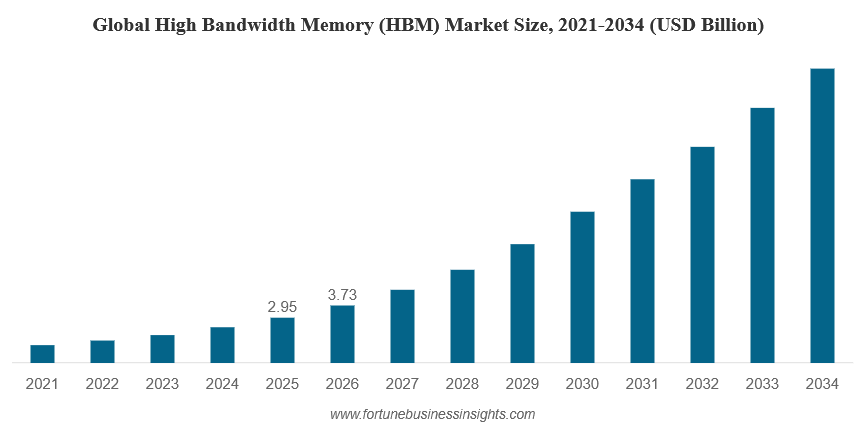
High-performance memory used in AI systems has become one of the fastest-growing segments of the market, with demand for HBM expected to expand rapidly as companies invest in larger AI models and data centres.
Large AI models require enormous amounts of data. Some of that data must be stored, while some must be accessed and processed quickly. NAND acts like the warehouse, holding the information AI systems learn from. DRAM acts like the workspace, allowing processors to access and process information efficiently.
For CXMT, the opportunity is to move closer to the part of the market where AI demand is strongest. The company is attempting to enter a segment where existing players have spent years building manufacturing expertise, customer relationships, and production scale.
YMTC’s opportunity is different but equally important. AI systems depend on huge amounts of stored data, from training datasets to enterprise information. Without sufficient storage capacity, the wider AI ecosystem cannot scale.
Together, CXMT and YMTC represent two sides of the same challenge: building the memory foundation required for the AI era.
Why CXMT is being valued as more than a chip company
The development of CXMT and YMTC is also tied to a wider push for semiconductor resilience.
After facing restrictions on advanced chip technologies, China has placed greater emphasis on developing domestic capabilities across the semiconductor supply chain.
That has made both companies more than conventional chip manufacturers. They are also viewed as strategically important players in a broader industrial strategy.
This position provides meaningful advantages:
- long-term investment support
- access to domestic demand
- government backing during a difficult technology race
That strategic importance has also influenced investor expectations. CXMT is increasingly being valued not only on current financial performance but also for its potential role in reducing China’s dependence on foreign memory suppliers.
However, strategic importance does not remove the challenges of the semiconductor industry.
China’s electric vehicle, solar, and telecom industries eventually produced globally competitive companies, but they also went through periods of intense competition, excess capacity, and pricing pressure.
Memory chips have their own cycle. When production expands faster than demand, prices can fall quickly, margins can weaken, and companies across the industry may need to adjust investment plans.
CXMT’s progress will depend not only on strategic support, but also on whether it can compete through the normal ups and downs of the memory market.
The real ‘co-NAND-DRAM’
Building parallel memory ecosystems may look like independence from the outside, but the reality is more interconnected. Advanced semiconductor manufacturing relies on a global network of specialised equipment suppliers, materials, and technologies.
CXMT’s advanced DRAM production depends on equipment from companies such as ASML, Applied Materials, Lam Research, and Tokyo Electron. YMTC relies on similar parts of this ecosystem for advanced NAND production.
YMTC has already experienced how technology access can become a strategic issue after it was placed on the US Commerce Department’s Entity List in December 2022, restricting access to certain American technologies.
CXMT has not faced the same formal action, but both companies operate within the same global semiconductor ecosystem.
That is the broader conundrum. Semiconductor development is becoming increasingly strategic, but the industry itself remains deeply interconnected.
China is investing heavily to strengthen its domestic capabilities. At the same time, global semiconductor companies continue to depend on access to international markets, specialised technologies, and manufacturing networks.
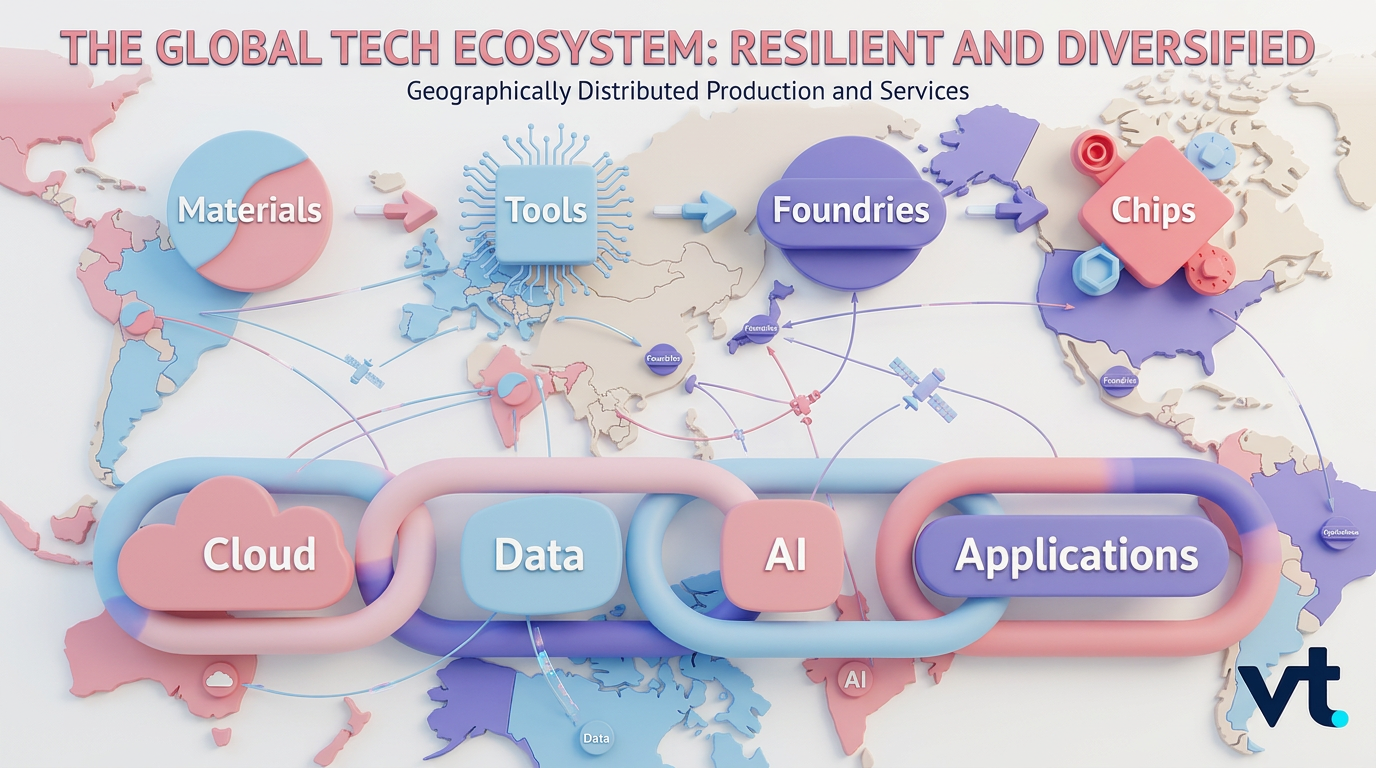
The connection extends beyond chip production. Global technology companies also continue to rely on cross-border supply chains, balancing supplier diversification with access to critical manufacturing hubs and markets.
CXMT’s rally reflects confidence that it can continue closing the DRAM gap. The harder challenge will be moving beyond domestic progress and competing in the most advanced AI memory segments, where manufacturing yields, technology development, and customer qualification matter as much as ambition.
The alternative view is that geopolitical competition may push countries and companies to duplicate parts of a system that was previously built around global cooperation, increasing costs and creating a more fragmented industry, as hinted at in Trump’s series of trade restrictions over the years.
Execution plays out next
Memory has always been one of the more cyclical areas of the semiconductor industry, and geopolitics does not remove that underlying pattern.
The current cycle is different because AI demand has placed greater attention on memory supply, particularly for advanced applications. But history shows that memory markets can still move sharply when capacity expands faster than demand.
When supply grows faster than demand, memory prices can decline, margins can compress, and companies may reduce investment. That cycle affects all major producers, regardless of their size or strategic importance.
For traders, the focus will be less on the ambition itself and more on execution.
Worth watching from here:
- whether CXMT can demonstrate sustained progress in production capacity, manufacturing yields, and technology development
- whether export policies continue reshaping access to advanced semiconductor tools
- whether the memory cycle remains supportive as more capacity comes online
CXMT’s valuation reflects expectations that China can continue narrowing the DRAM gap. YMTC’s experience shows how quickly external factors can influence the pace of semiconductor development.
The ‘Co-NAND-DRAM’ is not simply about short-term memory versus long-term memory, but how countries can build greater semiconductor independence in an industry that was created through decades of global cooperation, and how much duplication the world is willing to build to achieve it.
CXMT’s surge came at a time when markets were aggressively searching for the next beneficiaries of the AI IPO revolution. While Nvidia represented AI computing power, CXMT represented the memory layer that enables AI systems to function. Its IPO became a symbol of growing investor enthusiasm for China’s ambition to build an independent semiconductor ecosystem.
CXMTUSD (CXMT Corporation) will be tradeable on VT Market platforms from August as a share CFD.
Create an account today to monitor price movement and make instant moves.
Traders’ Frequently Asked Question
Why is CXMT gaining attention in the AI semiconductor race?
CXMT is drawing investor interest as China’s leading DRAM challenger, with markets watching whether it can build competitive AI memory capabilities.
What is the difference between CXMT and YMTC?
CXMT focuses on DRAM, which supports active computing, while YMTC focuses on NAND, which provides large-scale data storage for AI systems and other applications.
Why are memory chips important for AI?
AI requires both fast-access memory and large storage capacity. DRAM supports real-time processing, while NAND stores the vast amounts of data AI models rely on.
Can China build an independent semiconductor supply chain?
China has made progress in developing domestic chip capabilities, but advanced semiconductor production still depends on a globally connected network of equipment, technology, and suppliers.
What should investors watch with CXMT and the memory sector?
Investors are watching CXMT’s production progress, technology development, export policies, and whether the broader memory cycle remains supportive.
Start trading now — click here to create your real VT Markets account.








