



Key Takeaways
- The 2026 equity market is showing rotation from mega-cap tech into value and small-cap sectors, not broad risk-off sentiment.
- Earnings season confirmed that guidance and margin durability matter more than revenue growth.
- AI investment remains strong but is concentrated among mega-cap firms, while mid-cap tech is restraining spending.
- Financials, industrials, energy, and domestically focused small caps are benefiting from stronger earnings visibility and cheaper valuations.
- The bull market remains intact, but leadership is shifting toward cash-flow strength and capital discipline.
The 2026 market is no longer a monolith led by Big Tech; it’s a repositioning toward domestic resilience and small-cap value. As the earnings gap with mega-caps narrows, the market is rewarding balance sheet strength over hype. We expect this expansion beyond tech to accelerate through the second half of the year, signalling a healthier, more diversified market defined by those who prioritise durable guidance and capital discipline over aggressive expansion.
Ross Maxwell, VT Markets Analyst
Stock Market Rotation in 2026: The Flight to Reality
The first quarter of 2026 delivered a familiar equity-cycle pattern: controlled consolidation in mega-cap technology stocks alongside steady strength in value and small-cap sectors.
Rather than signalling a broad market downturn, recent pullbacks in tech-heavy indices reflect internal rotation within an ongoing bull market. We are witnessing a “Flight to Reality.” Capital is not leaving equities — it is repositioning toward sectors with clearer earnings visibility and lower valuation risk.
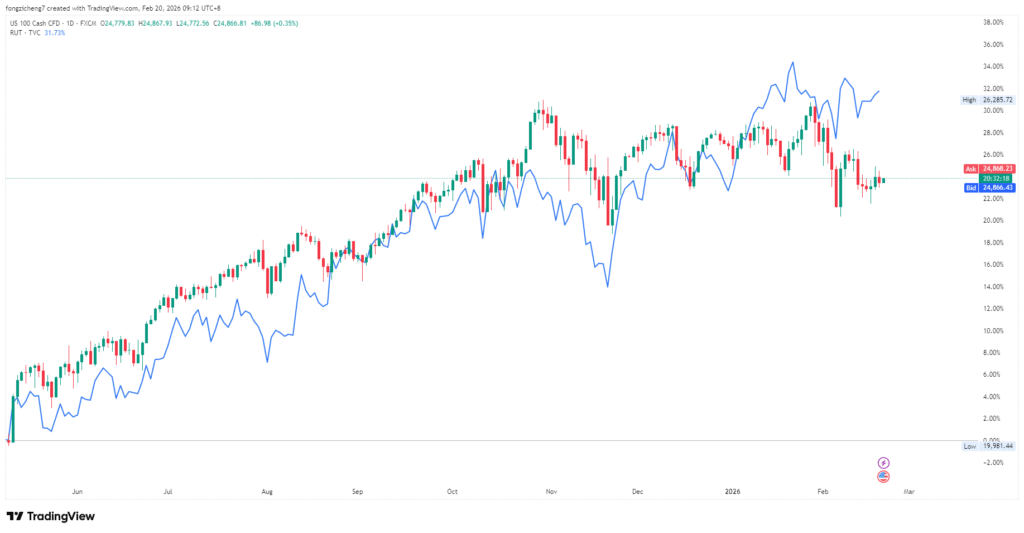
According to Bloomberg Intelligence, approximately 65% of Russell 2000 companies have exceeded 4Q profit expectations so far, the largest proportion since mid-202. By contrast, the beat rate for S&P 500 firms is the lowest in three quarters.
This shift suggests changing leadership rather than deteriorating risk appetite. The market is moving away from the speculative growth-at-any-price theme of the early 2020s toward a disciplined search for sustainable yield.
Controlled Sell-Offs, Not Structural Market Damage
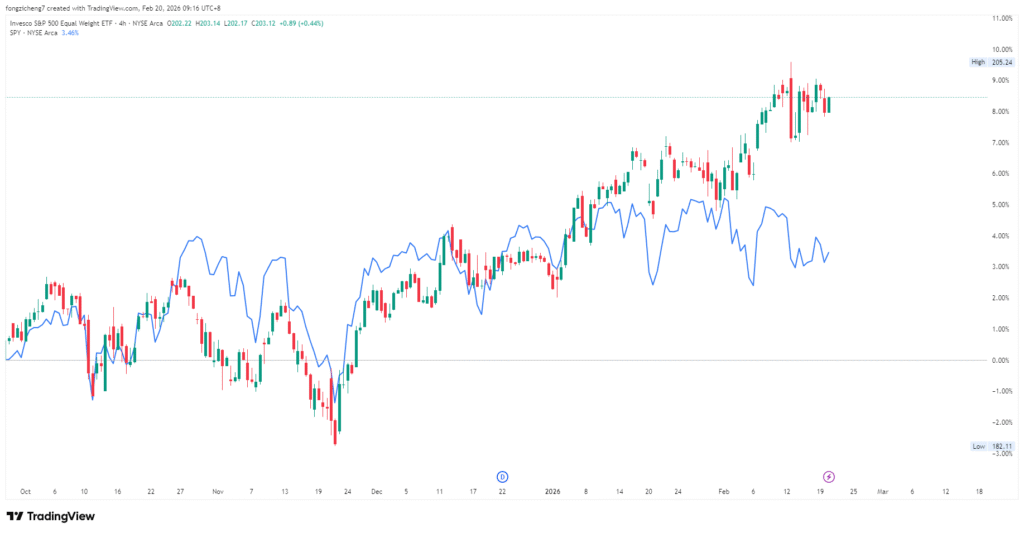
Recent index weakness has been notably contained. Volatility has risen modestly, yet credit spreads and liquidity conditions remain stable. Beneath headline performance, equal-weight and small-cap benchmarks have held up better than cap-weighted indices: the Russell 2000 has outperformed the S&P 500 by nearly 4% so far in 2026.
This divergence indicates investors are reallocating within equities rather than exiting risk assets. Technology stocks tied to long-duration growth have been most sensitive to higher real yields hovering near 4%. In contrast, companies with near-term cash flows, tangible assets, and lower valuations have attracted capital.
Earnings Season 2026: Guidance Mattered More Than Results
One of the defining features of the latest earnings season was that forward guidance outweighed reported numbers. While most large-cap firms beat earnings expectations and delivered broadly solid revenue, many stocks declined after reporting because management outlooks signalled softer demand, margin pressure, or limited visibility into 2026.
Markets are now rewarding conservative, credible forecasts and punishing fragile optimism. Investors are no longer buying the promise; they focus more on the delivery.
This shift from expansion to resilience is a response to elevated labour and financing costs. Firms that protect margins and sustain free cash flow are significantly outperforming those pursuing aggressive revenue growth at the expense of the bottom line.
Markets increasingly favour businesses with:
- Stable operating margins
- Strong cash generation
- Disciplined capital allocation
This is typical of later-cycle equity phases, where balance-sheet strength outweighs growth potential.
Why Value and Small Caps Are Leading
Strength in value and small-cap equities reflects improving fundamentals rather than merely rotation away from tech.
These sectors benefit from:
- Lower leverage
- Domestic revenue exposure
- Sensitivity to stabilising growth
- Stronger earnings visibility
Financial gain from higher-for-longer rates, energy firms generate robust cash flow, and industrials are supported by infrastructure demand. Valuations also remain relatively attractive after years of underperformance.
As earnings certainty becomes more valuable, capital is rotating toward cheaper, cash-generative businesses.
Rotation, Not the End of the Bull Market
Current sector shifts do not indicate a bearish turn, but rather, reflect a healthy maturation of the bull market. Earnings growth remains positive, corporate balance sheets are broadly healthy, and financial conditions are restrictive but not contractionary.
What has changed is leadership preference. Markets now reward conservative guidance, margin stability, and capital discipline.
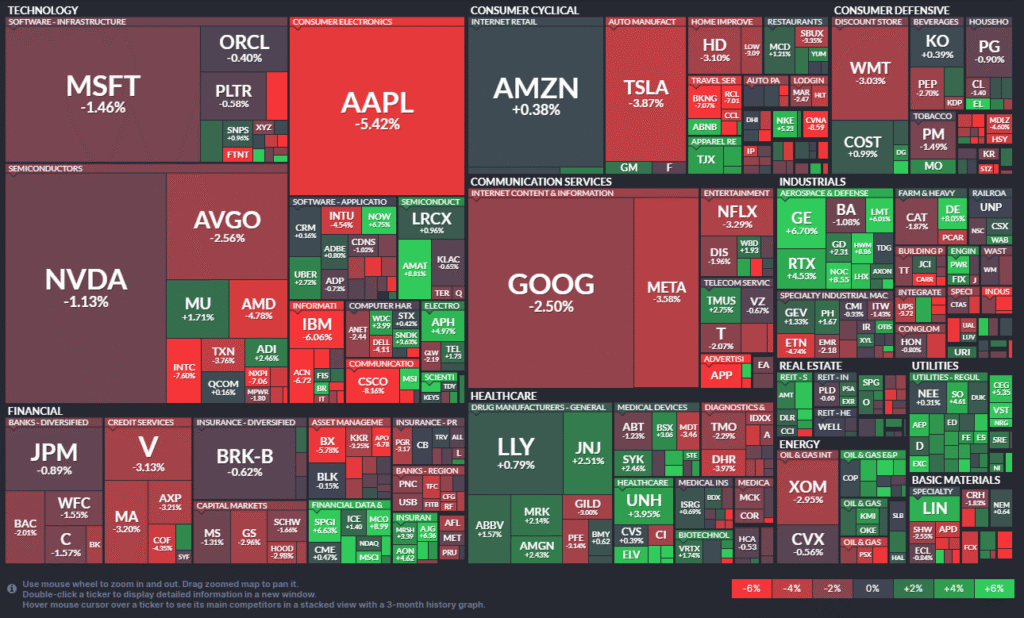
This heatmap captures a historic shift as capital exits overextended Mega-cap Tech (red) to fuel a broad-based surge in “real economy” sectors like Energy, Industrials, and Materials (bright green), signalling a healthy transition from narrow AI growth to a wide-market bull run.
Source: FinViz
The AI Capex Divide: Mega-Caps vs Mid-Caps
While artificial intelligence (AI) remains a structural theme, spending is becoming concentrated.
Mega-cap technology platforms continue heavy investment in data centres and infrastructure, funding capex internally despite near-term margin pressure. For instance, Amazon alone is guiding toward $200 billion in infrastructure spend. Outside this group, many mid-cap and smaller tech firms are narrowing AI spending to prioritise cash flow and returns.
This creates a split: intensive investment at the very top and restraint across the broader sector. As a result, AI-driven earnings upside remains concentrated rather than widely distributed.
What Traders Need to Know
Sector divergence means weakness in major technology indices should not be interpreted as broad risk aversion. For traders and investors, the key is no longer index direction, but cross-sector positioning. Specifically, focus on these three pivots:
- Pivot to asset-rich small caps: Prioritise small-caps in the Industrials and Materials sectors. These firms benefit from domestic infrastructure spending (OBBBA) and are less sensitive to the global tech slowdown.
- Screen for the refinancing wall: Avoid mid-cap tech firms with significant debt maturing in 2026-2027. The cost of rolling that debt will eat the margins that investors are now hypersensitive to.
- The AI Play: Focus on infrastructure providers (power, cooling, and real estate) rather than downstream firms, who seem to be struggling to monetise their AI tools.









