



Earnings season is now well underway, with Microsoft, Meta, Tesla, Amazon, Apple and Intel all reporting in February. Collectively, these results offer important insight into how the technology sector is positioning itself for 2026.
These companies account for a substantial share of global innovation spending, equity index performance and capital allocation trends. What stands out from both the results and subsequent commentary is that artificial intelligence is moving beyond experimentation and into a phase defined by execution, efficiency and returns discipline.
Microsoft
Microsoft’s results reinforced its position as one of the most balanced large-cap technology companies. Cloud remains the primary revenue engine, but the key shift is the move from AI experimentation to monetisation.
The next phase for Microsoft will centre on margins and capital efficiency. AI workloads are inherently capital-intensive, and investors are increasingly focused on how quickly revenue growth can outpace infrastructure costs.
The outlook suggests steady and durable expansion rather than sharp acceleration, a profile that typically attracts capital during periods of macroeconomic uncertainty.
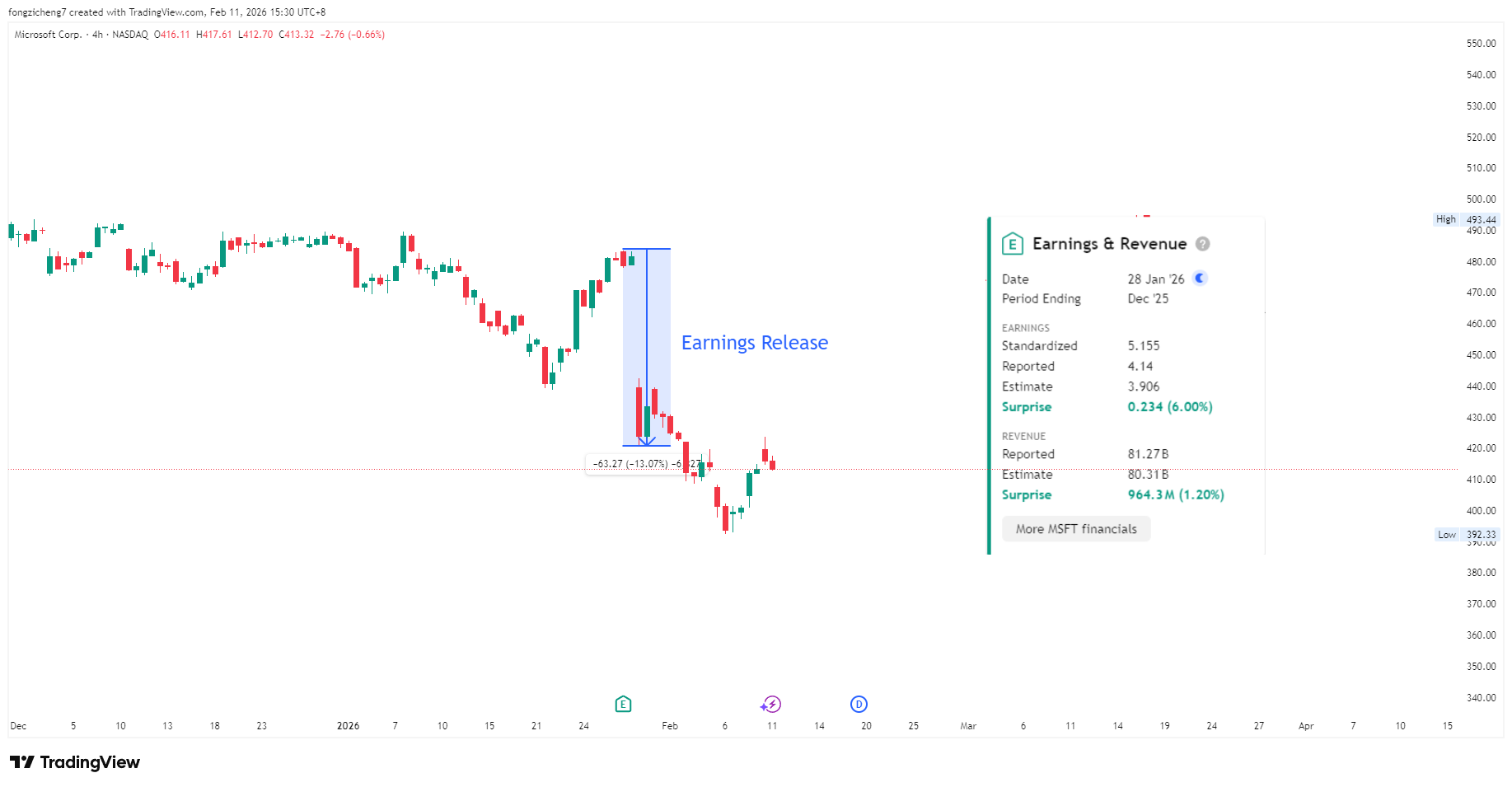
Despite a 6% earnings beat and revenue exceeding estimates, Microsoft shares dropped more than 13% in the sessions following results. The reaction suggests investors are now focused less on quarterly outperformance and more on forward margin pressure as AI infrastructure investment accelerates.
In a market that has already priced in AI dominance, beats alone are no longer enough. Guidance and capital intensity now determine direction.
Analytical Outlook
Microsoft enters the remainder of 2026 in what can best be described as a capacity-constrained growth phase. Demand remains robust. However, expansion will increasingly depend on data centre completion and power availability rather than software adoption alone.
Valuation will increasingly hinge on AI efficiency rather than AI potential. The company must demonstrate that infrastructure investment can generate returns comparable to traditional software margins if it is to justify its premium positioning.
Meta
Meta’s earnings underscored the durability of its operational discipline. Advertising demand remains resilient, supported by improved targeting and automation tools, while ongoing cost controls continue to underpin profitability. At the same time, management made clear that its longer-term ambitions remain firmly intact.
The debate has shifted. The market is no longer questioning whether Meta can finance future platforms, but rather how much near term earnings pressure it is prepared to absorb in pursuit of strategic dominance.
The company’s guidance suggests a deliberate attempt to balance investor confidence with sustained investment in AI-driven discovery and engagement.
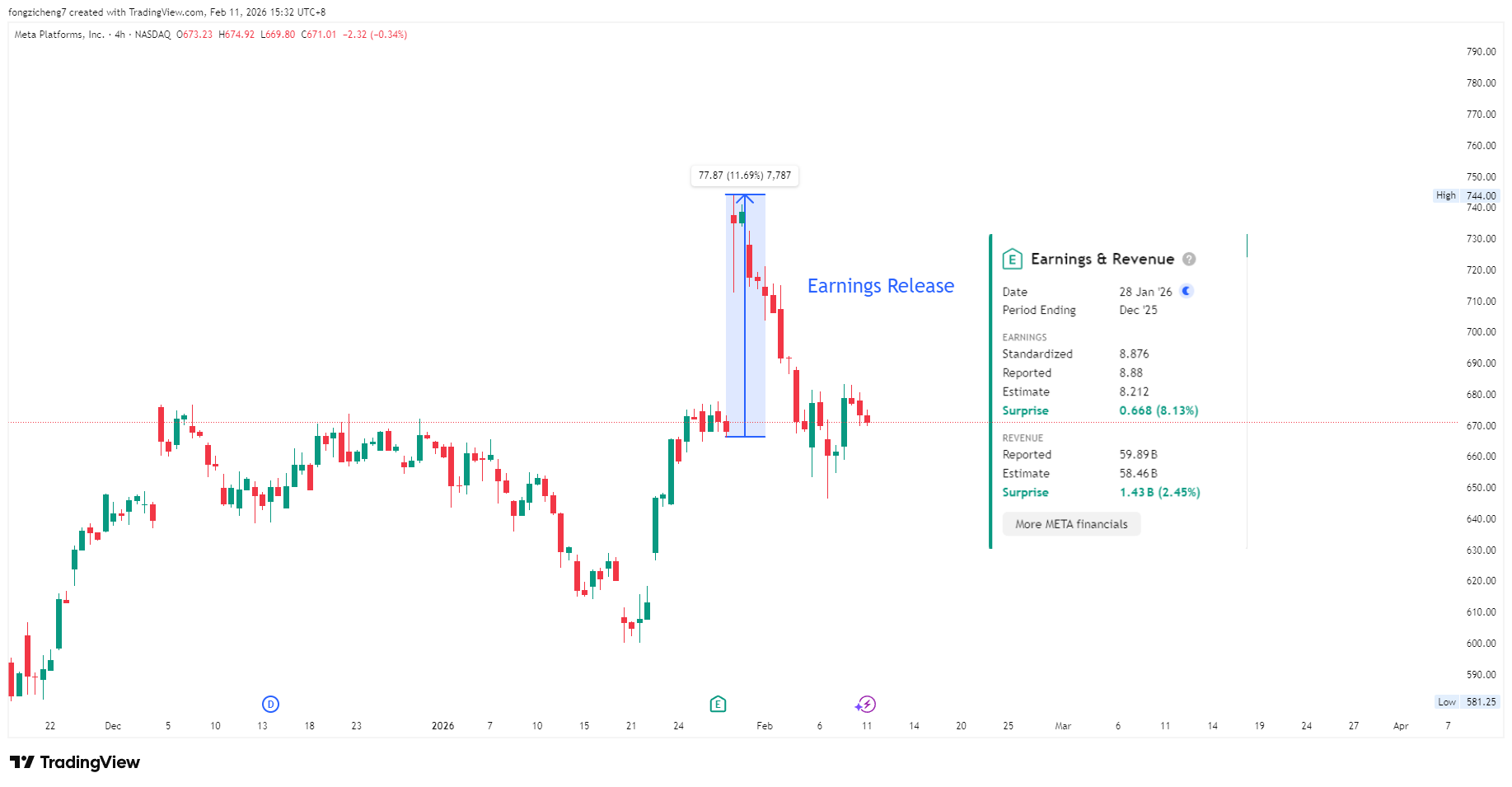
Meta shares initially surged nearly 12% following an 8% earnings beat and stronger-than-expected revenue. However, the rally quickly faded, with the stock returning close to pre-earnings levels within days.
The reaction suggests investors are willing to reward operational discipline but remain cautious about the scale of forward AI capital expenditure.
In a market that now demands efficiency alongside growth, strong quarters must translate into durable margin confidence to sustain upside momentum.
Analytical Outlook
Meta enters 2026 in a proven-it phase on capital intensity. The sustainability of 20% growth will depend on its ability to preserve core advertising margins while funding one of the most ambitious AI infrastructure programmes in the sector.
If margins remain firm, the investment case strengthens. If they begin to erode, scrutiny over returns will intensify quickly.
Tesla
Tesla’s results once again exposed the tension between volume expansion and margin preservation. Vehicle deliveries remain central to the business, yet sustained pricing pressure and rising competitive intensity continue to constrain profitability.
Management persists in framing Tesla as a vertically integrated technology and manufacturing platform rather than a conventional carmaker, reinforcing the narrative that long-term value lies beyond automotive output alone.
Looking ahead, execution will matter more than rhetoric. Progress in autonomy, energy storage and software-based revenue streams will carry greater weight than headline delivery growth.
The results serve as a reminder that structural disruption rarely follows a smooth path, particularly as global competitors narrow the technological gap.
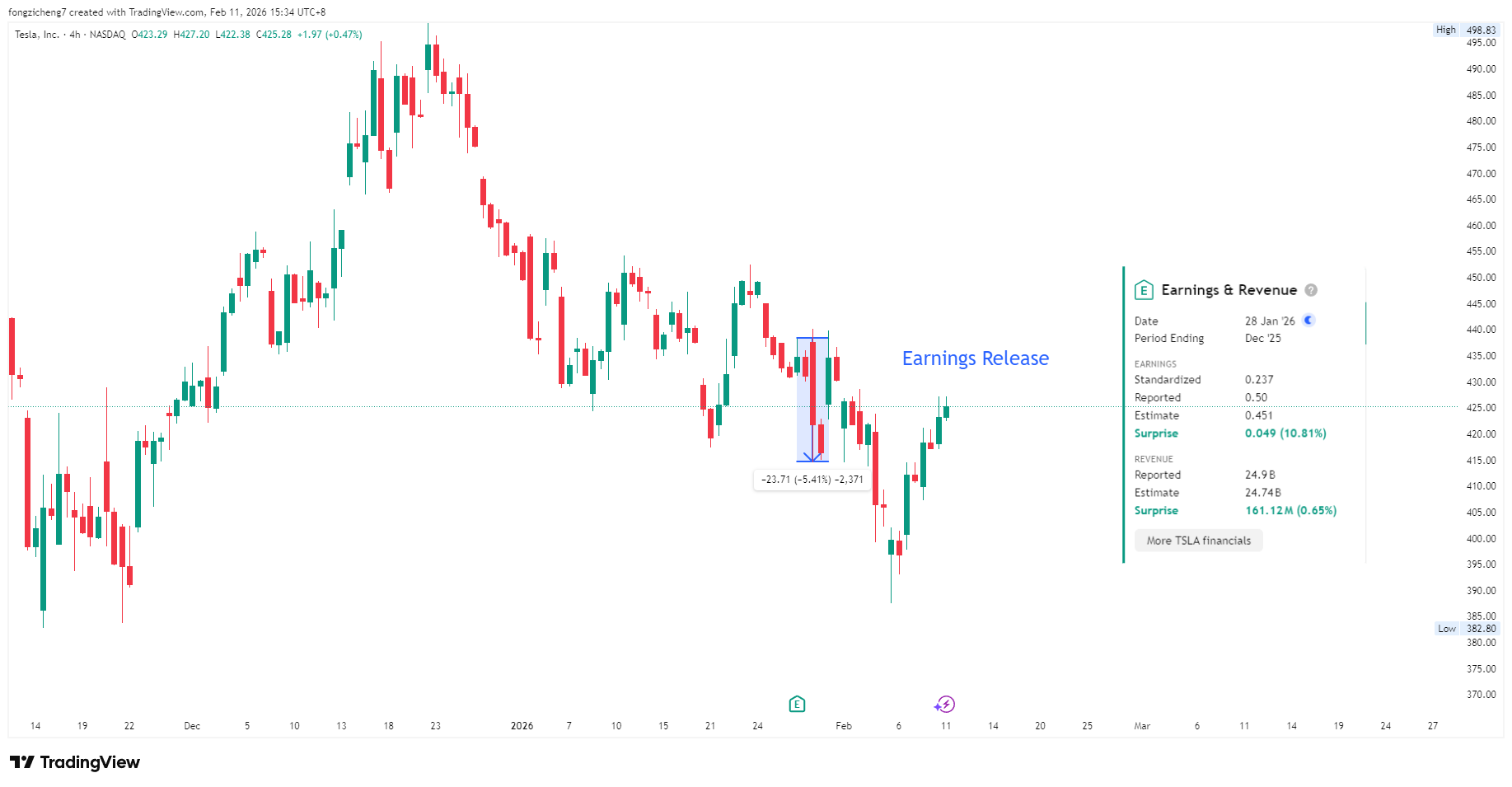
Tesla delivered an earnings beat of more than 10%, yet the stock declined around 5% in the sessions surrounding the release.
The muted response underscores that Tesla is no longer trading on quarterly outperformance alone. Investors remain focused on margin pressure, pricing dynamics, and the capital requirements tied to autonomy and AI development.
In a valuation built on future optionality, the market is demanding clearer evidence that innovation can coexist with sustainable profitability.
Analytical Outlook
Tesla enters 2026 as a company increasingly detached from traditional automotive valuation metrics. The disruption premium now rests predominantly on autonomy.
Investors are less focused on how many vehicles Tesla can produce and are more concerned with how rapidly it can commercialise the estimated 249 billion dollar opportunity embedded in its Robotaxi network.
The central risk lies in what can be described as a capital bridge. The company must generate sufficient free cash flow from its maturing vehicle portfolio and expanding energy division to finance roughly 20 billion dollars of AI and automation investment without returning to capital markets. Should execution falter, the valuation leaves little room for disappointment.
Amazon
Amazon’s earnings signalled a measured but meaningful shift towards profitability and cash flow discipline. The e-commerce division is operating with greater efficiency, reflecting tighter cost control and improved fulfilment economics, while AWS remains the principal driver of group valuation.
Management’s guidance points to selective and targeted investment rather than broad-based expansion. For a company of Amazon’s scale, even incremental efficiency improvements can translate into substantial earnings leverage. The focus is increasingly on return to capital rather than pure top-line growth.
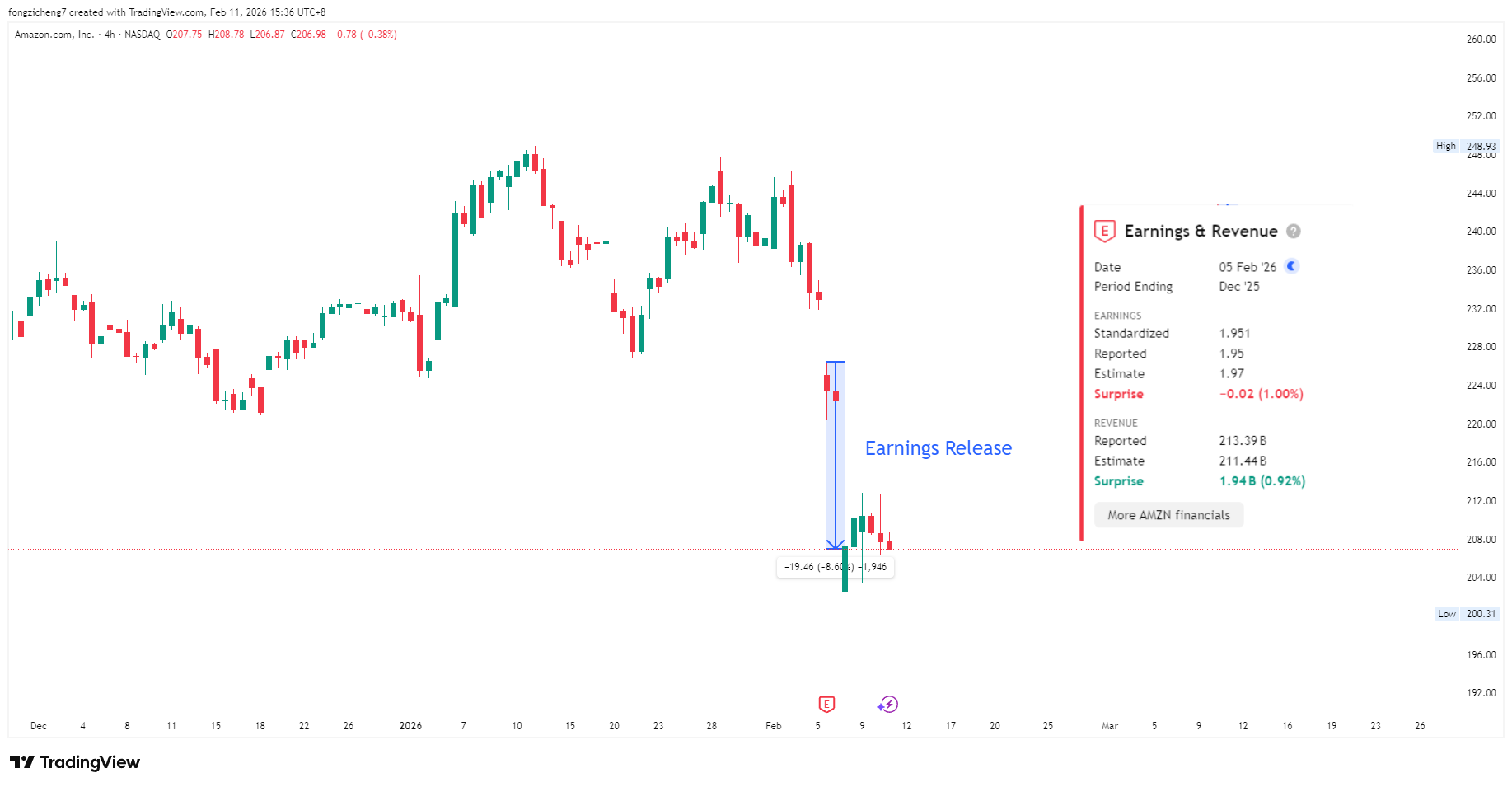
Amazon reported revenue ahead of expectations, but a slight earnings miss triggered an 8% decline in the sessions following results. The market reaction highlights a shift in focus toward profitability and cost discipline.
In an environment where AI infrastructure spending remains elevated, investors are scrutinising whether revenue expansion can translate into sustained margin strength. Top line resilience alone is no longer sufficient to support valuation.
Analytical Outlook
Amazon enters the 2026 fiscal year in a building phase that prioritises long-term AI positioning over near-term margin expansion. As infrastructure investment accelerates, equity performance is likely to become less sensitive to retail sales trends and more dependent on AWS execution.
The central question for investors is whether the record 244 billion dollar AWS backlog can be converted into realised profit quickly enough to offset rising infrastructure costs. If backlog conversion remains strong, valuation support should be held. If not, balance sheet pressure and free cash flow compression will become more visible.
Apple
Apple’s performance reinforced its status as the most defensive of the large-cap technology names. Hardware demand remains cyclical, and revenue expansion is incremental rather than transformative. Yet the company continues to produce highly predictable cash flows, underpinned by a growing services ecosystem and an exceptionally loyal installed base.
The outlook centres more on resilience than reinvention. Investors will focus on evidence of a renewed upgrade cycle and on how effectively Apple integrates artificial intelligence into its ecosystem without compromising its long-standing emphasis on privacy and user experience.
In an environment defined by volatility and capital intensity elsewhere in the sector, Apple’s financial consistency and ecosystem control remain distinguishing strengths.
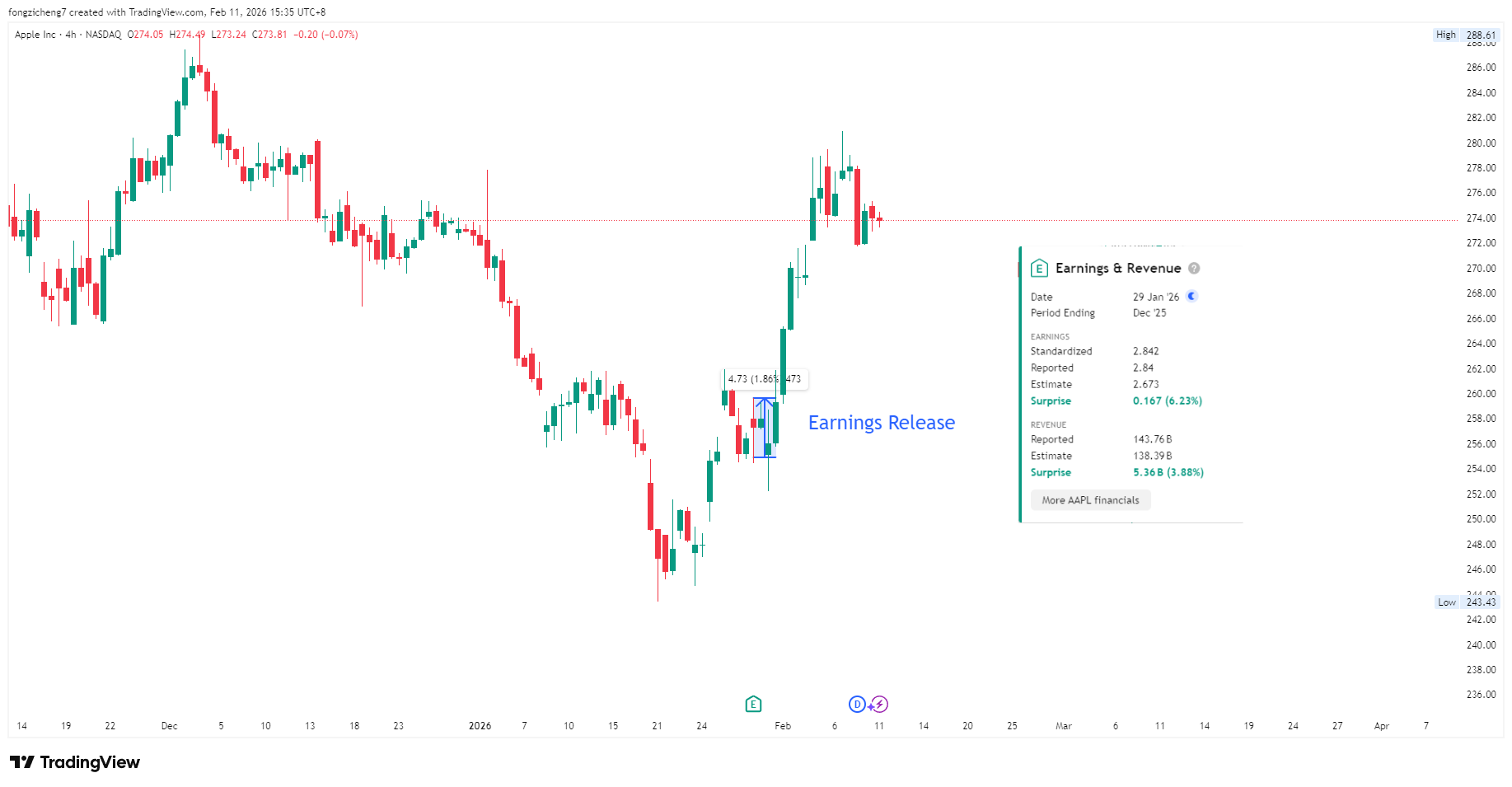
Apple delivered a solid earnings and revenue beat, with shares rising modestly in the sessions following the release. Unlike several peers, the stock did not experience sharp volatility or a reversal of gains.
The measured response reflects Apple’s positioning as a cash flow-driven ecosystem rather than a capital-intensive AI infrastructure play.
Investors are scrutinising AI-related spending, and Apple’s relative discipline and balance sheet strength provide valuation stability.
Analytical Outlook
Apple enters the remainder of 2026 with a strategy best described as strategic sovereignty. By avoiding the AI infrastructure arms race, the company has preserved substantial financial flexibility and maintained balance sheet strength.
The valuation narrative now depends on whether an AI-enhanced Siri and broader software integration can stimulate a sustained hardware upgrade cycle. Success would reinforce margin durability and ecosystem stickiness. Failure to accelerate replacement demand would leave growth reliant on incremental services expansion while component costs continue to edge higher.
Intel
Intel’s latest earnings highlight that the company remains in the midst of a transition. Progress in manufacturing, product competitiveness, and external partnerships is essential, yet credibility will depend on execution rather than ambition alone.
The company’s development will have a significant impact on the broader semiconductor sector, not just its own share price. A stronger Intel could rebalance supply chains and enhance competitiveness across computing and data centres. Investors are likely to focus on tangible outcomes rather than guidance statements.
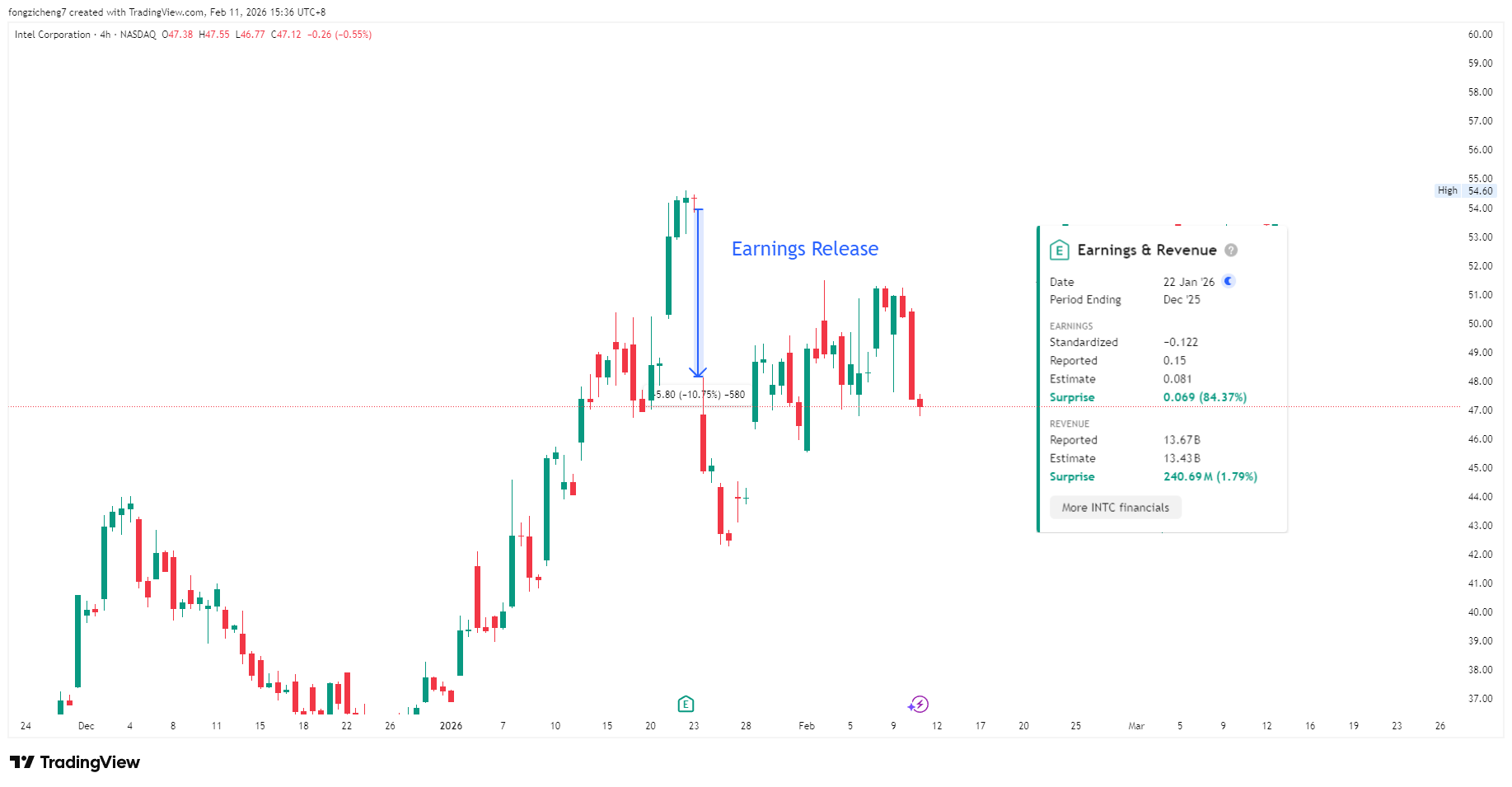
Intel reported earnings and revenue ahead of expectations, triggering an initial rally of more than 10%. However, the advance quickly reversed, with shares retracing much of the move in subsequent sessions. The reaction highlights investor caution toward capital-intensive turnaround stories.
While operational progress is being acknowledged, the market remains focused on execution risk and the scale of investment required to regain competitiveness in advanced chip manufacturing.
Analytical Outlook
Intel enters 2026 in a year that will test its ability to convert technical achievements into commercial success. The recovery of its share price will hinge on whether 18A can attract major external anchor customers such as Apple or Qualcomm to utilise its new fabrication facilities.
Until the foundry business evolves from a cost centre into a revenue generator, Intel remains a high-volatility turnaround investment, with its value increasingly shaped by geopolitical considerations rather than immediate profitability.
The Wider Impact on the Markets
AI remains the dominant theme throughout these earnings and commentary, but investor expectations are shifting back towards returns. Capital expenditures are rising, but so is scrutiny over efficiency, and cash generation.
For equity markets, concentration risk remains a key issue. These companies continue to heavily drive index performance, meaning their performance as a collective will also impact broader sentiment heavily. The recent earnings season suggests stability, which will support the markets, but is unlikely to create strong rallies, as we have seen, without clearer signs of accelerating growth.
What Traders Should Watch Next
Investors should keep an eye on three key factors moving forward into 2026. Evidence that AI investments are translating into sustainable revenue growth will be one of the most important factors for investors.
We should also keep an eye on margin trends as companies balance innovation with discipline. Finally, regulatory and geopolitical developments that could reshape global technology supply chains will also play a vital role in the markets.
Big tech enters 2026 with a tone more about measured execution than accelerated expansion. Focusing on consistency, credibility, and cash flow more than bold promises.









