






The economic calendar highlights the scheduled release dates of important economic data and its potential impact on financial markets. Since markets react to news, these events can lead to significant price movements. The calendar not only provides the timing of these releases but also indicates their significance, categorizing them as high-impact or low-impact events. Additionally, it specifies the country and currency involved.
How to read the Economic calendar
Every live Forex economic calendar displays all upcoming economic data releases and updates it with actual numbers as the announcements occur.
However, it is worthwhile to keep in mind that not all data releases have the same impact on the market. Many Forex news websites categorize and mark them as either low, medium, or high.
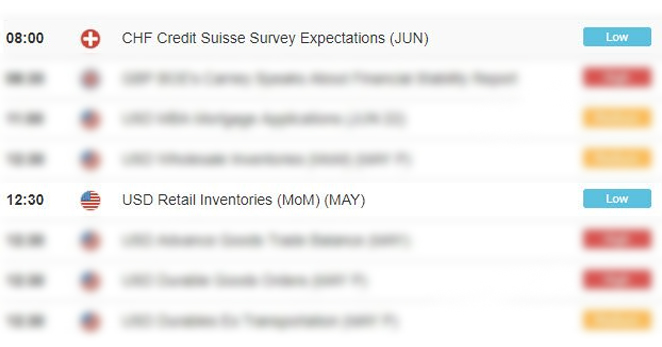
Low volatility characterizes announcements that are unlikely to provoke significant market reactions. This may include minor bond sales, survey results, and other lesser-known indicators.

Medium volatility refers to significant news releases that have a moderate impact on Forex. Data such as retail sales, trade balance, and other household spending often fall into this category.

High volatility includes significant events such as interest rate decisions, the Consumer Price Index, Gross Domestic Product, the Unemployment Rate, and Non-Farm Payroll numbers.
While there are many economic calendars available online, there is no single “best” option for every trader. Preferences vary some traders may favor calendars integrated into their trading platforms, while others may prefer standalone web-based tools for their visual design or usability.
Which announcements should traders pay the most attention

Among the most influential events on the economic calendar are central bank interest rate decisions. These announcements have a direct impact on currency valuations, as higher-yielding currencies typically attract greater demand from traders and investors seeking better returns.
Lower-yielding currencies are often favored in carry trades or borrowing strategies. It’s also important to note that the statements made by central bank officials during press conferences including comments from governors and board members can be just as impactful as the actual rate decision itself, offering critical insight into future monetary policy.
Following interest rates, the Consumer Price Index (CPI) is another key indicator closely monitored by traders. Since most central banks target a specific inflation rate, the CPI helps gauge whether inflation is within the desired range. Deviations from this target can prompt policy adjustments, which in turn affect currency markets. Additionally, inflation data plays a crucial role in long-term forex analysis, especially when evaluating metrics like Purchasing Power Parity (PPP) between currencies.
Another important metric is the unemployment rate. While many central banks do not have explicit employment targets with the U.S. Federal Reserve being a notable exception they often respond to significant changes in labor market conditions. Rising unemployment can signal economic weakness, prompting accommodative monetary policies, while a strong labor market may encourage tightening.
Equally critical are Gross Domestic Product (GDP) figures, particularly real GDP growth. Strong GDP performance usually supports currency appreciation, as it increases the likelihood of future interest rate hikes by central banks. A weak or negative GDP growth can lead to rate cuts or the introduction of quantitative easing measures, potentially weakening the national currency. For instance, during periods of economic slowdown, the Federal Reserve may lower interest rates significantly and inject liquidity into the economy often resulting in downward pressure on the U.S. dollar.
Beyond these headline indicators, several other data points regularly influence forex markets. These include the Non-Farm Payrolls (NFP) report, the Consumer Confidence Index, trade and budget balances, retail sales, home sales, and the Manufacturing Purchasing Managers’ Index (PMI). Each of these indicators provides valuable insights into economic health and market sentiment, helping traders make informed decisions in a constantly evolving global landscape.
Why Economic Calendar Matters?

The economic calendar is essential for forex traders, providing several key advantages that contribute to long-term success in the markets. One of its most important functions is risk management. By being aware of upcoming high-impact events, traders can anticipate periods of increased volatility and adjust their strategies accordingly. This may involve reducing position sizes, setting tighter stop-loss orders, or stepping back from the market during uncertain times.
The economic calendar also facilitates strategic trade planning. Rather than reacting impulsively to breaking news, traders can prepare in advance, aligning their trades with expected outcomes and market sentiment.
Finally, it fosters global awareness. In a market that operates 24 hours a day, five days a week, and is influenced by international developments, staying informed about global economic events is crucial. This awareness helps traders remain alert to geopolitical shifts, regional trends, and macroeconomic indicators that may affect currency pairs and the overall direction of the market.








