


 Insights
  VT
VT 






Natural gas prices have moved sharply lower, surprising many participants who are still focused on weather headlines or short-term demand narratives. However, the current decline is not being driven by a sudden collapse in consumption. Instead, it reveals how this market prioritizes expectations, positioning, and seasonality in advance. To grasp why natural gas prices are falling, it’s important to look beyond daily news and focus on how the market predicts future conditions.
Market Trades Ahead of the Season
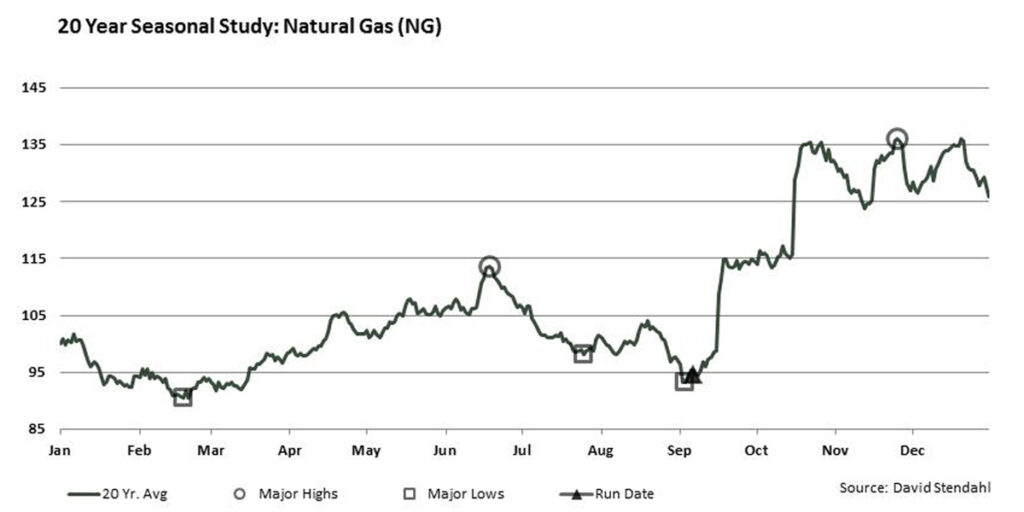
Natural gas is one of the most seasonal commodities in the global market. Its demand profile is highly influenced by weather, particularly winter heating demand in the Northern Hemisphere.
Historically, prices tend to peak during the late-year demand phase, when winter uncertainty is highest. Once that peak demand window passes, the market begins to look forward, well before winter officially ends.
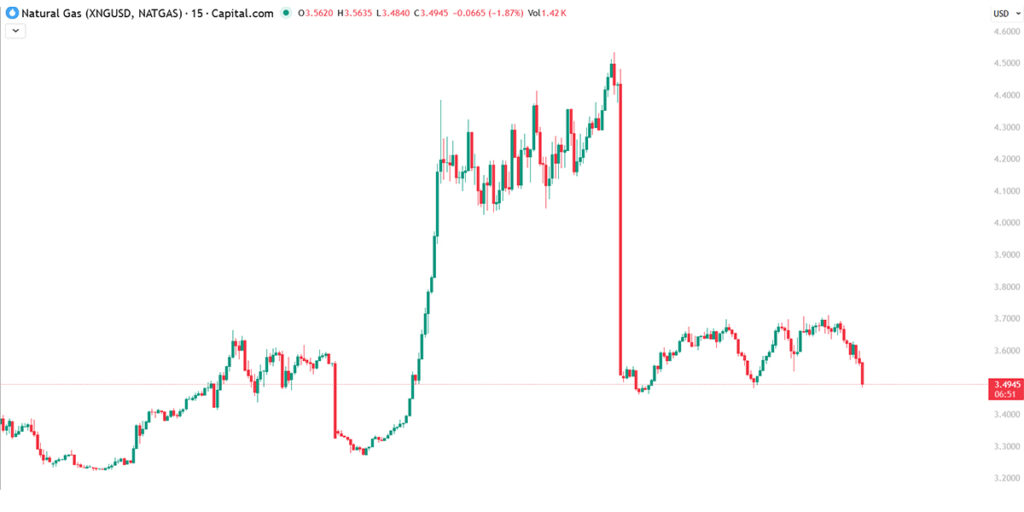
As heating demand expectations start to fade, prices often correct sharply, even if cold weather hasn’t fully gone. This is because markets don’t wait for demand to fall; they price in what demand will be.
To be precise, the market is no longer trading winter; it’s trading what comes after winter.
This forward-looking behavior explains why natural gas can decline even during periods of lingering cold. The premium for uncertainty evaporates quickly once the seasonal narrative shifts.
Storage Levels Are Doing Their Part
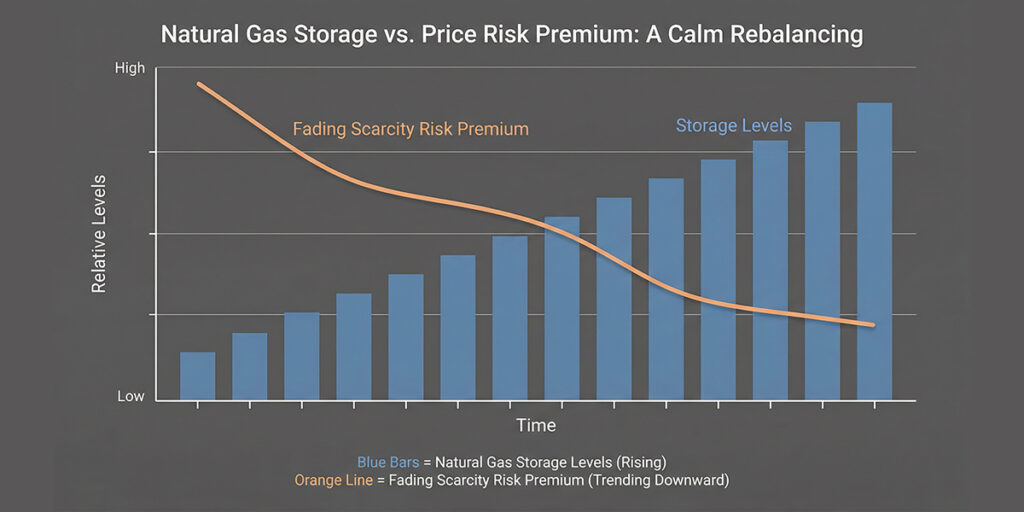
One of the major factors behind the current weakness is storage. Storage levels play an important role in shaping price behavior, acting as a buffer against supply disruptions and demand spikes. They act as a buffer against supply disruptions and demand spikes. When inventories are sufficient and are being replenished faster than expected without a steep decline, the sense of urgency to act disappears. Natural gas rallies depend on fears of shortages. The market no longer needs to price scarcity, and the risk premium that supported higher levels is removed.
Production Has Become Efficient
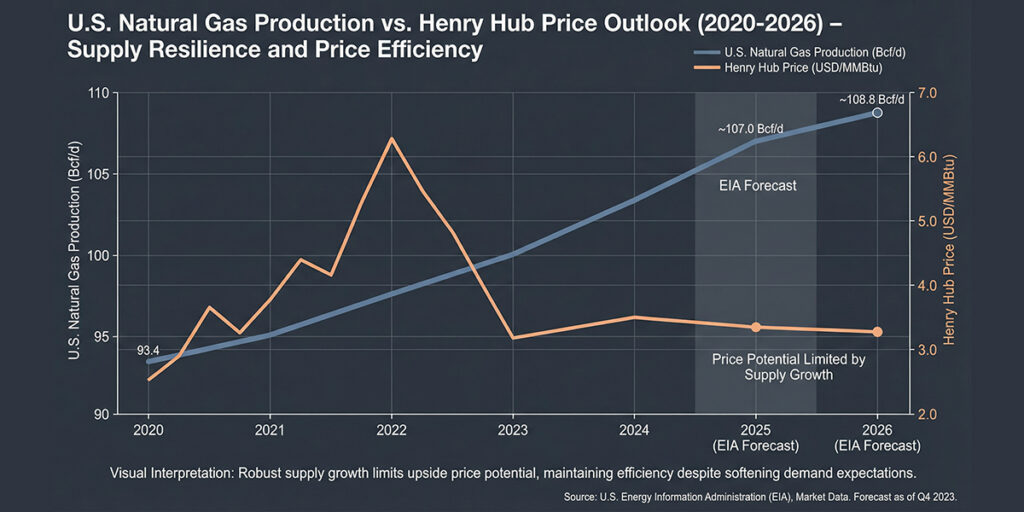
On the supply side, natural gas production, especially in the United States, has become exceptionally efficient. Advances in technology, infrastructure, and cost optimization mean that supply does not collapse immediately when prices fall. Production remains resilient for longer than many traders expect, which limits upside potential once demand expectations soften. This structural efficiency keeps supply steady even during price weakness, reinforcing downward pressure when the market transitions out of peak seasonal demand.
Modern gas production is:
- Highly cost-optimized
- Quick to scale and adjust
- Supported by infrastructure and technology
The Real Trigger
Perhaps the most important factor in the current move is positioning, not fundamentals. Natural gas draws in leverage, short-term speculation, and momentum-based trading. When prices fall below important technical levels, the reaction can be quick and extreme. Stop-losses get triggered, long positions close, and short momentum speeds up. These dynamics create air pockets, which are sharp price drops that happen faster than news or fundamental changes can explain. During these times, price action is influenced more by market mechanics than by changes in supply or demand.
Not a Demand Collapse But Repricing
It is important to highlight that this move does not indicate a collapse in underlying demand. Power generation demand is strong, LNG exports are steady, and industrial use has not dropped off. The market is not reflecting a major breakdown; it is reflecting normalization. The extra cost that used to be associated with winter uncertainty, tight storage concerns, and potential risks is being taken away. This repricing process can often happen quickly and harshly, especially in a market as sensitive and leveraged as natural gas.
Why Natural Gas Falls
Natural gas is well known for its asymmetric price behavior. Rallies tend to be slow and grinding, while declines are fast and vertical. Storage buffers dampen upside panic but accelerate downside relief, supply responds faster than demand adjusts, and leverage amplifies selling pressure. These characteristics make natural gas one of the most volatile commodities and one of the most emotionally challenging markets to trade. Success in this market depends less on predicting headlines and more on understanding structure, timing, and risk management.
Final Thoughts
The market is shifting from uncertainty to comfort. Seasonal demand is fading, storage conditions are stable, supply is strong, and speculative positioning is unwinding. Natural gas is not broken; it is acting just like it has in past cycles. For traders and investors, the main point is clear: natural gas responds to expectations first, fundamentals second, and sentiment last. It is important to understand this order to navigate its price movements effectively. However, the current decline is not due to a sudden drop in consumption. Instead, it shows how this market prices expectations, positioning, and seasonality ahead of time. To comprehend why natural gas prices are dropping, we should look beyond daily news and focus on how the market predicts future conditions.
Create a live VT Markets account today to access our platform features, including market insights and educational content.








