






By 2026, copper may no longer be seen as just another industrial metal. It’s evolving into a strategic asset, reshaping global trade, clean energy, and even geopolitics, much like oil did a century ago.
Copper’s role in the green transition has placed it at the heart of a global economic transformation.
As nations move toward net-zero targets and invest heavily in renewable infrastructure, copper is fast becoming the backbone of the new energy system a material that connects power, technology, and national strategy.
Copper: The Artery of the Green Economy
Copper’s role in the transition to clean energy is irreplaceable. Every part of the global push toward net-zero emissions depends on it, from electric grids and semiconductors to renewable energy technologies and electric vehicles.
An electric car consumes three to four times more copper than a conventional vehicle due to its heavy reliance on electric motors, batteries, and charging systems. The same applies to wind turbines, solar panels, smart grids, aircraft, ships, and defence systems.
As these industries expand, demand for copper is soaring, pushing the market into uncharted territory. With its exceptional electrical and thermal conductivity, as well as its durability under harsh conditions, copper is indispensable to the next generation of clean infrastructure.
Yet, the metal faces a structural supply problem. Existing mines are grappling with declining ore quality and rising costs, while new projects take years to develop.
This growing supply gap has created a form of strategic scarcity, echoing the oil market dynamics of decades past.
U.S. President Donald Trump’s decision to impose a 50% tariff on copper imports starting in August 2025 further tightened global supply, driving costs higher across industries, from automotive manufacturing to electronics.
It’s no surprise that markets are now treating copper as a strategic commodity, essential to both economic security and energy transition.
From Industrial Metal to Strategic Asset
Recent price action confirms that copper is no longer trading like a traditional industrial metal. Instead, it’s behaving like a strategic resource, responding sharply to geopolitical events, macroeconomic data, and energy policy shifts.
Because copper is priced in U.S. dollars, the greenback’s movements directly affect demand: a stronger dollar typically pressures prices, while a weaker one boosts appetite.
Meanwhile, China, which dominates refining and production, remains the central force in global copper demand, while the U.S. and Europe race to diversify supply chains through new partnerships across Latin America and Africa.
This has transformed copper into a geopolitical focal point, replacing oil as the critical resource in the new global energy order.
Market behaviour reflects that shift. Since mid-2025, copper prices have surged beyond $11,000 per tonne on the London Metal Exchange (LME), near record highs.
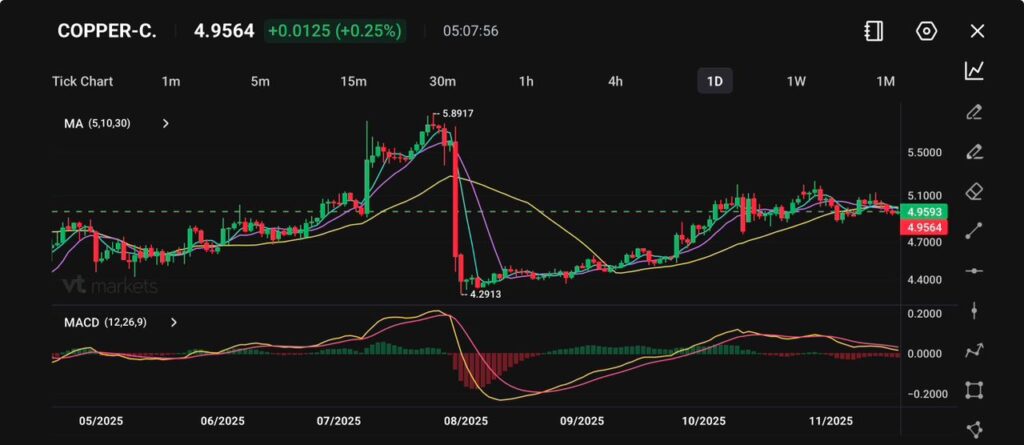
Technical charts show a clear long-term uptrend, marked by periodic corrections that haven’t disrupted the bullish structure. Momentum indicators and trading volumes point to strong institutional buying, and the breakout above $10,500 acted as a key entry signal for long-term investors.
Each wave of price strength has coincided with announcements of renewable energy expansion or export restrictions from producing countries, fuelling speculation and reinforcing copper’s new role as a barometer of the green economy.
The Investment Shift
Major financial institutions have begun reclassifying copper as a long-term strategic asset, building extensive positions in futures markets. Industrial players, in turn, are hedging their exposure to lock in prices as protection against future shortages.
Several banks forecast that if supply tightness persists, prices could surpass $12,000 per tonne, entering a new pricing era where copper’s value reflects not just industrial production, but its symbolic role in the global economic transition.
Copper now serves as a proxy for confidence in the green economy, moving more in line with energy policy announcements and decarbonisation targets than with traditional manufacturing data.
“From what I’m seeing, copper isn’t moving on normal industrial demand anymore. The market is reacting to long-term expectations; clean energy spending, supply risks, tariffs. Traders are buying copper the same way they buy assets they expect to get more valuable over time. That’s why the price swings look very different now.”
Navigating the Copper Market
For traders, copper has become one of the most technically and fundamentally complex commodities in the market. Price movements are shaped by a blend of macroeconomic indicators, supply and demand dynamics, and currency strength.
Key factors to monitor include:
- Mine output and refining capacity, particularly from Latin America and Africa.
- Inventory levels in LME and Shanghai warehouses.
- Renewable energy investment trends and infrastructure spending.
- Chinese industrial data and U.S. dollar movements.
On the charts, traders should track support and resistance zones, momentum divergences, and volume spikes, as volatility remains high. Effective risk management is essential — the copper market rewards precision but punishes complacency.
The New Economic Backbone
The world’s dependence on copper is now structural. Once considered a simple industrial metal, it has become the lifeblood of electrification, digital infrastructure, and clean energy.
While short-term volatility will persist, the long-term direction seems clear: demand growth has become strategic, not cyclical.
If oil powered the 20th century, copper will define the 21st. It is no longer just a metal — it’s a measure of global progress, and those who understand copper today will understand the next map of economic power tomorrow.
Disclaimer
The views and opinions expressed in this article are those of Nayel Aljawabrah, Market Analyst at VT Markets. They reflect his professional analysis and insights on market trends and do not necessarily represent the official position of VT Markets. This commentary is for informational purposes only and should not be considered financial advice.










