





Key Takeaways
- Trading costs may include spreads, commissions, and swap or rollover fees.
- The spread is the difference between the buy price and sell price of an instrument.
- Commissions may apply to selected account types or products, depending on the trading conditions.
- Swap fees may apply when a position is held overnight, unless the account or product is swap-free.
- Traders can view key trading cost details through the VT Markets app before placing or managing a trade.
What Are Trading Costs?
Trading costs are the charges or price differences that traders need to consider when opening, holding, or closing a position. These costs can affect the final profit or loss of a trade, especially for active traders or those who hold positions overnight.
On the VT Markets app, trading costs may include spreads, commissions, and swap fees. The actual cost can vary depending on the instrument, account type, market conditions, trade size, and how long the position remains open.
Understanding these costs can help traders plan entries more carefully, manage risk, and calculate potential returns more accurately.
1. Spread Cost
The spread is the difference between the bid price and ask price.
The bid price is the price at which you can sell an instrument. The ask price is the price at which you can buy an instrument. Since traders usually buy at the ask price and sell at the bid price, the spread becomes part of the trading cost.
The basic formula is:
Spread = Buy Price – Sell Price
On the VT Markets app, the Sell price is the price used when opening a sell position, while the Buy price is the price used when opening a buy position. The difference between these two prices is the spread.
For forex trading, the spread is often shown in pips. For indices, commodities, cryptocurrencies, and other CFD products, the spread may be shown in points or price units.
Example
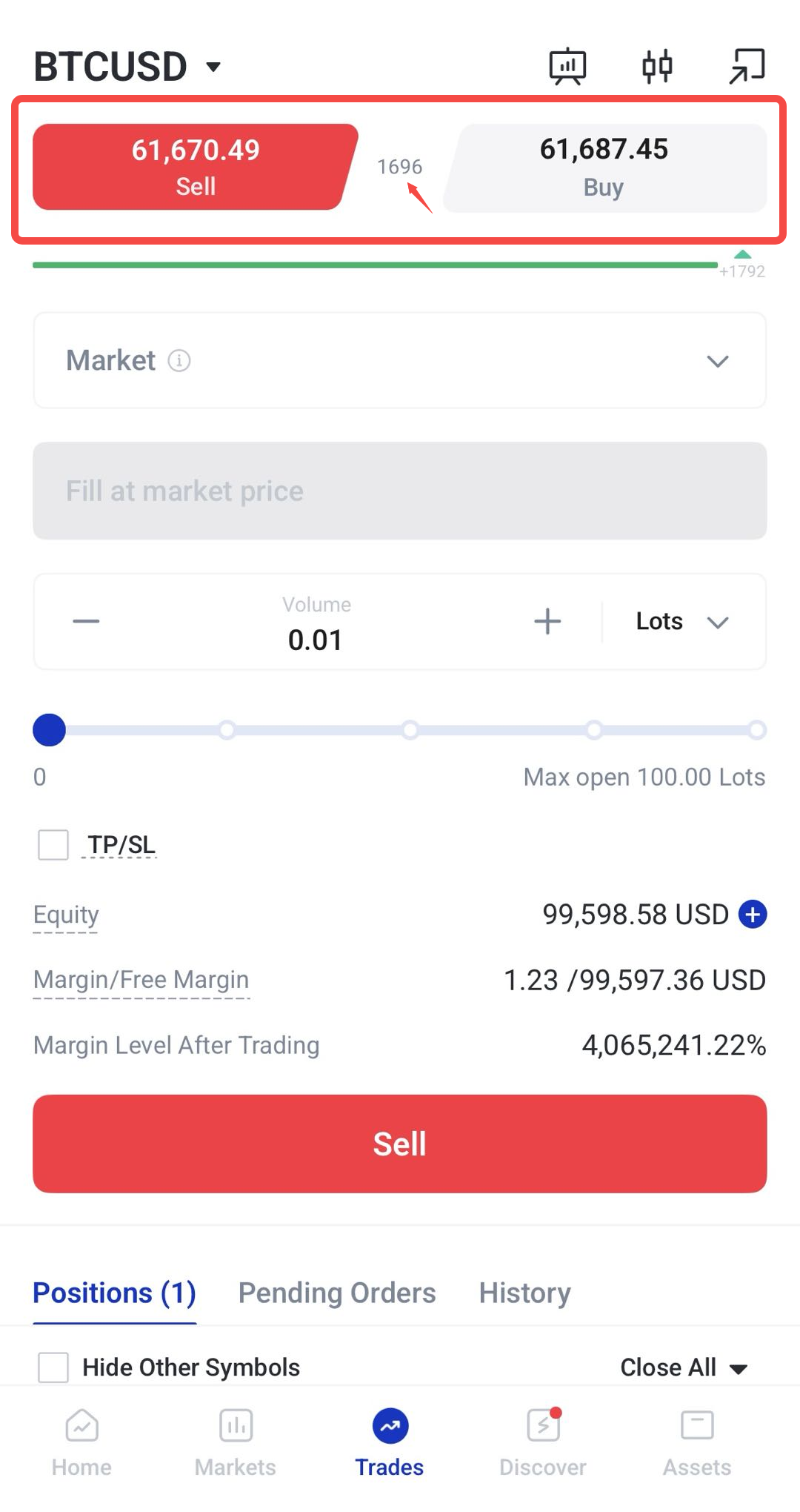
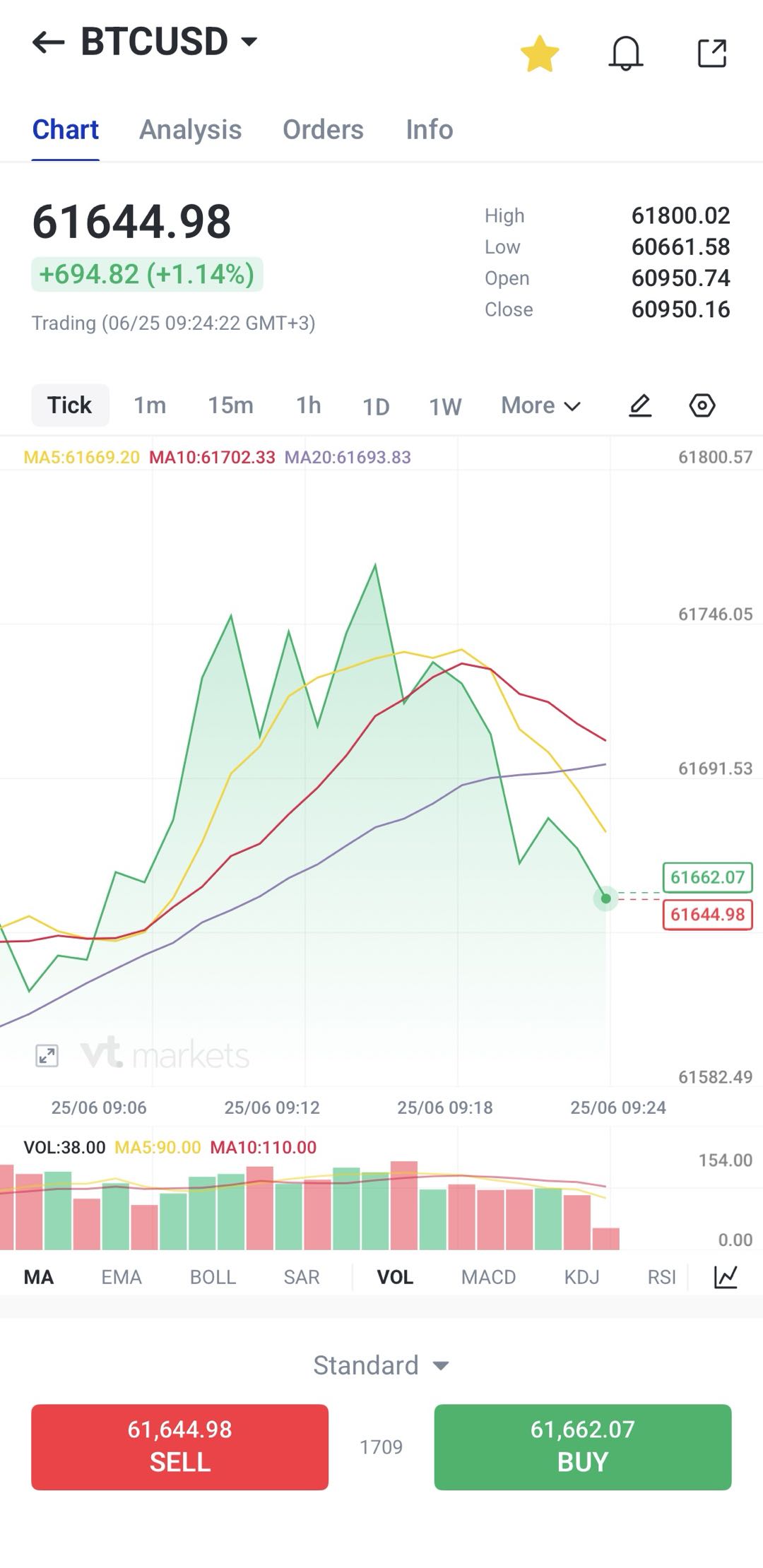
If BTCUSD shows:
- Sell price: 61,670.49
- Buy price: 61,687.45
The spread is:
61,687.45 – 61,670.49 = 16.96
This means the BTCUSD spread is 16.96 price units.
On the app, the spread may also appear as 1,696 points between the Sell and Buy prices. Since BTCUSD is quoted with two decimal places in this example, 1,696 points equals 16.96 in price movement.
Depending on the product, the platform may display the spread in points rather than price units. The exact point value depends on the instrument’s pricing format.
How to View Trading Costs on the VT Markets App
Traders can check key trading cost details directly through the VT Markets app before placing a trade.
How to View the Spread
To check the spread:
1. Open the VT Markets app.
2. Go to the market watchlist or product list.
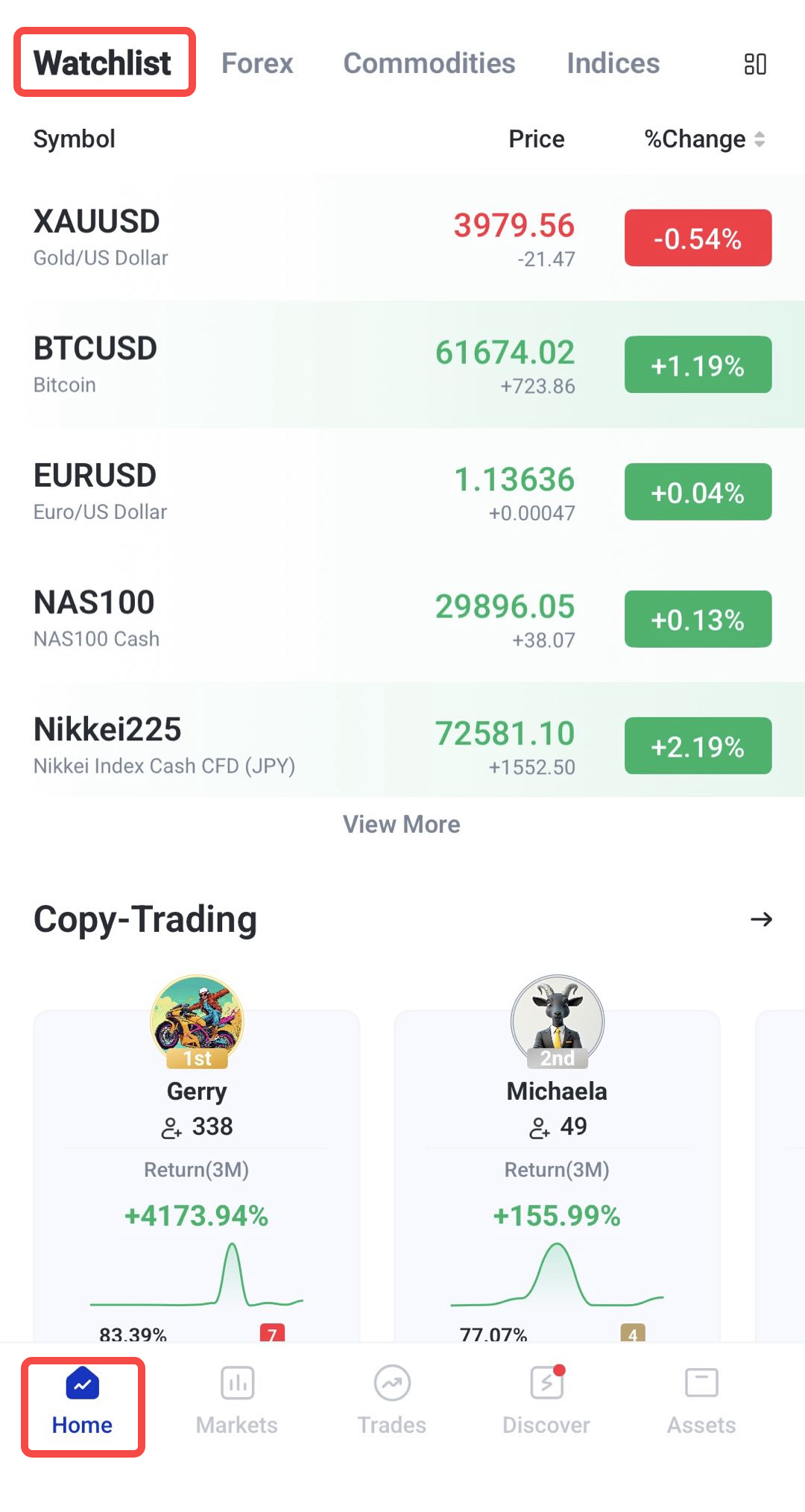
3. Select the instrument you want to trade.
4. Check the bid and ask prices shown on the screen.
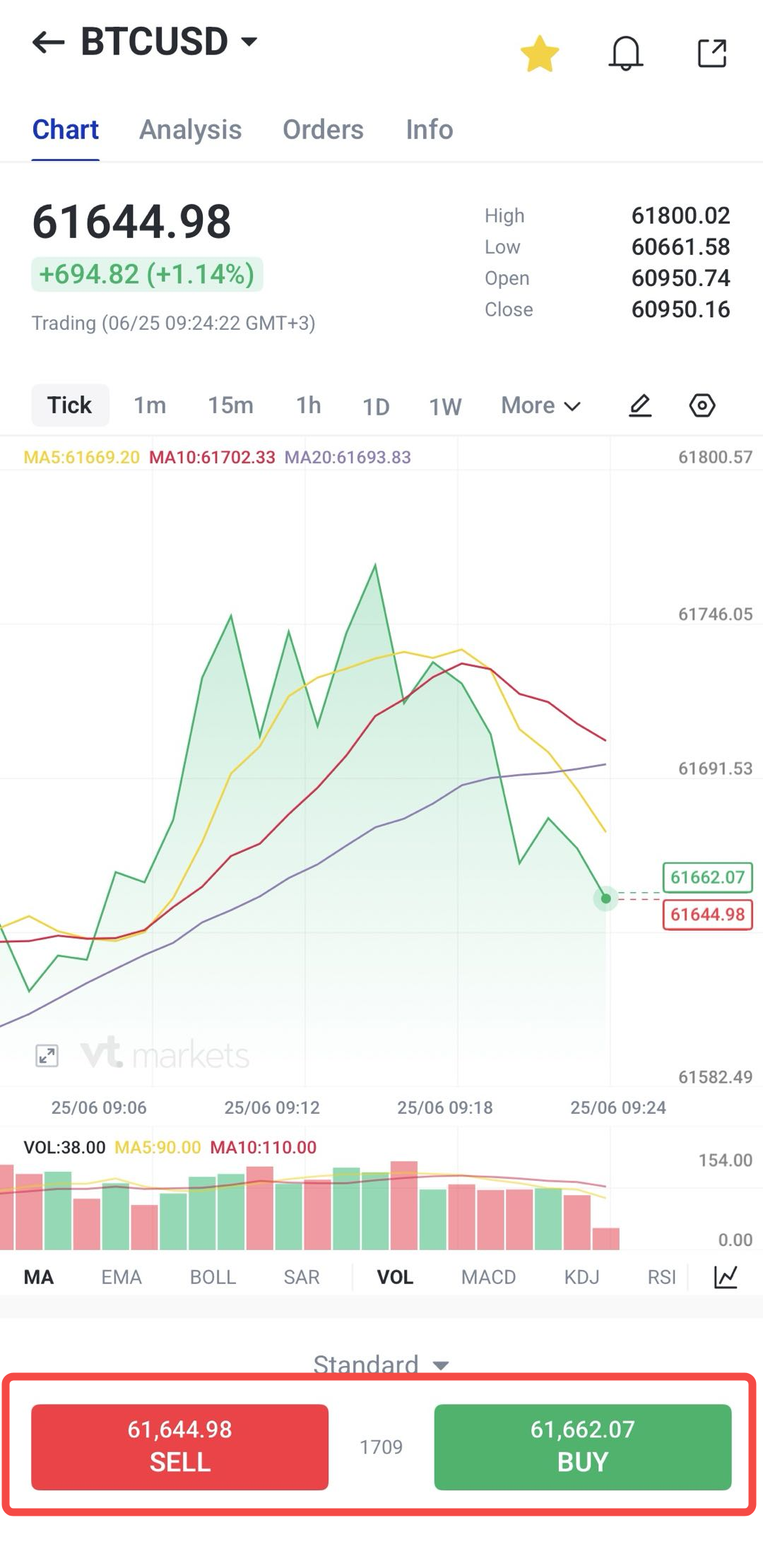
5. The spread is displayed between the Sell and Buy prices.
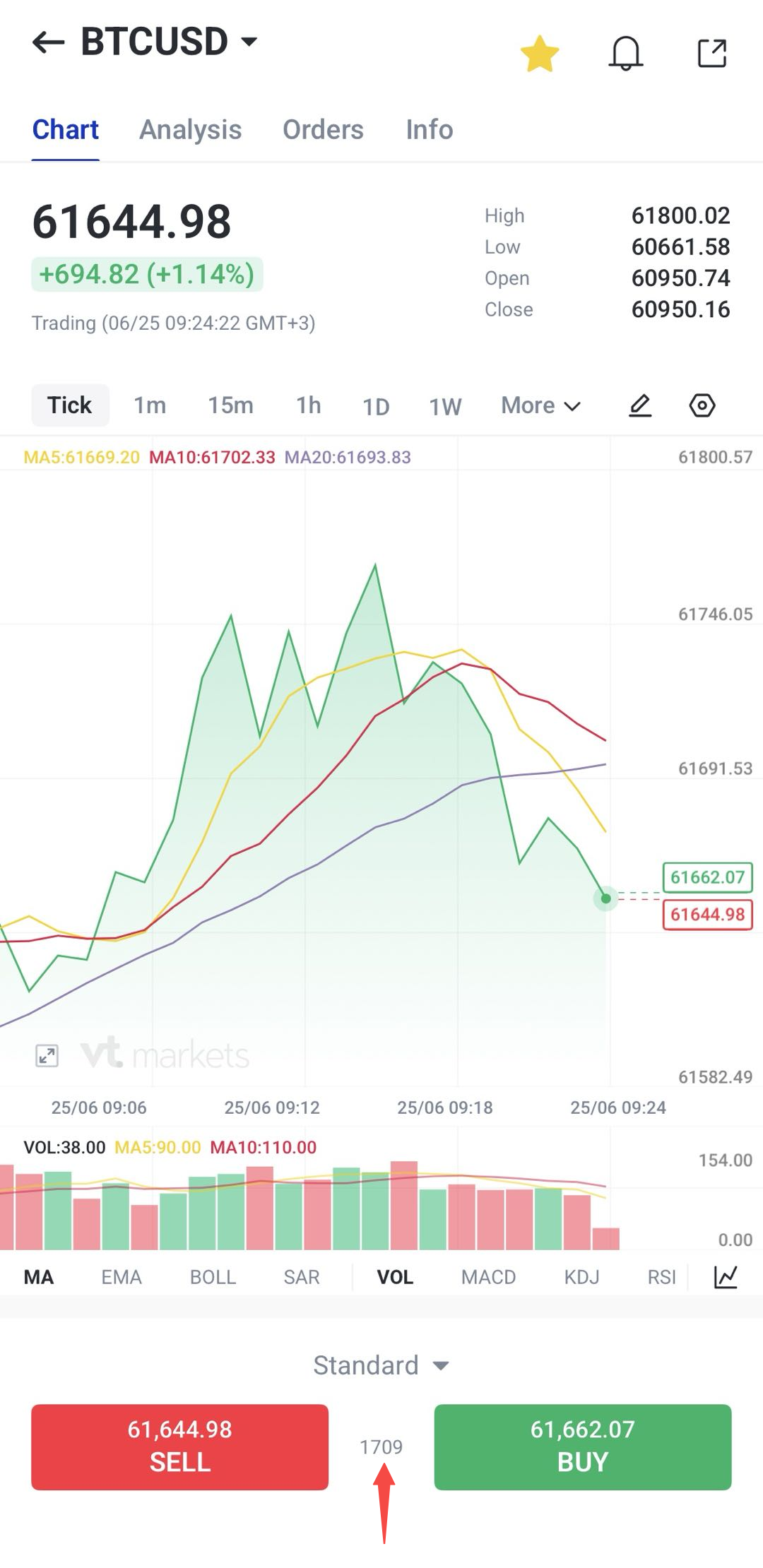
Since spreads can change during active market hours, it is useful to check them again before confirming an order.
2. Commission Cost
Commission is a direct fee charged for opening or closing a trade. It may apply to certain account types or products.
Some account types (such as Standard STP) may include most trading costs within the spread, while other account types (such as Raw ECN) may offer raw or tighter spreads with a separate commission. This is why traders should check the account conditions before placing trades.
How to Calculate Commission
The general formula is:
Total Commission = Commission per side × Number of sides × Number of lots
A complete trade usually has two sides:
- Opening the trade
- Closing the trade
Example
If the commission is USD 3 per lot per side and you trade 1 lot, the total commission would be:
USD 3 × 2 sides × 1 lot = USD 6
If you trade 2 lots, the commission would be:
USD 3 × 2 sides × 2 lots = USD 12
Commission should be included when calculating the total cost of a trade.
How to View Commission Details on the VT Markets App
To check commission information:
1. Open the VT Markets app.
2. Select the instrument you want to trade, example: USDJPY
3. Open the product details or specifications section.
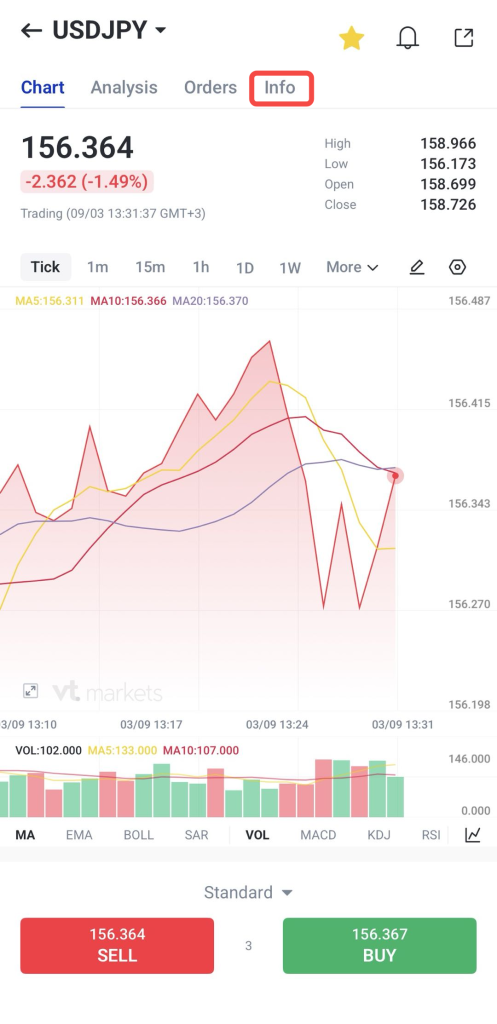
4. Review the commission information, if applicable.
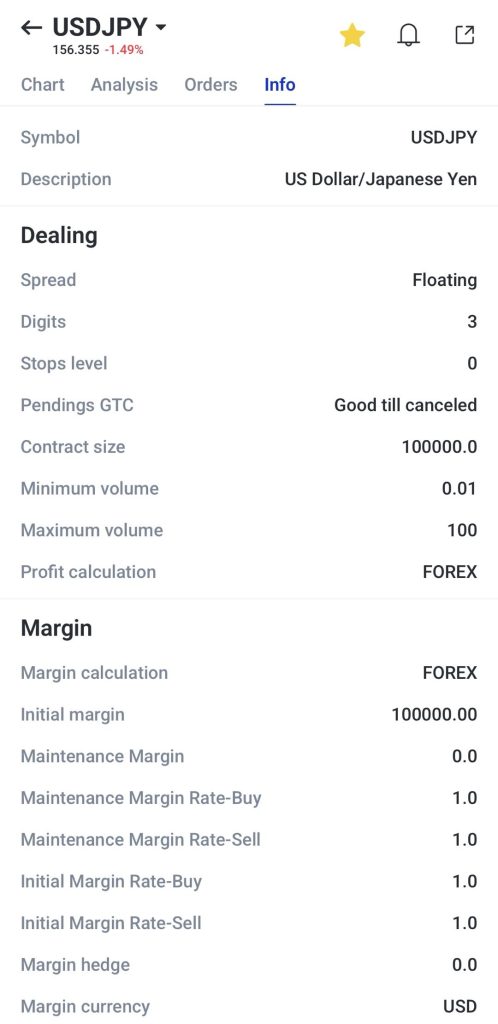
5. Check whether the cost is shown per lot, per side, or per round turn.
Commission may differ depending on the account type and product. Traders should review this before opening a position, especially when comparing account options.
3. Swap or Rollover Cost
Swap, also known as rollover, is a fee or credit that may apply when a position is held overnight.
Swap rates are linked to factors such as interest rate differences, product type, market conditions, and whether the position is long or short. This means a swap can be either a cost or a credit, depending on the instrument and direction of the trade.
When Swap Applies
Swap may apply when a position remains open after the market rollover time. If you close the position before rollover, swap usually does not apply.
For traders who hold positions for more than one day, swap can become an important cost to consider. This is especially relevant for swing traders or position traders.
How to Calculate Swap
The general formula is:
Swap Cost = Swap Rate × Trade Size × Number of Nights
The exact calculation may differ by product, contract size, and account type. Traders should always check the swap information shown in the app before holding a position overnight.
Example
If the overnight swap cost is USD 5 per night and you hold the position for three nights, the total swap cost would be:
USD 5 × 3 nights = USD 15
If a position is held over a weekend or holiday period, additional rollover adjustments may apply depending on the product.
How to View Swap Details
To check swap information:
1. Open the VT Markets app.
2. Select the instrument you want to trade.
3. Click the Info tab
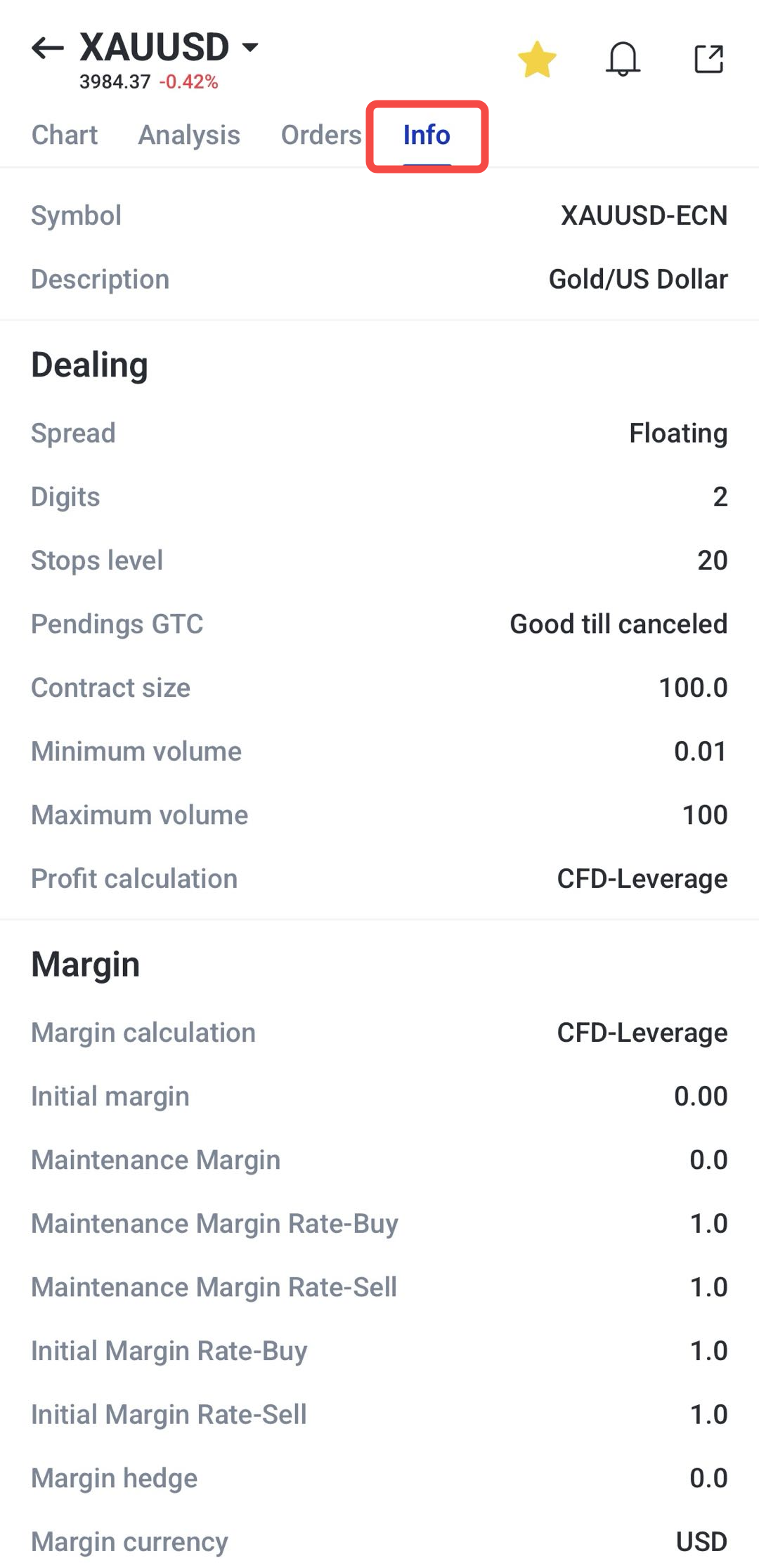
4. Look for the long swap and short swap information.
In the example below:
- Swap long applies to buy positions that are held overnight. In this example, a long position has a swap value of -78.75 points, which means an overnight cost may apply.
- Swap short applies to sell positions that are held overnight. In this example, a short position has a swap value of 27.09 points, which means a swap credit may apply.
- The 3-day swap shows when triple swap is applied. In this example, the 3-day swap is applied on Wednesday.
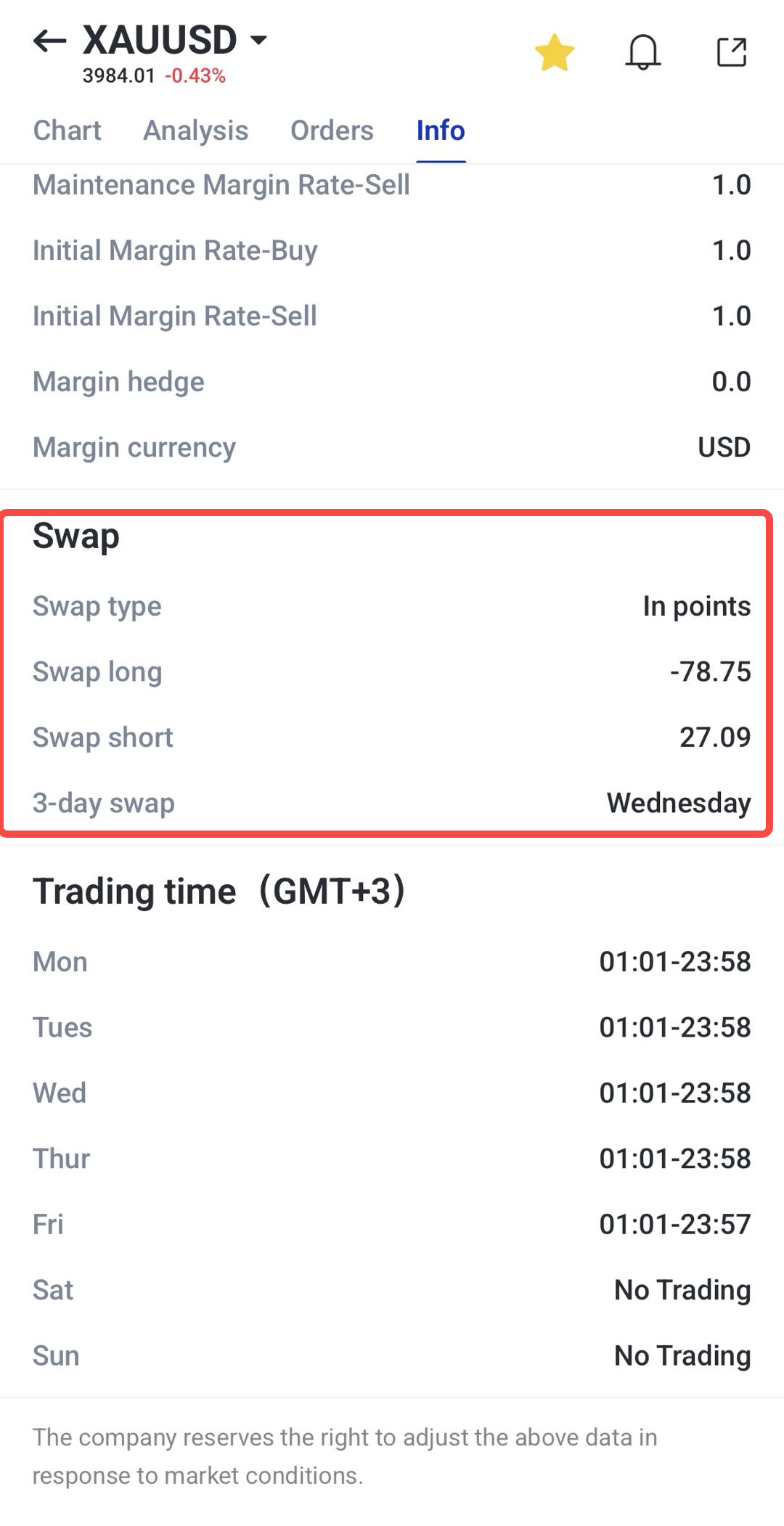
The long swap applies to buy positions, while the short swap applies to sell positions. Swap rates may change, so traders should review the latest information before holding positions overnight.
How to Calculate Total Trading Cost
The total trading cost depends on your account type and whether you hold your position overnight.
Standard STP Account
For a Standard STP account, the main trading costs are typically the spread and any applicable swap fees.
Total Trading Cost = Spread Cost + Swap
Example
A trader opens a 0.01 lot XAUUSD position with the following costs (illustrative):
- Spread cost: USD 0.17
- Overnight swap: USD 0.10
The total trading cost would be:
USD 0.17 + USD 0.10 = USD 0.27
Raw ECN Account
For a Raw ECN account, traders typically pay the raw spread, a separate commission, and any applicable swap fees.
Total Trading Cost = Spread Cost + Commission + Swap
Example
A trader opens a 0.01 lot XAUUSD position with the following costs:
- Spread cost: USD 0.08
- Commission: USD 0.06
- Overnight swap: USD 0.10
The total trading cost would be:
USD 0.08 + USD 0.06 + USD 0.10 = USD 0.24
How to View Costs on an Open Trade
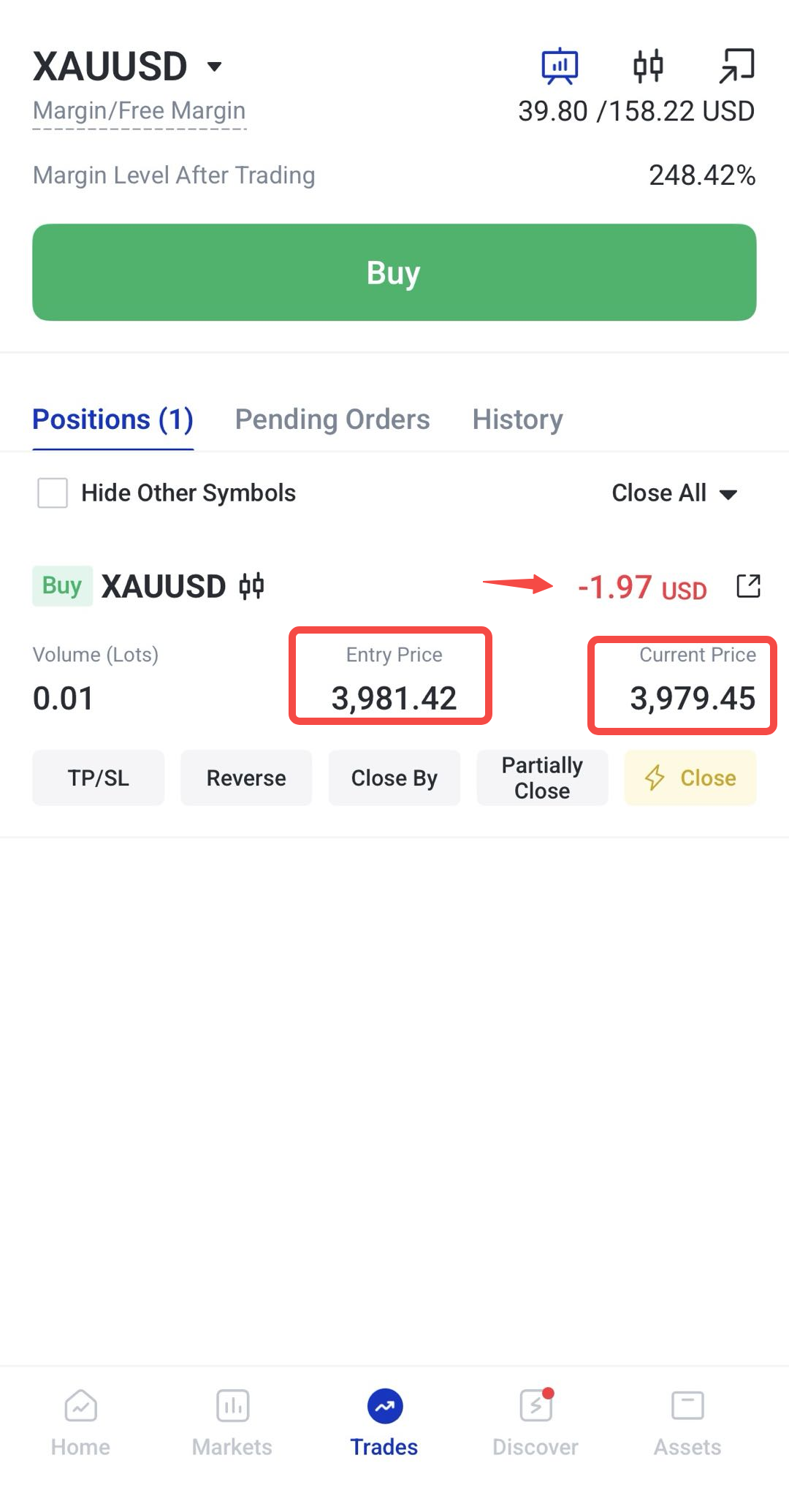
After opening a trade, traders can monitor related costs through the positions or trade details section in the app. This may show information such as the current profit or loss, swap, commission, entry price, and current market price.
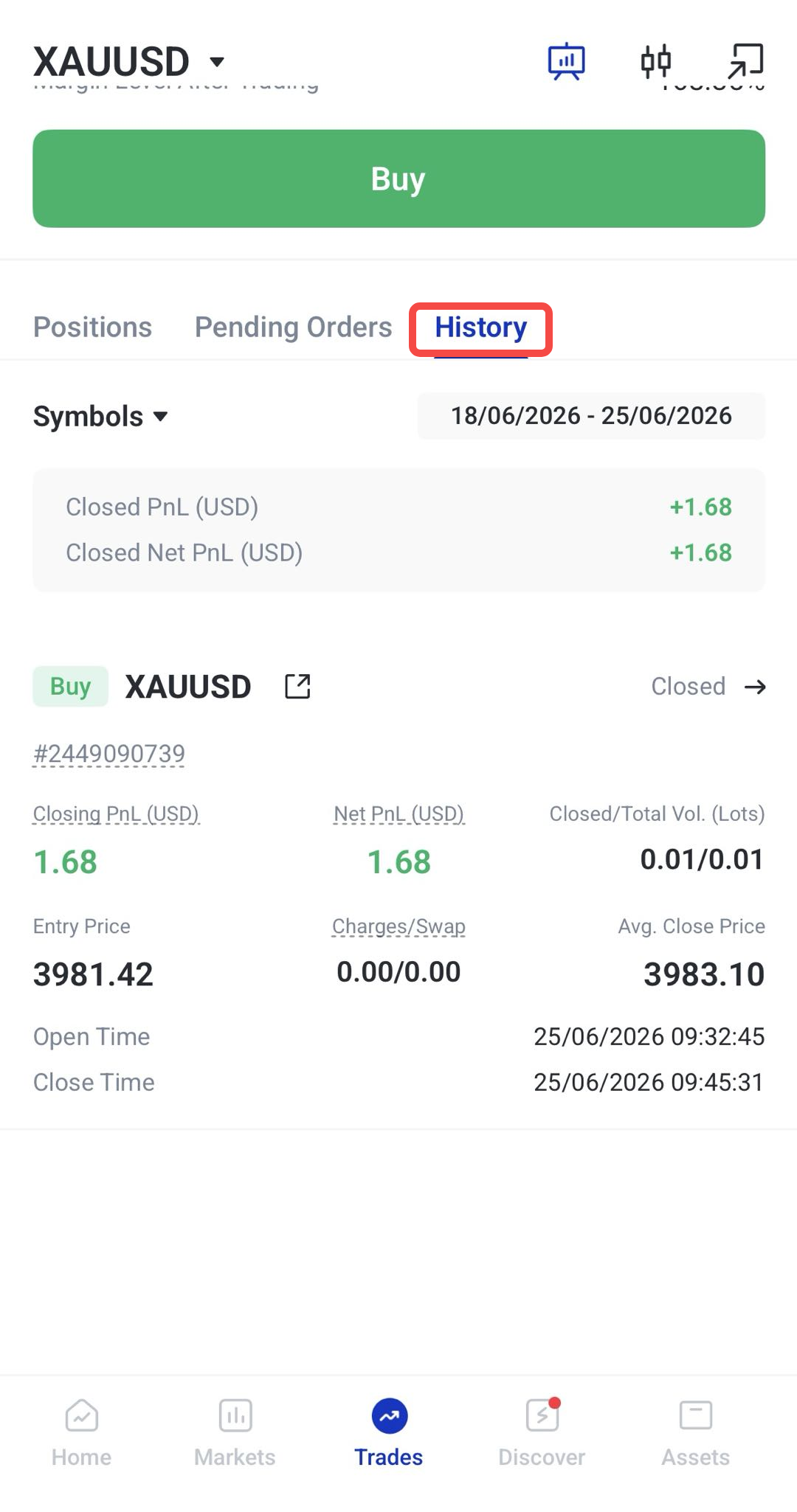
To review previous trades, traders can also check the trade history section. This helps them understand how trading costs affected the final result of completed positions.
Why Trading Costs Matter
Trading costs may look small at first, but they can affect long-term performance. This is especially true for traders who trade frequently, use short-term strategies, or open larger positions.
For example, a scalper who enters and exits the market many times in one day may be more affected by spreads and commissions. A swing trader who holds positions for several days may be more affected by swap fees.
By checking costs before trading, traders can better understand their break-even point and avoid unexpected charges.
Tips to Manage Trading Costs
Traders can manage trading costs more effectively by checking the main cost areas before opening or holding a position.
- Check the spread before entering a trade: Spreads can change during active market hours. Always review the Sell and Buy prices before confirming an order.
- Review commission by account type: Some accounts may include costs mainly in the spread, while others may offer tighter spreads with a separate commission. Check the trading conditions linked to your account.
- Check swap before holding trades overnight: Swap may apply when a position remains open after rollover time. A negative swap may add to your cost, while a positive swap may provide a credit.
- Compare account cost structures: Different account types may suit different trading styles. Short-term traders may focus more on spreads and commissions, while longer-term traders may pay closer attention to swap.
- Be careful during volatile market periods: Spreads may widen around major news events, market openings, or periods of low liquidity. Check costs again before placing trades during these times.
Frequently Asked Questions
What are the main trading costs?
The main trading costs are spreads, commissions, and swap fees. The actual cost depends on the product, account type, trade size, and holding period.
How do I calculate the spread?
The spread is calculated by subtracting the bid price from the ask price. For example, if the bid price is 1.08500 and the ask price is 1.08510, the spread is 0.00010, or 1 pip.
Does every trade have a commission?
Not every trade has a separate commission. Commission depends on the account type, product, and trading conditions. Some accounts may include most costs in the spread, while others may charge commission separately.
When does swap apply?
Swap may apply when a position is held overnight. The amount depends on the product, trade direction, account type, and swap rate shown in the app.
Where can I view trading costs on the VT Markets app?
You can view spreads through the bid and ask prices on the product screen or order ticket. Commission and swap details can usually be checked in the product details or specifications section. Open trade costs may also appear in the positions or trade details section.








