





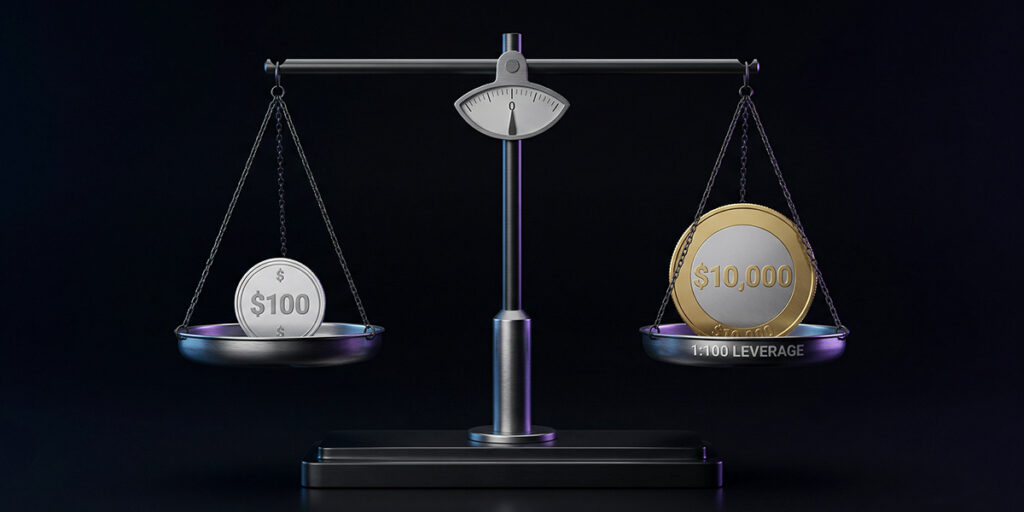
There has been a lot of noise about margin lately! So, what is margin? In Forex trading, margin is like the “good faith” deposit or a portion of your funds that the broker sets aside when you open a trade. It’s like a deposit on an apartment, just a bit of security to show you’re committed. Unlike rent, though, margin isn’t a cost or fee. Instead, the amount reserved as margin remains yours, allowing you to control a much larger trade size than what you have in your account.
For example, if you want to trade $100,000 of a currency with a 1% margin requirement, you only need $1,000 in your account for that trade. This is the power of margin and leverage, allowing you to engage in larger trades without depositing the full amount.
What is a margin account?
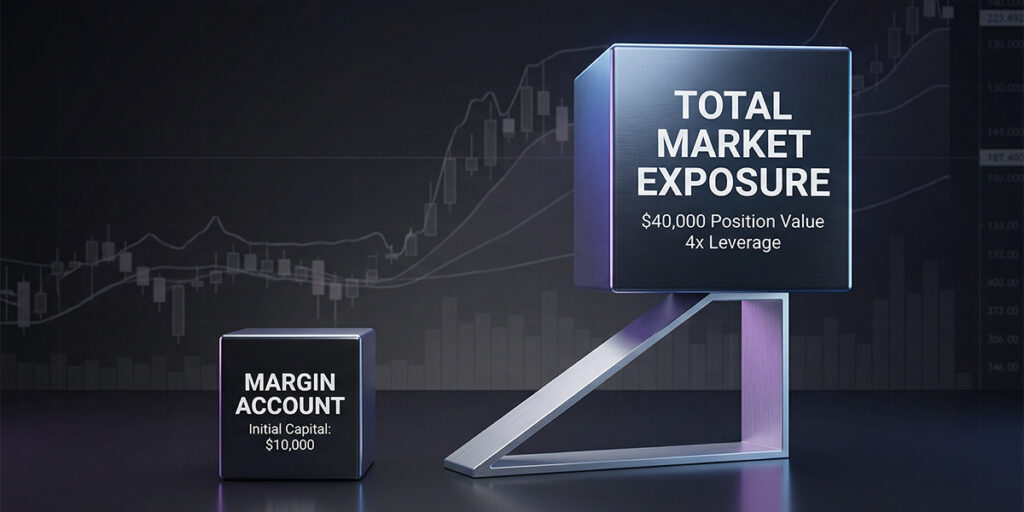
A margin account allows traders and investors to borrow money to increase their market exposure. This lets them take positions larger than what their available capital would normally allow. The main goal of using margin is to potentially improve returns, but it also raises the level of risk. In the forex market, traders use margin to control larger currency positions. Brokerage firms provide these margin facilities, and account values change continuously based on market price movements. To begin trading on margin in the forex market, an individual must first open and fund an account with a licensed broker. Once the account is active, margin is applied, allowing the trader to enter positions and participate in the market with leveraged exposure.
How to Calculate Margin in Forex
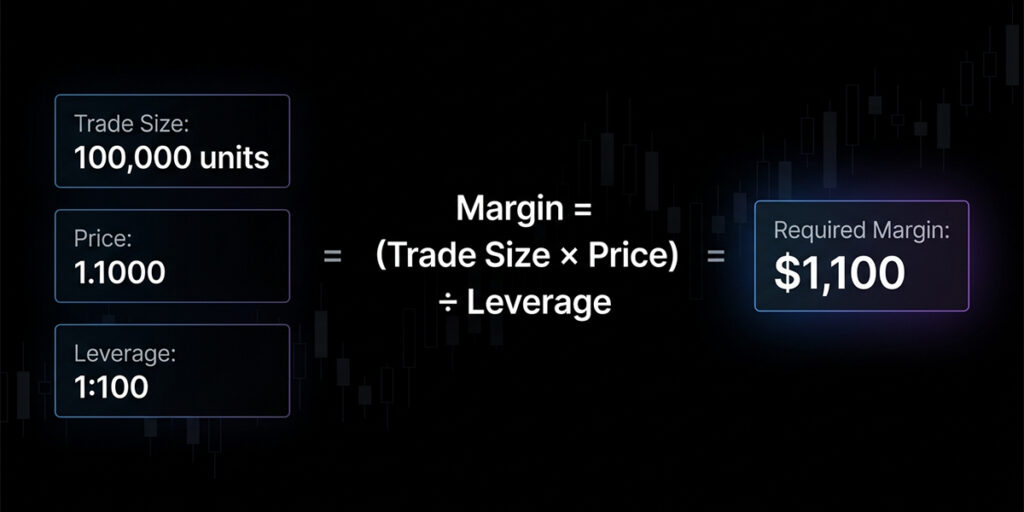
An investor must first deposit money into the margin account before placing a trade. The required deposit amount depends on the margin percentage set by the broker. Calculating margin in forex trading is essential to understanding how much capital is required to open and maintain a position. Margin is essentially the amount of money set aside from your account to control a larger trade using leverage.
The basic formula to calculate margin is:
Margin = (Trade Size × Price of the Currency Pair) ÷ Leverage
For example, if you want to trade 1 standard lot (100,000 units) of EUR/USD at a price of 1.1000 with a leverage of 1:100, the calculation would be:
Margin = (100,000 × 1.1000) ÷ 100 = $1,100
This means you only need $1,100 in your account to control a position worth $100,000.
What is the margin level?
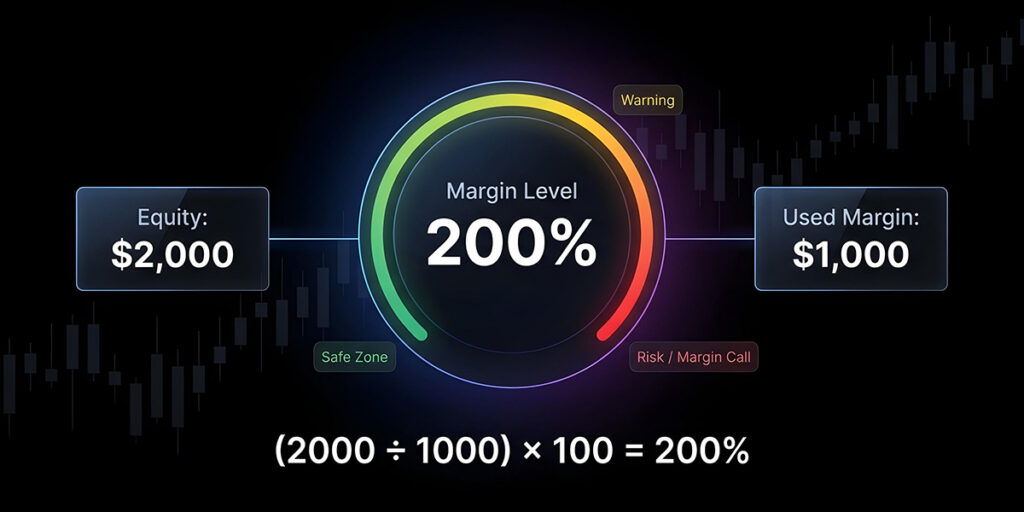
A margin level measures how much of your own money is left in your trading account compared to how much you’ve borrowed from your broker for leveraged trading.
It’s usually shown as a percentage and calculated as follows:
Margin level = (Equity / Used margin) × 100.
A higher margin level means you have more margin available in your account compared to the borrowed funds, which is generally seen as safer. In contrast, a lower margin level indicates you are using a larger share of borrowed funds, raising the risk of potential losses.
What is a margin call?
A margin call occurs when the funds in a trader’s account fall below the required level needed to maintain open positions. This typically happens when the market moves against a trade, reducing the account’s equity. When this threshold is breached, the broker may request the trader to deposit additional funds or close some positions to restore the required margin level. If no action is taken, positions may be automatically closed to prevent further losses. Margin calls are a critical risk management mechanism, reminding traders of the importance of maintaining sufficient capital and using leverage cautiously to avoid excessive exposure.
Comparing Margin and Leverage in Forex

Margin and leverage are two closely connected concepts in forex trading. Even though used together, they serve distinct roles within a trading framework. Understanding the difference between the two is important for effective risk management and strategic decision-making.
Margin refers to the actual amount of capital required to open and maintain a trading position.
Leverage, on the other hand, is the mechanism that allows you to control a larger position with a relatively smaller amount of capital. It is expressed as a ratio, such as 1:100, indicating how much your trading power is amplified.
To put this into perspective, with a leverage of 100:1, a trader can control a position worth $100,000 with just $1,000 of margin. In this case, margin is the capital you commit, while leverage is what expands your exposure in the market.
Leverage can significantly enhance potential returns, but it also increases the level of risk. Even small market movements can have a huge impact on your account balance when leverage is applied. For this reason, leverage is commonly described as a double-edged sword; it has the potential to create both profits and losses. Successful trading lies in finding the right balance. Traders can make more informed decisions by understanding how margin and leverage interact. It helps in managing the exposure effectively and maintains greater control over their trading outcomes.
Managing Risk with Margin in Forex
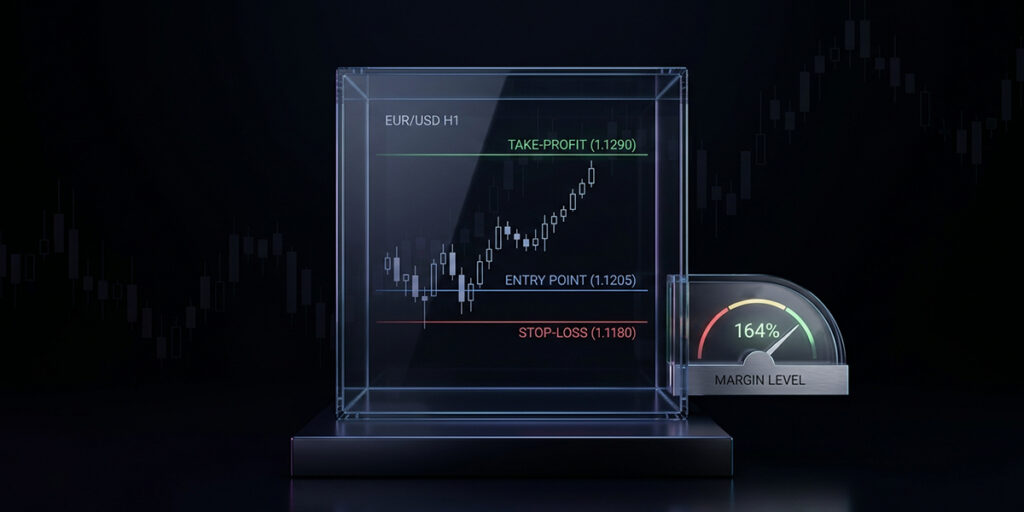
Once you learn how margin works, the next step is managing the risks associated with it. It is necessary to monitor your account closely and maintain a disciplined approach to risk management, as margin trading involves the use of borrowed funds.
One of the most effective tools is the use of stop-loss orders that automatically close your position if the market moves against you beyond a predefined level. This helps limit potential losses without the need for constant monitoring. Similarly, take-profit orders allow you to secure gains by closing a trade once it reaches your desired profit level, ensuring that favorable moves are not left unrealized.
Also, make sure to track your margin level, as a decline below the broker’s required threshold can result in a margin call. Staying aware of your margin status helps you take timely action and avoid unnecessary risks.
Effective risk management with margin is all about maintaining control, balancing opportunity with caution to ensure long-term consistency in trading.
Create a live VT Markets account today to access our platform features, including market insights and educational content.








