






Gold markets have recently entered a period of increased uncertainty. Price volatility has elevated, macroeconomic signals remain mixed, and traders across global markets are attempting to determine whether the current environment represents the beginning of a new directional trend or simply a pause before the next major move.
Professional traders and institutional investors typically look beyond price action alone, while price charts often dominate discussions around gold. Futures market data, especially trading volume and open interest, often provides a clearer view of what market participants are doing behind the scenes.
Recent data from the gold futures market reveals an interesting shift. Trading activity has declined noticeably, yet open positions remain largely intact. This combination offers important insight into current market sentiment and suggests that traders are exercising caution rather than abandoning the market entirely.
Trading Volume and Open Interest
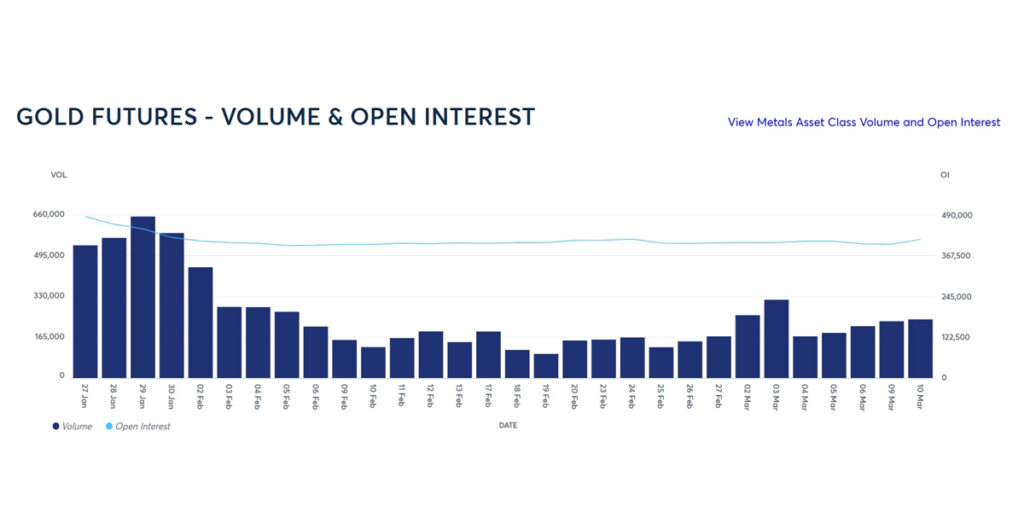
Before examining the current market environment, it is important to understand the two key metrics used in futures markets.
Trading Volume
Trading volume represents the number of futures contracts traded within a specific period. High trading volume generally signals active market participation, strong liquidity, and heightened trading interest. Volume tends to rise during periods of strong price movement or when new information enters the market.
Open Interest
Open interest refers to the total number of futures contracts that remain open and active. Unlike trading volume, which measures activity during a given period, open interest reflects how many positions traders continue to hold.
In simplified terms:
- Trading volume measures activity
- Open interest measures commitment
When these indicators are analyzed together, they can reveal whether traders are:
- Entering new positions
- Closing existing trades
- Or maintaining exposure while waiting for stronger signals
This makes futures positioning data particularly useful when markets enter transitional phases.
Gold Futures Trading Activity Has Declined
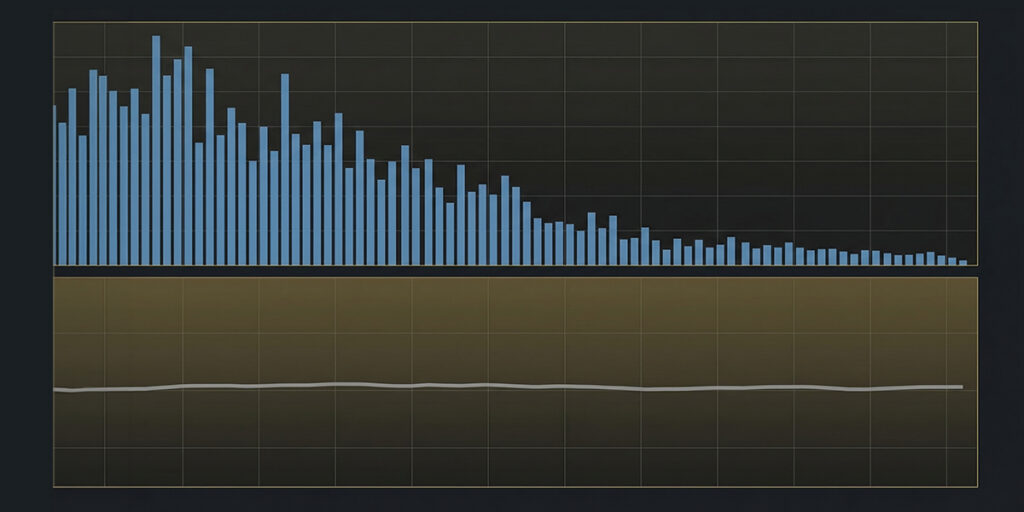
Recent gold futures data show that trading volume has declined compared to earlier periods.
Daily trading activity, which exceeded 600,000 contracts previously, has recently fallen into the 150,000 to 250,000 contract range. Such a reduction suggests that a smaller number of new trades are being initiated across the market.
At first glance, declining trading activity might appear to signal weakening interest in gold. However, the broader data tells a more nuanced story. Despite the reduction in trading volume, open interest has remained relatively stable, fluctuating only within a narrow range.
This distinction is critical. Rather than exiting the market, traders appear to be holding their existing positions while waiting for a clearer macroeconomic direction.
What Stable Open Interest Reveals About Market Behaviour
The market is typically entering a period of consolidation or indecision when trading volume declines while open interest remains steady.
In such environments:
- Existing traders remain committed to their positions.
- New participants hesitate to enter aggressively.
- Market participants wait for stronger catalysts before deploying additional capital.
This behavior suggests that traders are not losing confidence in gold but instead are becoming more selective about when and how they add exposure. Such phases are common when markets are facing conflicting economic signals.
For example:
- Inflation remains uncertain
- Interest rate expectations continue to shift.
- Currency volatility affects commodity pricing.
During these conditions, many institutional traders prefer to reduce short-term activity while maintaining strategic exposure.
Where Traders Are Positioning in the Gold Futures Market
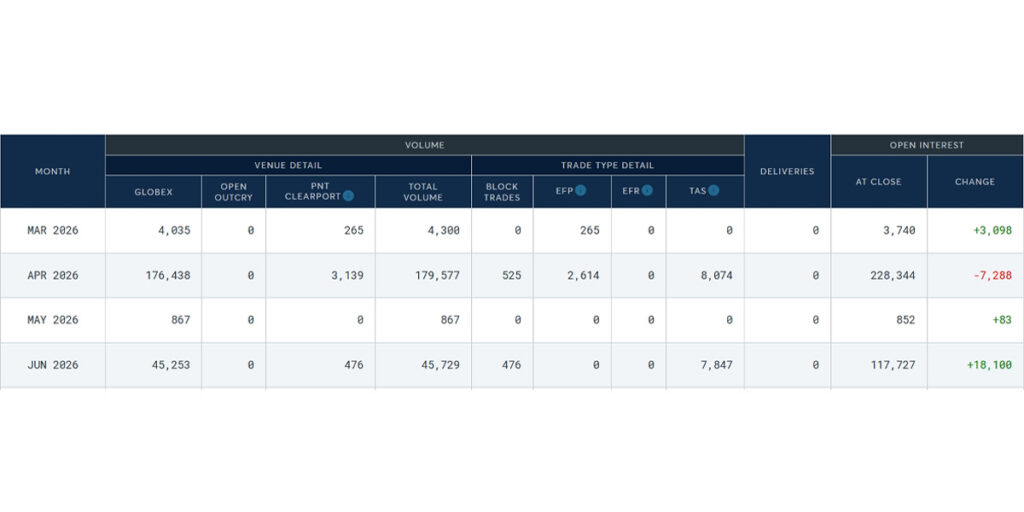
Another way to assess market sentiment is by examining which contract months hold the largest concentration of open interest.
Current futures data shows that:
- April 2026 contracts carry the largest share of open positions, with more than 228,000 contracts outstanding.
- June 2026 contracts already contain over 117,000 contracts.
This distribution indicates that traders are gradually rolling positions forward into future contracts rather than exiting the market entirely. Such behavior typically reflects longer-term positioning strategies, where market participants maintain exposure while adjusting the timing of their trades.
It also reinforces the idea that traders are waiting for a clearer macroeconomic catalyst before making more aggressive directional bets.
Macro Drivers Traders Are Watching
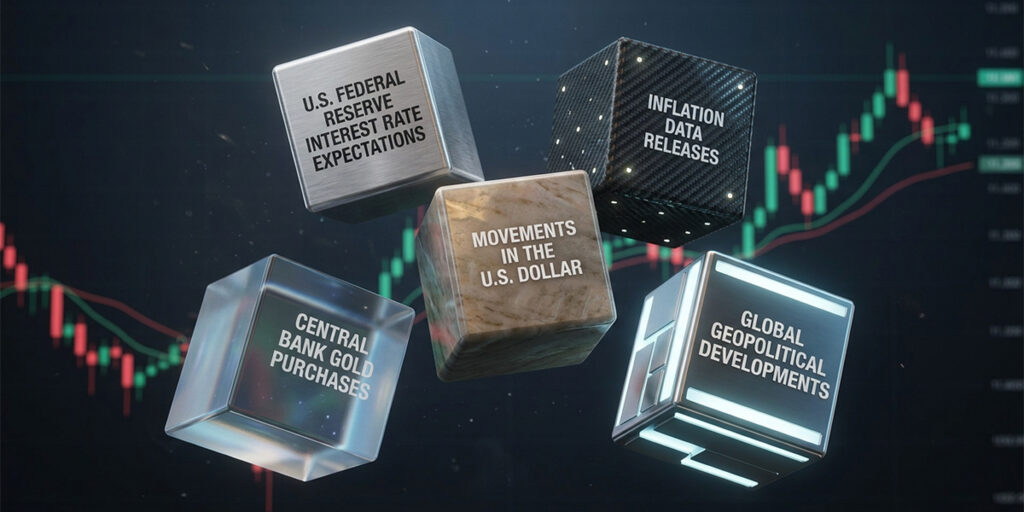
Gold prices are deeply influenced by global macroeconomic forces. Traders currently appear to be closely monitoring several key developments that could determine the next major move.
These include:
- U.S. Federal Reserve interest rate expectations
- Inflation data releases
- Movements in the U.S. dollar
- Central bank gold purchases
- Global geopolitical developments
Each of these factors has historically played a major role in shaping gold demand.
For instance:
- Lower interest rates tend to support gold prices by reducing the opportunity cost of holding non-yielding assets.
- Rising geopolitical tensions often increase safe-haven demand.
- A weaker U.S. dollar typically strengthens gold due to its inverse relationship with the currency.
When uncertainty surrounds these factors, markets often enter low-volume holding patterns, similar to the environment currently observed in gold futures.
Why Stable Open Interest Matters
Stable open interest during periods of declining volume is interpreted as a sign that market conviction remains intact. If traders were losing confidence in gold, open interest would likely decline as positions were closed and capital exited the market.
Instead, the data suggests that traders are maintaining exposure while awaiting clearer macroeconomic signals.
This type of positioning environment frequently precedes major market moves.
When new information eventually enters the market (such as inflation surprises, policy shifts, or geopolitical developments), the presence of existing positions can accelerate price movement as traders quickly adjust their strategies.
A Market Waiting for the Next Catalyst
Taken together, current futures market data suggest that gold traders have not abandoned the market, even though trading activity has slowed. Instead, the market appears to be entering a period of anticipation.
During such phases:
- Traders maintain existing exposure.
- New participation slows temporarily.
- Markets wait for a catalyst strong enough to redefine expectations.
Historically, these transitional periods often precede major price movements once a clear directional narrative emerges.
Final Thoughts

Gold futures data currently reflects a market that is not retreating but pausing. Stable open interest suggests that traders are holding their positions and closely monitoring macroeconomic developments before committing additional capital. This behavior is consistent with markets that are searching for clarity rather than abandoning conviction.
As inflation trends, interest rate expectations, and geopolitical developments continue to evolve, gold may soon find the catalyst needed to trigger the next meaningful move.
Until then, futures positioning indicates that traders remain attentive, watching the market carefully while maintaining their strategic exposure.
Create a live VT Markets account today to access our platform features, including market insights and educational content.








