





Crude oil remains one of the most closely tracked commodities in global financial markets, yet it is often misinterpreted due to the dominance of short-term headlines and geopolitical narratives. While news flow can influence intraday volatility, sustained moves in USOIL (WTI Crude) are ultimately driven by a combination of price structure, supply-demand dynamics, futures market expectations, capital discipline, and long-term macro cycles.
This analysis takes a data-driven approach, adding together technical behavior, futures pricing, production realities, and demand trends to provide a clearer and more objective view of where USOIL currently stands and what that positioning may imply going forward.
Current Price Context
USOIL is currently trading in the mid-$50s per barrel. This reflects a long period of consolidation after a significant multi-month decline. Compared to last year, prices are much lower, highlighting how much the market has pulled back from previous highs. Meanwhile, volatility has decreased significantly compared to earlier quarters. This indicates a move away from panic toward stabilization.
This price behavior suggests that the market is not anticipating an immediate supply shock, nor does it indicate a sudden drop in demand. Instead, USOIL seems to be entering a positioning phase. Participants are reassessing value, expectations, and long-term balance instead of reacting rashly to short-term events.
Intraday Structure: Compression Over Breakdown
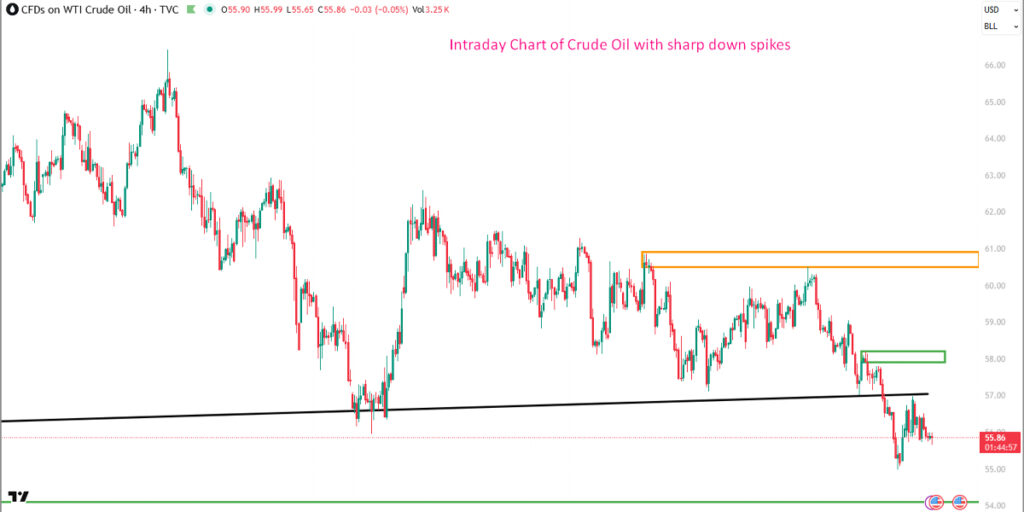
USOIL has been moving within a narrow range from an intraday view. Downward pushes have been met with strong buying near established support levels, while upward attempts often stall at defined resistance points. This pattern shows that buyers are eager to purchase at lower prices, but sellers are active enough to keep prices from breaking through to the upside.
This type of price movement is typical of markets adjusting rather than forming a clear trend. Large institutional players often take this time to rebalance their positions, protect against future risks, or wait for confirmation from macroeconomic or inventory reports. Importantly, sideways movement should not be seen as a weakness. Historically, periods of compression often lead to increased volatility once a catalyst resolves the uncertainty.
Technical Perspective: Short-Term Pressure & Structural Neutrality
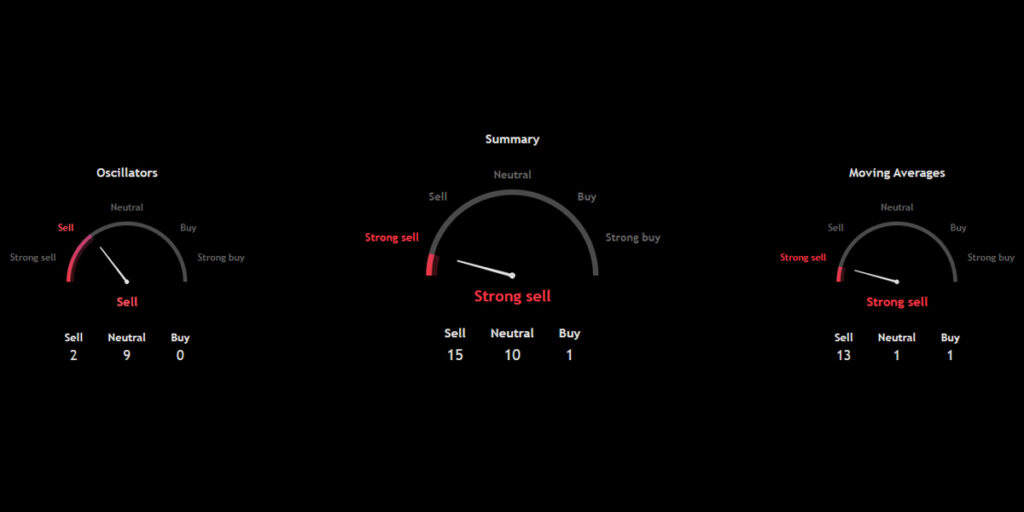
Technical indicators currently lean toward mild short-term downside pressure, reflecting recent price weakness. It is critical to contextualize these signals within the broader market structure. Momentum and oscillator-based indicators perform best in trending environments; when markets move sideways, signals tend to rotate frequently and lose predictive reliability.
In this context, technical readings should be interpreted tactically rather than structurally. They highlight near-term pressure but do not invalidate the broader consolidation framework. For traders, this reinforces the importance of respecting range boundaries and avoiding directional conviction without confirmation.
Future Expectations Tell a Different Story
Perhaps the most revealing insight comes from the futures curve. While near-term prices remain low, longer-dated contracts show a gradual upward slope into the early 2030s, with prices stabilizing in the low $60s before leveling off further out.
This curved structure conveys several important messages. First, the market does not expect an immediate supply crisis. Second, it acknowledges longer-term tightness due to capital discipline, declining spare capacity growth, and limited upstream investment. Finally, it reflects a view of oil as a limited strategic resource rather than an oversupplied commodity.
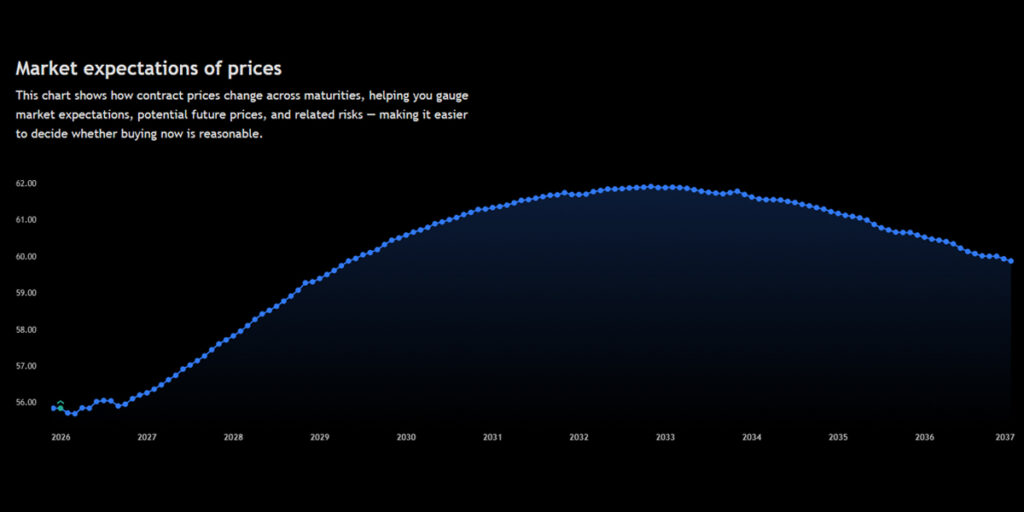
In essence, the futures market is pricing patience, not panic. It recognizes short-term softness while keeping a positive outlook for the long term.
Supply Dynamics: Discipline Over Expansion
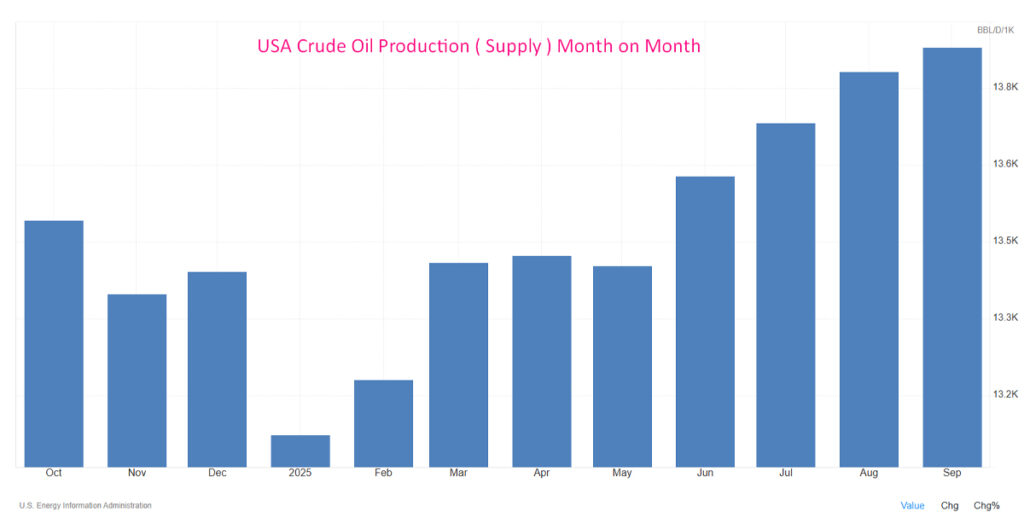
Oil is primarily a supply-managed market. While US crude production is close to record levels, growth has slowed compared to earlier cycles. Producers have focused on returning money to shareholders, strengthening their balance sheets, and improving capital efficiency instead of expanding output aggressively.
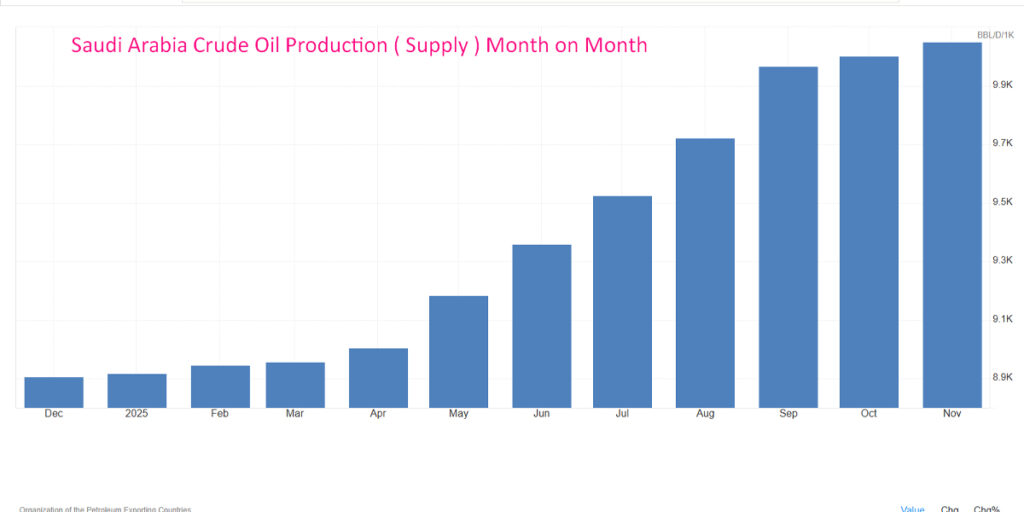
The OPEC+ continues to have a crucial role in managing global supply. Production adjustments, voluntary cuts, and coordinated output strategies are essential for maintaining balance. While the current supply seems sufficient, the absence of large-scale new capacity additions indicates that future flexibility is limited. This limitation is an important factor supporting prices in the long term.
Demand Reality
On the demand side, conditions remain stable rather than explosive. There is little evidence of a sharp global demand contraction. Transportation, aviation, and industrial usage continue to provide a steady baseline of consumption, even as efficiency gains and energy transition narratives evolve.
Crucially, oil prices do not require booming demand to rise. They simply require demand to remain resilient while supply growth remains constrained, a condition that continues to hold.
Market Interpretation
USOIL is not in crisis but in compression. Short-term momentum is cautious, but long-term expectations are positive. Futures pricing shows a gradual return to normal rather than a collapse. Structural supply issues continue to support prices.
This situation requires discipline instead of guesswork. Traders should stick to clearly defined ranges and stay flexible to changes in volatility. Those looking at the longer term should remember that oil moves in cycles, not just straight lines. Periods of consolidation often come before significant price changes.
In the end, USOIL today focuses less on headlines and more on structure, expectations, and patience. In this environment, managing risk and making decisions based on data are much more important than simply trying to guess the market direction.








