





The rising price of gold in India has been driven by multiple factors, including global economic uncertainty, inflation, and fluctuations in the Indian rupee. During periods of geopolitical tension or financial instability, wealth preservation becomes a priority for investors, leading them to view gold as a reliable flight-to-quality asset, thereby boosting demand.
Central banks, including the Reserve Bank of India, along with government monetary and inflation-targeting policies, also play a significant role in influencing domestic gold prices. Additionally, India’s gold market is heavily impacted by global trends, especially strong demand from major economies such as the US and China. Overall, understanding what drives gold prices is essential for investors aiming to protect their wealth or make informed investment decisions in gold.
China & India Buying More Gold
Recent data from the World Gold Council reveals that gold prices surged globally as central banks across major economies either maintained or increased their gold reserves.
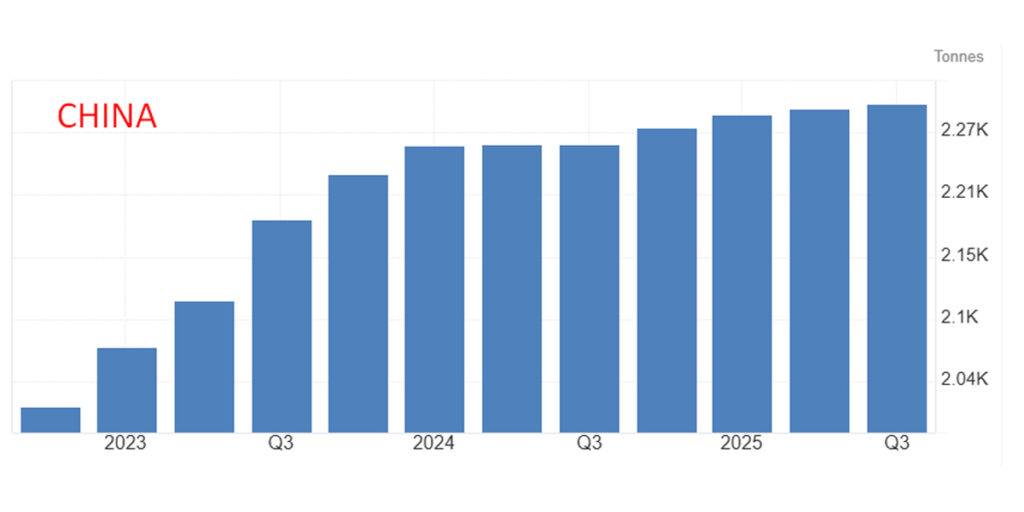
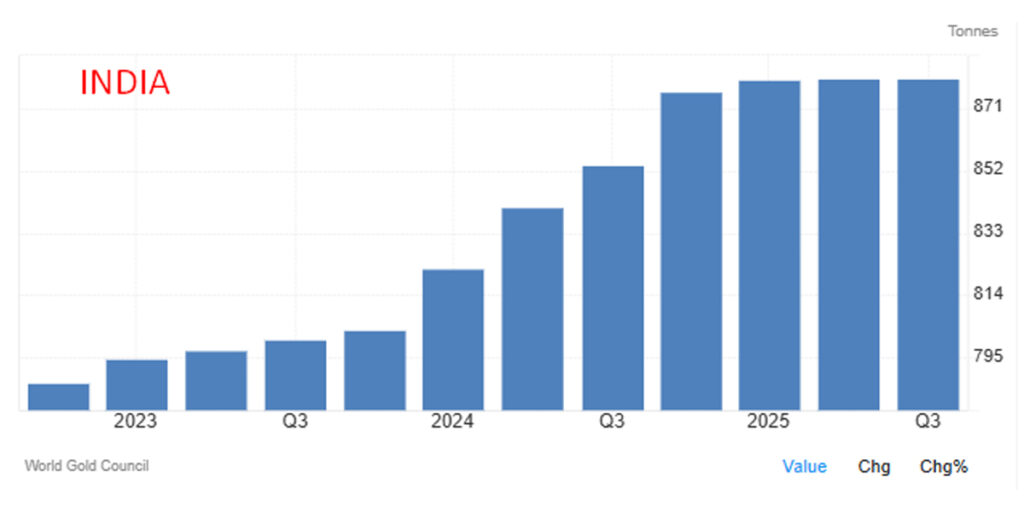
China and India are leading this trend! China now holds 2,303.5 tonnes of gold, continuing its multi-month accumulation streak, while India has boosted its reserves to 880.18 tonnes, the highest in its history. This strong institutional demand creates upward pressure on global gold prices, as central banks typically buy in large quantities and hold for long periods, reducing available supply in the market.
The reason behind this surge is strategic: central banks buy gold as a hedge against inflation, a buffer against currency volatility, and a way to diversify away from reliance on the US dollar. With rising geopolitical tensions, fluctuating global currencies, and long-term economic uncertainty, gold acts as a safe and stable asset that strengthens national financial security. As more central banks accumulate gold, the sustained demand continues driving prices higher worldwide, including in India.
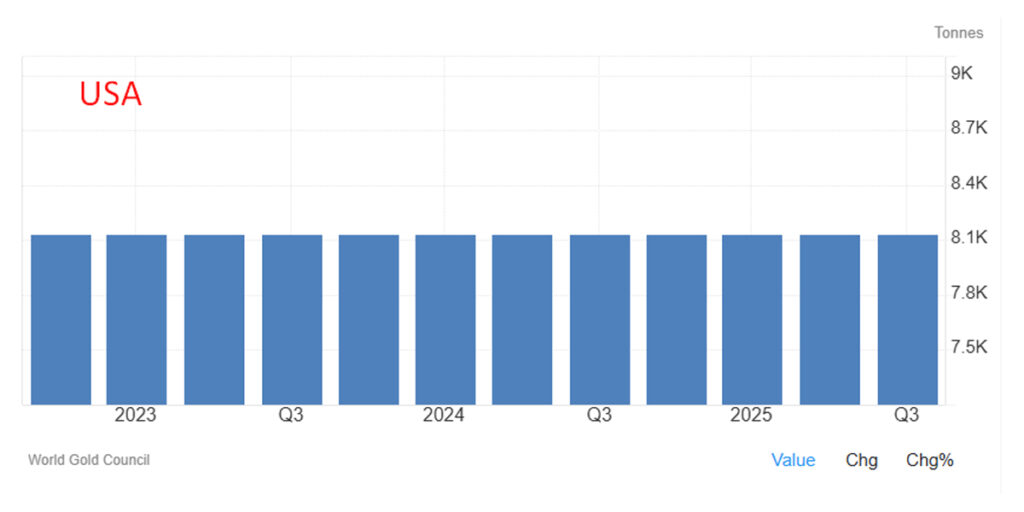
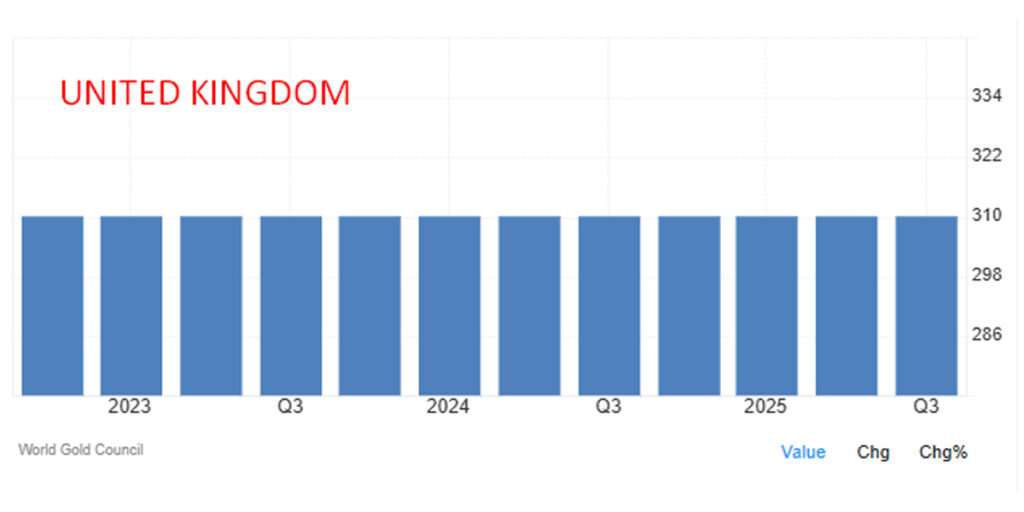
While China and India are leading the buying wave, several major economies continue to hold large and stable gold reserves, contributing to long-term price stability. The United States remains the world’s largest holder with 8,133 tonnes, followed by Russia with 2,329 tonnes, both maintaining steady levels.
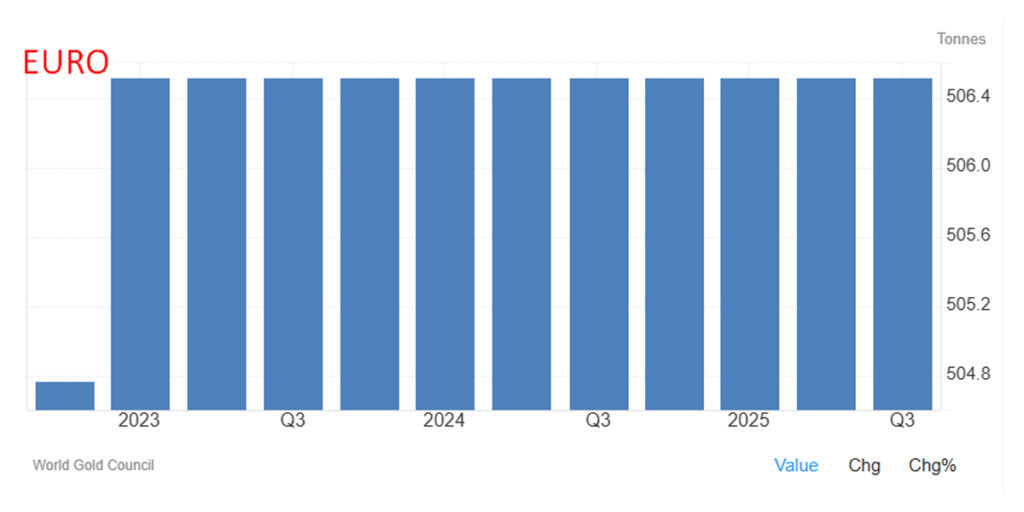
The Euro Area and the United Kingdom have also kept their holdings largely unchanged, signaling continued confidence in gold as a core reserve asset. This combination of aggressive accumulation from emerging giants and stable reserves from Western economies highlights a global shift: central banks are treating gold as an essential pillar of financial security.
Why does the RBI focus on increasing gold reserves?
Diversification and De-dollarization:
The RBI aims to diversify its foreign exchange reserves and gradually reduce reliance on the US dollar. Gold provides long-term stability because it isn’t tied to the performance of any single currency. This becomes especially important during periods of global economic uncertainty or sharp movements in the dollar’s value.
Hedge Against Inflation:
Gold is widely recognized as a strong hedge against inflation. When currency values weaken due to rising prices, gold typically maintains or even grows its value. This helps protect the purchasing power of India’s foreign reserves during inflationary phases.
Safe-Haven Asset:
Gold is considered one of the safest assets during global financial stress, geopolitical tensions, or war-driven volatility conditions. A robust gold reserve acts as a shield for the economy in times of crisis.
Confidence Building:
A sizable gold reserve strengthens global confidence in the Indian economy. It signals financial stability, prudent reserve management, and long-term resilience, factors that can attract more foreign investment and improve India’s economic credibility.
International Transactions:
Although less common today, gold still plays a role in international settlements. Maintaining substantial gold reserves gives India the flexibility to conduct transactions or settle obligations with other nations, even in situations where the rupee may not be preferred or accepted.
Implications for Indian Traders & Investors
The sustained rise in gold prices carries meaningful implications for Indian traders and investors. Gold continues to be one of the most dependable hedging instruments during periods of economic or market volatility, providing protection when risk assets fluctuate sharply. It also plays an essential role in portfolio diversification, helping balance exposure to equities, currencies, and other higher-risk instruments.
While short-term corrections or profit-booking phases may occur, the long-term demand outlook remains strong, supported by persistent central bank accumulation, ongoing geopolitical uncertainty, and India’s own cultural and investment-driven appetite for gold.
For those aiming to protect wealth or reinforce stability in their portfolios, gold stands out as a strategic, resilient, and future-ready choice.
Trade Gold with VT Markets
There has never been a better time to trade gold, as it’s gaining global momentum. VT Markets gives traders the tools, technology, and insights needed to trade smarter.
In a world where market conditions change quickly, you deserve a platform that keeps you ahead.
Open your account today and experience a new standard of trading.








