






Key Takeaways
- Warsh is reshaping the Fed, not just its interest rate policy. His focus on shorter statements, less forward guidance, and greater discretion marks a significant shift in how the central bank communicates.
- Less guidance gives the Fed more flexibility. By avoiding detailed commitments, Warsh has greater room to change policy as economic conditions evolve without being tied to previous projections.
- Markets may face higher uncertainty. With fewer policy signals from the Fed, investors should expect greater volatility around economic data releases and FOMC meetings.
- Gold faces a two-stage outlook. A hawkish Fed and higher real yields remain a short-term headwind, but any loss of confidence in the Fed’s independence or transparency could become a powerful long-term catalyst for gold.
- The biggest risk is credibility. If Warsh’s reforms strengthen confidence in the Federal Reserve, gold could remain under pressure. If they instead fuel concerns that monetary policy is becoming more political, demand for gold as a safe-haven asset could accelerate.
The latest FOMC meeting may have revealed more than the Federal Reserve’s interest-rate outlook. It also offered the clearest glimpse yet into how Fed Chair Kevin Warsh intends to reshape the central bank.
Markets initially focused on the decision to leave rates unchanged and the debate over inflation. However, the bigger story may lie in how the Fed now communicates policy. Shorter statements, less forward guidance and a more discretionary approach suggest Warsh is changing not just monetary policy, but the framework behind it.
That matters because the way the Fed communicates today could determine how easily it changes direction tomorrow. For individuals navigating macro shifts, masterfully timing entries requires a strong grasp of foundational precious metal trading strategies. For gold investors, understanding Warsh’s next move may prove just as important as predicting the next rate cut.
Warsh’s Vision for a Different Federal Reserve
Kevin Warsh did not enter the Federal Reserve chairmanship as a blank slate. Before becoming Fed Chair, his message was already clear. He believed the Fed had become too interventionist, too dependent on forward guidance, and too willing to protect markets from volatility. His old argument was that inflation is ultimately a central bank responsibility, that credibility matters, and that the Fed should not become the permanent rescuer of the economy.
Since becoming Fed Chair, that core message has not changed. Warsh has not suddenly turned from dove to hawk or from reformer to defender of the old system. The change is more about power and execution. Before, he criticised the Fed from the outside. Now, he is using the chairmanship to reshape it from the inside.
What Changed After Warsh Took Over
The biggest change is not his inflation view. It is his operating style.
Warsh has moved quickly to reduce the Fed’s dependence on forward guidance, shorten the policy message, and make the central bank less predictable. He has also chosen not to anchor markets with his own dot plot projection.
This became entirely concrete on July 8, 2026, with the release of the FOMC minutes. The minutes also reinforced Warsh’s preference for limiting forward guidance, with the policy statement shortened considerably and offering fewer signals about the future path of interest rates. Reflecting Warsh’s demand for concise messaging, the resulting official policy statement was slashed to about a third of its typical length.
This makes Warsh look independent and hawkish in the short term. He is telling markets that the Fed will not promise rate cuts, will not guide every meeting in advance, and will not soften its inflation message just because growth concerns appear. This increased macro unpredictability highlights why tactical flexibility and sound trade risk management tips are becoming essential for modern portfolios. That is why markets initially read him as bad news for rate-cut hopes.
How Warsh Is Strengthening The Chair
Warsh’s reforms may sound technical, but they matter because they shift more power toward the Fed Chair.
Under the previous Fed style, investors relied on forward guidance, detailed policy statements, dot plots, and speeches from different Fed officials. This gave markets many signals to follow. It also limited how freely the chair could move, because any major policy shift had to be explained against what the Fed had already guided before.
Warsh is moving away from that model. In a history-making defiance of standard Fed transparency, Chair Warsh refused to submit an individual rate projection for the 2026 dot plot. He is the first Fed chair to entirely withhold a projection since the tool was introduced in January 2012.
By completely removing his own dot from the plot and shrinking statements to a fraction of their original length, he gives himself ultimate room to decide policy meeting by meeting. When the machinery of the institution speaks less, the chair’s voice becomes the only one that truly matters.
Why Investors May Still Think Trump Gets What He Wants
This is where politics become unavoidable. Even if Warsh sounds independent today, investors cannot ignore how he got the job. He was chosen by Trump, and markets know Trump wants lower rates, stronger growth, and a Fed that is less resistant to his economic agenda.
The July 8 minutes revealed a deeply fractured central bank. While the committee voted unanimously to hold the benchmark interest rate steady at 3.50%–3.75%, individual participants are intensely divided. Nine out of the 18 participants now project at least one more rate hike before the end of the year, while eight project a hold, and only one expects a cut. This split occurs alongside a sharp staff revision to the Fed’s Summary of Economic Projections, which hiked 2026 core PCE inflation expectations to 3.3% (up from 2.7%) while trimming GDP forecasts.
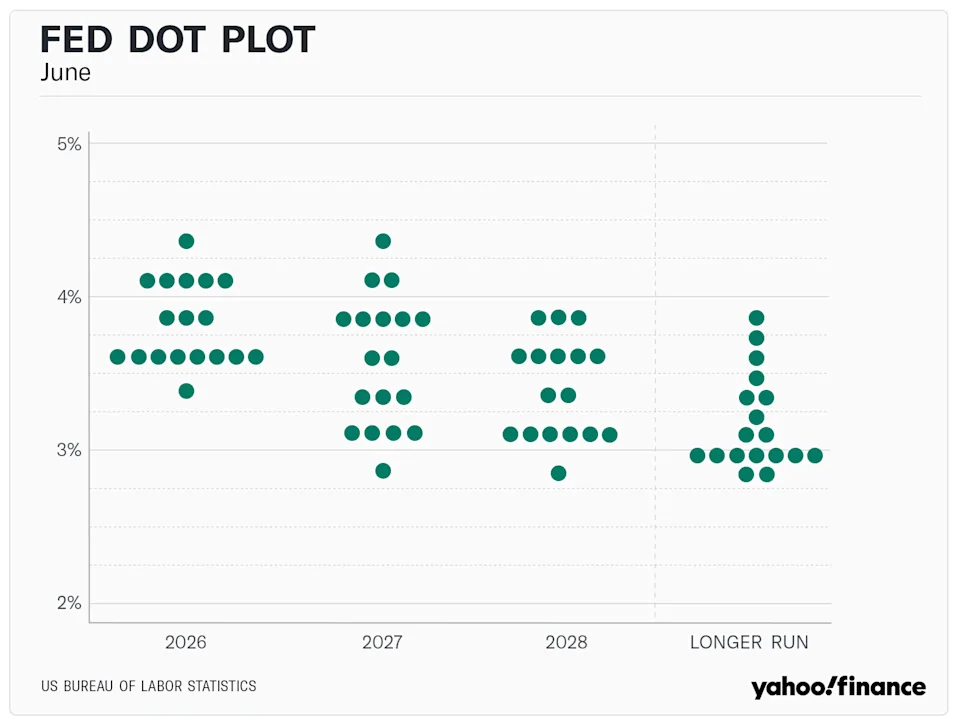
Warsh may not give Trump immediate rate cuts in an environment with sticky 3.3% core inflation. However, the structure he is building could still give him a way to deliver what Trump wants later.
If forward guidance is entirely removed and the dot plot is rendered useless by the chair’s refusal to participate, markets have fewer institutional signals to hold him against. When the time comes, Warsh can execute a massive pivot without contradicting any previous promises, justifying it as an agile, data-driven decision rather than a political one.
What This Means For Gold
For gold, the impact of Warsh’s stronger chairmanship has two stages.
In the short term, it is negative for gold. The July 8 minutes perfectly illustrated this pressure. As the minutes exposed a hawkishly split committee leaning toward further “policy firming” to battle elevated inflation, the market reacted immediately. Gold fell 0.75% to trade at $4,075, sitting roughly 27% below its January all-time high of $5,589. Higher inflation expectations coupled with a Fed willing to raise rates drive up real yields, making non-yielding gold less attractive. For those tracking these intraday swings, keeping an eye on a live XAU/USD price forecast and gold trading analysis is crucial to managing short-term exposures.
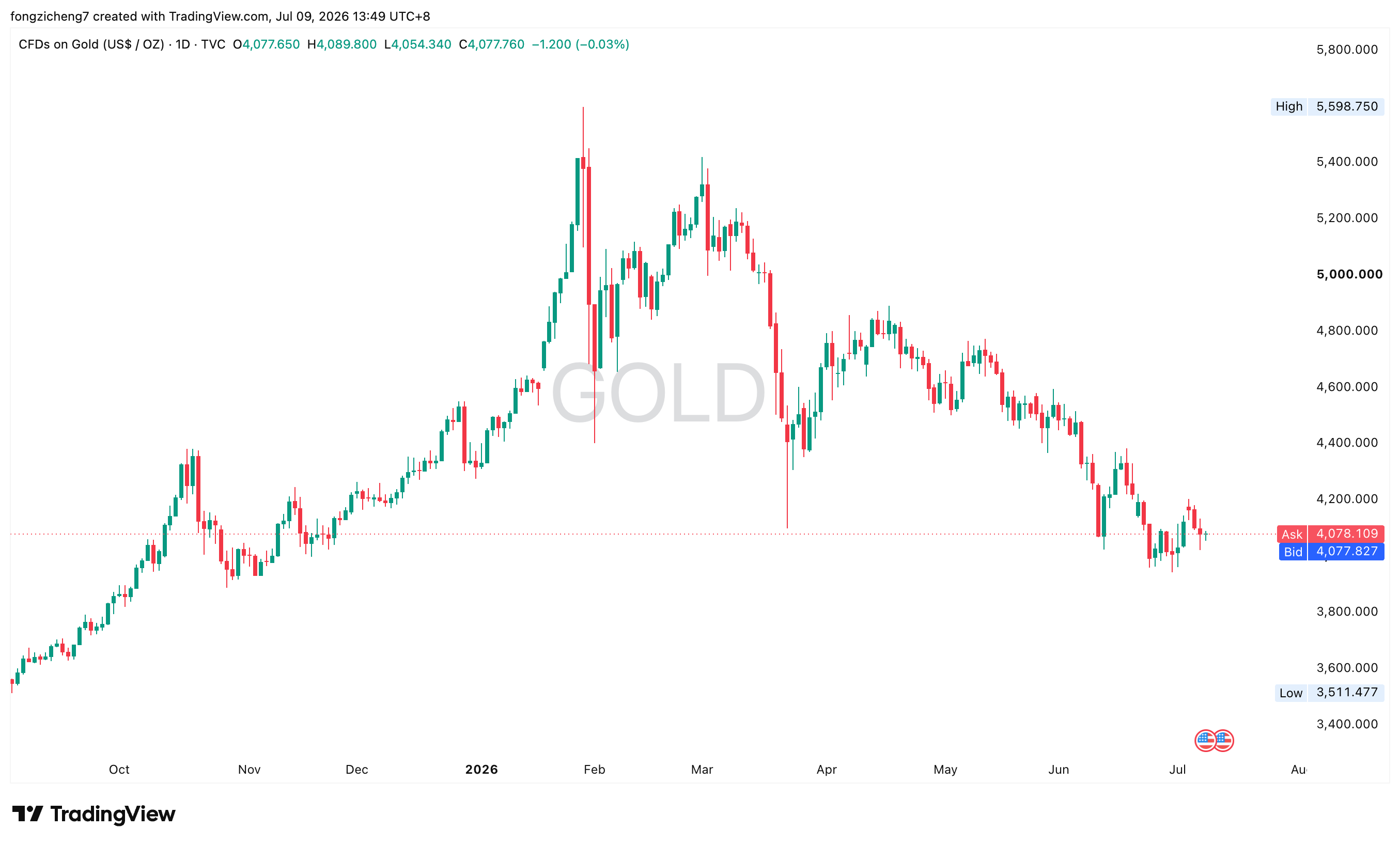
The medium-term risk is different. If investors start to believe that Warsh’s reforms make the Fed less transparent, more discretionary, or easier to steer toward Trump’s preferences, gold will aggressively recover.
In that scenario, gold is no longer just trading inflation metrics or immediate rate cuts. It is trading confidence in the system itself. Warsh is bearish for gold if his opaque, tight-lipped framework successfully restores Fed credibility — but he will be wildly bullish for gold if his concentrated power makes the central bank look entirely political. Investors looking to hedge against these systemic risks can prepare by reviewing the ultimate guide to gold investing strategies to protect capital over longer horizons.
The Big Questions
What is the current federal funds rate following the latest FOMC meeting?
The Federal Open Market Committee voted unanimously to keep the benchmark interest rate target steady at 3.50% to 3.75%. Despite this unanimous pause, underlying policy minutes reveal a heavily fractured committee where nine out of 18 participants project at least one more rate hike before the end of 2026 due to sticky consumer price risks.
How is Fed Chair Kevin Warsh changing central bank communication?
Fed Chair Kevin Warsh is shifting the central bank toward a highly discretionary, unscripted operational framework by scaling back traditional market hand-holding. He has executed this shift by dramatically shortening the official FOMC policy statement to roughly a third of its typical length and completely withholding his individual interest rate projection from the dot plot, making him the first Fed Chair to do so since the tool was introduced in 2012.
Why does a shorter FOMC statement matter to macro investors?
By stripping out exhaustive forward guidance and detailed economic projections, the Federal Reserve minimizes its commitments to future policy paths. This intentional institutional silence concentrates decision-making authority directly in the hands of the Chair, granting maximum agility to shift monetary policy abruptly during future meetings without breaking prior promises to the market.
How do the July FOMC minutes impact the price of gold?
The immediate market reaction to the July minutes is bearish for gold, pulling prices down 0.75% to trade at $4,075, which sits roughly 27% below the January all-time high of $5,589. This near-term downward pressure is driven by an upward revision in core PCE inflation expectations to 3.3% and a hawkishly split committee, both of which push up real yields and diminish the appeal of non-yielding assets.
Is the Warsh Fed framework bullish or bearish for gold in the long term?
The long-term outlook depends entirely on market perception of the central bank’s independence. If Warsh’s opaque, discretionary approach successfully reins in sticky inflation and restores Fed credibility, it remains fundamentally bearish for gold over the long horizon. Conversely, if concentrated power leads investors to believe the central bank has compromised its autonomy to favor political agendas, it will be wildly bullish, sparking an aggressive safe-haven rally back into gold as a systemic hedge.
Start trading now — click here to create your real VT Markets account.








