






Key Points
- SPCX revenue rose 161% year on year to $14.58 billion, above pre-earnings estimates of $12.7 billion–$12.9 billion.
- Adjusted EBITDA reached $8.81 billion against expectations of around $6.6 billion.
- Super Intelligence was the largest revenue segment, contributing $7.56 billion.
- Q4 capital expenditure could reach $35 billion–$40 billion as infrastructure investment accelerates.
SpaceX’s third-quarter revenue rose 161% year on year to $14.58 billion, exceeding pre-earnings estimates of $12.7 billion–$12.9 billion as its AI business expanded.
The company also posted its first quarterly profit since listing, with net income of $4.40 billion. Adjusted EBITDA reached $8.81 billion, above expectations of around $6.6 billion.
Beyond the headline earnings beat, the revenue mix and Starlink’s operating performance offer a clearer picture of the company’s progress.
Why Traders Are Watching SpaceX
Super Intelligence generated $7.56 billion, accounting for just over half of quarterly revenue. Connectivity contributed $5.25 billion and space operations added $1.77 billion. All three segments exceeded the pre-earnings estimates used in this analysis, although AI’s growing contribution makes demand for computing capacity increasingly important to the outlook.
Within connectivity, Starlink’s performance was more mixed. Subscribers increased to 13.6 million from 12.0 million in Q2, falling short of some forecasts. Monthly revenue per customer improved to $69 from $66, but remained below $83 a year earlier as the service expanded into lower-price markets.
Q3 capital expenditure reached $19.59 billion, including $16.44 billion for AI, and management indicated Q4 spending could reach $35 billion–$40 billion. The pace of customer adoption and capacity utilisation will help determine how quickly that investment starts to pay off.
Key Trading Levels
| Price Level | What Traders Are Watching |
| $172.63 | October high and next upside reference above $158.02 |
| $158.02 | Immediate resistance and key breakout level |
| $140.56 | First support level |
| $131.34 | Next downside reference below $140.56 |
| $107.17 | Deeper support reference if selling extends |
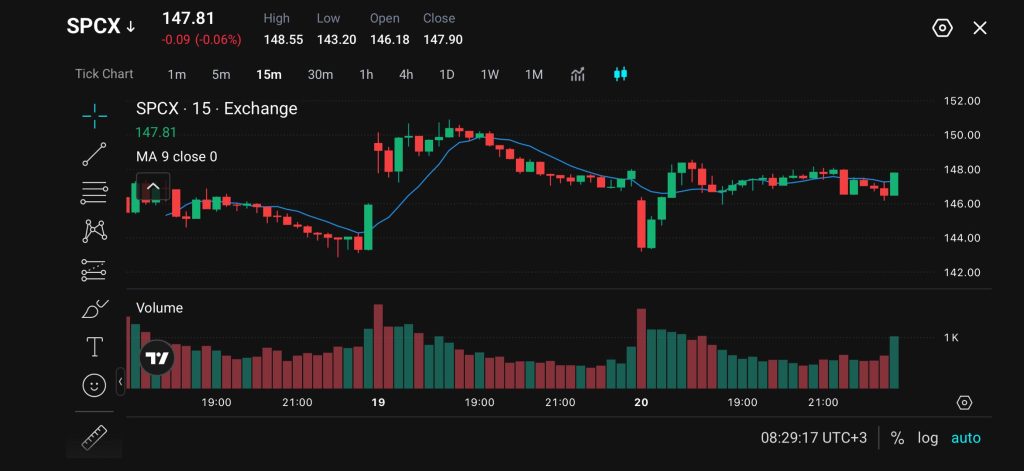
The $158.02 level marks the resistance threshold buyers need to reclaim to strengthen the recovery. Move above $172.63 represents the October high and the next reference for assessing whether shares can regain their earlier peak.
On the downside, $140.56 is the first support level where buying interest may emerge. $131.34 provides the next support reference if that level fails, while $107.17 becomes relevant in a deeper correction.
Bullish and Bearish Setups
| Setup | Trigger | Potential Market Reaction |
| Bullish Breakout | Sustained move above $158.02, followed by a successful hold | Shares could recover towards $172.63 |
| Range Consolidation | Hold between $140.56 and $158.02 | Shares may consolidate as investors assess the outlook |
| Bearish Rejection | Fail near $158.02 and retreat | Attention could return to $140.56 |
| Bearish Breakdown | Sustained break below $140.56 | Selling could extend towards $131.34 |
| Deeper Correction | Sustained break below $131.34 | Shares could move towards $107.17 |
The bullish case depends on buyers defending $158.02 after a breakout. A successful hold above this level could support a recovery towards $172.63, particularly if investors remain confident in AI growth despite higher spending.
The bearish case strengthens if shares fall below $140.56, bringing $131.34 into focus. Further weakness could expose $107.17 if concerns over infrastructure spending or slower growth outweigh the earnings beat.
Disclaimer
The price levels and market scenarios above reflect the author’s view at the time of writing and do not represent financial advice or an official recommendation from VT Markets. Traders should conduct their own analysis and manage risk carefully.
What to Watch Next
Upcoming company updates and policy decisions could shape how investors assess SpaceX’s outlook.
Key developments include:
- Tesla Q3 Results (21 October): Possible effects on sentiment towards Musk-related companies and growth stocks.
- SpaceX–Tesla Merger Discussions: Special committees are exploring a potential transaction, but no terms have been agreed and a merger is not assured.
- Federal Reserve Meeting (27–28 October): Interest-rate expectations could influence growth-stock valuations and financing conditions.
- AI Execution: Updates on capacity, new cloud customers and monetisation will help investors assess returns on spending.
- Wider AI Sentiment: Developments involving CoreWeave and Oracle may influence confidence in capital-intensive infrastructure businesses.
Frequently Asked Questions
Did SpaceX beat Q3 2026 expectations?
Yes. SpaceX reported revenue of $14.58 billion, above pre-earnings estimates of $12.7 billion–$12.9 billion. Adjusted EBITDA reached $8.81 billion, exceeding expectations of around $6.6 billion.
Why is AI important to SpaceX’s outlook?
Super Intelligence generated $7.56 billion in Q3 revenue, accounting for just over half of total sales. As SpaceX invests heavily in AI infrastructure, future performance will increasingly depend on customer demand and the returns generated by that investment.
Did Starlink miss subscriber expectations?
Starlink reached 13.6 million consumer subscribers, below some forecasts of 14.2 million–14.3 million. However, estimates varied across providers. Subscriber numbers still increased from 12.0 million in Q2.
What are the key SPCX trading levels?
The main upside levels are $158.02 and $172.63. A sustained hold above $158.02 could support a move towards $172.63. On the downside, a break below $140.56 could bring $131.34 into focus, followed by $107.17 if weakness continues.
Is a SpaceX–Tesla merger confirmed?
No. Both companies have formed special committees to explore a potential transaction, but no terms have been agreed. The discussions do not guarantee that a merger will proceed.
Start trading now — click here to create your real VT Markets account.



