






For two years, Salesforce has been answering a difficult question: could AI make traditional software less valuable? On Wednesday, the market appeared to accept its answer.
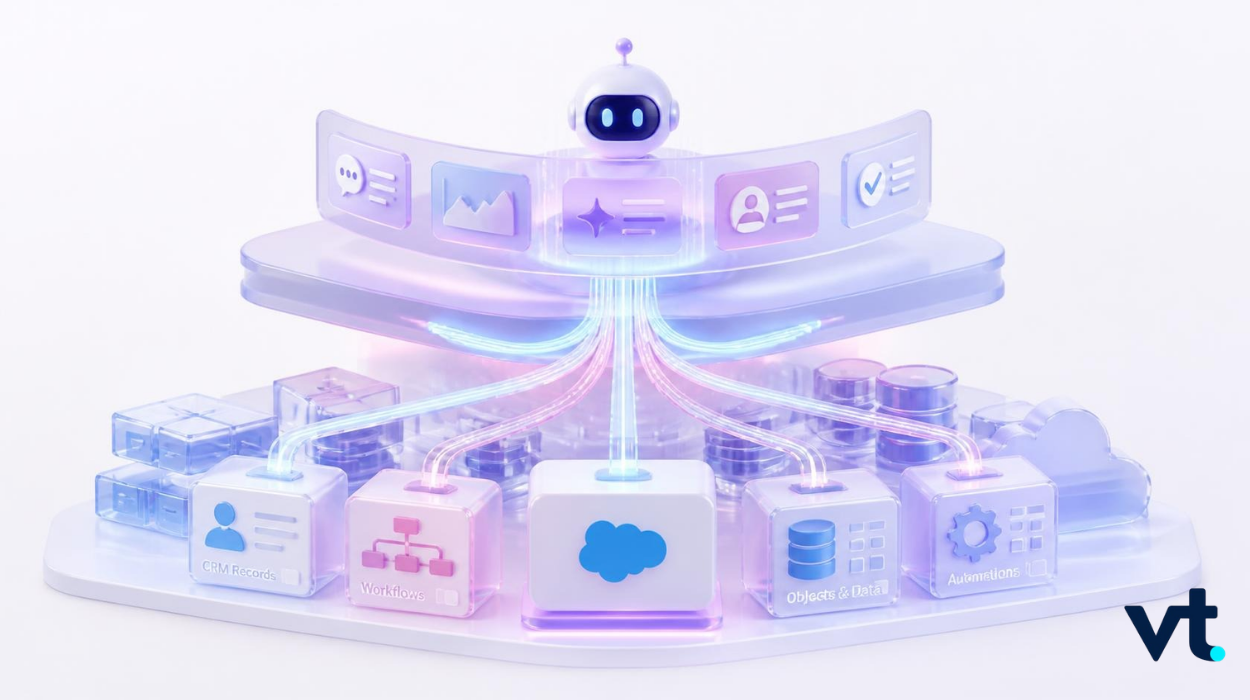
The company announced Claudeforce, an expanded partnership with Anthropic that places Salesforce data, workflows and permissions inside Claude. The move pushed CRM shares higher in extended trading and shifted attention from whether AI would disrupt Salesforce to whether Salesforce can capture value inside the AI era.
The announcement arrived alongside second-quarter results, sending CRM shares higher by around 14% in extended trading. Marc Benioff used the moment to push back against the idea of a SaaS downturn otherwise termed ‘Saaspocalypse; arguing that AI agents will expand rather than weaken Salesforce’s role.
The more important detail was not the partnership itself. It was the direction of the move. Salesforce did not build a competing AI interface. It moved into someone else’s.
That decision addresses one of the biggest concerns surrounding traditional software companies: if AI agents become the new way people interact with technology, does owning the interface still matter?
Salesforce is betting that the answer is no. Its data, workflows and governance may remain valuable even when the screen belongs to someone else. That argument is plausible. It is also unproven.
What Claudeforce represents
Claudeforce launches as a plugin connecting Claude with Salesforce workflows, offering 37 prebuilt sales skills that allow users to draft emails, update records and complete related actions directly from the chat interface.
The setup is designed around enterprise control. Administrators manage authentication and permissions centrally, allowing sellers to access approved workflows without individual configuration.
The partnership also builds on existing integration work. Claude already operates within Agentforce, while Salesforce and Anthropic have expanded collaboration through Slack and Model Context Protocol integrations.
The product itself was not created purely as a strategic partnership exercise. Anthropic’s own sales team encountered workflow challenges while using Salesforce through Claude, which eventually became the foundation for a broader product.
A broader shift of AI adoption is beginning to reshape how software is consumed, and Salesforce is positioning itself inside that transition rather than resisting it. A common theme for many companies as we have seen in the past year. Explore how legacy softwares, Shopify and Allbirds entered the AI race.
The tension underneath the rally
Salesforce built its business around owning the place where sales teams work. The concern entering 2026 was that AI agents could make that interface less important, weakening the value of traditional per-seat software.
Claudeforce accepts that possibility and attempts to benefit from it.
If users interact with Salesforce through AI agents rather than Salesforce’s own interface, the company argues that usage of its underlying platform could increase because the data, permissions and workflows remain essential.
The strategic shift is straightforward:
Salesforce is moving from owning the destination to becoming the infrastructure behind the destination.
That creates a new opportunity, but it also changes the economics. A company that provides the trusted data layer inside another platform does not necessarily hold the same pricing power as the company controlling the customer-facing experience.
Why CRM stock rebounded on the AI shift
Salesforce entered earnings with investors focused less on profitability and more on whether growth could recover. The stock had fallen significantly from previous highs as concerns grew that AI could pressure traditional SaaS economics.
Before earnings, CRM traded at a discount to broader software valuations, reflecting uncertainty around future growth. The quarter gave investors a reason to reconsider.
| Metric | Q2 FY27 |
| Revenue | $11.35bn, up 11% year on year |
| Net income | $3.53bn, up 87% year on year |
| Free cash flow | $1.10bn, up 81% |
| Agentforce ARR | Above $1.5bn, up more than 240% year on year |
| FY27 revenue guidance | Raised to $46.1bn–$46.4bn |
The stock sat 43% below its all-time highs on a $171 billion market cap, with an average analyst target of $252 against a share price near $209. It traded at roughly 14.8 times forward earnings against an industry average closer to 23.
The strongest signal was not simply the earnings beat. It was evidence that AI usage is expanding.
Salesforce reported 7.0 billion Agentic Work Units delivered to date, with 3.2 billion generated in the second quarter alone. Slack also recorded stronger adoption, with Slackbot users increasing more than 150% quarter on quarter.
For an AI platform transition, usage growth matters because adoption usually comes before monetisation.
Headline gains were not entirely operational
The market reaction focused on the upside, but several details require closer examination.
Salesforce’s reported improvement included factors beyond core operations:
- Net income: A $2.6bn gain from strategic investments, including Anthropic exposure, boosted headline earnings
- EPS guidance: The increase reflects more than operating improvement alone
- Balance sheet: A $25bn debt-funded buyback increased leverage and reduced free cash flow growth expectations
The quarter still showed a healthy operating performance, with revenue growth and improving AI adoption. However, the magnitude of the earnings improvement should not be interpreted entirely as a business transformation.
What to discern is Salesforce’s long-term valuation. Whether it depends on whether AI creates stronger operating economics, not only stronger financial results.
The price of moving Inside someone else’s Interface
Salesforce is now in an unusual position.
It is both a major investor in Anthropic and a distribution partner for Anthropic’s interface.
That creates clear benefits. The partnership strengthens Salesforce’s AI position, provides exposure to a leading AI ecosystem and allows its customers to access new workflows.
But it also highlights the company’s strategic challenge.
If AI interfaces become increasingly interchangeable, Salesforce’s data and governance layer could become more valuable. However, if customer relationships increasingly move toward AI providers, the company may have less control over the experience that historically supported software pricing power.
The success of this strategy depends on whether infrastructure ownership can capture enough value when the interface belongs to someone else.
Signals for Salesforce’s next move
The next phase of the story will depend on whether AI adoption begins translating into broader business momentum.
- cRPO growth on the Q3 print: Management has tied second-half reacceleration to it, which makes it the cleanest read on whether the story is converting.
- The composition of Agentforce ARR. Effective this quarter, that figure now includes Slackbot and Headless 360. Growth from a widened definition is not the same as growth from adoption.
- Balance sheet impact: Determines whether capital returns affect future flexibility
Market participants will also watch whether the post-earnings move holds after the initial repricing. A large gap higher often shifts attention from the announcement itself to whether expectations can continue being met.
Market will assess next phase
Salesforce has provided a convincing response to one major concern: AI does not necessarily make SaaS companies irrelevant. By placing its data, workflows and governance inside Claude, Salesforce has shown that its value may extend beyond the traditional software interface.
The remaining challenge is economic.
The company still needs to prove that being the trusted layer behind AI agents can create durable value comparable to owning the workflow itself. The latest quarter showed stronger adoption and renewed investor confidence, but it also included investment gains, higher leverage and expectations for future acceleration.
Salesforce answered whether AI would erase its relevance. The next earnings cycles will determine how much that relevance is worth.
Interested in tracking price movements for Salesforce x Anthropic? Download the VT Markets app to monitor real-time price action on CRM and other CFD Shares.
Tap for Trader’s Recap!
What is Claudeforce and why is it important for Salesforce?
Claudeforce is Salesforce and Anthropic’s integration that brings Salesforce data, workflows and permissions into Claude, allowing users to complete sales tasks through AI.
Why did Salesforce shares rise after announcing Claudeforce?
Investors viewed the partnership as evidence that Salesforce can benefit from AI adoption rather than being disrupted by it.
Does Claudeforce solve the AI threat facing Salesforce?
It addresses concerns that AI could reduce the value of traditional software interfaces, but Salesforce still needs to prove the long-term economics of this shift.
What are investors watching after Salesforce’s latest earnings?
Investors are watching AI adoption, Agentforce revenue quality, cRPO growth and whether improved results translate into sustainable operating growth.
What is the biggest risk for Salesforce’s AI strategy? The challenge is whether Salesforce can capture enough value as AI interfaces become more important while maintaining the pricing power of its traditional software model.
Start trading now — click here to create your real VT Markets account.








