






At a Glance:
- Copy trading lets beginners automatically mirror the trades of experienced traders in real time.
- Set copy mode, investment amount, and risk level anytime with just a few taps.
- Copiers can choose from thousands of providers and follow multiple providers to diversify their portfolio.
- VT Markets offers copy trading from as low as USD 10.
What Is Copy Trading?
Copy trading is an automated system where you automatically mirror another trader’s positions in real time within your own account. When the trader opens, modifies, or closes a trade, the same action is replicated proportionally in your account.
This allows you to take part in the markets even if you lack the time or skills to analyse charts yourself. For beginners exploring copy trading, understanding this fundamental mechanism is the first step.
Unlike self-directed trading, you don’t do all the research or place trades on your own. Instead, you choose experienced traders to copy, while still controlling how much money you allocate and when to stop copying. The trade execution itself is automatic.
For example, if a trader opens a EUR/USD buy trade using 2% of their account, your account will also open a EUR/USD buy trade using 2% of the funds you’ve assigned to copy them. While the market, direction, and percentage risk are matched, the actual trade size depends on your account balance.
Why Beginners Should Start Copy Trading
Copy trading offers beginners a structured method to enter the markets while learning on the go. Instead of spending months mastering charts, strategy building, and risk rules before placing your first trade, you can gain real market exposure, follow experienced traders, then use what you see to build your own decision-making skills over time.
Learn Faster Through Real Trades
Trading books and videos helps. However, watching how an experienced trader manages live positions teaches you the “how” behind the theory. These include entries, position sizing, exits, and risk control, relieving you from having to guess from scratch.
Start With Structure, Not a Blank Chart
For many newcomers, the hardest part is knowing where to begin. Copy trading reduces getting overwhelmed early. It allows you to follow a guided approach rather than improvising every decision by yourself.
Understand Your Risk Tolerance Early
Markets are emotional. Copy trading helps you discover how you react to volatility, floating losses, and drawdowns. These are the insights that matter before you trade independently with full decision pressure.
Build Confidence Gradually
As you follow traders over weeks and months, you naturally pick up common setups, realistic return expectations, and better timing. Some copiers eventually transition into placing their own trades once they have developed enough consistency and confidence.
Choosing Copy Trading with VT Markets
VT Markets’ copy trading adapts to how you trade. As a copier, you can access the platform on both mobile app and desktop: choose from 1000+ traders and trade anywhere, anytime.
With VT Markets,
- You can begin copy trading from just USD 10. Choose top-performing traders, activate copying with a single tap, and watch automated trades execute in your account in real time.
- For new copiers, you can benefit from trading micro-lots starting from 0.0001 with lightning-fast execution in under 2 seconds. All this provides you with professional strategies accessible regardless of account size.
- You stay in control and can adjust risk settings like Stop Loss. You can choose multi-currency and different account-type options. You also get 3 copying modes, so it’s easy to diversify your portfolio. If your plans change, you can stop copying anytime.
Note: You can also opt to switch from a Copier to a Provider on VT Markets (if you are confident about your trading skills) and earn up to 50% profit-sharing income if your copiers make profits from trading.
How Do You Start Copy Trading Step-by-Step?
Understanding how copy trading works is simpler than most beginners expect. While platforms may differ in design and features, the underlying process is largely the same: you select a trader, allocate funds, and their trades are mirrored proportionally in your account.
Here’s a clear step-by-step breakdown of how copy trading works in practice:
1. Choose a Copy Trading Platform
Your first step is selecting a broker that offers built-in copy trading functionality. This determines:
- The markets you can access (forex, indices, commodities, or crypto CFDs)
- The execution speed and spreads
- The transparency of trader performance data
- The risk controls available to copiers
Many brokers now integrate copy trading services directly into popular platforms like MetaTrader 4 (MT4) and MetaTrader 5 (MT5), or offer proprietary mobile apps with built-in copy features. This integration makes it easier to manage your entire account from one place.
A reliable copy trading platform should also display transparent statistics for every trader you can follow. Look for:
- The provider’s profitability over the past months
- Maximum drawdown (the largest peak-to-trough decline)
- Trading style
2. Choosing the Right Provider
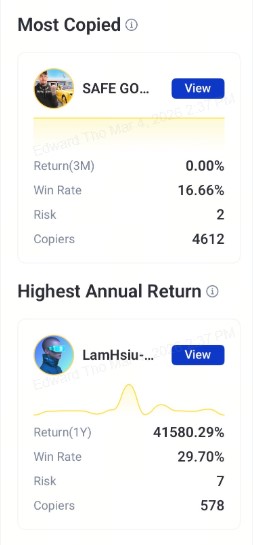
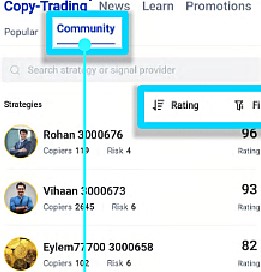
On the VT Markets app, copy trading is deliberately designed to be simple and user-friendly. Start by navigating to the ‘Discover’ tab and click on ‘Community.’ Here, you can sort the provider list using various metrics, such as Trading, Rating, and Return.
You can also customise filters based on your preferences, including time period and risk band. This feature makes it easy to find the right provider for your needs.
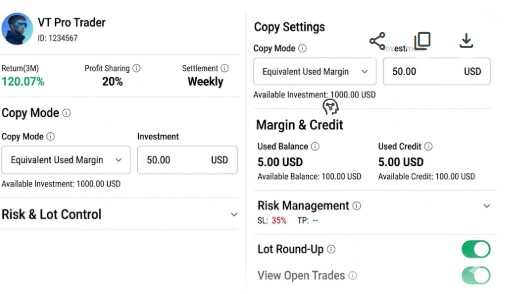
Once you click on a trader’s profile, you will be able to view their past performance, monthly risk band, profit-sharing ratio, and instruments traded.

3. Allocate Your Funds
After choosing a provider, you decide how much capital to allocate to copying their trades. Most platforms set minimums, often between $100 and $500, though this varies by broker and sometimes by individual provider. However, with VT Markets Copy Trading, followers can start copy trading with a minimum deposit of USD50, and some providers even allow followers to copy their trades from as low as USD10.
Copy trading uses proportional copying: if a provider risks 1% of their balance on a trade, you risk 1% of your allocated balance, regardless of actual account sizes. This scaling mechanism ensures your risk exposure matches the provider’s relative risk, not their absolute position sizes.
Example: You have a $200 trading account and allocate $50 (25% of your balance) to a single provider. When that provider opens a position using 5% of their equity, your account automatically opens a position using 5% of your $50 allocation, a $2.50 trade.
Practical guidelines for fund allocation:
- Avoid allocating more than 50% of your total trading capital to a single provider
- Plan to diversify across multiple traders from the start
- Only risk money you can genuinely afford to lose
4. Start Copying Automatically
Once copying is activated, the platform automatically opens, modifies, and closes trades on your behalf whenever the provider acts.
Eg. If they buy EUR/USD, your account automatically opens the same position. If they set a stop-loss or take-profit, yours adjusts accordingly. If they close, you close.
There may be small differences in execution prices due to spreads, latency, or different account types, but the direction and intent of each trade normally match. In fast-moving markets, slippage can occur. Therefore, your entry price might be slightly different from the provider’s trades, especially during high volatility events.
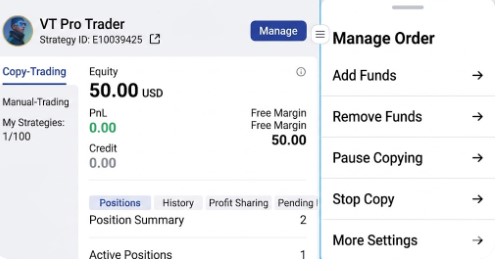
Some platforms offer semi-automatic approaches where you confirm each signal before execution, but most copy trading is fully automatic. Even in full automation, you typically retain the ability to:
- Close any individual copied trade manually
- Pause the copy relationship temporarily
- Stop copying a provider entirely
Execution quality varies by broker and market conditions. Liquid markets like major forex pairs generally execute smoothly, while less liquid markets or extreme volatility can cause more noticeable slippage.
Ongoing Monitoring and Risk Management
Although copy trading is a fully automated trading solution, it still requires oversight. We recommend that you review results regularly, weekly at minimum, with deeper monthly reviews of each provider’s performance.
Practical control tools available on most platforms include:
- Flexibility to stop, adjust, and reassign capital instantly
- Reduce or increase your allocation
- Set maximum loss limits per provider (stop-copy thresholds)
- Close all open copied positions manually
Watch for warning signs that suggest it’s time to reconsider a copy relationship:
- Extended periods of large drawdowns
- Deviation from the provider’s originally stated strategy
- Long stretches without any trading activity
Compare ongoing provider behaviour against what they claimed in their profile. A conservative swing trader who suddenly starts scalping with high leverage is no longer the trader you initially selected.
The bottom line: your account, your responsibility. Even when someone else makes trading decisions, you remain accountable for managing risk parameters on your own account.
FAQs
- What is the minimum amount to start copy trading with VT Markets?
You can start copy trading from as low as USD 10, depending on the provider you choose. However, a higher balance allows better diversification across multiple providers, which can help manage risk more effectively. Always trade with capital you can afford to lose.
- Can I control my risk while copy trading?
Yes. You remain in full control of your account. With VT Markets, you can:
- Set your investment amount per provider
- Adjust or reduce allocation anytime
- Pause or stop copying instantly
- Manually close copied trades
Copy trading is automated, but risk management decisions remain yours.
- How do providers earn money on VT Markets?
Strategy providers can earn up to 50% profit-sharing from copiers, depending on their performance structure. Performance fees are only paid when profits are generated, aligning incentives between providers and followers. Always review a provider’s fee terms before copying.
- Is copy trading guaranteed to be profitable?
No. Copy trading carries the same market risks as independent trading.
Even experienced providers experience drawdowns, and past performance does not guarantee future results. Profitability depends on market conditions, risk management, and realistic expectations.
- Can I switch from copier to provider?
Yes. If you are confident in your trading strategy, you can apply to become a provider and allow others to copy your trades. This flexibility allows traders to evolve within the same ecosystem as their experience grows.
- Is copy trading completely passive?
Copy trading reduces the need for daily chart analysis, but it is not “set and forget”. You should monitor performance regularly, review drawdowns, and adjust allocations when necessary. Staying engaged helps protect your capital.
Kickstart Your Copy Trading Account Journey
Whether you’re a complete beginner taking first steps beyond demo trading, an experienced trader testing new approaches, or someone with limited capital seeking gradual market exposure, copy trading accounts offer compelling advantages.
VT Markets provides real environmental experiences with lower risk profiles, creating ideal conditions for gaining experience without the threat of significant losses.
The key to maximising copy trading account benefits lies in approaching them with the same professionalism you’d apply to managing substantial portfolios. With VT Markets, you get copy trading accounts that mirror standard trading conditions, helping you build confidence and skills that scale with you.








