






Overview
- US Treasury yields remain the dominant market theme as investors reassess inflation expectations, government borrowing and long-term interest rate outlook.
- The Federal Reserve, Bank of England and Bank of Japan headline a busy central bank calendar, while US GDP and Core PCE inflation data could reshape expectations for interest rates.
- Oil prices continue to influence inflation expectations, adding another layer of uncertainty for policymakers and risk assets.
- Traders should closely monitor bond yields, US dollar strength and key technical levels across gold, major currency pairs and equity indices.
Market Outlook: Bond Markets Take Centre Stage
The bond market has become the primary driver of global market sentiment after the US 30-year Treasury yield extended its longest run above 5% since 2007. At the same time, the benchmark 10-year Treasury yield climbed towards 4.68%, reflecting persistent concerns over inflation, expanding government debt and the long-term sustainability of US fiscal policy.
Equity markets have remained resilient throughout rising geopolitical tensions and elevated oil prices, largely supported by continued optimism surrounding artificial intelligence and corporate earnings. Even so, higher borrowing costs are beginning to test whether equity valuations can continue to justify current levels.
Unlike previous periods of market uncertainty, investors have not rushed into long-term US government bonds. Treasury yields have continued to rise despite ongoing geopolitical risks, suggesting inflation concerns and increasing government borrowing requirements outweigh the traditional demand for safe-haven assets.
Although Treasury yields above 5% inevitably draw comparisons with 2007, the current backdrop differs substantially. The previous cycle was dominated by weaknesses within the housing market and financial system. Today’s challenges stem from persistent fiscal deficits, elevated equity valuations, rising energy prices and substantial investment into artificial intelligence infrastructure.
The common thread remains the cost of money. Higher borrowing costs tend to expose vulnerabilities that remain hidden during periods of low interest rates, forcing investors to reassess risk across multiple asset classes through instruments like CFD bonds.
Rising Yields Continue to Pressure Financial Conditions
Higher Treasury yields present a growing challenge for the US government. As existing debt matures, refinancing takes place at considerably higher interest rates, increasing overall debt servicing costs. Larger interest payments widen the fiscal deficit, requiring additional debt issuance that could place further upward pressure on yields.
The impact extends well beyond government finances. Treasury securities offering yields above 5% become increasingly attractive relative to equities, particularly when investors question whether future corporate earnings can offset rising financing costs. Growth sectors such as technology remain especially sensitive because much of their valuation depends on projected future cash flows.
Artificial intelligence continues to provide long-term growth expectations, yet investment costs are rising rapidly. Major technology companies are committing substantial capital towards data centres, semiconductor infrastructure, cloud computing and energy capacity. Investors are likely to become increasingly focused on whether these investments translate into stronger revenue growth, improving margins and sustainable free cash flow.
The Federal Reserve Faces Another Difficult Decision
This week’s Federal Reserve meeting arrives as policymakers continue balancing inflation against slowing economic momentum.
Higher oil prices have the potential to keep inflation elevated through increased transportation, manufacturing and production costs. If inflation proves persistent, expectations for future rate cuts could continue to be pushed further into the future.
Lowering interest rates too early could reignite inflationary pressures while weakening confidence in the US Dollar. Maintaining restrictive policy for longer would support inflation control but also increase borrowing costs for households, businesses and the government.
The accompanying economic data will therefore carry additional importance. Advance US GDP figures are expected to show quarterly growth improving to 2.3% from 2.1%, while Core PCE inflation is forecast to slow to 0.1% from 0.3%. Any deviation from expectations may quickly influence Treasury yields, US Dollar direction and broader market sentiment.
Outside the United States, traders will also monitor Australia’s CPI release, comments from Reserve Bank of Australia Governor Michele Bullock, the Bank of England’s Monetary Policy Report and the Bank of Japan’s interest rate decision. Together, these events could generate heightened volatility across the major currency pairs throughout the week.
What Could Support Risk Assets?
Markets will focus on upcoming inflation data and whether conditions remain supportive for equities despite elevated bond yields. Oil prices staying below US$100 would help ease inflation pressures, while resilient corporate earnings, particularly from major technology companies, could support valuations if AI investments continue translating into stronger profitability. Improving productivity from artificial intelligence could also allow higher yields to be viewed as a reflection of stronger growth rather than financial stress. Continued inflation moderation would further support expectations that the Federal Reserve can maintain its policy path without additional tightening.
However, risks remain as higher oil prices towards US$110 to US$120 or a rise in 10 year Treasury yields towards 5% could pressure growth, borrowing costs and equity valuations. Markets will also monitor whether AI investments generate sufficient earnings growth, with weaker technology results posing downside risks. A simultaneous decline in equities, bonds and the US Dollar would signal broader concerns over US asset demand. Overall, elevated yields reflect a higher cost of capital rather than an immediate financial crisis, keeping economic data and central bank decisions as key market drivers.
Key Symbols to Watch
USDX | XAUUSD | EURUSD | USOil | BTCUSD
Upcoming Events
| Date | Currency | Event | Forecast | Previous | Analyst Remarks |
| 29 Jul | AUD | CPI y/y | 4.00% | 4.00% | Inflation remaining at current levels may reinforce existing policy expectations. |
| 30 Jul | USD | Federal Funds Rate | 3.75% | 3.75% | Markets will focus on policy guidance and any shift in the rate outlook. |
| 30 Jul | GBP | Official Bank Rate | 3.75% | 3.75% | Attention remains on inflation trends and potential timing of future rate adjustments. |
| 30 Jul | USD | Advance GDP q/q | 2.30% | 2.10% | Stronger growth may support Treasury yields and the US Dollar. |
| 31 Jul | JPY | BOJ Policy Rate | 1.00% | 1.00% | Markets will assess any change in forward guidance alongside the rate decision. |
For a full view of upcoming economic events, check out VT Markets’ Economic Calendar.
Key Movements of The Week
USDX
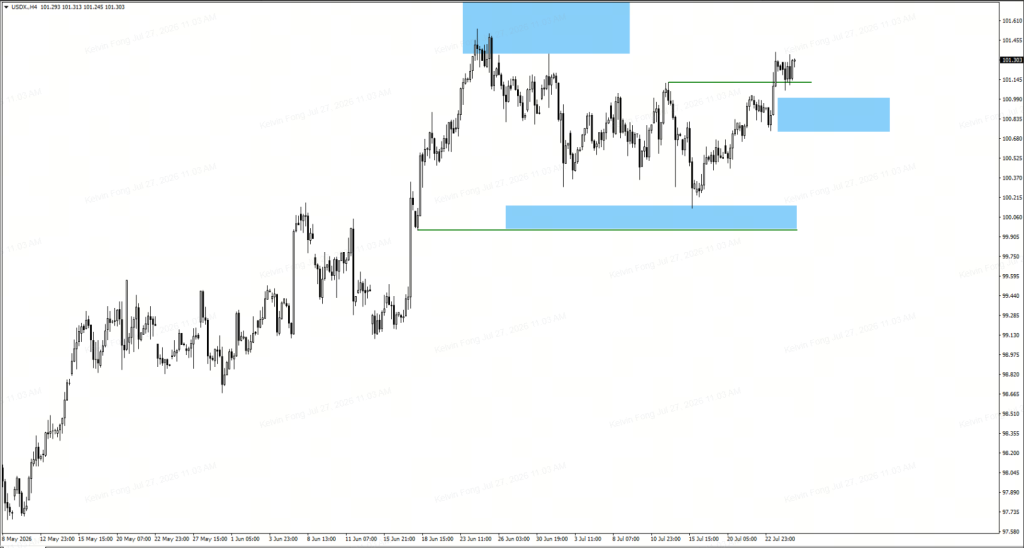
- The US Dollar Index continued holding above the 101.13 support level, maintaining its broader upward bias.
- A sustained break above 101.35 would strengthen bullish momentum, while a retracement towards 100.80 may offer another buying opportunity.
- Dollar direction will likely depend on the Federal Reserve meeting, US GDP and Core PCE inflation data.
EURUSD
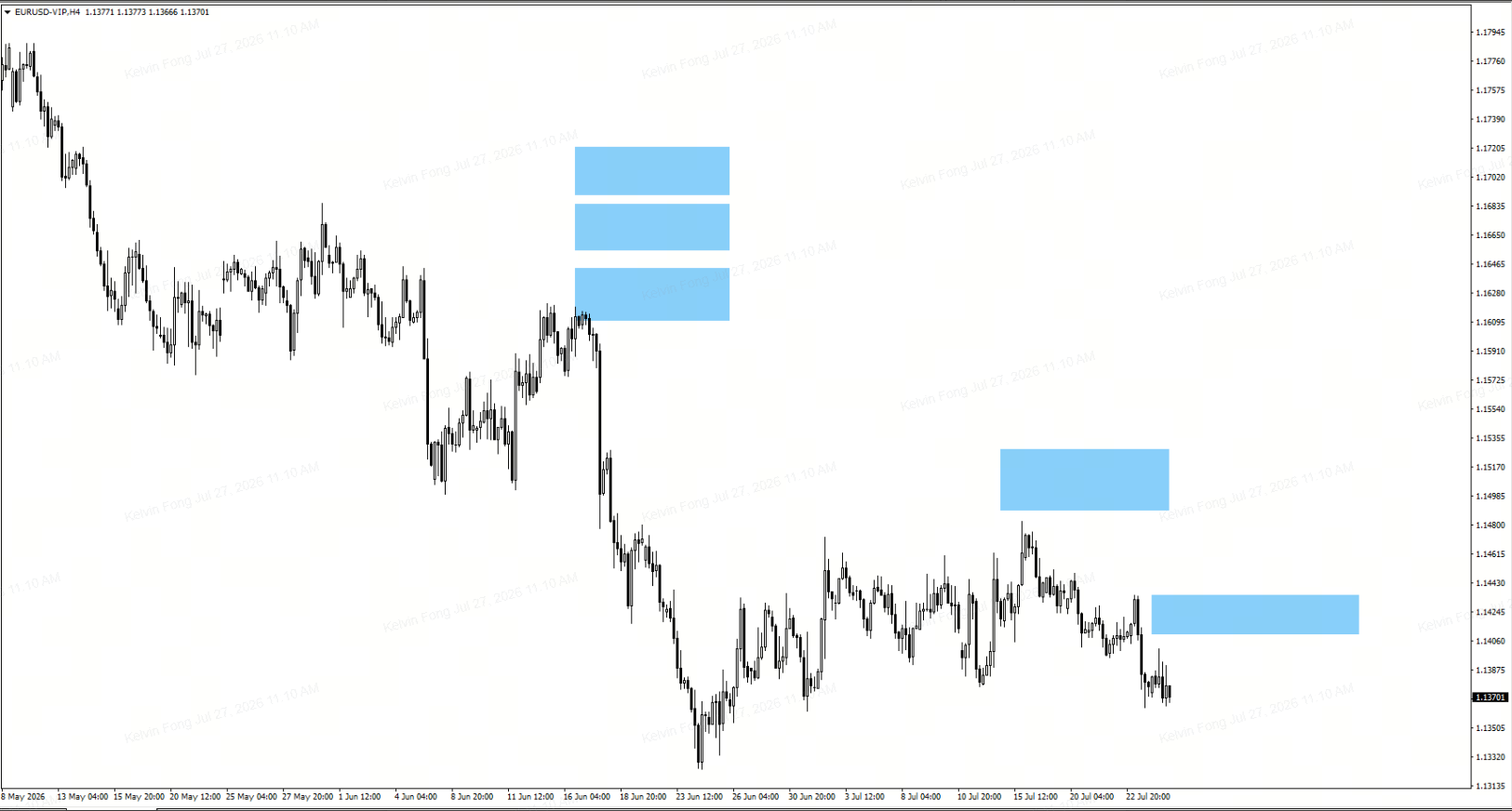
- EURUSD remained under pressure as US Dollar strength persisted alongside rising Treasury yields.
- Selling interest remains favoured around 1.1430, with a close below 1.1361 reinforcing the bearish outlook.
- Monitor price action around resistance rather than chasing moves lower.
USOIL
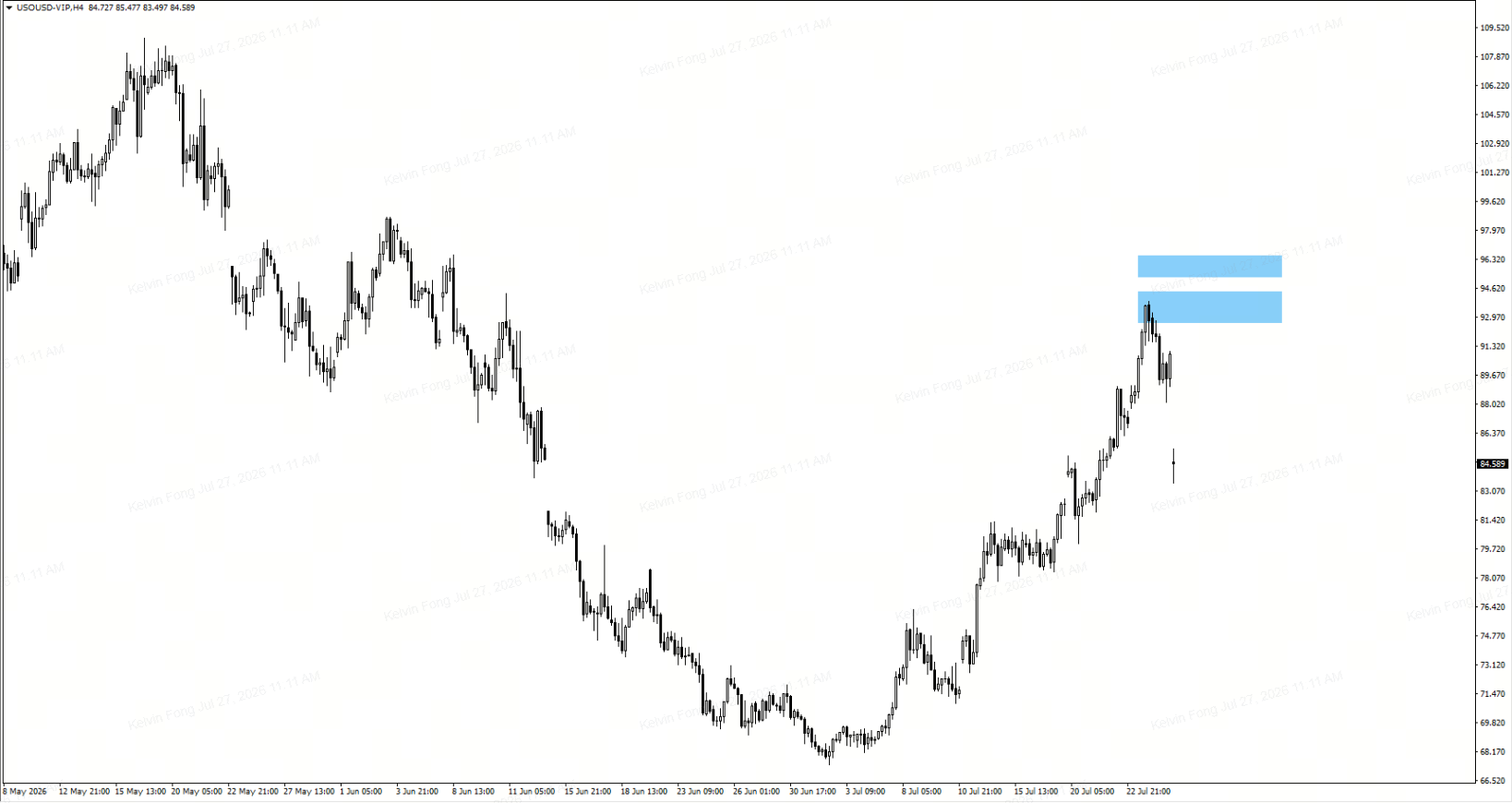
- USOil found resistance around 92.65, although sellers have yet to establish clear control.
- Further upside towards 95.25 remains possible if buying momentum continues.
- Energy prices remain a key driver of inflation expectations and central bank policy.
XAUUSD (Gold)
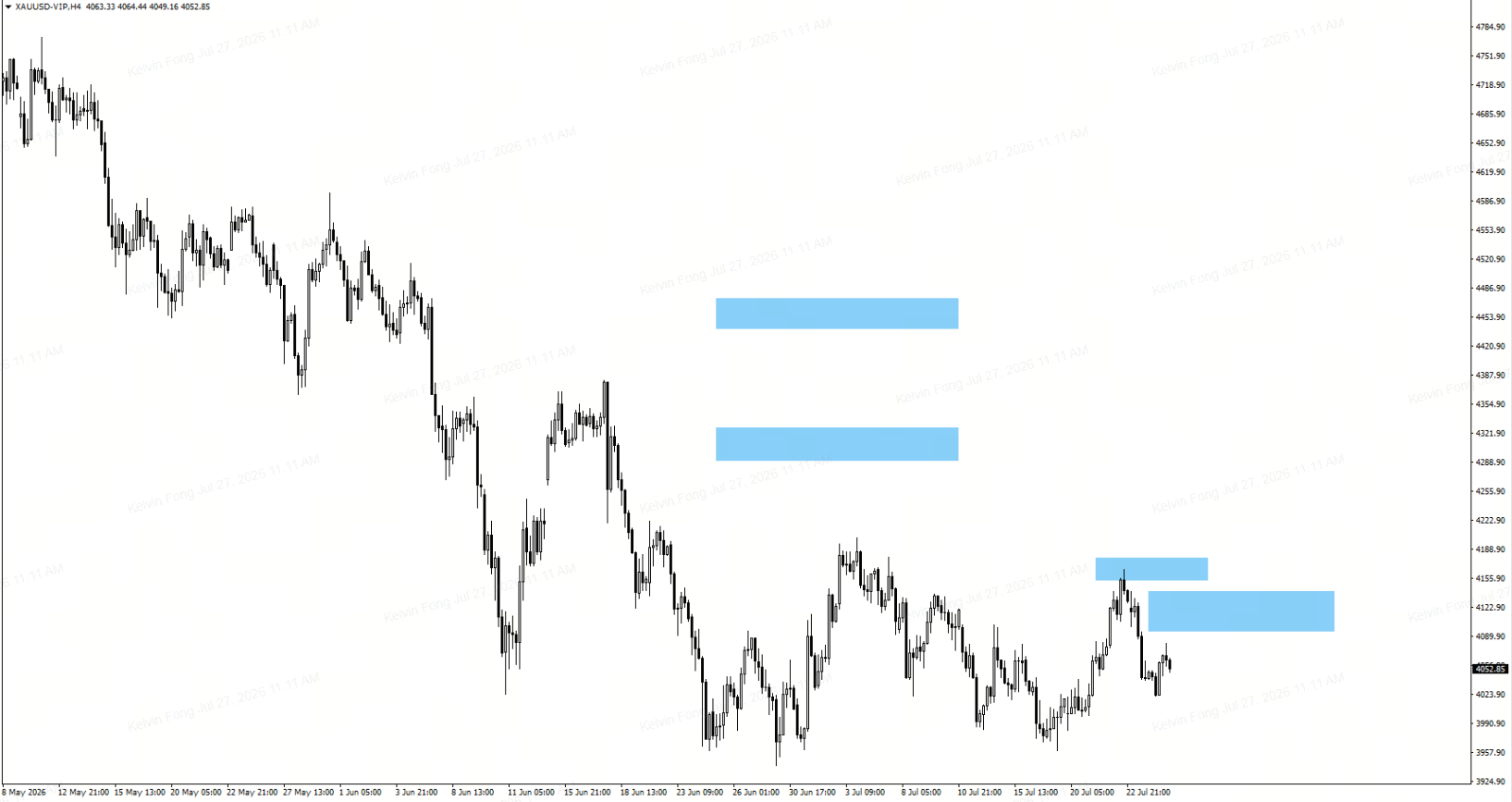
- Gold continued trading near elevated levels as markets balanced geopolitical uncertainty against higher Treasury yields.
- Consolidation below 4,120 may encourage renewed selling if bearish price action develops.
- Volatility could increase following the Federal Reserve decision and US inflation data.
SP500
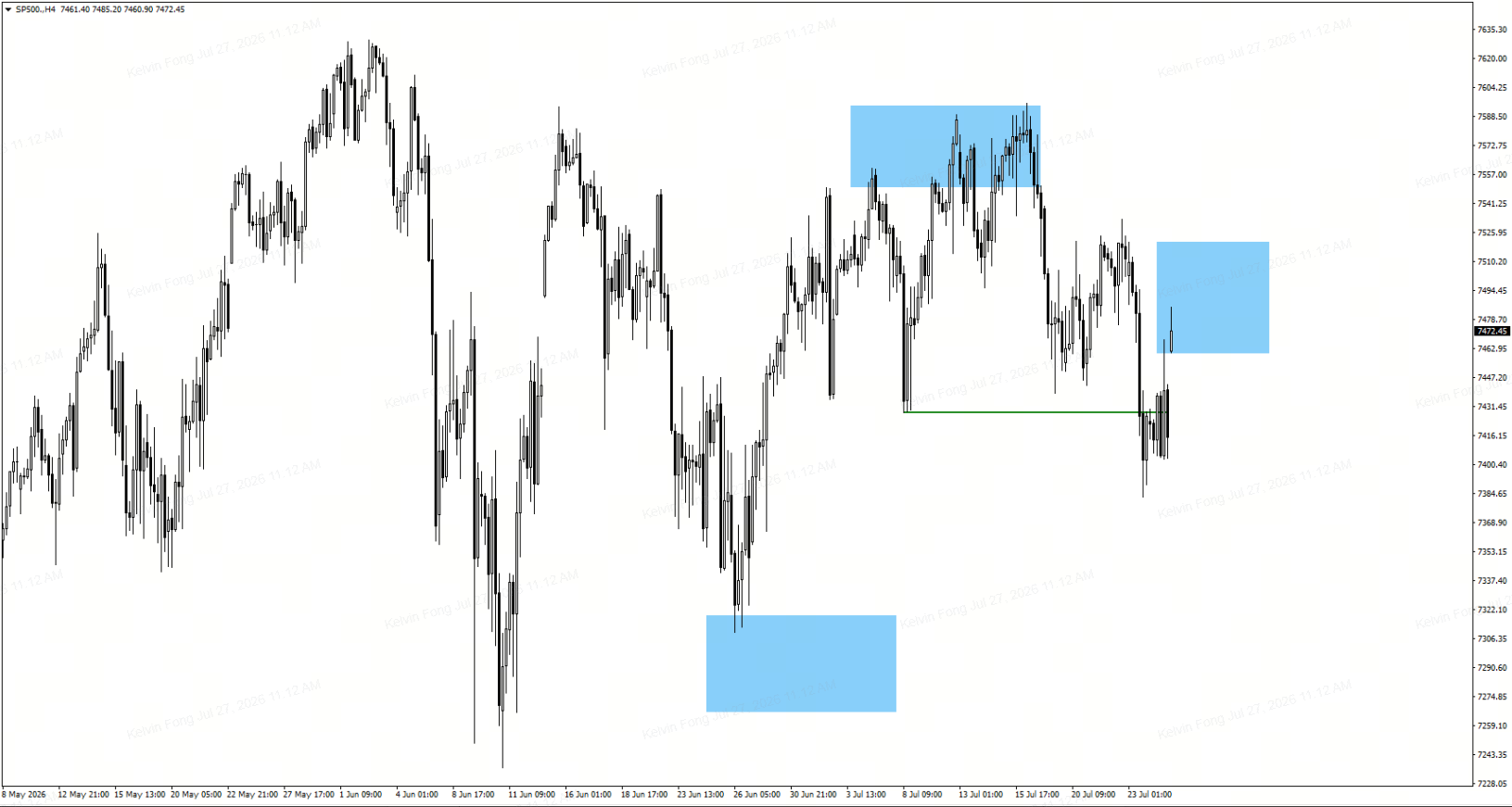
- S&P 500 faced selling pressure near the 7,480 monitored area, but additional confirmation is needed to validate the rejection.
- A retest of this zone will be closely monitored for further directional clues.
BTCUSD
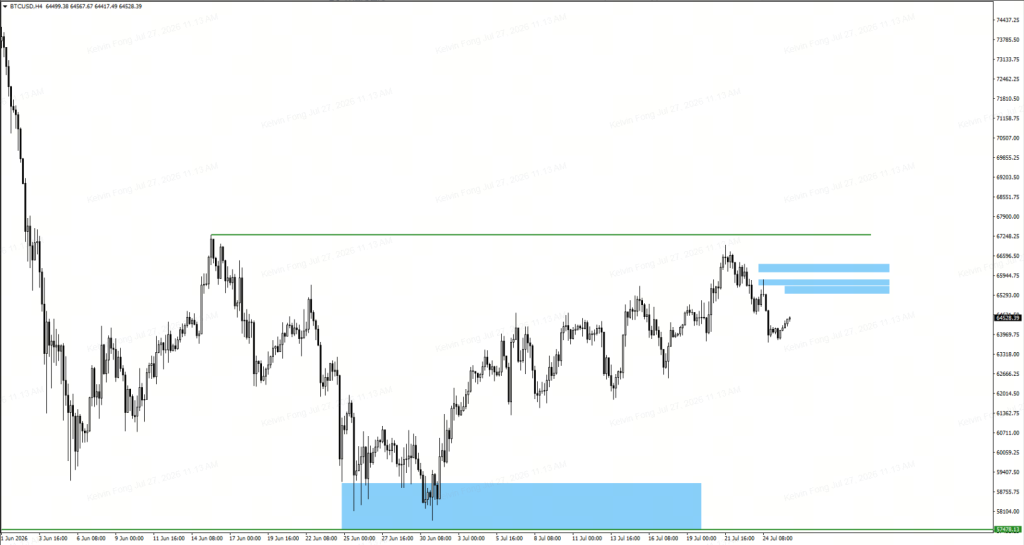
- Bitcoin failed to secure a close below 63,920, leaving the broader range intact.
- Resistance remains around 65,570 and 66,040, while a break below 63,920 could invite stronger selling pressure.
- Traders should remain patient and wait for confirmation before positioning for the next directional move.
Bottom Line
Global markets enter a pivotal week with attention firmly focused on central bank decisions, US economic data and Treasury yields. The Federal Reserve, Bank of England and Bank of Japan are expected to shape currency market direction, while US GDP and Core PCE inflation figures will provide fresh insight into the path of monetary policy. Elevated bond yields, resilient oil prices and continued scrutiny of AI-driven earnings remain central themes, leaving traders closely focused on incoming data and technical confirmation before committing to new positions.
Create a live VT Markets account today to access our platform features, including market insights and educational content.
FAQs
What is driving current bond market volatility?
US Treasury yields are rising primarily due to persistent inflation, expansion in US government debt, and growing fiscal deficits. Higher borrowing needs mean more debt issuance, which requires higher yields to attract investors even during periods of geopolitical uncertainty.
How do rising bond yields impact the stock market?
When Treasury yields exceed 5%, safe-haven government bonds become highly attractive relative to stocks. Elevated yields increase corporate borrowing costs and reduce the present value of future earnings, placing valuation pressure on growth sectors like technology and AI infrastructure.
Why are markets so sensitive to current Federal Reserve decisions?
The Fed is balancing persistent inflation (driven by energy and production costs) against slowing economic momentum. Lowering rates too early risks reigniting inflation, while keeping policy restrictive for too long increases financial stress on consumers, businesses, and government debt refinancing.
What key economic indicators are driving current FX and equity sentiment?
Traders are closely monitoring US advance GDP growth figures, Core PCE inflation data, and crude oil price trends. Beyond the US, key inflation releases and central bank decisions from Australia (RBA), the UK (BoE), and Japan (BoJ) are driving major currency market movements.
Start trading now — click here to create your real VT Markets account.








