






Overview
- US stock indices reached fresh record highs as strong corporate earnings, AI-driven growth expectations, and improving market sentiment supported risk appetite.
- Slower US private-sector employment growth increased expectations that inflation pressures may continue easing, potentially giving the Federal Reserve more flexibility on monetary policy.
- Falling oil prices helped reduce concerns over energy costs and inflation risks, providing additional support for equities.
- Technology stocks remained a major driver of the rally, supported by continued investment in artificial intelligence, cloud computing, and semiconductor infrastructure.
- The Dow Jones Industrial Average, S&P 500, and Nasdaq 100 all reached new highs, although investors continue monitoring economic data and Federal Reserve policy signals.
Global financial markets entered a more optimistic phase as major US stock indices reached new record levels, supported by a combination of strong corporate earnings, improving economic expectations, and easing geopolitical concerns.
The latest rally reflects growing confidence that US companies can continue generating earnings growth despite a higher interest rate environment. Many listed companies have demonstrated resilience through effective cost management and stronger profit margins, reinforcing expectations that corporate earnings remain a key market driver.
The technology sector has been one of the strongest contributors to the market advance. Large technology companies continue expanding investments in artificial intelligence, cloud computing, and digital infrastructure, increasing expectations for future revenue growth and supporting demand for technology-related stocks.
Slower US Employment Growth Supports Market Sentiment
The latest US private-sector employment data became another important factor supporting equity markets.
The ADP report showed that US private companies added 44,000 jobs in July, significantly below market expectations of around 75,000 jobs. The figure also declined from the revised June reading of 95,000 jobs.
The slowdown suggested that labour market conditions may be gradually cooling after a period of strong growth. While weaker employment data can normally raise concerns about economic activity, markets reacted positively as investors viewed the moderation as a sign that inflation pressures could continue easing.
A softer labour market may reduce pressure on the Federal Reserve to maintain restrictive monetary policy, increasing expectations that future policy decisions could become more supportive for risk assets.
Lower Oil Prices Ease Inflation Concerns
Geopolitical developments have also played an important role in shaping market sentiment.
Previously, tensions in the Middle East increased concerns about possible disruptions to global energy supplies, contributing to higher oil prices and increased uncertainty across financial markets.
However, easing concerns over further escalation reduced pressure on energy markets. Oil prices moved lower as investors reassessed the likelihood of supply disruptions.
The decline in energy prices became a supportive factor for equities. Traders tracking commodity movements often use a crude oil guide or an oil ETF guide to understand how lower energy costs reduce operating expenses for businesses and support consumer spending.
This improvement in sentiment encouraged investors to move capital back towards growth-oriented sectors, including technology, industrial companies, and financial services, with many choosing to trade ETFs using CFDs to capitalize on sector swings.
Federal Reserve Policy Remains a Key Market Driver
Despite improving market sentiment, monetary policy remains one of the most important factors influencing the outlook for US equities.
After more than two years of restrictive policy aimed at controlling inflation, investors are increasingly focused on when the Federal Reserve may shift towards a more flexible approach.
Inflation has moderated from previous highs, while supply chain conditions and commodity prices have improved. However, key economic indicators detailed in our Consumer Price Index (CPI) guide show that some inflation components, particularly services and wages, remain areas of concern for policymakers.
Interest rates continue to influence corporate valuations, borrowing costs, and investor behaviour. Investors closely monitoring benchmark indices can consult our S&P 500 trading guide and Dow Jones futures guide to evaluate how changing rate expectations impact broad market valuations.
However, the Federal Reserve has maintained that future decisions will depend on incoming economic data.
Any unexpected increase in inflation or stronger-than-expected labour market conditions could delay expectations for policy easing and increase market volatility. Traders looking to navigate these macro shifts often rely on trading news releases alongside essential trade risk management tips to hedge against unexpected volatility.
Technical Analysis of Wall Street Indices
The technical outlook for the three major US indices remains positive, supported by strong corporate earnings, continued liquidity flows, and improved expectations surrounding monetary policy.
However, with the Dow Jones, S&P 500, and Nasdaq 100 trading near record levels, traders are monitoring whether current momentum can continue or whether short-term consolidation may emerge.
Upcoming economic releases, including employment data, inflation figures, and Federal Reserve commentary, are expected to remain important factors influencing market direction.
Dow Jones Index
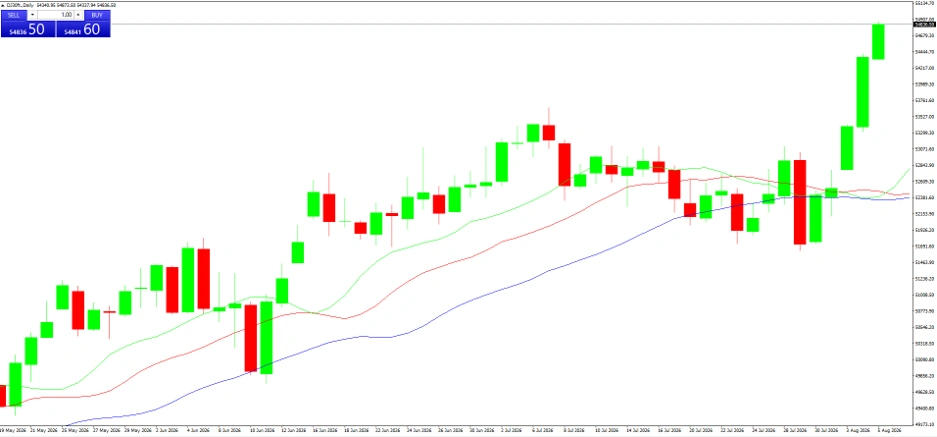
The Dow Jones Industrial Average continued its upward momentum for the fifth consecutive session, reaching fresh record levels as industrial, financial, and healthcare stocks supported the broader advance.
The index remains within a stable upward trend, with prices continuing above important support levels that previously supported the current move higher.
Compared with technology-heavy indices, the Dow Jones has been relatively less affected by fluctuations in the technology sector due to its broader exposure across traditional industries.
The index reached a session high of 54,881.00 points, with an opening price of 54,340.95 points.
S&P 500 Index
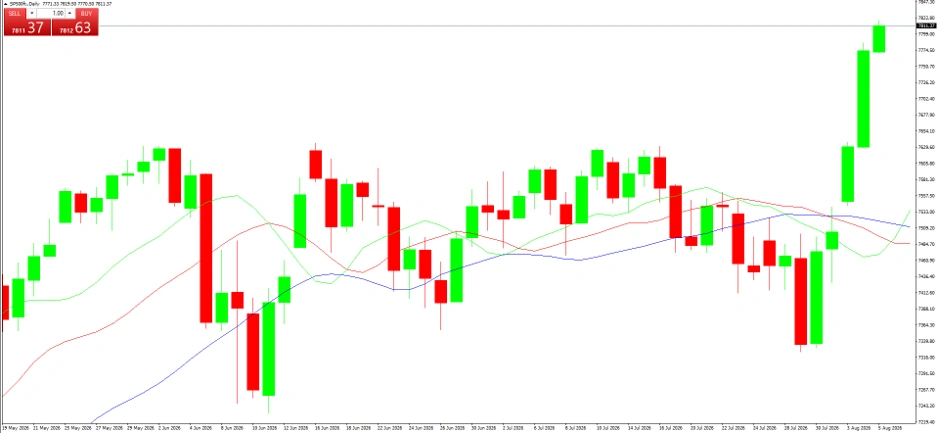
The S&P 500 continued its upward trend for the fifth consecutive session, moving above key support levels as buyers maintained control of market momentum.
The index reaching fresh record levels reflects continued confidence in corporate earnings resilience and expectations that monetary policy could become less restrictive.
From a technical perspective, the index remains in a strong upward trend, although traders continue monitoring whether earnings growth can continue supporting current valuations.
The S&P 500 reached a session high of 7,819.50 points, with an opening price of 7,771.33 points.
Nasdaq 100 Index
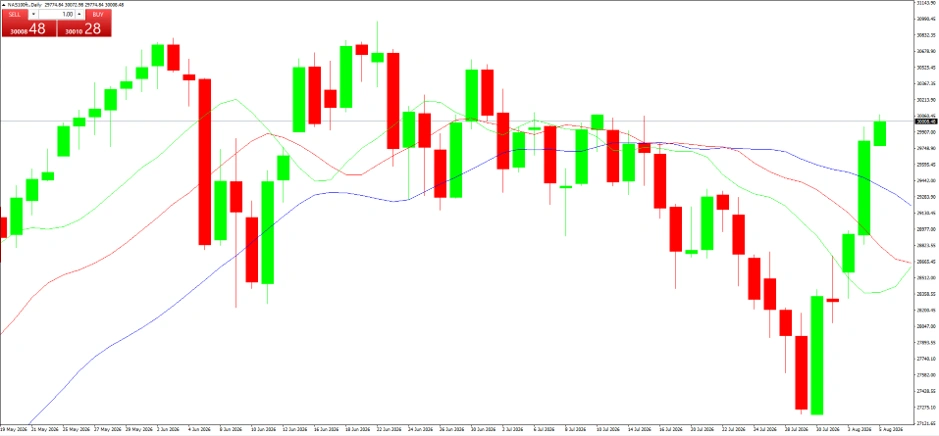
The Nasdaq 100 remained a key driver of the broader market rally, supported by continued demand for major technology companies involved in artificial intelligence, cloud computing, and semiconductor development.
The index continues to trade within a clear upward channel, reflecting sustained investor interest in technology-related growth sectors.
The increase in trading activity alongside the move higher suggests continued participation from investors rather than a rally driven only by reduced market liquidity.
The Nasdaq 100 reached a session high of 30,072.98 points, with an opening price of 29,774.84 points.
Frequently Asked Questions
Why are US stock indices reaching record highs?
US indices have been supported by strong corporate earnings, AI-related investment, improving expectations around monetary policy, and reduced geopolitical concerns.
Why did weaker employment data support stocks?
The slowdown in private-sector employment reduced concerns about persistent inflation pressures and increased expectations that the Federal Reserve may have more flexibility in future policy decisions.
How do lower oil prices affect stock markets?
Lower oil prices can reduce costs for businesses and consumers, potentially supporting corporate margins and economic activity.
Which US index benefited most from AI growth?
The Nasdaq 100 has benefited significantly from AI-related growth due to its exposure to major technology companies involved in artificial intelligence, cloud computing, and semiconductors.
What are the main risks for US stock indices?
Key risks include stronger-than-expected inflation, delayed monetary policy easing, weaker corporate earnings, and renewed geopolitical uncertainty.
Start trading now — click here to create your real VT Markets account.








