






The US midterm elections on 3 November 2026 could become a significant catalyst for financial markets as investors assess how a potential shift in congressional control might influence fiscal policy, inflation and interest rates. However, the biggest market reaction may not come from which party wins, but from how the result compares with what investors have already anticipated.
Recent polling suggests Democrats are favoured to regain control of the House of Representatives, while the Senate remains competitive. With markets already considering the possibility of reduced Republican control, an unexpected Republican sweep could trigger a larger repricing of financial assets.
A divided Congress appears to be a plausible outcome, potentially creating a more supportive environment for Gold and US equities while placing moderate pressure on the US Dollar, provided Treasury yields stabilise or decline. However, persistent inflation and elevated borrowing costs remain important risks that could outweigh any positive election sentiment.
2026 US Midterms: What Is the Market Already Pricing In?
The midterm elections will determine control of Congress for the remaining two years of President Donald Trump’s term. While the presidency is not on the ballot, the results could significantly influence the administration’s ability to advance tax legislation, government spending and other economic policies.
Recent polling has shown Democrats leading the generic congressional ballot by approximately eight to nine percentage points, strengthening expectations of a potential change in House control. Although national polling does not directly determine congressional seats, these expectations suggest that a Democratic House victory may be less surprising to investors than an unexpected Republican sweep.
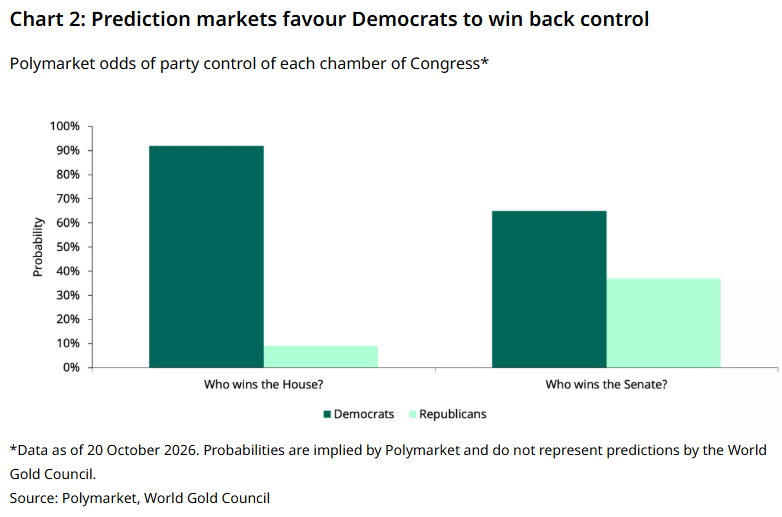
The more important economic consideration is whether the next Congress enables or restricts additional fiscal expansion. Greater Republican control could support expectations of policy continuity and business investment, but potentially increase concerns about government deficits and inflation. A divided Congress could limit major new spending initiatives, potentially easing upward pressure on Treasury yields.
Nevertheless, equity investors remain focused on corporate earnings, particularly technology and artificial intelligence (AI). With valuations already sensitive to higher borrowing costs, inflation and Treasury yields may pose a greater threat to financial markets than the election result itself.
Three Election Scenarios and Their Potential Market Impact
The base case is a divided Congress, with Democrats potentially regaining the House while Republicans retain the Senate. As markets may already be pricing in reduced Republican control, this outcome could generate a more measured reaction than an unexpected Republican sweep.
The greater market risk lies in an outcome that challenges existing expectations. A Republican sweep could trigger sharper repricing, particularly in Treasury yields, the US Dollar, and sectors sensitive to fiscal policy.
| Election scenario | Strategic interpretation | Potential market implications |
| Divided Congress | Greater legislative constraints could limit additional fiscal expansion and reduce expectations for government borrowing. | Lower yields could support Gold and bonds, while equities may benefit from reduced uncertainty. |
| Republicans retain both chambers | Greater legislative flexibility could support expectations for tax continuity, deregulation and increased spending. | Financials and industrials could benefit initially, but rising yields and a stronger USD may pressure technology stocks, Gold and Crypto. |
| Democrats control both chambers | Stronger opposition could restrict Trump’s legislative agenda while increasing the potential for budget disputes. | Lower yields could benefit Gold and growth stocks, although political confrontation may increase volatility. |
A divided Congress, particularly if Democrats gain the House while Republicans retain the Senate, could reduce expectations for major fiscal changes and eventually provide greater policy clarity. However, legislative gridlock could also complicate budget negotiations and delay economic initiatives.
An unexpected Republican sweep could initially support financials, industrials and other sectors benefiting from deregulation. However, this rally may prove short-lived if expectations of greater fiscal expansion increase concerns over deficits and Treasury issuance.
Higher yields could subsequently pressure equity valuations, particularly in technology stocks, while a stronger US Dollar may weigh on Gold and cryptocurrencies.
Democratic control of both chambers could constrain further fiscal expansion while increasing the possibility of political confrontation and budget disputes.
Although lower Treasury yields may support Gold and growth stocks, the reason behind declining yields matters. A decline driven by weaker economic growth, rather than easing inflation concerns, may offer less support for equities.
Across all three scenarios, Treasury yields remain a key indicator of how investors interpret the election outcome.

Asset Outlook: Gold, US Dollar, US Stocks, and Crypto
Under a divided-Congress scenario, the outlook for major assets remains conditional on inflation and Treasury yields.
| Asset | Directional bias | Key consideration |
| Gold | Cautiously bullish | Lower real yields and a weaker USD could support a recovery |
| US Dollar | Neutral to moderately bearish | Reduced fiscal expansion expectations could weigh on DXY |
| US Stocks | Cautiously bullish | Stable yields and resilient earnings could support further gains |
| Bitcoin | Neutral, with potential upside | Improving liquidity and risk appetite could support prices |
These biases are conditional scenarios, not unconditional price forecasts.
1. US Stocks: Can the Post-Election Rally Continue?
Historically, US equities have often performed well following midterm elections. However, corporate earnings and AI-related investment remain more important drivers. Traders looking to navigate key indices can review our S&P 500 Trading Guide and our complete breakdown on What is Nasdaq 100.
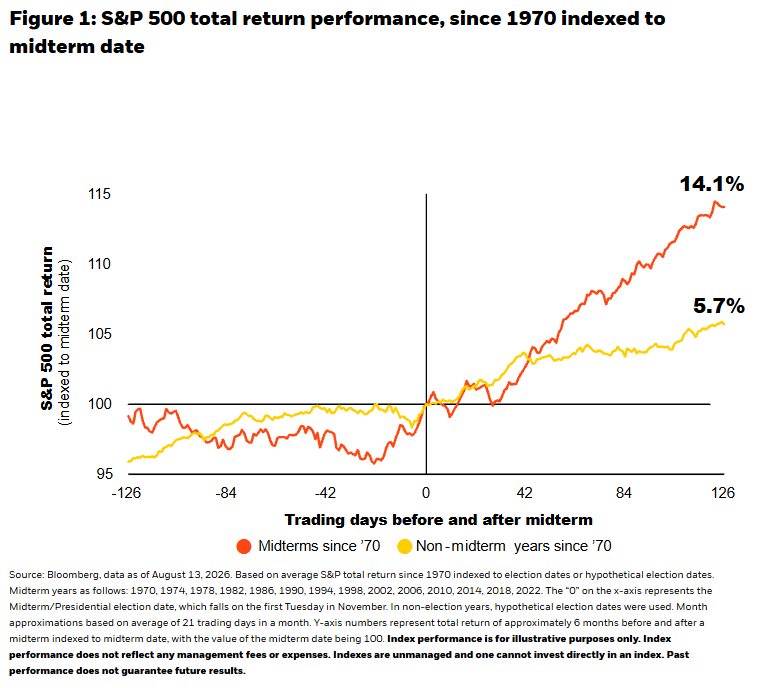
For 2026, however, corporate earnings and AI-related investment remain more important drivers than political developments alone. Following substantial equity gains, elevated valuations leave the Nasdaq particularly vulnerable to rising Treasury yields, which increase the discount rate applied to future earnings.
The outlook for US equities remains cautiously constructive under a divided Congress, particularly if Treasury yields stabilise and corporate earnings remain resilient.
However, the Nasdaq faces greater valuation risks if yields resume climbing, given its exposure to high-growth technology companies. A broader rally extending beyond major AI and technology stocks would provide stronger confirmation of a sustainable post-election advance.
2. Gold (XAUUSD): Could Lower Yields Support Prices?
Gold (XAUUSD) continues to benefit from structural demand, including central bank purchases and geopolitical uncertainty. If you are new to precious metals, check out our Complete Beginner’s Guide to Gold Trading or get live market insights with our XAU/USD Gold Price Analysis. To better identify high-probability setups, traders can also explore 7 Chart Patterns for Gold Trading alongside our Commodity Trading Guide 2026.
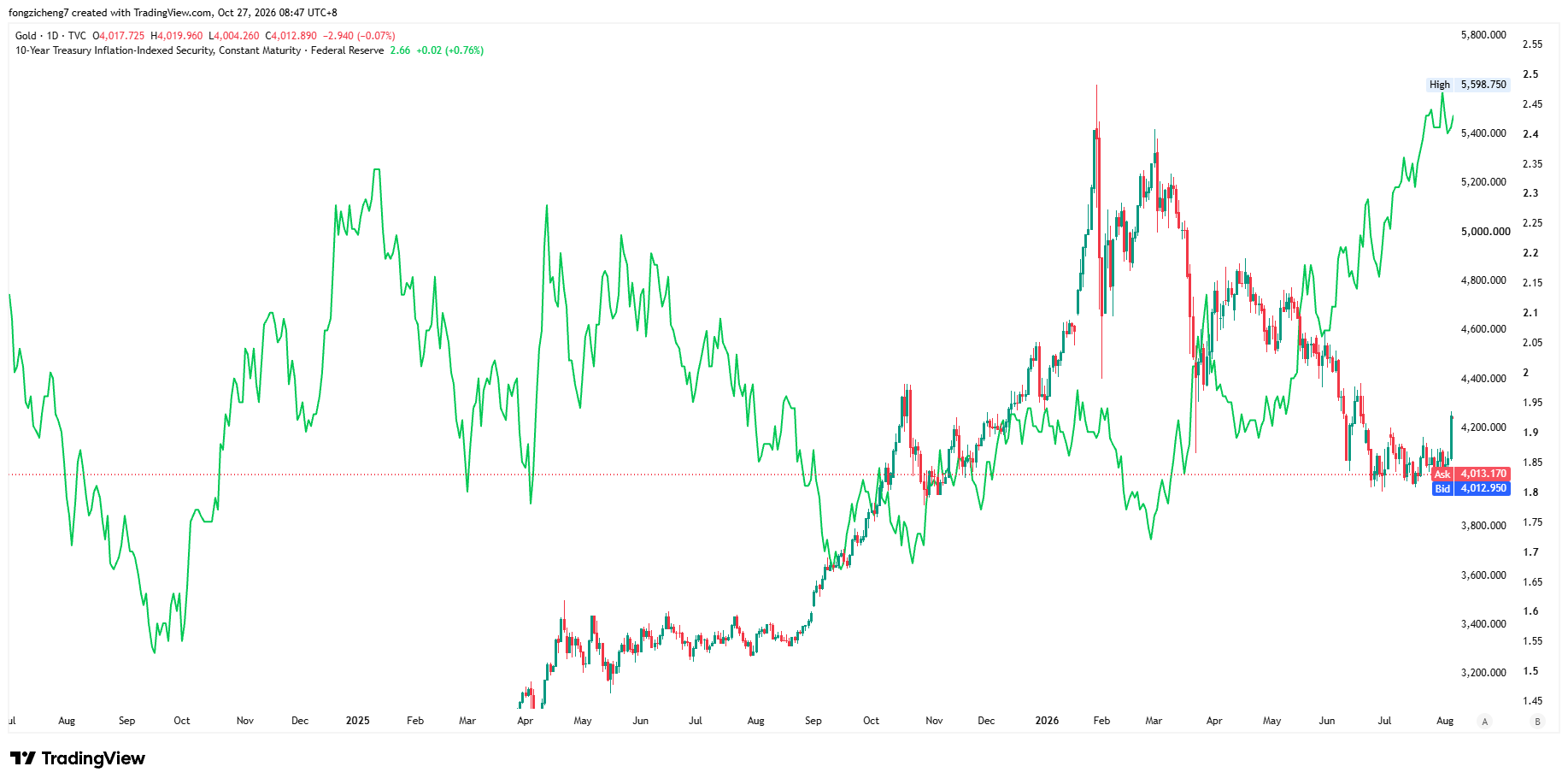
A divided Congress could provide a more supportive environment if reduced fiscal expansion expectations lead to lower yields and a weaker US Dollar. This could strengthen Gold’s outlook beyond temporary safe-haven demand surrounding Election Day.
Nevertheless, persistent inflation and a hawkish Federal Reserve could keep real yields elevated, limiting Gold’s recovery. A more convincing bullish signal would emerge if Gold establishes higher highs while real Treasury yields and DXY decline.
3. US Dollar (DXY): Could Political Gridlock Weaken the Dollar?
The US Dollar’s reaction will depend heavily on relative Treasury yields and Federal Reserve expectations. For a broader perspective on currency markets, refer to our Guide to VT Markets Forex Trading and learn How to Start Trading Forex for Beginners. Understanding foundational concepts like What is Forex Spread and key technical tools in our Moving Average Crossover Strategy Guide will help you manage FX volatility during election cycles.
Conversely, a divided Congress could reduce expectations for additional stimulus and government borrowing, potentially placing downward pressure on DXY. However, the Dollar could still benefit from safe-haven demand during periods of uncertainty.
Under a divided Congress, the USD could remain neutral to moderately weaker if Treasury yields begin declining. Falling US 2-year yields alongside a sustained DXY breakdown would provide stronger confirmation of this outlook.
4. Cryptocurrencies: Could Bitcoin Benefit from Improving Liquidity?
Cryptocurrencies remain particularly sensitive to regulatory expectations and global liquidity. If you are exploring digital assets, start with our Beginner’s Guide to Bitcoin Trading. You can also review the 5 Best Crypto to Buy Now in 2026 to discover top-performing assets across the market.
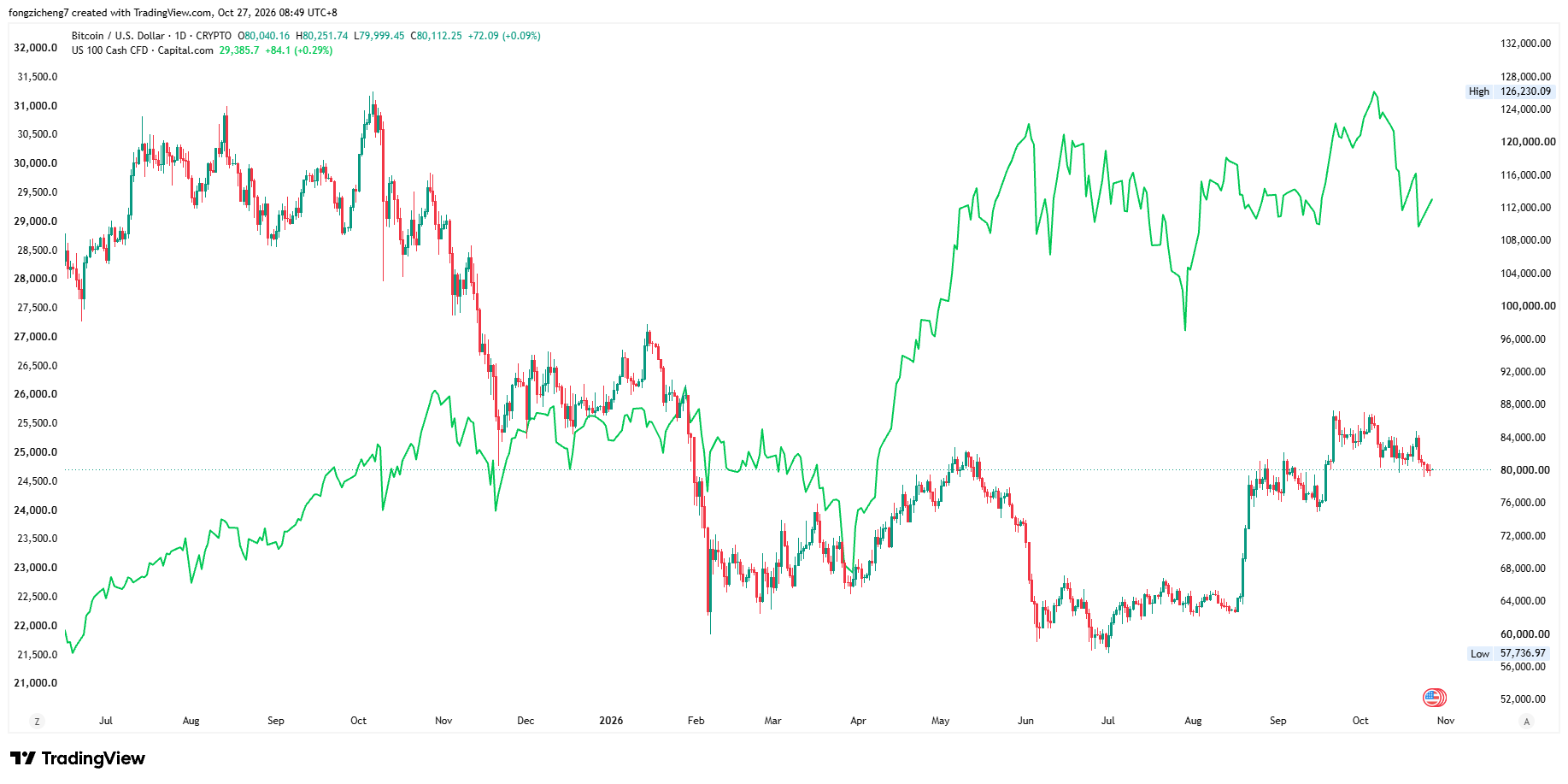
Beyond regulation, Bitcoin remains closely influenced by global liquidity, interest rate expectations and investor risk appetite. Under a divided Congress, declining Treasury yields and improving financial conditions could support cryptocurrencies alongside technology stocks.
However, higher yields and a stronger USD could pressure speculative assets regardless of the election outcome. Bitcoin’s relationship with the Nasdaq is therefore worth monitoring, particularly whether improving institutional fund flows and broader risk appetite support sustained price gains.
Three Catalysts That Could Change the Market Outlook
Treasury Yields
Treasury yields will likely be one of the most important indicators following the election. Higher yields driven by inflation or fiscal concerns could pressure Gold, equities and cryptocurrencies, while declining real yields may create more supportive financial conditions.
However, the reason behind yield movements matters. Rising yields associated with stronger economic growth may be less concerning for equities than increases caused by persistent inflation or government borrowing risks. Traders should therefore assess Treasury yield movements alongside inflation and growth expectations.
Inflation and Federal Reserve Expectations
Persistent inflation remains the principal risk to a constructive market outlook. A hawkish Federal Reserve could keep borrowing costs elevated, strengthening the USD while placing pressure on Gold, stocks and cryptocurrencies.
Softer inflation could have the opposite effect by encouraging expectations of lower future interest rates. However, energy-driven inflation presents an additional challenge, potentially weakening economic growth while keeping price pressures elevated. Changes in expected Federal Reserve policy may therefore outweigh the immediate election reaction.
Unexpected Congressional Results
An unexpected Republican sweep could prompt investors to rapidly reassess tax, spending and regulatory expectations, while Democratic control of both chambers may increase concerns about political confrontation.
Narrow margins, contested races or delayed results could also prolong uncertainty, potentially amplifying short-term volatility. The greatest market movements may occur when election outcomes differ sharply from what investors had already anticipated.
What Happens After Election Day?
Financial markets could experience sharp initial movements as election results become clearer, particularly across Gold, the USD, cryptocurrencies, and US stock indices. A relief rally is possible once uncertainty fades, but the first market reaction may not establish the longer-term direction, especially if Treasury yields move against investor expectations.
Capital Group research found that midterm election years experienced median annualised stock-market volatility of nearly 16% since 1970, compared with approximately 13% during other years. This historical pattern highlights the potential for larger price fluctuations without indicating which direction markets will move.
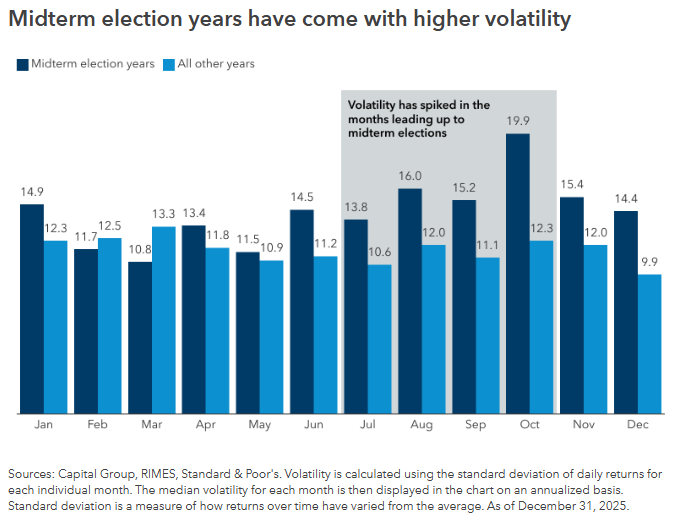
Beyond the immediate reaction, attention will increasingly shift towards fiscal negotiations, government borrowing and the Federal Reserve’s inflation outlook. With the new Congress taking office in January 2027, policy changes will unfold gradually, while corporate earnings and AI investment could regain prominence as key market drivers.
Conclusion: Strategic View for 2026 Midterm Elections
A divided Congress remains the base case, potentially creating a supportive environment for Gold and US equities while placing moderate pressure on the US Dollar, provided Treasury yields stabilise or decline.
However, persistent inflation, a hawkish Federal Reserve and rising borrowing costs remain the biggest risks to this outlook. These factors could outweigh any post-election optimism, particularly for high-valuation technology stocks.
Ultimately, we believe the more important opportunity lies in identifying whether the election produces a lasting shift in Treasury yields and financial conditions, rather than simply reacting to which party controls Congress.

FAQ
- When are the 2026 US midterm elections?
The 2026 US midterm elections will take place on 3 November 2026. Americans will vote for all 435 seats in the House of Representatives and 35 Senate seats, including two special elections. The results will determine which political party controls Congress for the next two years.
- How do US midterm elections affect the stock market?
US midterm elections can influence the stock market by changing expectations for government spending, taxation and economic policies. Political uncertainty may increase market volatility, while greater clarity following the election could support investor confidence. However, stock market performance also depends on interest rates, inflation and corporate earnings.
- Does the S&P 500 usually rise after midterm elections?
Historically, the S&P 500 has often delivered positive returns in the months following US midterm elections. This may partly reflect reduced political uncertainty and improved investor confidence. However, historical performance does not guarantee future returns, particularly when inflation, Federal Reserve policy and economic conditions remain uncertain.
- Will gold prices rise during the 2026 US midterm elections?
Gold prices could rise if election uncertainty increases safe-haven demand. However, a stronger US dollar or rising real Treasury yields could put downward pressure on gold. The overall direction of XAUUSD will depend on how investors interpret the election results alongside interest rate expectations and broader economic conditions.
- How could the US midterm elections affect the US Dollar?
The US Dollar could strengthen if election outcomes increase expectations of higher interest rates or encourage safe-haven demand. Alternatively, concerns over economic growth, government borrowing or political gridlock could weaken the currency. Traders should monitor the US Dollar Index (DXY), Treasury yields and Federal Reserve expectations.
- How could the 2026 midterm elections affect Bitcoin and cryptocurrencies?
The midterm elections could influence Bitcoin and other cryptocurrencies through changes in regulatory expectations, fiscal policy and market sentiment. A Congress supportive of clearer cryptocurrency regulations could encourage institutional participation, while political uncertainty or tighter financial conditions could weigh on digital asset prices.
- Is a Republican or Democratic victory better for financial markets?
Neither outcome is automatically bullish or bearish. Republican control of Congress could support expectations of policy continuity, while Democratic gains could lead to divided government and greater legislative constraints. Market reactions will depend on expected changes to taxation, government spending, regulation and economic growth.
- Why does market volatility increase around US elections?
Market volatility can increase as investors respond to changing polls, unexpected election results and uncertainty over future economic policies. Sudden shifts in expectations may trigger sharp price movements across stocks, currencies, gold and cryptocurrencies. Wider spreads, slippage and sudden price reversals may also occur during periods of heightened uncertainty.
- What should traders monitor during the 2026 US midterm elections?
Traders should monitor congressional election results, Federal Reserve interest rate expectations, US Treasury yields and important economic data. Key markets to watch include the S&P 500, Nasdaq, Gold (XAUUSD), US Dollar Index (DXY) and Bitcoin. Monitoring market sentiment and maintaining appropriate risk management can help traders navigate election-related volatility.
Start trading now — click here to create your real VT Markets account.



